

Illustrative patient and dental clinician discussing crown treatment with a tooth model
Cosmetic Dentistry

Cosmetic Crown Treatment in Campbellville

A crown has to look right and cope with the way you actually bite, clench and chew. For households in Campbellville, we assess the tooth and your bite habits, compare crowns with smaller repairs, and choose a material and shape that balance appearance with day-to-day durability.

Crowns that suit a Campbellville routine

Looks matter. So does how hard you bite.

Some people wake with a tired jaw. Others notice their front teeth have worn shorter, or that an old crown has chipped at the edge. These are clues about bite forces, and they matter when a crown is being planned for appearance. A beautiful crown that does not suit your bite may not last as well as one designed with it in mind.

A crown is a custom cover fitted over a reshaped tooth. It can restore strength to a damaged or heavily filled tooth and improve how it looks. The reshaping is permanent, so a healthy tooth with only a minor cosmetic concern deserves a careful look at alternatives. Ask why full coverage is proposed and what a smaller option could do.

We start by examining the tooth and your bite, asking about clenching, grinding and any sports or work that put your teeth at risk. Then we talk about what you would like the tooth to look like. If another crown has worn or broken, or a recommendation has left you with questions, we can go through that as well.

Discuss a crown that fits your bite
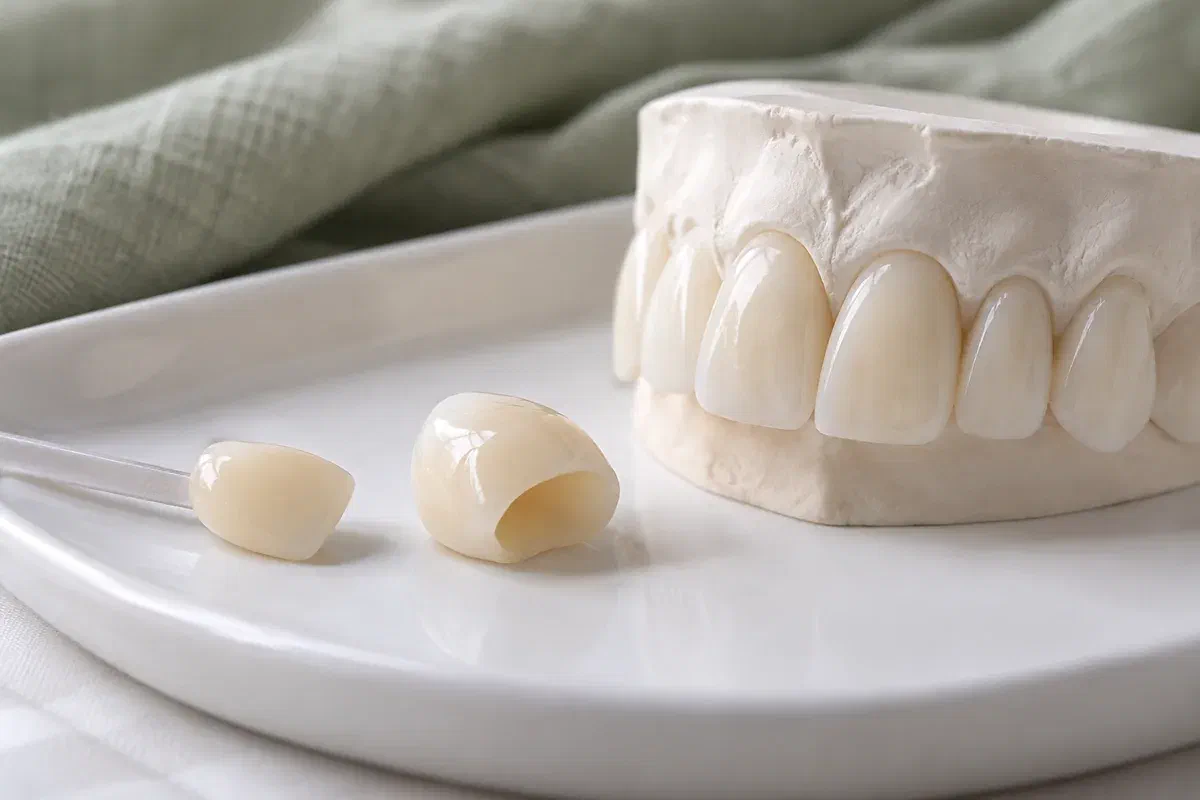
Illustrative tooth-coloured crown beside a front-tooth teaching model and shade sample
Signs that bring people in

Wear, chips and changes in colour.

Tell us what you notice in the mirror and what you notice in your jaw and teeth. Worn edges, tenderness or a chipped crown all help us understand the forces at play.

A crown that has chipped or dulled

Explain whether the crown has a chip, has lost its shine, or no longer matches. Mention any grinding habit. We examine the crown, the tooth and the gum before replacement is discussed, and you can ask whether a new crown alone would deal with the cause.

A worn or extensively repaired tooth

Heavy wear, large fillings, cracks and root canal treatment all reduce the tooth's strength. Share that history and any jaw symptoms. It helps us judge what a crown would need to withstand and whether other treatment, like managing grinding, should come first.

A tooth that has changed colour or outline

A darker tooth or one that has lost its shape should be understood before it is covered. Tell us about any injury or discomfort, and when you noticed the change. Once the cause is clear, we can talk about suitable cosmetic options.

If grinding is wearing teeth down, a crown on a healthy tooth may not be the best first step. Ask about protection, smaller repairs and the long-term effect of preparing the tooth.

What a well-chosen crown can do

Durable where it needs to be, natural where it shows.

If a crown is appropriate, it can give a worn or weakened tooth a reliable surface and restore its shape in your smile. Material choice weighs the tooth's location, the remaining structure, your bite forces, any grinding habit and the appearance you are after.

A crown is not indestructible. It may need adjustment, repair or replacement in time, especially under heavy forces, and the natural tooth inside still needs care. Your plan should spell out these risks and the maintenance involved.

Patient information: Canadian Dental Association — crown treatment

A reason that accounts for your bite

Ask why a crown suits this tooth and how your bite was considered. The explanation should be about your tooth and your habits. You should also learn what a smaller restoration could offer and where it might struggle.

Appearance balanced with strength

Talk about the shade and shape you would like. Some materials offer more translucency, others more toughness. Ask how the appearance will be reviewed and what compromises, if any, your bite might require.

Protection planned from the start

Mention grinding, sports, existing guards or retainers, and any planned whitening or fillings. A guard may need to be made or adjusted after the crown is fitted. Including these early keeps the crown part of a sensible plan.

How treatment unfolds

Understand the forces, then build the crown.

Each tooth has its own sequence. Ask about the number of visits, any temporary crown, and how decisions would be made if more damage were found once treatment starts.

  1. Examine the tooth and the bite

    We look at symptoms, wear patterns, previous work, gum health and X-rays. The dentist considers whether the tooth is strong enough for a crown and how your bite might affect it. Risks, preliminary care and the reasons for favouring a crown are explained.

  2. Pick a material suited to your forces

    We discuss appearance goals, materials that handle your bite well and how much reshaping is needed. Costs and the visit sequence are confirmed. Ask how comfort is managed and whether a temporary will protect the tooth.

  3. Shape the tooth and record it

    When you decide to go ahead, the tooth is prepared and a scan or impression captures it for the lab. A temporary crown, if fitted, is more delicate than the final one, so chew carefully. Ask what to do if it loosens.

  4. Check bite and appearance before cementing

    The dentist checks fit, contacts and how the crown meets opposing teeth, along with its appearance. Raise concerns about shade or shape now. Afterward, we cover cleaning, any guard you need and when to return.

Protecting your crown

Guard it at night, clean it every day.

Temporary and final crowns have different instructions. If you are unsure which to follow, call and ask before heading in from Campbellville.

Keep the gum line clean

Brush along the edge of the crown and use the interdental aid we recommend. Plaque gathers at that seam, and the natural tooth beneath can still develop decay. Tell us if the gum bleeds often or if cleaning there is awkward.

Notice clenching and bite changes

If the crown feels high, the tooth aches when you chew, or your jaw feels tired, let us know. Do not simply wait it out. We can review the bite, the crown and the surrounding gum.

Wear your guard and avoid using teeth as tools

If a night guard or sports guard was recommended, wear it and bring it to reviews so the fit can be checked. Avoid opening packages or biting hard objects. Regular checkups let us monitor the crown and the tooth supporting it.

Patient information: Cleveland Clinic — crowns, risks, and care

Matching treatment to the tooth

Strong enough, and no more than needed.

Ask how much of the tooth each option covers and why. Appearance counts, together with saving structure, handling your bite and planning for future care.

When full coverage is justified

A crown built for your smile and your bite

A crown may be suggested when wear, cracks or past repairs leave the tooth vulnerable. Discuss the material, margin and appearance, along with how it will handle your bite. Understand the preparation and upkeep before agreeing.

When more natural tooth can remain

A smaller restoration or veneer

Depending on the damage, a limited repair or veneer might be an option. Ask how it would cope with your bite and whether it would offer enough support. Heavy grinding can make some options less suitable, so the comparison matters.

When a crown should not come first

A guard, tests or monitoring

Sometimes managing grinding or investigating a tooth comes before any restoration. A healthy tooth may not need elective coverage at all. Ask whether a conservative first step makes sense while you weigh your options.

Bite and durability questions

Will it hold up? And other things people ask.

Bring questions about why a crown is proposed, how the material handles your bite and what the crown will need afterward.

(905) 876-4488
I grind my teeth at night. Can I still have a cosmetic crown?
Often yes, but grinding affects material choice and the risk of chipping. A night guard may be recommended to protect the crown and your other teeth. We can discuss what suits you.
Which is stronger, a porcelain crown or a zirconia crown?
Different materials have different strengths and appearances. The best choice depends on the tooth’s position, your bite and your goals. Ask the dentist to explain the trade-offs for your tooth.
Do I need a new night guard after getting a crown?
A crown can change the shape of a tooth slightly, so an existing guard may need adjustment or replacement. Bring it to your fitting so we can check.
Can a chipped crown be repaired, or does it need replacing?
Small chips can sometimes be smoothed or repaired, while larger ones may require a new crown. It depends on the material and location. We can assess the damage and explain the options.
Should I wear a mouthguard for sports after getting a front crown?
A mouthguard is a sensible precaution for contact sports and helps protect crowns and natural teeth alike. Ask whether a custom guard would suit you.
Is there a reason to crown a healthy tooth just because it looks worn?
Not necessarily. Worn teeth may be treated more conservatively, and the cause of the wear should be addressed first. Ask about all the options before a crown is chosen.

Patient information: American Dental Association — whitening and existing restorations

Campbellville crown consultations

A crown planned for real life.

Contact our Bronte Street practice about a worn or damaged tooth, a chipped crown or a recommendation you would like explained. We will assess the tooth and your bite, outline sensible alternatives and talk about appearance and care before any treatment.

Whether a crown suits a tooth depends on its condition and your bite. Cosmetic goals are weighed against structure, risk and long-term maintenance.

Visit Milton Dental Clinic
Unit 1, 342 Bronte St. S, Milton, ON L9T 5B7
Get directions Clinic hours
Monday–Thursday
11am–7pm
Friday–Sunday
By appointment only

Areas we serve

  • Milton
  • Oakville
  • Mississauga
  • Georgetown
  • Halton Hills
  • Acton
  • Campbellville
  • Brampton
  • Burlington
  • Puslinch
  • Rockwood
  • Erin
  • Caledon
  • Etobicoke
  • Old Milton
  • Bronte Meadows
  • Timberlea
  • Dorset Park
  • Dempsey
  • Clarke
  • Beaty
  • Coates
  • Harrison
  • Scott
  • Willmott
  • Ford
  • Bowes
  • Cobden
  • Walker
  • Mountain View
  • Milton Heights
  • Hawthorne Village
  • Valley View
  • Fallingbrook
  • Nassagaweya
  • Trafalgar
  • Esquesing
  • Nelson
  • Brookville
  • Moffat
  • Glen Williams
  • Norval
  • Limehouse
  • Stewarttown
  • Ashgrove
  • Hornby
  • Silver Creek
  • Speyside
  • Scotch Block
  • North Oakville
  • River Oaks
  • Glen Abbey
  • West Oak Trails
  • Palermo
  • Bronte Creek
  • College Park
  • Joshua Creek
  • Uptown Core
  • Preserve
  • Iroquois Ridge
  • Lisgar
  • Meadowvale
  • Meadowvale Village
  • Churchill Meadows
  • Erin Mills
  • Central Erin Mills
  • Streetsville
  • East Credit
  • Creditview
  • Heartland
  • Sheridan
  • Mount Pleasant
  • Credit Valley
  • Huttonville
  • Churchville
  • Springbrook
  • Northwest Brampton
  • Bram West
  • Fletcher's Meadow
  • Fletcher's Creek South
  • Alton Village
  • Orchard
  • Millcroft
  • Headon Forest
  • Tansley
  • Brant Hills
  • Tyandaga
  • Kilbride
  • Lowville
  • Aberfoyle
  • Morriston
  • Arkell
  • Hillsburgh
  • Freelton
  • Carlisle
  • Waterdown
  • Flamborough
  • Mountsberg

How can we help?

Milton Dental Clinic

Have a question about your smile? Choose the option that works best for you.

For urgent dental concerns, please call.
Messages are reviewed during clinic hours.