

Illustrative patient and dental clinician discussing crown treatment with a tooth model
Cosmetic Dentistry

Cosmetic Crown Treatment in Halton Hills

One tooth has turned grey, or slowly looks different from its neighbours, and covering it seems like the obvious fix. From Halton Hills, we start by finding out why it changed, then discuss whether a crown, a smaller restoration or another approach will give the look you want with the least lasting change.

Crown questions across Halton Hills

A single grey tooth in an otherwise bright smile.

Teeth do not usually darken one at a time without a reason. An old bump from a hockey game, a deep filling or a change inside the tooth can all show up as a shift in colour, sometimes years later. Before that tooth is covered, it helps to know what is going on beneath the surface.

Sometimes the answer is a crown: a tailored cover placed over a reshaped tooth, with its colour and contour planned to suit your smile. Sometimes it is internal bleaching, a veneer, a filling, or simply a review. Crown preparation removes tooth structure permanently, so the choice should rest on the tooth's condition as much as on its appearance.

Our dentist begins by examining the tooth and asking about its history. Then we talk about what you would like to see. If a crown has already been suggested to you, or you have an older crown that no longer matches, we can explain the reasoning and the other paths available.

Have a discoloured tooth assessed
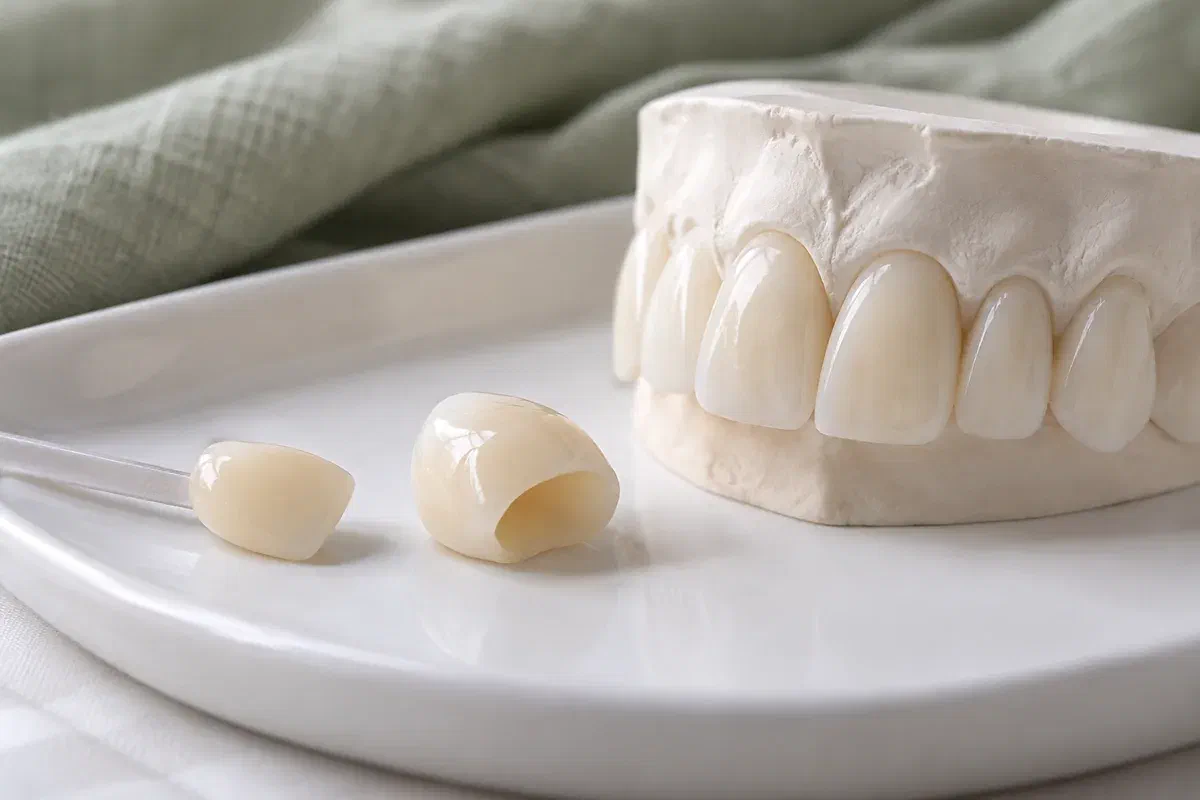
Illustrative tooth-coloured crown beside a front-tooth teaching model and shade sample
What may be behind the change

Colour, structure, or old restorations?

Mention both how the tooth looks and how it behaves. A darker tooth that is also tender to bite on raises different questions from one that looks off but feels normal.

An older crown that no longer matches

Crowns keep their original shade while natural teeth change around them. Explain which detail stands out, whether colour, shape or a dark rim near the gum. We examine the crown and the supporting tooth first, so you can ask whether replacing it would really solve what you see.

A tooth weakened by past treatment

Large fillings, a previous crack or root canal treatment can leave less natural tooth to build on. Share that background. It guides which restorations are possible and whether something like decay needs attention before a final crown is planned.

A tooth that darkened after an injury

Colour change after trauma can reflect changes inside the tooth. Tell us when the injury happened, whether it ever hurt, and when you noticed the shade shift. Tests may be recommended, and cosmetic choices are discussed once the tooth's condition is clear.

Wanting a tooth to look lighter does not automatically make a crown the right answer. Ask about options that keep more of the tooth, and about the long-term implications of preparing it.

When covering the tooth is sensible

Restore the look without ignoring the cause.

If a crown is suitable, it can mask discolouration and give a weakened tooth a sturdy surface at the same time. The material depends on the tooth's position, the remaining structure, how hard you bite and the result you have in mind.

Crowns have limits, and knowing them helps you decide. A crown may later need adjustment, repair or replacement, and the tooth inside still needs ongoing care. The plan should explain risks, maintenance and any uncertainty, particularly for a tooth that has been injured before.

Patient information: Canadian Dental Association — crown treatment

A diagnosis before a decision

You should understand what made the tooth change colour and why a crown is appropriate for it. Ask to see the findings. You should also hear what bleaching, a veneer or a smaller repair could offer, and where those options might fall short.

A shade that suits the teeth around it

Share whether you want the crown to blend with your current teeth or with teeth you plan to whiten. Ask how the colour will be checked. A dark tooth underneath can affect which materials give the most natural result.

A plan that includes the rest of your smile

Mention retainers, sports guards, planned whitening or nearby fillings. They can affect timing and fit. Settling those details early keeps the crown part of a joined-up plan, not an isolated cosmetic fix.

How we approach it

Why it changed, then how to restore it.

Each tooth has its own path, and from Georgetown, Acton or elsewhere in Halton Hills it helps to see that path in advance. Ask how many visits are likely, whether a temporary will be used, and what would happen if tests or preparation reveal more than expected.

  1. Investigate the tooth

    We examine the tooth, review its history and take X-rays or tests as needed. The dentist looks at whether the inside of the tooth needs care and whether enough structure remains for a crown. Risks and preliminary treatment are explained.

  2. Choose a restoration and a material

    Once the tooth's condition is understood, we discuss your appearance goals, suitable materials and how much reshaping each option involves. The estimate and sequence are confirmed. Ask about comfort during treatment and whether a temporary will be placed.

  3. Prepare and capture the tooth

    If a crown goes ahead, the tooth is shaped and a scan or impression is taken for fabrication. A temporary crown, if used, needs gentle handling until the final crown is ready. Ask what to do if it comes loose.

  4. Check colour and fit before cementing

    The crown is tried in so fit, contacts, bite and shade can be reviewed. This is especially important over a darker tooth. Once it is secured, we explain cleaning, short-term advice and when to come back.

Afterward

Keep caring for the tooth you cannot see.

Temporary and final crowns have separate instructions. If you are unsure which applies at the moment, call the clinic.

Brush and floss right to the margin

Clean gently where the crown meets the gum, and use the interdental tool we suggest. That seam traps plaque, and decay can still start in the natural tooth beneath. Tell us if bleeding persists or the spot is hard to reach.

Speak up about pain or pressure

A crowned tooth that hurts on biting, touches first or stays sensitive should be checked, especially if it was injured in the past. A new crown is no reason to put up with discomfort. We can reassess the bite and the tooth.

Prevent the next knock

Wear a mouthguard for contact sports, avoid biting hard objects, and ask about a night guard if you grind. Have existing appliances checked for fit. Regular reviews let us monitor both the crown and the tooth supporting it.

Patient information: Cleveland Clinic — crowns, risks, and care

Options for a changed tooth

From bleaching to full coverage.

For every option, find out how much of the tooth would be covered and what it is meant to fix. Appearance is weighed alongside natural structure, function and future care.

When strength and colour both need help

A crown for a tooth that needs coverage

A crown may be recommended if the tooth is weakened as well as discoloured. Talk about the material, where the margin will sit and how the shade will be achieved. Understand the preparation and upkeep before committing to a permanent change.

When the tooth is mostly sound

A veneer or a more limited repair

If enough healthy structure remains, a veneer or smaller restoration could improve the colour with less coverage. Ask how well it would mask the darker tooth and how durable it would be. It will not suit every case, but the comparison is worth hearing.

When a crown is premature

Internal bleaching, tests or monitoring

Some discoloured teeth need investigation or a different treatment before any restoration. Others are best watched for a while. Ask whether a conservative step could come first, with a crown kept in reserve.

Discoloured tooth questions

What to ask about a tooth that has changed colour.

Ask why a crown is being suggested, what the material can achieve over a darker tooth, and what care will follow.

(905) 876-4488
Why would one tooth turn grey when the others haven't?
Common reasons include past injury, changes inside the tooth or old restorations. An examination and sometimes X-rays help identify the cause before treatment is chosen.
Can a tooth that darkened after an injury be whitened from the inside?
Internal bleaching can be an option for some teeth that have had root canal treatment. Whether it suits yours depends on the tooth’s condition. We can explain the alternatives.
Will a crown fully hide a very dark tooth?
Material choice affects how well darker tooth structure is masked. Ask which materials would suit your tooth and how the shade will be checked before the crown is secured.
Does a grey tooth always need root canal treatment first?
Not always. The need depends on the health of the tooth’s inner tissue, which is assessed with tests and images. Ask what was found and what the options are.
Is it risky to cover a discoloured tooth without finding the cause?
A crown could hide a problem that still needs treatment. That is why we investigate first, so the right care is planned before anything is covered.
Can I get my crown planned together with braces or aligners?
Often the crown is made after tooth movement is complete, so its shape and bite fit the final position. Tell us about any orthodontic plans so we can sequence them.

Patient information: American Dental Association — whitening and existing restorations

From Halton Hills to Bronte Street

Find out why the tooth changed before deciding how to fix it.

Contact our Bronte Street practice about a discoloured tooth, a crown you have been advised to have, or an older crown you would like replaced. We will investigate the tooth, explain sensible alternatives and go through appearance and long-term care before treatment.

Whether a crown suits a tooth depends on its condition and how much preparation it needs. Appearance goals are weighed against structure, risks and maintenance.

Visit Milton Dental Clinic
Unit 1, 342 Bronte St. S, Milton, ON L9T 5B7
Get directions Clinic hours
Monday–Thursday
11am–7pm
Friday–Sunday
By appointment only

Areas we serve

  • Milton
  • Oakville
  • Mississauga
  • Georgetown
  • Halton Hills
  • Acton
  • Campbellville
  • Brampton
  • Burlington
  • Puslinch
  • Rockwood
  • Erin
  • Caledon
  • Etobicoke
  • Old Milton
  • Bronte Meadows
  • Timberlea
  • Dorset Park
  • Dempsey
  • Clarke
  • Beaty
  • Coates
  • Harrison
  • Scott
  • Willmott
  • Ford
  • Bowes
  • Cobden
  • Walker
  • Mountain View
  • Milton Heights
  • Hawthorne Village
  • Valley View
  • Fallingbrook
  • Nassagaweya
  • Trafalgar
  • Esquesing
  • Nelson
  • Brookville
  • Moffat
  • Glen Williams
  • Norval
  • Limehouse
  • Stewarttown
  • Ashgrove
  • Hornby
  • Silver Creek
  • Speyside
  • Scotch Block
  • North Oakville
  • River Oaks
  • Glen Abbey
  • West Oak Trails
  • Palermo
  • Bronte Creek
  • College Park
  • Joshua Creek
  • Uptown Core
  • Preserve
  • Iroquois Ridge
  • Lisgar
  • Meadowvale
  • Meadowvale Village
  • Churchill Meadows
  • Erin Mills
  • Central Erin Mills
  • Streetsville
  • East Credit
  • Creditview
  • Heartland
  • Sheridan
  • Mount Pleasant
  • Credit Valley
  • Huttonville
  • Churchville
  • Springbrook
  • Northwest Brampton
  • Bram West
  • Fletcher's Meadow
  • Fletcher's Creek South
  • Alton Village
  • Orchard
  • Millcroft
  • Headon Forest
  • Tansley
  • Brant Hills
  • Tyandaga
  • Kilbride
  • Lowville
  • Aberfoyle
  • Morriston
  • Arkell
  • Hillsburgh
  • Freelton
  • Carlisle
  • Waterdown
  • Flamborough
  • Mountsberg

How can we help?

Milton Dental Clinic

Have a question about your smile? Choose the option that works best for you.

For urgent dental concerns, please call.
Messages are reviewed during clinic hours.