

Illustrative patient and dental clinician discussing crown treatment with a tooth model
Cosmetic Dentistry

Cosmetic Crown Treatment in Mississauga

Someone has told you a tooth needs a crown, and you would like to understand why before agreeing. For visitors from Mississauga, we can examine the tooth, explain the reasoning in plain language, compare it with smaller options, and talk about how the crown would look and be cared for.

A second look for Mississauga smiles

You were told “crown.” Now you want to know why.

It is completely reasonable to pause after hearing that a tooth should be crowned. The procedure reshapes the tooth so a custom cover can fit over it, and that reshaping cannot be reversed. Understanding the reason is part of giving informed consent, not a sign of doubt in whoever suggested it.

Often the reason is structural. A tooth with a crack, a very large filling or extensive past repair may be safer with full coverage. In other cases, the concern is mostly cosmetic and a veneer, bonding or whitening could be explored. The appearance you want still matters either way, since colour and contour are planned as carefully as strength.

When you come in, we look at the tooth, listen to what you were told and what you hope for, and explain what we see. You might leave reassured that a crown is sensible, curious about a smaller option, or with a clearer idea of the questions to ask. Any decision stays yours.

Get a crown recommendation explained
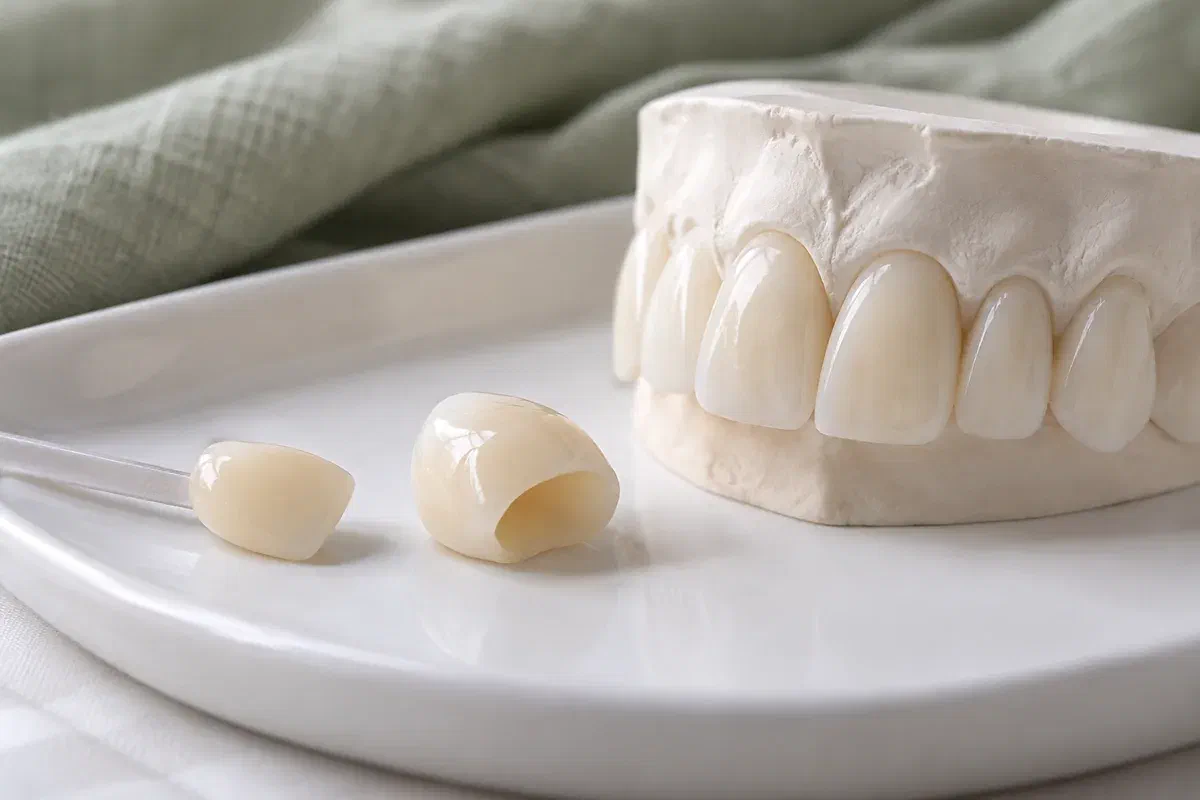
Illustrative tooth-coloured crown beside a front-tooth teaching model and shade sample
Situations we help clarify

Different teeth, different reasons for coverage.

Bring whatever you know: what you were told, what you see in the mirror and how the tooth feels when you bite. Together those details show whether the issue is cosmetic, structural or both.

Advice to replace a crown you already have

Ask what specifically was flagged: the colour, the shape, a visible edge, or something under the crown. We examine the restoration, the tooth and the surrounding gum. That helps you see whether a new crown would address every part of the problem.

A recommendation to crown a filled or cracked tooth

Large fillings, fractures and root canal treatment all reduce the natural tooth left behind. Share this history and any records you have. We can explain what protection a crown would give and whether something else needs treating first.

A darker tooth someone suggested covering

A discoloured tooth may need its cause understood before any cover is placed. Tell us about past injuries, sensitivity and when the shade changed. Once the tooth's health is clear, we can look at cosmetic choices that fit.

A crown is not the default answer for a healthy tooth you simply want to look different. Ask about gentler alternatives and how preparation would affect that tooth's long-term care.

When the recommendation holds up

What full coverage can genuinely do.

If a crown is the right fit, it can return a strong, usable surface to the tooth while being designed to look at home in your smile. Material choice depends on the tooth's location, how much of it remains, the pressure it takes in your bite and your appearance goals.

Ask about the downsides with equal interest. A crown may need adjusting, mending or replacing in future, and the tooth beneath still needs care. The plan should be open about risks, maintenance and any uncertainty in the tooth's outlook.

Patient information: Canadian Dental Association — crown treatment

Reasoning you can check for yourself

Ask to see the X-ray, photo or feature of the tooth that supports the recommendation. It should be about this tooth, not crowns in general. You should also learn what a more limited repair could achieve and where it might struggle.

A conversation about colour and outline

Say what shade and shape you would prefer and whether the crown should match your current teeth or fit with other planned work. Find out how the appearance will be reviewed. Good matching goes beyond choosing a tab from a shade guide.

A crown that fits your wider dental plan

Mention any aligners, retainers, guards, planned whitening or other restorations. They may change the timing or the fit. Discussing them early keeps the crown part of an overall plan rather than an isolated decision.

If you decide to go ahead

A careful diagnosis, then a careful finish.

Every crown follows a sequence shaped by the tooth, so if you are coming over from Mississauga, it helps to see the whole route early. Ask how many appointments are involved, whether you will wear a temporary, and how decisions would be made if extra damage turns up.

  1. Review the evidence and the alternatives

    We look at symptoms, the tooth's history, gum health and any X-rays, including ones you bring from elsewhere. The dentist judges whether the tooth can support a crown. You will hear what preliminary care might be needed, the risks and why a crown is favoured.

  2. Agree on the approach and the material

    Your appearance goals, suitable materials and the amount of reshaping are discussed openly. The estimate and order of visits are confirmed. Ask how your comfort will be handled and whether a temporary will protect the tooth while the crown is made.

  3. Prepare and record the tooth

    With your go-ahead, the tooth is prepared and impressions or a scan are taken so the crown can be fabricated. A temporary needs careful handling until the permanent crown is ready. Ask what to do if it feels loose or detaches.

  4. Confirm fit and look before securing

    The dentist checks the fit, contacts, bite and appearance. Raise any concern about shade or outline at this point. Once the crown is in, we cover cleaning, short-term instructions and when to call or return.

After your crown

Small daily steps protect a big investment of tooth.

Temporary and final crowns have different care instructions. Ask us whenever you are unsure which set to follow.

Clean where the crown meets the gum

Brush that edge gently and use the floss or interdental brush we suggest. Plaque likes to gather at the margin, and the tooth underneath can still decay. Tell us if the gum bleeds repeatedly or the area is hard to clean.

Watch for bite or comfort changes

Report it if the crown seems to hit before other teeth, hurts when you chew or stays sensitive. Discomfort should be checked, not endured. We can examine the bite, the tooth and the gum around it.

Avoid preventable damage

Do not crack hard foods or open things with your teeth. Ask about a guard if you grind or play sport, and have retainers or other appliances rechecked. Keep your reviews so we can monitor the crown and its supporting tooth.

Patient information: Cleveland Clinic — crowns, risks, and care

The full range of choices

Is a crown the only answer here?

Ask how much tooth each option would cover and why. Looks deserve weight, but so do keeping natural structure, function and the care the tooth will need in years to come.

When coverage is clearly needed

A crown planned for strength and appearance

If the tooth's condition points to a crown, talk about the material, where the edge will sit and the look you expect. Make sure the structural justification is clear, and that you understand both the preparation and what maintenance will involve.

When more tooth could be preserved

A veneer or a more limited repair

Depending on the damage, a veneer, onlay or bonded repair might be a fair comparison. Ask what each could achieve and whether it would offer enough support. It will not always be suitable, but you should hear the reasoning.

When coverage may be premature

Whitening, more tests or monitoring

Some concerns need investigation or a different treatment before a restoration is considered. A healthy tooth may not need an elective crown. Ask whether something more conservative is possible or whether the tooth can be watched.

Second-opinion questions

Ask these before you say yes.

Use the visit to find out why a crown is proposed, what the material can deliver and what the tooth will need afterward.

(905) 876-4488
Is it okay to get a second opinion on a crown recommendation?
Yes. Understanding a permanent treatment before agreeing to it is reasonable. Bring any X-rays or notes you have, and we can explain what we see and whether we would suggest the same approach.
Can I bring X-rays from another dental office?
Please do, or ask your previous office to send them. Recent images can help us understand the tooth, though we may still need our own examination or records.
What questions should I ask before agreeing to a crown?
Ask why full coverage is needed, what a smaller repair could do, how much tooth will be removed, what material is planned, and what upkeep to expect. Clear answers help you decide with confidence.
My tooth doesn't hurt. Why would it need a crown?
Cracks, weakened walls or large fillings do not always cause pain. A crown may be suggested to protect a tooth at risk. Ask what was found and what could happen if you wait.
If I want the crown to look natural, is that separate from the clinical need?
Both are planned together. The clinical reason decides whether a crown is needed; your appearance goals shape its colour and outline. Ask about each during the consultation.
Could a new crown change the estimate once the old one is off?
It can, if decay, a crack or other damage is found underneath. Ask how such findings would be explained to you and how your options would be discussed before going further.

Patient information: American Dental Association — whitening and existing restorations

Mississauga second opinions

Bring the recommendation. We will go through it with you.

Call our Bronte Street practice to talk through a crown you have been advised to have, or one you already have and dislike. We will assess the tooth, explain the reasonable alternatives and discuss appearance and care before anything is scheduled.

Whether a tooth suits a crown depends on its condition. Cosmetic preferences are considered alongside structure, risk and ongoing maintenance.

Visit Milton Dental Clinic
Unit 1, 342 Bronte St. S, Milton, ON L9T 5B7
Get directions Clinic hours
Monday–Thursday
11am–7pm
Friday–Sunday
By appointment only

Areas we serve

  • Milton
  • Oakville
  • Mississauga
  • Georgetown
  • Halton Hills
  • Acton
  • Campbellville
  • Brampton
  • Burlington
  • Puslinch
  • Rockwood
  • Erin
  • Caledon
  • Etobicoke
  • Old Milton
  • Bronte Meadows
  • Timberlea
  • Dorset Park
  • Dempsey
  • Clarke
  • Beaty
  • Coates
  • Harrison
  • Scott
  • Willmott
  • Ford
  • Bowes
  • Cobden
  • Walker
  • Mountain View
  • Milton Heights
  • Hawthorne Village
  • Valley View
  • Fallingbrook
  • Nassagaweya
  • Trafalgar
  • Esquesing
  • Nelson
  • Brookville
  • Moffat
  • Glen Williams
  • Norval
  • Limehouse
  • Stewarttown
  • Ashgrove
  • Hornby
  • Silver Creek
  • Speyside
  • Scotch Block
  • North Oakville
  • River Oaks
  • Glen Abbey
  • West Oak Trails
  • Palermo
  • Bronte Creek
  • College Park
  • Joshua Creek
  • Uptown Core
  • Preserve
  • Iroquois Ridge
  • Lisgar
  • Meadowvale
  • Meadowvale Village
  • Churchill Meadows
  • Erin Mills
  • Central Erin Mills
  • Streetsville
  • East Credit
  • Creditview
  • Heartland
  • Sheridan
  • Mount Pleasant
  • Credit Valley
  • Huttonville
  • Churchville
  • Springbrook
  • Northwest Brampton
  • Bram West
  • Fletcher's Meadow
  • Fletcher's Creek South
  • Alton Village
  • Orchard
  • Millcroft
  • Headon Forest
  • Tansley
  • Brant Hills
  • Tyandaga
  • Kilbride
  • Lowville
  • Aberfoyle
  • Morriston
  • Arkell
  • Hillsburgh
  • Freelton
  • Carlisle
  • Waterdown
  • Flamborough
  • Mountsberg

How can we help?

Milton Dental Clinic

Have a question about your smile? Choose the option that works best for you.

For urgent dental concerns, please call.
Messages are reviewed during clinic hours.