
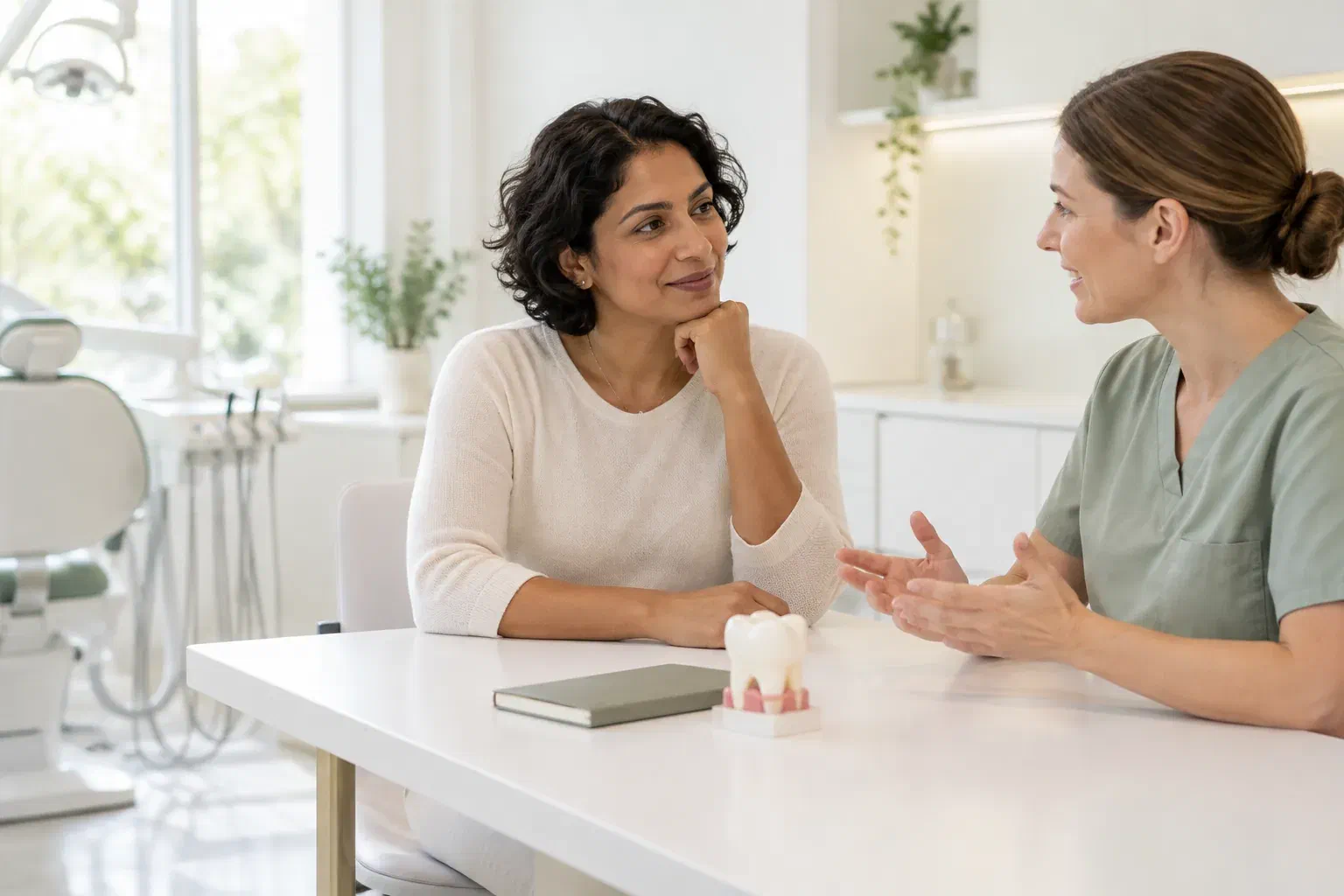
Illustrative patient sharing smile goals with a dental clinician at a consultation table
Cosmetic Dentistry

Cosmetic Dental Consultation in Burlington

A wedding, a graduation, or a milestone birthday often prompts the first real look at a smile. For anyone booking from Burlington, a cosmetic dental consultation sets that date beside your oral health and explains which options are realistic, what each involves, and what cannot be hurried.

When a date is on the calendar

A circled date, a camera, and a question about your smile

An approaching event has a way of making small things feel urgent. A chipped corner, a shade that seems dull in photos, or an old filling near the front can suddenly matter. A consultation is the right moment to describe that concern and learn what is possible within the time you actually have.

Timing depends on the cause as much as on the treatment. Surface staining, colour change from within a tooth, and a worn restoration may each call for a different response, and some responses involve several visits or healing time. Understanding the cause shows whether cosmetic care, other dental work, more information, or nothing at all fits.

Coming in from Burlington with a deadline, be candid about it, and equally candid about your limits. You might want only a gentle refresh, need to manage costs around other event expenses, or prefer to avoid permanent changes. A good consultation respects the date without letting it push you into a rushed choice.

Talk about your timeline with us
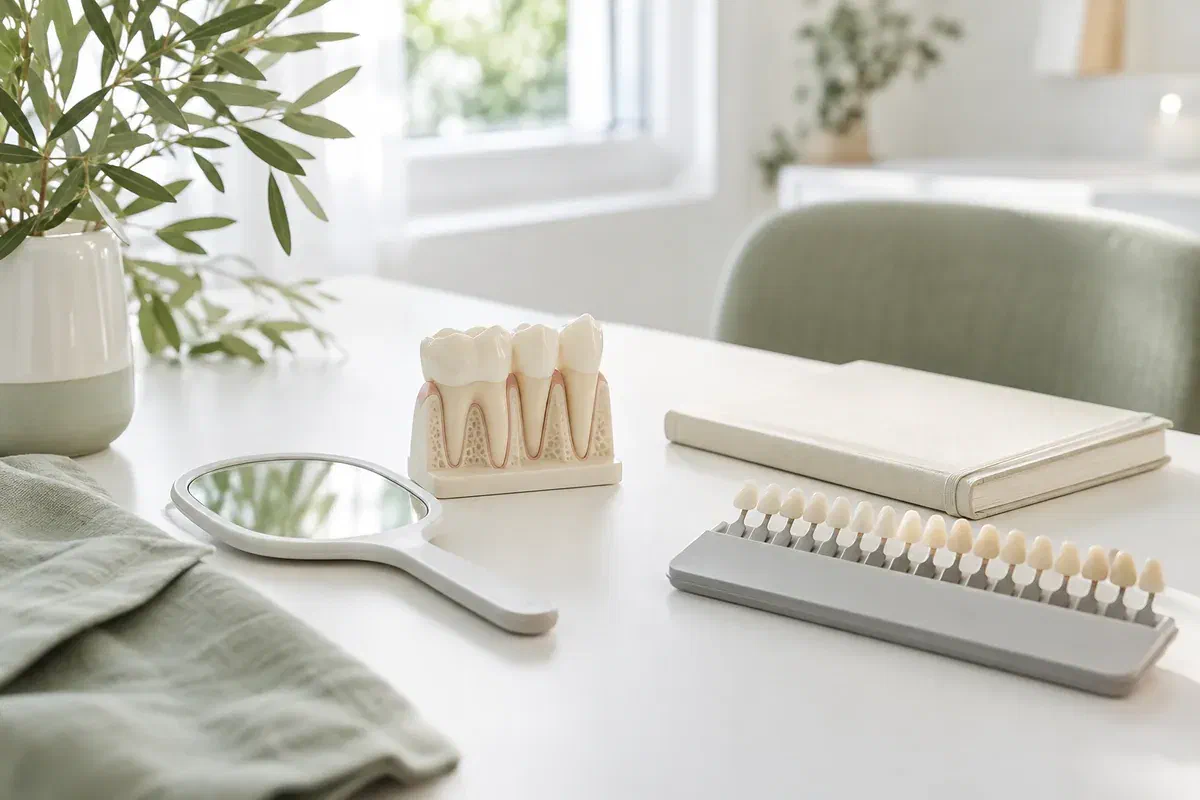
Illustrative consultation table with a teaching model, mirror, notebook, and tooth-shade guide
Information that helps the planning

The date, the detail, and the boundaries you want respected

Say it the way you would to a friend. Point out what you notice, when it stands out most, and any practical limits on time or budget that should shape the options.

The feature you want to look better on the day

Indicate the tooth or area, and if more than one thing bothers you, pick the most important. Recent photos from a similar event can show what you dislike. They help describe a preference, though the plan has to suit your own teeth and bite.

Any discomfort, injury, or recent change

Tell the clinician about sensitivity, pain, bleeding gums, a knock to the mouth, or a tooth that has darkened. Note older crowns, fillings, orthodontic treatment, and appliances. These can limit what is sensible before your date and affect the order of care.

How much time and money you can give it

Be realistic about how many appointments fit before the event and around everything else you are organizing. Ask about fees without feeling pressured to agree. A proposal is far easier to judge when its schedule and costs are clear from the start.

A consultation does not oblige you to go ahead with elective treatment. Ask when booking what the visit covers, whether further records could be recommended, and what can be answered at that appointment.

What the conversation should clarify

A realistic plan, even if the plan is to wait

Separating the goal from the treatment keeps the deadline in perspective. If you want one tooth to look less obvious in photos, there may be several ways to approach it, some quicker than others. Each comes with its own limits, preparation, upkeep, and effect on surrounding teeth.

It also helps to hear what is still unknown. A recommendation might depend on a fuller exam, X-rays, managing a gum or decay concern, or a specialist's view. Ask how that uncertainty fits your timeline, rather than assuming a first suggestion is a confirmed plan.

Patient information: Cleveland Clinic — cosmetic dentistry options and considerations

What is needed for health and what is optional

Ask which findings matter for oral health and which choices are purely elective. They can overlap. Knowing the difference helps set priorities, and it explains why a request ahead of your event might lead first to another assessment or treatment.

Smaller changes that still make a difference

Ask whether a modest change before the date, with anything larger later, would be reasonable. The discussion should cover what each choice gains or gives up. A more extensive plan is not automatically the better option, especially under time pressure.

A sequence you can actually follow

Repeat the proposed steps and dates back in your own words, and flag anything unclear. Ask which changes are permanent, what could need replacing later, and who is responsible for each stage. Writing it down makes the schedule easier to review.

What the appointment covers

Working backwards from your date, honestly

Your questions get as much room as the clinical findings. It is worth confirming, when you call, how long the visit runs and whether X-rays or a full exam would be booked on another day.

  1. Explain the occasion and your preferences

    Share what you would like to change, what you like as it is, and when the event takes place. Review your health history, medications, earlier dental care, and symptoms. Knowing the date lets the clinician talk about what can reasonably happen before it, and what should not be rushed.

  2. Examine the teeth that matter to your concern

    Teeth, gums, existing restorations, and bite are checked where they bear on your question. Photographs or radiographs might be suggested for a defined purpose. You can ask what each would clarify and whether the information already available is enough to plan around your timeline.

  3. Compare options against the calendar

    Go through what each reasonable approach aims to do, its preparation, and the care it needs afterwards. Find out how many appointments each would take, what could go wrong, what else might work, and roughly what it would cost. If a referral is mentioned, ask how it would affect timing.

  4. Decide what happens before the date and after

    You might choose something modest now, take a proposal away to consider, or schedule a suitable plan. Before leaving, be clear on which parts are settled. Check the best way to reach the team once more questions surface, and whether anything health-related should be treated before the event regardless.

Between the consultation and the event

Plan calmly. The date is a guide, not a rule.

Most of what happens next is quiet thinking: rereading the proposal and deciding what matters most before the day. Keep brushing and flossing as normal, and act on anything the clinician flagged for treatment.

Check the scope, schedule, and estimate

Look for the teeth and procedures listed, the order they would happen in, and anything that might stretch the cost or the schedule. Ask what upkeep looks like over the years, beyond the first appointment. Where a line is unclear, ask before treating the estimate or timeline as final.

Note questions as they come up

Practical questions often occur once event planning picks up again. Jot down anything about preparation, appearance, comfort, or scheduling. A short list makes a follow-up call efficient and keeps details from slipping.

Avoid last-minute treatments elsewhere

Mention it if a different dentist or specialist has treatment lined up, or if you rely on a retainer or night guard. Resist trying a store-bought whitening kit or a quick fix somewhere else while your plan is still taking shape. Ask how the order of steps could affect shade and fit before the day.

Possible paths before and after the date

Some things fit before the event. Some are better after.

You might walk out with a simple plan, a two-part approach split around the event, or reassurance that nothing needs changing. What matters most is understanding why the chosen path suits your situation.

When a single suitable step answers the concern

One focused change

A particular shade, edge, or restoration concern may have a targeted option. Find out exactly which surfaces it alters and which stay untouched. A good plan describes preparation and aftercare clearly, without expanding to teeth unrelated to your original question.

When a sound choice needs more detail

Health treatment or more information first

A gum, structural, bite, or symptom finding may need to be addressed before elective care, even if that pushes cosmetic plans past the event. Ask what must be resolved first and when cosmetic options can be revisited. Any further assessment should have a clear purpose.

When you would rather decide after the date

Waiting, a second opinion, or no change

Hold the advice up against what you care about most, and get another opinion if that would settle your mind. Check whether anything found during the exam still needs treatment. Leaving a healthy feature alone, for now or for good, can be a sensible outcome.

Event-season questions

Practical answers for planning around a big day

Use the visit to make the decision clearer. Questions about fees, how much treatment is involved, and whether doing nothing is reasonable are all welcome.

(905) 876-4488
How far ahead of an event should I book a cosmetic consultation?
Earlier is generally better, because some options take several visits and health findings may need attention first. Book as soon as the event is confirmed, and mention the date so the clinician can discuss what is realistic.
Can anything cosmetic be done in a single appointment before my event?
That depends on the cause and the option that suits it. Some changes are relatively quick, while others involve preparation and follow-up visits. Ask the clinician which approaches could fit your timeline and what trade-offs a faster option might carry.
Is it sensible to whiten my teeth right before a wedding?
Ask before starting any whitening close to an event. Whitening can cause temporary sensitivity for some people, and it generally does not change crowns or fillings. The clinician can explain timing and how it might affect visible restorations.
What if the treatment I want cannot be finished before the date?
A smaller step could sometimes come first, with the rest planned afterwards. Sometimes waiting is the better choice. The clinician can explain how staging might affect shade matching, sequencing, and cost so you can decide.
Should I bring photos from a past event that I did not like?
They can help show what bothers you, such as a shade that looks dull or an edge that stands out. Treat them as a way to start the conversation. Your own tooth structure and bite will shape what is appropriate.
Can a cosmetic consultation reveal a health problem I need to deal with first?
Sometimes. A dull or darkened tooth, for instance, may have a cause worth investigating before anything cosmetic. Tell the clinician about soreness or anything new, and ask plainly which suggestions protect your oral health and which are optional extras for the event.
Planning from Burlington

Let the date start the conversation, not rush it.

Give our Bronte Street practice a call to book a cosmetic dental consultation. Tell us about the occasion, what you would like to understand, any symptoms you have noticed, and the priorities you want considered while possible next steps are explored.

A consultation explores suitable options and does not guarantee that a requested procedure is appropriate or can be completed by a particular date. Ask about scope and fees when booking.

Visit Milton Dental Clinic
Unit 1, 342 Bronte St. S, Milton, ON L9T 5B7
Get directions Clinic hours
Monday–Thursday
11am–7pm
Friday–Sunday
By appointment only

Areas we serve

  • Milton
  • Oakville
  • Mississauga
  • Georgetown
  • Halton Hills
  • Acton
  • Campbellville
  • Brampton
  • Burlington
  • Puslinch
  • Rockwood
  • Erin
  • Caledon
  • Etobicoke
  • Old Milton
  • Bronte Meadows
  • Timberlea
  • Dorset Park
  • Dempsey
  • Clarke
  • Beaty
  • Coates
  • Harrison
  • Scott
  • Willmott
  • Ford
  • Bowes
  • Cobden
  • Walker
  • Mountain View
  • Milton Heights
  • Hawthorne Village
  • Valley View
  • Fallingbrook
  • Nassagaweya
  • Trafalgar
  • Esquesing
  • Nelson
  • Brookville
  • Moffat
  • Glen Williams
  • Norval
  • Limehouse
  • Stewarttown
  • Ashgrove
  • Hornby
  • Silver Creek
  • Speyside
  • Scotch Block
  • North Oakville
  • River Oaks
  • Glen Abbey
  • West Oak Trails
  • Palermo
  • Bronte Creek
  • College Park
  • Joshua Creek
  • Uptown Core
  • Preserve
  • Iroquois Ridge
  • Lisgar
  • Meadowvale
  • Meadowvale Village
  • Churchill Meadows
  • Erin Mills
  • Central Erin Mills
  • Streetsville
  • East Credit
  • Creditview
  • Heartland
  • Sheridan
  • Mount Pleasant
  • Credit Valley
  • Huttonville
  • Churchville
  • Springbrook
  • Northwest Brampton
  • Bram West
  • Fletcher's Meadow
  • Fletcher's Creek South
  • Alton Village
  • Orchard
  • Millcroft
  • Headon Forest
  • Tansley
  • Brant Hills
  • Tyandaga
  • Kilbride
  • Lowville
  • Aberfoyle
  • Morriston
  • Arkell
  • Hillsburgh
  • Freelton
  • Carlisle
  • Waterdown
  • Flamborough
  • Mountsberg

How can we help?

Milton Dental Clinic

Have a question about your smile? Choose the option that works best for you.

For urgent dental concerns, please call.
Messages are reviewed during clinic hours.