

Illustrative patient discussing smile planning with a dental clinician at a consultation desk
Cosmetic Dentistry

Digital Smile Design

A visual plan can make a cosmetic conversation easier to understand. Explore digital smile design in Milton to discuss proposed tooth shapes and proportions, connect the preview with clinical findings, and understand the steps and limitations behind a possible change.

A closer look at digital smile design

Use the picture to ask better questions about the plan.

Digital smile design describes a visual approach to planning and discussing changes to a smile. Photographs, other appropriate records, and digital tools can help illustrate ideas about tooth shape, proportions, and their relationship to the face. The image is a communication aid within a clinical planning process.

A preview does not establish that every proposed change is suitable or guarantee a final result. The teeth, gums, bite, and available structure still need assessment. A useful design conversation connects what you see on the screen with the procedures, preparation, and maintenance that would be required.

At Milton Dental Clinic, begin by explaining what you would like to understand about your smile. Ask which planning methods would be helpful for your situation and what the consultation includes. You do not need a finished design in mind before discussing the choices.

Discuss visual planning for your smile
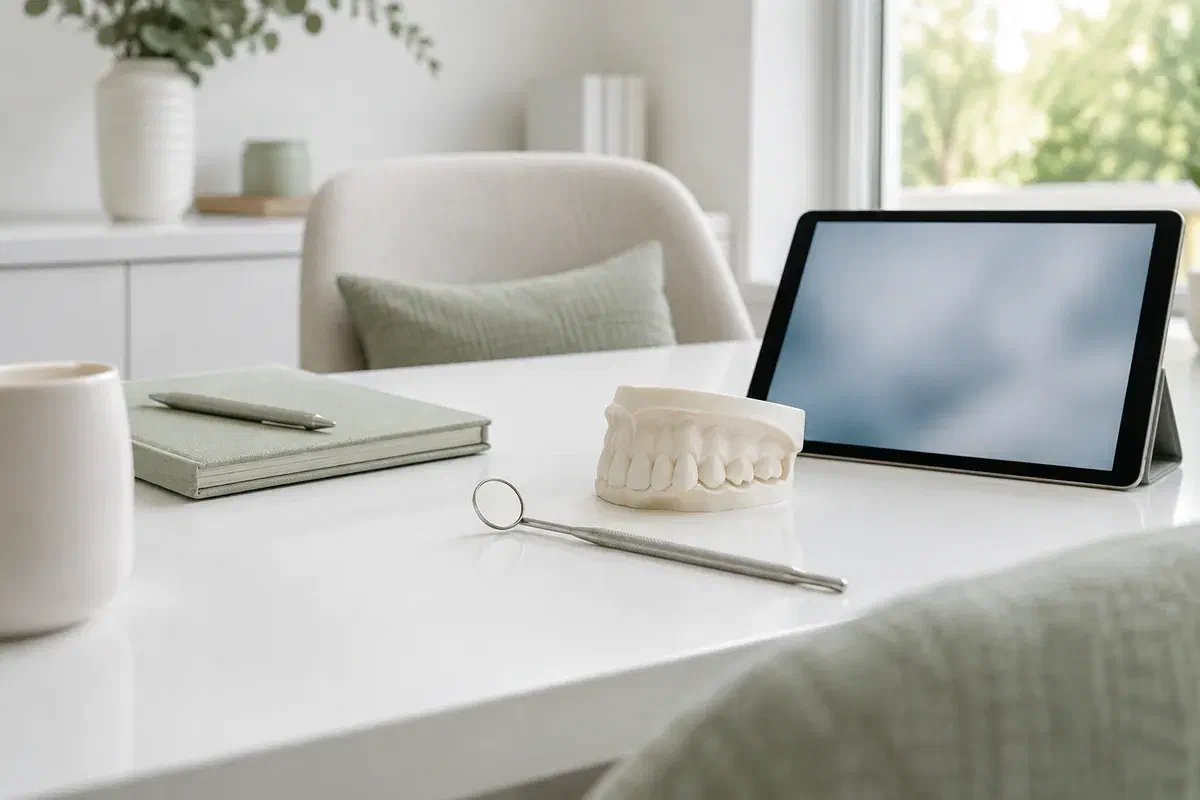
Illustrative dental planning desk with a teaching model, mirror, and tablet
Questions a visual plan can help clarify

Look beyond a brighter picture to the specific change.

Explain which feature concerns you and what you hope to preserve. A design discussion should make your preferences more precise without assuming that every visible difference needs treatment.

Uncertainty about tooth length or proportions

It can be difficult to describe why one tooth looks too short, broad, or prominent. A visual discussion may help identify the feature you mean. Ask how the suggested outline relates to neighbouring teeth and whether the change would require adding material, removing structure, or moving teeth.

Several possible procedures for one goal

A similar-looking preview can sometimes represent quite different treatment paths. Ask which procedures would produce the proposed change and what each would leave unaltered. The image alone does not explain the difference between a surface restoration and an orthodontic plan.

A need to understand the overall sequence

When more than one area of care is involved, ask how the stages depend on each other. Gum health, tooth position, colour, and restorations may affect the order. The design should support a clear explanation rather than hide unresolved decisions behind a polished presentation.

A digital preview is an illustration of a proposal, not a diagnosis or a promise. Ask what has been clinically assessed and what still needs confirmation before treatment can be planned.

Why visual planning can be useful

Make the conversation easier to share and evaluate.

A visual reference can help you and the clinician talk about the same feature. Instead of relying only on words such as natural or balanced, you can point to a particular edge, proportion, or relationship and explain your preference.

The value lies in the discussion it supports. You should be able to question the proposal, understand its limits, and compare alternatives. An attractive image should not make the decision feel settled before the clinical and practical implications have been explained.

Patient information: Research — smile documentation and digital planning · Clinical study — digital and conventional smile design

A more specific way to describe what you like

Say which parts of a proposal feel comfortable and which do not reflect your preference. You may want a subtle change rather than uniform teeth. A useful review gives your observations a place in the planning conversation without treating personal taste as a clinical diagnosis.

A shared reference when care involves more than one clinician

Ask how the proposed goals will be communicated if another provider or laboratory is involved. The records should support a consistent discussion of the intended result. Clarify who is responsible for each stage and who will explain any changes to the plan.

An opportunity to understand trade-offs before proceeding

Use the preview to ask what would be needed to achieve the illustrated change. Discuss tooth preparation, appointments, costs, and future care. You can decide that a smaller change better matches your priorities after seeing what a more extensive proposal involves.

How a visual planning discussion develops

Gather relevant information before refining the proposed appearance.

The records and tools depend on the case. Ask which parts of the process are recommended, what they cost, and whether any additional assessment or referral is needed.

  1. Discuss preferences and examine the starting point

    Share your goals, dental history, symptoms, and any previous cosmetic treatment. The clinician assesses the relevant teeth, gums, and bite. Explain what you want to keep as well as change, and identify any deadlines or practical constraints.

  2. Collect the records that answer the planning questions

    Photographs and other appropriate records may be recommended to understand the smile and treatment needs. Ask why each is being taken and how it contributes. A visual design should use relevant clinical information rather than rely only on a casual photograph.

  3. Review the proposal and the treatment behind it

    Discuss the illustrated shapes and proportions together with the procedures they imply. Ask about alternatives, limitations, and whether a physical mock-up or further assessment would add useful information. Confirm which aspects are provisional before treating them as agreed details.

  4. Decide whether to proceed, revise, or gather more information

    A planning review may lead to a revised proposal, another consultation, or a treatment decision. Confirm the agreed scope, estimate, and next stage. Choosing to review a design does not require you to accept every procedure shown.

After reviewing a smile design

Take the questions from the screen into the decision.

A planning appointment often leads to reflection rather than immediate treatment. Review the explanation alongside the image, and ask for clarification before agreeing to irreversible work.

Separate the appearance goal from the procedure list

Check which teeth would be treated and what would happen to each. Ask whether the same preference could be approached differently. Keep track of any unresolved questions about preparation, referrals, or additional records so they are addressed before treatment starts.

Understand what a preview cannot demonstrate

A screen cannot fully reproduce how an actual restoration will feel or how every material will look under changing light. Ask how the bite, comfort, and physical result will be evaluated. Where a trial or mock-up is discussed, clarify its own limitations as well.

Continue care while the plan is being considered

Keep routine dental visits and any recommended treatment for active problems. Tell the team about changes in symptoms or plans made with another provider. A design may need review if the condition of the teeth or the intended treatment sequence changes.

Choosing the right level of planning

Use the method that answers the question you actually have.

Digital design is one planning approach. The need for it depends on the proposed change and the information required to make a responsible decision.

When a visual comparison could clarify the goal

A digital visual proposal

A digital illustration may help discuss proportions or a coordinated appearance change. Ask what records support it and what the image represents. The proposal still needs a clinical explanation of feasibility, preparation, and expected maintenance.

When another form of assessment adds useful information

Models, a mock-up, or further clinical records

Some questions are better explored with additional records or a physical representation, where appropriate. Ask what each method can show and what remains uncertain. No single planning aid replaces the examination or confirms every aspect of the final treatment.

When the concern is limited or you are still exploring

A focused consultation without a full design exercise

A small, clearly defined issue may be discussed without an extensive design process. You can start with an assessment and decide whether further planning would help. Ask for the scope and fees before committing to additional records or design stages.

Questions about digital smile planning

Understand what the preview means before acting on it.

Ask about the connection between the image, the clinical findings, and the treatment proposal. These distinctions make a visual conversation more useful.

(905) 876-4488
Does approving a digital smile picture mean I have approved all the treatment behind it?
The appearance discussion and the treatment decision should both be clear. Ask which procedures, risks, costs, and alternatives have been explained and agreed. Liking a picture should not substitute for understanding what would be done to your teeth.
Can digital smile design guarantee my final teeth will look exactly like the preview?
No. The preview illustrates a proposal within the limits of the records and planning method. Clinical findings, materials, and treatment response affect the physical result. Ask which details are realistic goals and which remain provisional.
Do I need veneers just because a smile design shows a different tooth shape?
Not necessarily. A proposed shape may raise several options, each with different preparation and limitations. Ask how the change could be achieved and whether a smaller restoration, orthodontic opinion, or no elective treatment is reasonable for your situation.
Can I ask to keep small natural differences in a digital smile proposal?
Yes. Explain which features feel like part of your smile and which you want changed. The design discussion should reflect your preferences alongside clinical constraints. Uniformity is not an automatic requirement for a healthy or pleasing appearance.
Will my first digital smile design consultation always include a scan or mock-up?
Not necessarily. The scope depends on the assessment and the planning question. Ask when booking what the visit includes, which records may be recommended separately, and what the fees are. A particular technology should not be assumed from the service name alone.
What should I ask if the digital proposal includes treatment by another clinician?
Clarify the reason for referral, which stage the clinician would provide, and how the shared goals will be communicated. Ask whether their assessment could change the proposal. The sequence, responsibilities, and estimates should be understandable before treatment begins.
Digital smile design in Milton

Turn a possible change into a conversation you can understand.

Arrange a consultation at our Bronte Street practice to discuss your appearance goals and suitable planning methods. We can explain what information is needed and how a visual proposal could help you compare the next steps.

Planning methods depend on individual needs. A digital image is not a guaranteed outcome or a substitute for clinical assessment and informed treatment discussion.

Visit Milton Dental Clinic
Unit 1, 342 Bronte St. S, Milton, ON L9T 5B7
Get directions Clinic hours
Monday–Thursday
11am–7pm
Friday–Sunday
By appointment only

How can we help?

Milton Dental Clinic

Have a question about your smile? Choose the option that works best for you.

For urgent dental concerns, please call.
Messages are reviewed during clinic hours.