

Illustrative patient discussing smile planning with a dental clinician at a consultation desk
Cosmetic Dentistry

Digital Smile Design in Caledon

A full smile proposal can feel like an all-or-nothing choice. It doesn't have to be. Digital smile design for Caledon can help you see the bigger picture, then pick a sensible place to start, set priorities, and understand what each piece would involve.

The big picture, in pieces

Where would you start?

Plenty of people would like a few things about their smile to be different, yet have no wish to tackle them all at once. Digital smile design uses clinical photographs, other suitable records and planning software to illustrate how proposed changes in shape and proportion could fit together. With the whole picture visible, it becomes easier to decide what matters most and what could wait.

Being able to see the whole is not the same as knowing it can be done. A proposal can't confirm that the gums, bite or tooth structure support each change, and it doesn't determine the finished look. The examination and a straightforward discussion of procedures, preparation and upkeep tell you which pieces are realistic, and in what order.

For households in Bolton and elsewhere in Caledon, a planning visit can be a chance to set priorities rather than commit to a full plan. Tell us the one change you'd choose if you could only pick one. We'll explain the planning steps that would help and what the consultation includes.

Talk about priorities for your smile
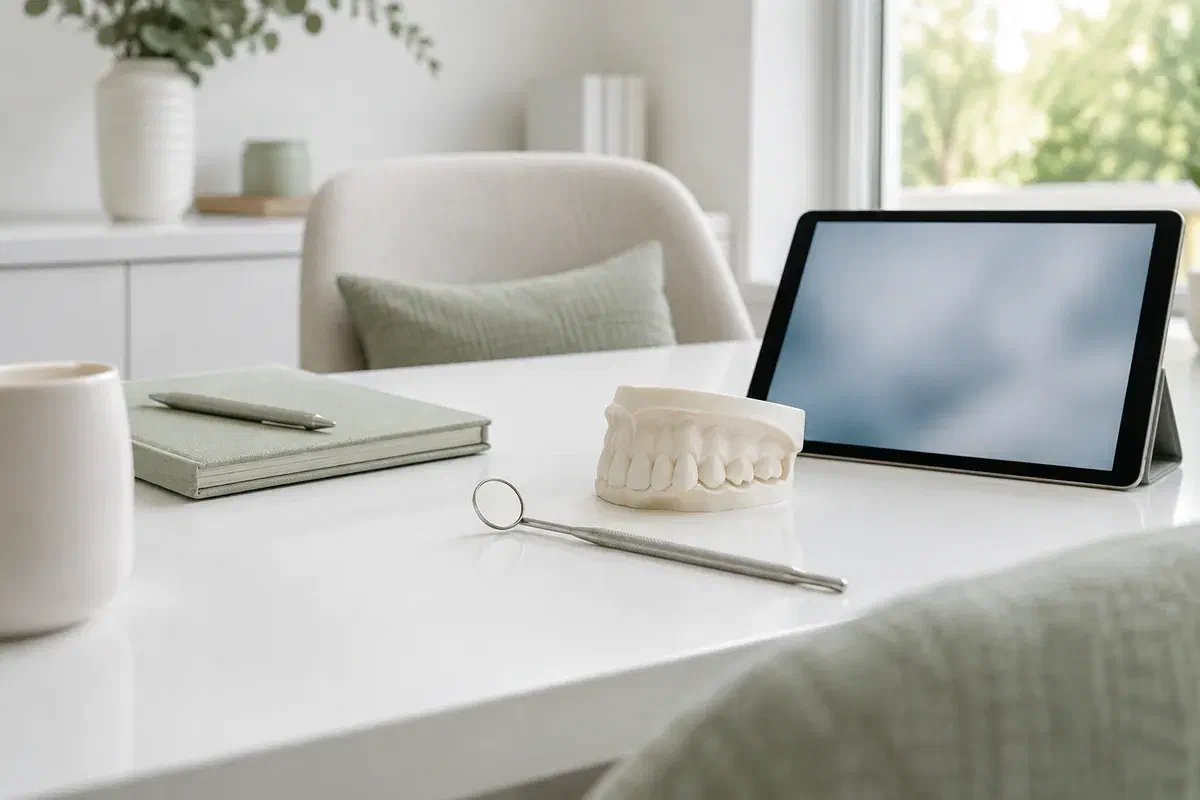
Illustrative dental planning desk with a teaching model, mirror, and tablet
Sorting priorities

The one thing you'd change first

Describe what bothers you most and what you're happy with. Prioritising helps make the goal specific, and it may show that some differences don't need treatment at all.

A single tooth that stands out

Often one tooth's length, width or position draws more attention than anything else. A proposal can show it in context with its neighbours. Ask whether improving it would mean adding material, reducing enamel or moving it, and whether it can be addressed alone.

Options that commit you to more later

Some routes to a similar preview treat one tooth; others work best when several are done together. Ask what each option would alter and leave untouched, and whether starting with one tooth would affect how the others can be matched later.

Deciding what can sensibly wait

Gum care, alignment, whitening and restorations may need a particular order, which affects how a plan can be phased. Ask which stages have to come first and which could be left for later. The proposal should make that easy to see.

A preview shows a possible result, not a diagnosis or a promise. Ask which pieces the examination supports and which still need checking.

How seeing the whole helps

Choose a first step without losing sight of the goal.

When the overall proposal is in front of you, it's easier to point to the feature you care most about and ask how that piece could be handled. The clinician can explain how it relates to the rest.

You remain free to question every part and to settle for much less than the full picture. A complete design is a map of possibilities, not a list of obligations, and no image should make a phased approach feel second best.

Patient information: Research — smile documentation and digital planning · Clinical study — digital and conventional smile design

Priorities in your own words

Seeing the full proposal can clarify what you'd do first, what you'd do later and what you'd skip. Telling the clinician helps build a phased plan around your wishes, within the limits the findings set.

A record to return to

If you phase treatment, or a specialist or laboratory takes part, shared records help keep later steps consistent with earlier ones. Ask how the plan will be documented and who will explain any changes.

What each phase would involve

Ask about the preparation, appointments, fees and maintenance for each piece of the plan. Knowing this lets you decide whether to phase the work, simplify it, or stop after the change that matters most.

From the full picture to a first phase

Map it out, then choose a starting point.

Records and tools depend on the individual case. Ask what is advised, what each part costs, and whether another assessment or a referral might help.

  1. Share priorities and get examined

    You explain your goals and which matters most, along with your history, symptoms and any earlier cosmetic work. The clinician assesses teeth, gums and bite. Mention timing considerations and anything you want to stay as it is.

  2. Records for the whole smile

    You may be advised to have clinical photos and other records of your whole smile taken, even if you only plan to start with one area, so later phases can be matched. Ask what each record adds. Proper records beat a casual photo every time.

  3. Review the map and the first piece

    The full proposal is discussed together with the procedures behind each part. Ask which pieces depend on others, what the limits are, and whether a try-in or further assessment would help. Note what is provisional.

  4. Pick a phase, revise, or wait

    You might start with one change, ask for a simplified proposal, or take time to decide. Confirm scope, estimate and next step for the phase you choose. Seeing the full design doesn't commit you to all of it.

Living with a phased plan

Each phase deserves its own decision.

With phased plans, there are natural pauses. Look back at the explanation as well as the image before each phase, and ask questions before agreeing to any irreversible step.

Track what's done and what's next

Keep a simple note of which teeth have been treated, which are still in the plan, and what each would involve. Ask whether later phases could be simplified. Bring open questions about records or referrals to each review.

Remember images can't predict everything

A screen can't show how a finished restoration feels, or how it will look beside teeth treated in a later phase. Ask how fit, comfort and matching would be checked as the plan progresses, and what a mock-up wouldn't show.

Keep ordinary care going between phases

Routine checkups and treatment for active problems continue throughout. Let us know about new symptoms or work done elsewhere. If your teeth change between phases, the proposal may need revisiting.

How much planning a phased approach needs

Sometimes one tooth needs a full design. Sometimes ten don't.

Digital design is one planning tool. Its value depends on how many changes you're considering and the information needed to phase them responsibly.

Useful when you want to phase several changes

A whole-smile digital proposal

An overall proposal can help you see how pieces of a plan fit together. Ask what records it uses and what it represents. Each piece still needs a clinical explanation of what is achievable and how it would be maintained.

Useful when matching later work matters

Models, a try-in or extra records

Where suitable, models, more records or a temporary mock-up can capture details for future phases that a screen might miss. Ask what each can show and what will stay uncertain. None replaces the examination.

Useful when only one change is on your mind

A focused consultation

If one tooth or one feature is the whole concern, a full design may not be needed. Begin with an assessment and decide later whether more planning would help. Check what further records would cover, and cost, before agreeing to them.

Caledon questions about phased plans

Starting small, planning ahead

These answers are about prioritising and phasing a smile plan. Bring your own questions to the appointment.

(905) 876-4488
Can I treat one tooth now and others later?
Often, yes, though it depends on the teeth and the treatment. Ask how a single change now would affect matching and options later, and whether some steps work better done together.
Will a tooth treated now match ones treated in a later phase?
Matching can be planned for, but materials and natural teeth can change over time, so no perfect match can be promised. Ask how shade and shape would be recorded and checked when later phases begin.
How do I decide which change to prioritise?
Start with what bothers you most, then ask the clinician whether anything needs to come first for health reasons. The answer is usually a balance of your priorities and the clinical order of care.
Is a full smile design worth doing if I only plan to start small?
It can be, if you expect to make further changes later and want them to fit together. If you’re only interested in one change, a simpler consultation may be enough. Ask which suits you.
Does seeing a full proposal mean I'm expected to do all of it?
No. The proposal shows possibilities. Each procedure needs its own explanation and your consent, and choosing only part of it, or none, is entirely reasonable.
How can I plan phases around trips from Caledon?
Ask for a rough outline of how many visits each phase might involve and how much time should pass between them. That makes it easier to fit the plan around work, school runs and the rest of the household.
Phased smile planning for Caledon

See it all. Start with what matters.

Book a consultation on Bronte Street to talk about your priorities and how a plan could be phased. We'll explain what information is needed and how a proposal can help you choose a sensible first step.

Planning depends on each person's needs. A digital proposal shows possibilities, not guaranteed results, and does not replace clinical assessment or informed consent for each phase.

Visit Milton Dental Clinic
Unit 1, 342 Bronte St. S, Milton, ON L9T 5B7
Get directions Clinic hours
Monday–Thursday
11am–7pm
Friday–Sunday
By appointment only

Areas we serve

  • Milton
  • Oakville
  • Mississauga
  • Georgetown
  • Halton Hills
  • Acton
  • Campbellville
  • Brampton
  • Burlington
  • Puslinch
  • Rockwood
  • Erin
  • Caledon
  • Etobicoke
  • Old Milton
  • Bronte Meadows
  • Timberlea
  • Dorset Park
  • Dempsey
  • Clarke
  • Beaty
  • Coates
  • Harrison
  • Scott
  • Willmott
  • Ford
  • Bowes
  • Cobden
  • Walker
  • Mountain View
  • Milton Heights
  • Hawthorne Village
  • Valley View
  • Fallingbrook
  • Nassagaweya
  • Trafalgar
  • Esquesing
  • Nelson
  • Brookville
  • Moffat
  • Glen Williams
  • Norval
  • Limehouse
  • Stewarttown
  • Ashgrove
  • Hornby
  • Silver Creek
  • Speyside
  • Scotch Block
  • North Oakville
  • River Oaks
  • Glen Abbey
  • West Oak Trails
  • Palermo
  • Bronte Creek
  • College Park
  • Joshua Creek
  • Uptown Core
  • Preserve
  • Iroquois Ridge
  • Lisgar
  • Meadowvale
  • Meadowvale Village
  • Churchill Meadows
  • Erin Mills
  • Central Erin Mills
  • Streetsville
  • East Credit
  • Creditview
  • Heartland
  • Sheridan
  • Mount Pleasant
  • Credit Valley
  • Huttonville
  • Churchville
  • Springbrook
  • Northwest Brampton
  • Bram West
  • Fletcher's Meadow
  • Fletcher's Creek South
  • Alton Village
  • Orchard
  • Millcroft
  • Headon Forest
  • Tansley
  • Brant Hills
  • Tyandaga
  • Kilbride
  • Lowville
  • Aberfoyle
  • Morriston
  • Arkell
  • Hillsburgh
  • Freelton
  • Carlisle
  • Waterdown
  • Flamborough
  • Mountsberg

How can we help?

Milton Dental Clinic

Have a question about your smile? Choose the option that works best for you.

For urgent dental concerns, please call.
Messages are reviewed during clinic hours.