

Illustrative patient discussing smile planning with a dental clinician at a consultation desk
Cosmetic Dentistry

Digital Smile Design in Rockwood

Seeing a new smile on screen can bring a rush of enthusiasm, or a wave of doubt. Digital smile design for Rockwood treats the proposal as something to sit with: a visual to reflect on, test against your exam, and accept, revise or set aside in your own time.

Room to think

You don't have to decide today.

Elective changes to your teeth deserve a calm decision. Digital smile design is a way to visualise one: clinical photographs, suitable records and planning software combine to show how a proposed tooth shape or proportion might sit within your face. Having that picture can make it easier to reflect on what you actually want, away from the dental chair.

While you reflect, keep the image in its place. It cannot confirm that the gums, bite or remaining tooth structure suit the proposal, and it doesn't determine how real teeth will look once treated. The examination, together with a candid account of procedures, preparation and long-term care, gives you what you need to judge it.

If you're making the trip from Rockwood, it's reasonable to treat the first visit as a fact-finding one. Tell us what has been on your mind, and what you'd like explained. We'll suggest planning steps that suit your situation and be clear about what each involves and costs.

Book a no-pressure planning conversation
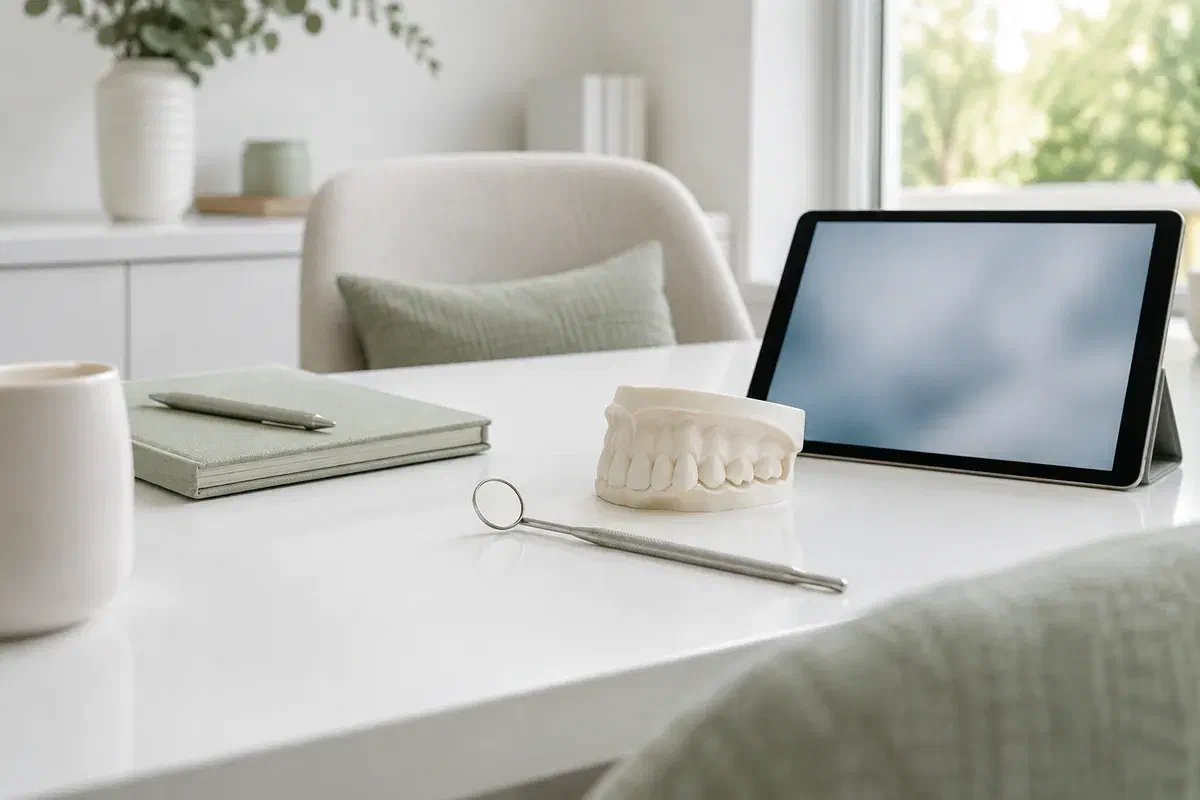
Illustrative dental planning desk with a teaching model, mirror, and tablet
Things to reflect on

Is it the smile you want, or the one on the screen?

Mention the feature that bothers you and anything you'd hate to lose. Reflection often narrows a goal, and sometimes it shows that a difference is better left alone.

A detail you keep coming back to

Maybe one tooth's length or angle keeps catching your attention. A proposal can show it changed, which helps you test whether the change really matters to you. If it does, ask whether it would rely on adding material, reshaping, or moving the tooth.

Choosing between paths that look alike

Bonding, veneers, crowns and orthodontics can each sit behind a similar preview. Time spent at home is a good chance to think about which trade-offs suit you. Ask what each would alter, what it would leave, and what upkeep it would bring.

Understanding the full timeline

When several areas of care are involved, the order can stretch over months. Ask how stages depend on one another before you decide whether the whole journey appeals. A good proposal explains this rather than letting a neat image make it seem simple.

A preview is a picture of a possibility. It is not a diagnosis or a promise, so ask what the examination supports and what still needs confirming.

Why a picture aids reflection

Something concrete to think about

It's hard to weigh a change you can only imagine. A proposal gives you something specific to consider: an edge, a proportion, a gap closed or kept. You can come back to it with questions once you've had time to think.

That time matters. Use it to question the proposal, notice what it leaves out, and compare it with smaller changes or none at all. An attractive image should prompt thought, not cut it short.

Patient information: Research — smile documentation and digital planning · Clinical study — digital and conventional smile design

A chance to notice your real preferences

Initial excitement sometimes fades into a preference for something subtler, or a firmer sense of what you want. Either is useful. Share your reaction at the next conversation, so it can inform a plan grounded in the clinical findings.

Consistency if the plan involves others

If a laboratory or specialist would take part, shared records keep everyone aimed at the result you settle on. Ask how goals would be communicated and who would explain any change of course.

Time to weigh what it would really take

Ask what the proposal would involve in preparation, visits, fees and future care, and take those answers home with you. With reflection, many people find that a modest change, or waiting, fits their priorities best.

A planning process with pauses built in

Explore, record, review and reflect

Records and methods depend on what you want to explore. Ask what is recommended, what it would cost, and whether another opinion or a referral could be useful.

  1. An exploratory first visit

    You describe your goals, history, any symptoms and earlier cosmetic care, and the teeth, gums and bite are examined. You don't need to have decided anything. Let us know about time pressures and features you're keen to keep.

  2. Records, if they'd help

    Clinical photographs and other suitable records might be advised. It's fine to ask the purpose of each and to decide whether you want them yet. A proposal based on real clinical information is more worth reflecting on than one built from a casual photo.

  3. A review without obligation

    The proposed shapes are explained along with the procedures they would require. Raise alternatives and limits, and ask whether a temporary try-in or more assessment would help. Be clear on which elements are provisional.

  4. Take it away and come back

    Many people leave with the proposal to think about. You can return to ask for a revision, discuss treatment, or say you've decided against it. Confirm scope and estimates in writing before any work is booked.

In the days after

Let the first impression settle.

After a design review, give yourself time. Read the explanation again alongside the image, write down questions as they come, and get answers before agreeing to anything irreversible.

Picture the work as well as the result

Jot down which teeth the plan would affect and what each would go through. Ask whether a lighter approach could reach a similar effect. Bring unanswered questions about preparation, referrals or records to your next conversation.

Remember what the preview can't capture

Screens can't show how a restoration feels, how it reflects outdoor light, or how it changes with time. When you speak with the clinician again, ask how fit and comfort would be assessed, and what a mock-up would leave unanswered.

Keep your mouth healthy while you think

Continue routine checkups and treatment for any active problem. If new symptoms appear or another provider treats you, let the clinic know. A proposal may need updating if things change during your reflection.

Taking things one step at a time

Start small. Add planning only if it helps.

Digital design is one planning method. Whether it's worth doing depends on the change you're curious about and how much information you need to decide comfortably.

When seeing the change would help you decide

A digital proposal to reflect on

A visual can help when proportions or several teeth are part of the question. Ask what records it uses and what it is meant to represent. The clinician should also explain what's achievable and what maintenance would follow.

When you need more than an image to feel sure

Models, a mock-up or added records

Study models, extra records or a temporary trial smile can offer a different kind of preview, where suitable. Ask what each can show and what it can't. None replaces the exam or settles every detail in advance.

When you're still at the wondering stage

A conversation and assessment only

If you're unsure whether you want to change anything, a straightforward consultation may be the right start. You can decide later about further planning. Find out what any extra records or design work would include, and what it would cost, beforehand.

Rockwood questions about smile planning

Taking time over a smile decision

These answers are for people who want to think carefully before acting. Bring any other questions with you.

(905) 876-4488
How long can I take to decide after seeing a proposal?
As long as you need. If a lot of time passes, or your teeth change, the proposal may need reviewing before treatment. Ask whether records would need updating if you wait.
Is it normal to feel unsure after seeing my digital design?
Yes. A new smile can feel unfamiliar at first, even if it is what you asked for. Mention any doubts at your next conversation. A revision, a smaller change or a decision not to proceed are all valid outcomes.
What questions should I write down to ask after my design review?
Useful ones include which teeth would be treated, which steps are permanent, how many visits are involved, what the estimate covers, and what upkeep each option needs. Add anything that has been on your mind.
If I decide against treatment, have I wasted the planning visit?
Not at all. Understanding your options and deciding to leave things as they are is a perfectly informed outcome. The assessment may also highlight anything worth watching at routine visits.
Will what I see on screen be exactly what I end up with?
No. The proposal illustrates an idea within the limits of the records and method used. Materials, clinical findings and the course of treatment all shape the real result. Ask which details are realistic goals.
Can I follow up by phone from Rockwood before booking another visit?
You can call (905) 876-4488 with questions. Some things can be clarified by phone, while anything involving an examination or records will need an appointment.
A first step from Rockwood

Look, learn, then decide when you're ready.

Book a consultation with our team on Bronte Street to explore your goals and the planning that might help. We'll explain what's involved, answer your questions, and leave the decision in your hands.

Planning is tailored to each person. A design on screen illustrates a proposal, not a guaranteed outcome, and does not replace an examination or a fully informed treatment decision.

Visit Milton Dental Clinic
Unit 1, 342 Bronte St. S, Milton, ON L9T 5B7
Get directions Clinic hours
Monday–Thursday
11am–7pm
Friday–Sunday
By appointment only

Areas we serve

  • Milton
  • Oakville
  • Mississauga
  • Georgetown
  • Halton Hills
  • Acton
  • Campbellville
  • Brampton
  • Burlington
  • Puslinch
  • Rockwood
  • Erin
  • Caledon
  • Etobicoke
  • Old Milton
  • Bronte Meadows
  • Timberlea
  • Dorset Park
  • Dempsey
  • Clarke
  • Beaty
  • Coates
  • Harrison
  • Scott
  • Willmott
  • Ford
  • Bowes
  • Cobden
  • Walker
  • Mountain View
  • Milton Heights
  • Hawthorne Village
  • Valley View
  • Fallingbrook
  • Nassagaweya
  • Trafalgar
  • Esquesing
  • Nelson
  • Brookville
  • Moffat
  • Glen Williams
  • Norval
  • Limehouse
  • Stewarttown
  • Ashgrove
  • Hornby
  • Silver Creek
  • Speyside
  • Scotch Block
  • North Oakville
  • River Oaks
  • Glen Abbey
  • West Oak Trails
  • Palermo
  • Bronte Creek
  • College Park
  • Joshua Creek
  • Uptown Core
  • Preserve
  • Iroquois Ridge
  • Lisgar
  • Meadowvale
  • Meadowvale Village
  • Churchill Meadows
  • Erin Mills
  • Central Erin Mills
  • Streetsville
  • East Credit
  • Creditview
  • Heartland
  • Sheridan
  • Mount Pleasant
  • Credit Valley
  • Huttonville
  • Churchville
  • Springbrook
  • Northwest Brampton
  • Bram West
  • Fletcher's Meadow
  • Fletcher's Creek South
  • Alton Village
  • Orchard
  • Millcroft
  • Headon Forest
  • Tansley
  • Brant Hills
  • Tyandaga
  • Kilbride
  • Lowville
  • Aberfoyle
  • Morriston
  • Arkell
  • Hillsburgh
  • Freelton
  • Carlisle
  • Waterdown
  • Flamborough
  • Mountsberg

How can we help?

Milton Dental Clinic

Have a question about your smile? Choose the option that works best for you.

For urgent dental concerns, please call.
Messages are reviewed during clinic hours.