
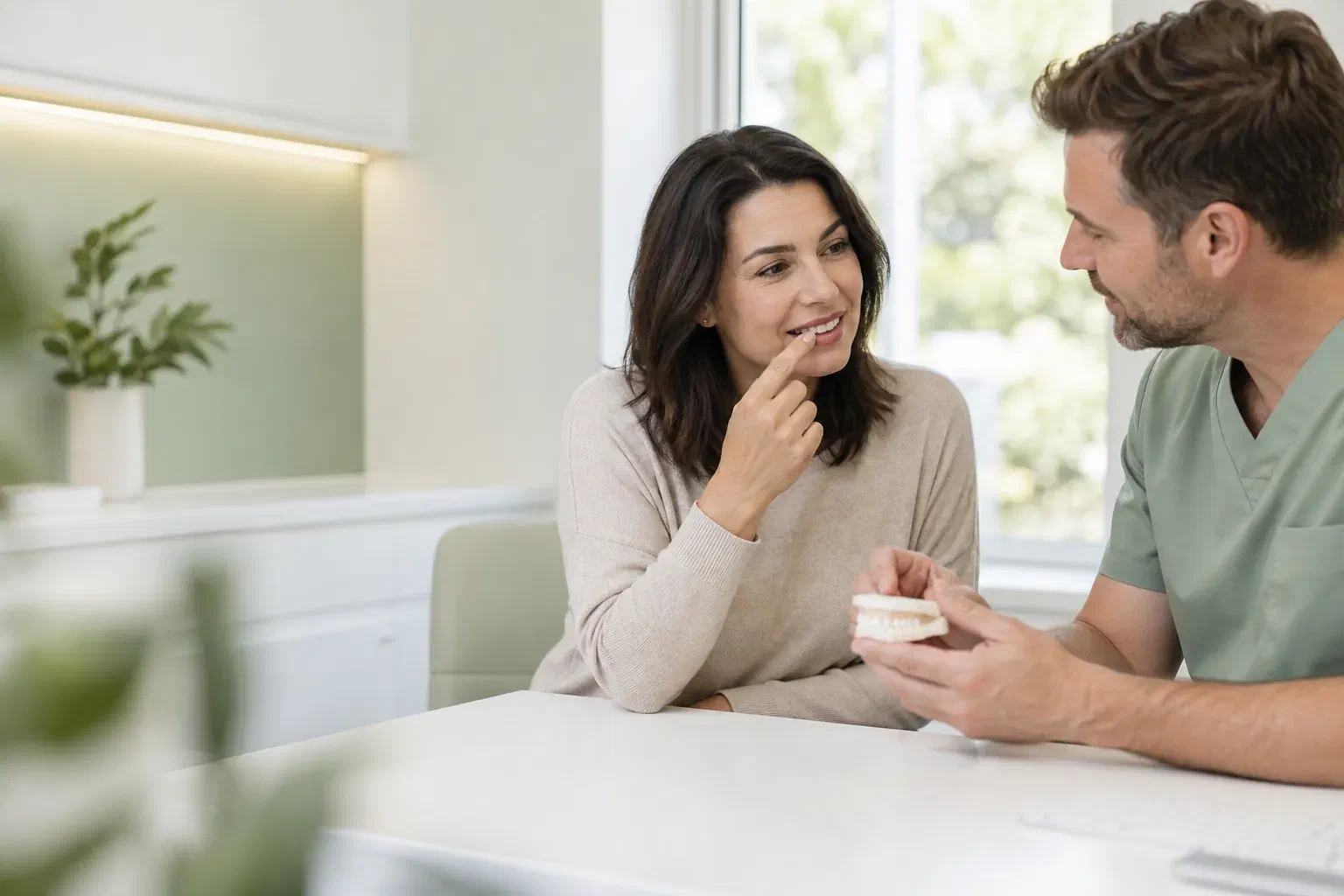
Illustrative patient discussing a tooth-edge concern with a dental clinician
Cosmetic Dentistry

Enamel Recontouring in Campbellville

A pointed eye tooth can draw attention every time you smile, yet that point often has a job to do. From Campbellville, we can examine the canine and your bite, explain how much of the tip could safely be softened, and tell you when it is better to leave it.

Campbellville · the pointed tooth

Can a sharp canine be softened without upsetting the bite?

Sometimes, and only within careful limits. The canines, or eye teeth, help guide your jaw when you slide your teeth sideways, so their tips do more than look pointed. Enamel recontouring, also called enameloplasty or reshaping, removes a very small layer of outer enamel to refine a suitable edge. It works for minor, selected differences and is not a way to make large changes by repeatedly reducing sound teeth.

Every tooth has its own margin. The enamel thickness, how your upper and lower teeth glide past one another and any wear you already have all set that margin, and removed enamel never grows back. The clinician may find that a slight rounding is reasonable, or that bonding, orthodontic advice or leaving the tip alone would be more sensible.

For a rural household in Campbellville, keeping trips efficient matters, so tell us when booking what the concern is and the visit can focus on it. Mention whether the point bothers you in photos, catches your lip, or both. A small question deserves an answer; it is not automatically a reason for treatment.

Ask about a pointed canine
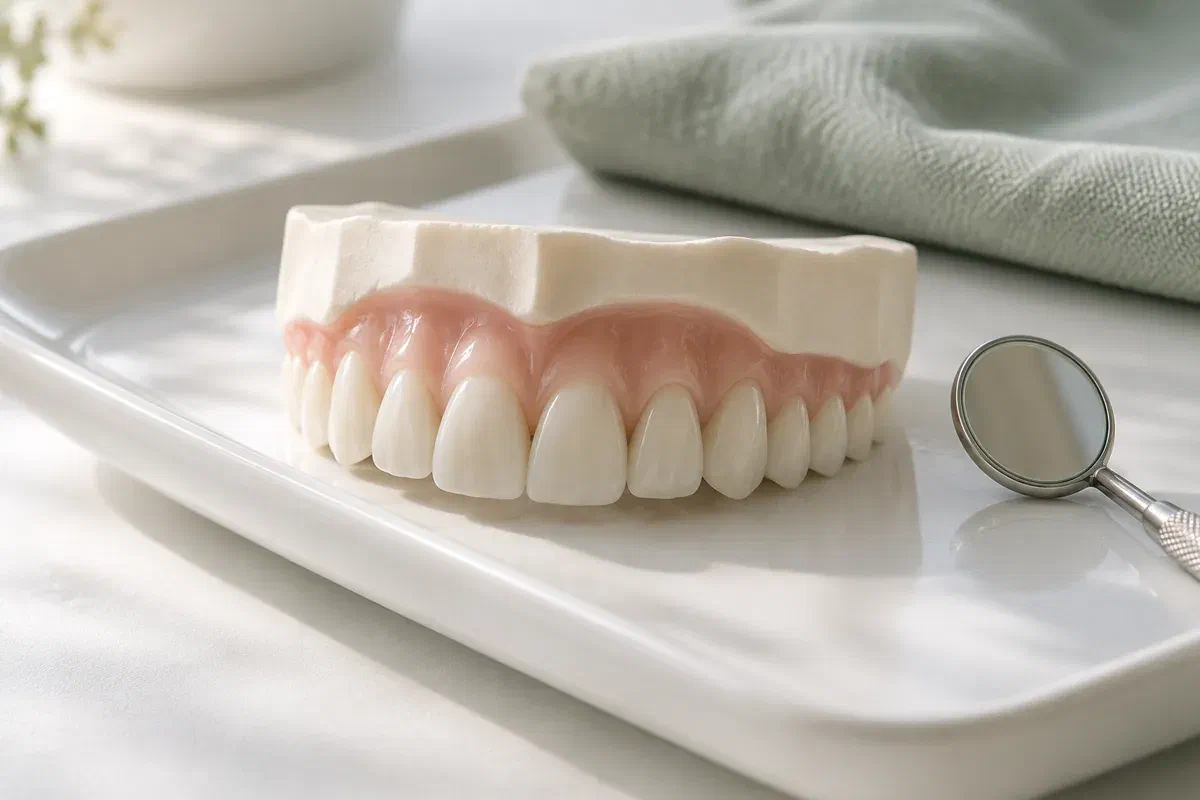
Illustrative upper front-teeth model showing natural edge shapes beside a dental mirror
Why that tooth stands out

Shape, position, or wear on the teeth around it

A canine can look sharp because of its own form, because it sits forward, or because the teeth beside it have worn. Tell us what you’ve noticed and for how long.

A tip that seems more pointed than you’d like

Focus on that one tooth rather than asking for all your teeth to look alike. The clinician weighs whether a gentle rounding is suitable and how it would affect your smile line. Pointed canines are entirely normal.

A point that catches your lip

Mention when it started bothering you and whether a chip, knock or old filling is involved. Comfort is a reasonable goal, but if the tip has recently changed, the reason needs checking before any smoothing.

Sensitivity, grinding or flattened neighbours

Tell us about cold sensitivity, clenching, erosion or past reshaping. Wear on nearby teeth can make an intact canine look longer than it is. The findings may point toward protection rather than reduction.

Please don’t file down a pointed tooth at home. Professional assessment is needed to decide whether, where and how much to adjust, and the role a canine plays in your bite makes this especially important.

What gentle rounding may offer

A softer outline, if the bite allows it

For a suitable canine, careful recontouring can take the sharpness off a tip without any restoration. That can soften its appearance and make it more comfortable against your lip. It still removes healthy enamel permanently, so the reason and the limit should be clear before anything is done.

The assessment may show that the tip should stay as it is, because it guides your bite or because the enamel is already thin. If what you want is a bigger change, another approach may be safer. Ask what is realistic, and don’t assume a natural point is a problem.

Patient information: Cleveland Clinic — enameloplasty and limited tooth contouring · Clinical report — conservative recontouring and composite alternatives

A precise plan for one tooth

Ask the clinician to show you exactly where the tip would be softened and roughly how much. Agreeing on one specific feature is better than a vague wish for a gentler smile.

Weighing addition against reduction

If neighbouring teeth have worn, the canine may only look long beside them. Ask whether building those up would suit better than reducing the canine, and how each choice affects your bite and upkeep.

Respect for the tooth’s function

Consider how the canine works when you move your jaw, not just how it looks. Flattening it to match the front teeth is not an appropriate goal. A subtle softening, or none, is a perfectly sound choice.

How it’s assessed

Test the movement, set the limit, then refine.

Whether the canine can be reshaped depends on the examination. Ask how the enamel and the way your jaw moves will be checked, and what alternatives exist if reduction isn’t advised.

  1. Describe the concern and any history

    Share injuries, sensitivity, grinding or earlier adjustments. The clinician examines the tooth, checks how your jaw moves side to side and reviews records. A newly chipped tip is assessed differently from a shape you’ve always had.

  2. Agree on how much, if anything, changes

    Ask what would be rounded and what would remain, and how the bite would be protected. Discuss permanence and possible sensitivity. The amount is decided beforehand, not increased gradually toward an ideal.

  3. Soften the tip carefully, where suitable

    With your agreement, suitable dental instruments are used on the selected area only. Mention discomfort or ask for a pause at any point. The plan, rather than your tolerance, determines how much is removed.

  4. Polish and recheck your jaw movements

    The tip is polished and the clinician checks the result and how your teeth meet and glide. Mention anything that feels rough or different. Confirm aftercare, any review and when to call.

After the tip is softened

Ordinary care for a natural tooth

Your clinician may give specific instructions, and those come first. Reshaping on its own leaves no restoration to maintain, but the canine still relies on good cleaning, sensible habits and routine dental review.

Keep brushing gently with fluoride

Clean your teeth and between them using the method you’ve been shown. There is no benefit in scrubbing the reshaped tip harder. Ask if sensitivity makes brushing uncomfortable or you need advice on products.

Don’t bite hard objects to test it

Biting ice, pens or packaging can chip a tip. Mention habits that may have worn your teeth before. If protection or further assessment was advised, follow that plan alongside the reshaping.

Tell us if your bite feels different

Contact the team if sensitivity persists or worsens, or if sliding your teeth sideways feels changed. Describe what you notice. The cause needs checking before any further adjustment is considered.

Patient information: Cleveland Clinic — tooth enamel and its protection

Ways to handle a pointed canine

Round it, rebalance it, or keep it.

Ask how each option answers your concern and fits the way your teeth work together. The right choice is one whose effects you clearly understand.

When the tip can spare a little enamel

Carefully limited enamel recontouring

Gentle rounding is possible only where the canine’s enamel and role in the bite allow it. Discuss the benefit and exactly where it stops. It cannot reposition a tooth that sits forward.

When worn neighbours make the canine look long

Composite bonding on neighbouring teeth

Adding to worn or short teeth nearby can rebalance the smile without reducing the canine. Ask about preparation, shape and maintenance. It is a different kind of change and should be compared on its merits.

When position or bite explains the shape

Orthodontic advice, investigation, or no change

A canine that sits out of line may need orthodontic advice, and a recent chip may need checking. A healthy, stable point can simply be kept. Ask what would be watched over time.

About pointed teeth

Questions on reshaping a canine

Changing a tooth with a role in your bite deserves a careful explanation. Ask about the specific canine, the amount involved and the alternatives.

(905) 876-4488
Why does the dentist check how my jaw slides before reshaping a canine?
Canines often guide the jaw during side-to-side movement. Reducing a tip without checking that role could change how your teeth meet, so the clinician tests it before suggesting any adjustment.
Can both eye teeth be rounded at the same appointment?
Sometimes, if both are assessed as suitable and you agree to the plan. Each is evaluated individually, and one may be suitable while the other is better left alone.
Do pointed canines mean something is wrong?
No. Pointed canines are a normal tooth shape. Reshaping is only ever an elective choice, and the clinician can tell you whether there is any clinical reason to consider it.
Will softening the tip make the tooth weaker?
A very limited refinement within enamel is not intended to weaken a tooth, but removing too much could affect it. That is why the amount is agreed carefully and kept small.
Can enamel taken from a canine tip regrow?
No. Enamel that has been removed is not replaced by the body. Good daily care protects what remains but cannot restore the original point, so the decision deserves thought.
I live in a rural area. Can the assessment and reshaping be combined?
Often they can be planned efficiently if the examination shows a minor, suitable change. Mention when booking that you’d like to keep visits to a minimum, and we’ll explain what is realistic.
Visiting from Campbellville

Bring the tooth that catches your eye.

Book a consultation at our Bronte Street practice about a pointed canine or other small shape concern. We will check the tip, test how your jaw moves and talk through rounding, rebalancing or leaving it before anything is decided.

Suitability is assessed tooth by tooth. Enamel removal is permanent, and some teeth are best left with their natural shape.

Visit Milton Dental Clinic
Unit 1, 342 Bronte St. S, Milton, ON L9T 5B7
Get directions Clinic hours
Monday–Thursday
11am–7pm
Friday–Sunday
By appointment only

Areas we serve

  • Milton
  • Oakville
  • Mississauga
  • Georgetown
  • Halton Hills
  • Acton
  • Campbellville
  • Brampton
  • Burlington
  • Puslinch
  • Rockwood
  • Erin
  • Caledon
  • Etobicoke
  • Old Milton
  • Bronte Meadows
  • Timberlea
  • Dorset Park
  • Dempsey
  • Clarke
  • Beaty
  • Coates
  • Harrison
  • Scott
  • Willmott
  • Ford
  • Bowes
  • Cobden
  • Walker
  • Mountain View
  • Milton Heights
  • Hawthorne Village
  • Valley View
  • Fallingbrook
  • Nassagaweya
  • Trafalgar
  • Esquesing
  • Nelson
  • Brookville
  • Moffat
  • Glen Williams
  • Norval
  • Limehouse
  • Stewarttown
  • Ashgrove
  • Hornby
  • Silver Creek
  • Speyside
  • Scotch Block
  • North Oakville
  • River Oaks
  • Glen Abbey
  • West Oak Trails
  • Palermo
  • Bronte Creek
  • College Park
  • Joshua Creek
  • Uptown Core
  • Preserve
  • Iroquois Ridge
  • Lisgar
  • Meadowvale
  • Meadowvale Village
  • Churchill Meadows
  • Erin Mills
  • Central Erin Mills
  • Streetsville
  • East Credit
  • Creditview
  • Heartland
  • Sheridan
  • Mount Pleasant
  • Credit Valley
  • Huttonville
  • Churchville
  • Springbrook
  • Northwest Brampton
  • Bram West
  • Fletcher's Meadow
  • Fletcher's Creek South
  • Alton Village
  • Orchard
  • Millcroft
  • Headon Forest
  • Tansley
  • Brant Hills
  • Tyandaga
  • Kilbride
  • Lowville
  • Aberfoyle
  • Morriston
  • Arkell
  • Hillsburgh
  • Freelton
  • Carlisle
  • Waterdown
  • Flamborough
  • Mountsberg

How can we help?

Milton Dental Clinic

Have a question about your smile? Choose the option that works best for you.

For urgent dental concerns, please call.
Messages are reviewed during clinic hours.