

Illustrative patient discussing a tooth-shape question with a dental clinician
Cosmetic Dentistry

Enamel Reshaping in Burlington

Once braces or aligners are finished, the teeth are straight, yet one edge can still look uneven next to its neighbour. From Burlington, you can have that edge assessed, hear whether a small enamel reshaping step fits with your retainer and bite, and compare it with bonding or leaving it.

Burlington · after orthodontic treatment

The teeth are straight. One edge still isn’t.

Straightening often reveals details that crowding used to hide. With every tooth now lined up, a front tooth with a slightly longer tip or a corner worn differently from the one beside it can stand out. Enamel reshaping, also called recontouring or enameloplasty, removes a small amount of outer enamel to refine a suitable contour.

That makes it a subtraction, never an addition. The amount that can safely be changed depends on the enamel thickness, how the tooth meets its opposite in your bite, and whether your retainer still needs to fit snugly. An edge that was chipped before treatment may suit added material better than further removal.

Talking it through with a clinician means you hear the realistic extent of change before anything happens. Bring your retainer if you wear one, describe the difference you notice, and ask whether waiting, bonding or simply accepting a natural variation would be wiser. There is time to think.

Ask about an uneven edge
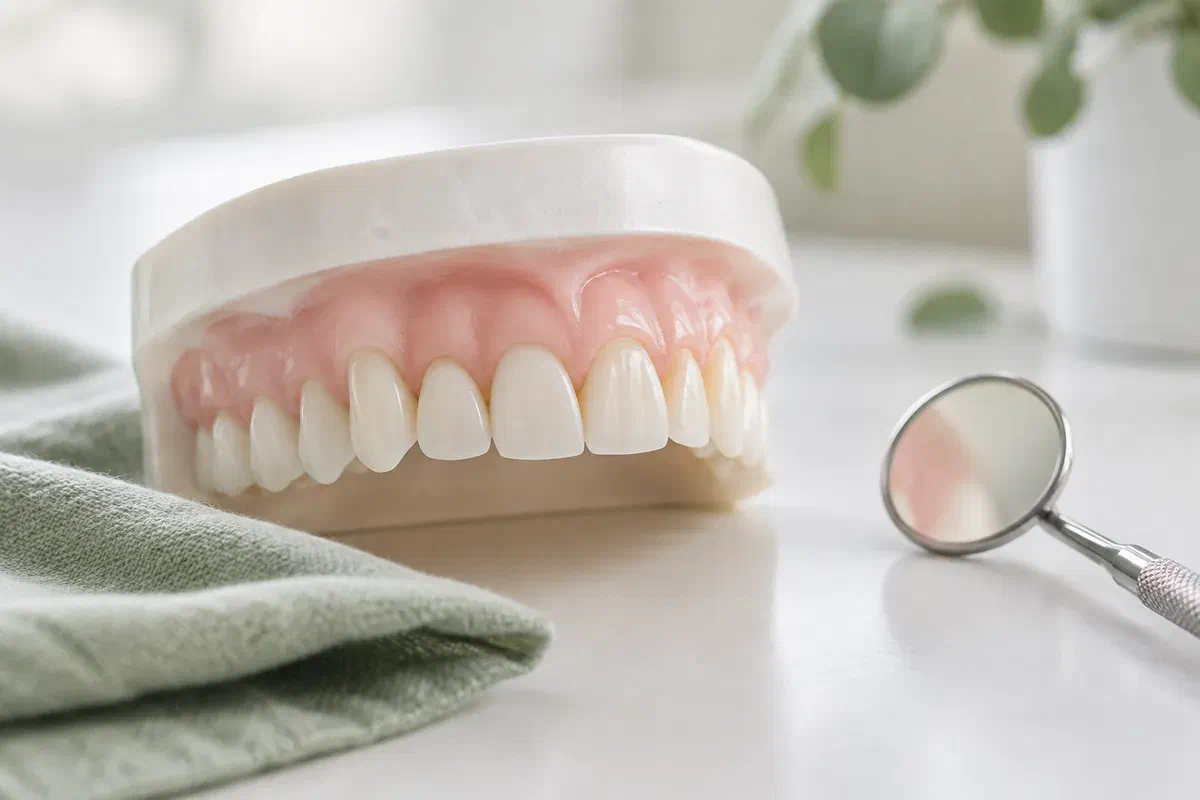
Illustrative upper-teeth teaching model showing modest natural variation in tooth corners
What the clinician will want to know

Your treatment history shapes the answer

Orthodontic work, retainers and earlier repairs all affect what is sensible. Share what you can remember about past treatment and anything that has changed since.

One tip that sits lower or looks fuller

Point it out and explain the shape you would prefer. The clinician can tell you whether the difference is part of a healthy natural outline and how softening it would alter the tooth beside its neighbours. You may still prefer to keep it once you understand the trade-off.

Roughness you noticed after brackets came off

Mention when it appeared and whether it catches your tongue or lip. Leftover adhesive, a restoration margin and a small chip can all feel rough. The cause has to be identified before anyone chooses how to smooth it.

Edges that look thin or feel sensitive

Tell us about clenching, grinding, sparkling or acidic drinks, earlier erosion or teeth that react to cold. If enamel needs protecting, taking more away may be unsuitable. Prevention, repair or investigating the cause might be the better route.

Never try to even out a tooth with a nail file or other abrasive. Your retainer fit and your enamel are both easy to affect and hard to restore.

Getting the balance right

Finish the look without undoing the foundation

On a suitable tooth, a minor refinement can sometimes balance one contour without placing new material. The change should be clearly defined, such as softening one tip after assessment. Reshaping will not remove stains, treat a cavity, or do the work of orthodontic movement.

Enamel removal is permanent, so the consultation earns its place. It lets you weigh a likely gain against possible risks, including sensitivity and changes to how your retainer sits. Deciding that a healthy natural difference is fine as it is remains entirely reasonable.

Patient information: Cleveland Clinic — enameloplasty · Clinical report — selective enamel reduction and aesthetic planning

Agreement on which surface

Confirm exactly which tooth and which part of it is under discussion, and how that connects to what you see. Precise language avoids different ideas about how much will change. If smoothness for your tongue matters more than looks, mention it.

A plain statement of what cannot be done

Ask whether your ideal result would need more than a small contour change. If it would, alternatives should be explored before enamel is removed. Treatment should not grow because a more dramatic look seems tempting.

Coordination with retainers and other care

Bring up your retainer, any night guard, recent restorations and treatment planned by your orthodontist or another dentist. A reshaped edge can change how appliances and contacts fit. The team can judge whether to coordinate first or wait.

Step by step, for Burlington visitors

A short process, with a clear stopping point

Check beforehand what the appointment will include and whether treatment could happen the same day. An assessment may suggest records, input from your orthodontist, or a different approach.

  1. Review the edge, the bite and your retainer

    The clinician examines the surface, nearby teeth and how they meet, and considers your orthodontic history and symptoms. Records may be suggested if they would settle a specific question. Say if you have tried to alter the tooth at home.

  2. Agree on scope and alternatives

    Together you confirm the reason for the change, its permanence and the limits of the likely result. Ask about sensitivity and whether bonding or another route would preserve more enamel. You should both understand the plan before starting.

  3. Carry out the limited refinement

    When reshaping suits and you choose to go ahead, the agreed area is shaped with dental instruments. Decide on a signal to pause. Mention discomfort instead of assuming it comes with the territory.

  4. Polish, then check fit and bite

    The surface is smoothed and polished, and your bite and contacts are checked, with your retainer tried in where relevant. Describe how it feels but avoid testing it on hard food. Instructions and how to reach us later are covered before you leave.

Looking after the result

Same routine, a watchful eye, and your retainer

Follow the guidance you were given. If reshaping was combined with bonding or another treatment, ask what additional care applies to that part.

Keep brushing and cleaning gently

Use fluoride toothpaste, a soft brush and your usual interdental cleaning. A refined edge that feels new does not need extra scrubbing. If sensitivity persists or cleaning around a retainer wire feels awkward, ask instead of switching to harsher products.

Keep up any plan for wear or erosion

Where clenching, acidic drinks or another factor was identified, managing it still matters after the cosmetic step. Discuss next steps and any referral. Changing the outline does not stop tooth-surface loss already underway.

Report a retainer that pinches or a bite that feels off

Tell us which tooth feels different and when, and whether your retainer fits as before. The surface, contacts or appliance may need checking. More reduction should not be the default fix for a new feeling.

Patient information: American Dental Association — recognising and managing dental erosion

Your options compared

Three ways to approach one stubborn edge

Work out whether the aim is to alter healthy enamel, add back missing structure or deal with something else. The name of a cosmetic procedure should not settle the diagnosis.

For a modest contour change the enamel can support

Limited reshaping of suitable enamel

An agreed reduction may suit a selected minor feature where enamel and bite permit. Ask what will be kept and what change to expect. Planning should avoid returning to remove more each time a natural difference becomes visible.

For a short, chipped or damaged edge

Bonding or another restoration

An edge chipped before orthodontic treatment, or one that is simply short, may need material added. Discuss the defect, the tooth that remains and how the material is maintained. Repair serves a different purpose from elective refinement.

When reshaping would miss the real cause

Orthodontic review, investigation, or no change

A difference caused by tooth position may be a question for your orthodontist, and an unexplained surface change may need another look. A healthy, stable feature can be monitored. Ask how each alternative addresses your concern.

Questions we hear after braces

Clear answers for a recently straightened smile

These cover timing, retainers and a few common misconceptions. Your clinician will apply them to your own teeth.

(905) 876-4488
How soon after braces come off can a tooth edge be reshaped?
There is no fixed waiting period that suits everyone. The clinician will consider whether the teeth are stable, how your retainer fits and whether your orthodontist has any input. Sometimes it is worth letting things settle before deciding.
Will my retainer still fit after a tooth is reshaped?
A small change can affect how a retainer sits, particularly a removable one that hugs the edges. Bring it to the appointment so fit can be checked, and ask whether an adjustment or a new retainer might be needed.
Could reshaping have been an alternative to orthodontic treatment?
Not for crowding or misalignment in general. Reshaping refines a contour; it does not move teeth. Where position is the issue, orthodontic advice is the appropriate route, and reshaping may only play a small finishing role.
Is reshaping suitable for teenagers who have just finished treatment?
It may be considered, but young teeth and recently moved teeth need careful assessment. The clinician will look at enamel, bite and stability, and a parent or guardian should be part of the discussion.
Is freezing used for a minor edge adjustment?
Often it is not needed for small enamel changes, though this depends on the tooth and your comfort. Ask what sensations to expect and how to call for a break. A surface that turns out not to be enamel may need a different plan.
The rough spot is where a bracket used to sit. Is that reshaping?
Not necessarily. Leftover adhesive or a minor surface mark is different from removing natural enamel. The clinician should identify what you are feeling first, and polishing or another step may be more appropriate.

Patient information: American Dental Association — fluoride and enamel protection

Coming from Burlington

Finish your smile thoughtfully

Book with our Bronte Street practice to have an uneven edge looked at after orthodontic treatment. Bring your retainer, and we will explain what reshaping could achieve, where its limits sit and which alternatives to consider.

Enamel reshaping and recontouring overlap. Suitability is assessed tooth by tooth, and enamel that is removed will not grow back.

Visit Milton Dental Clinic
Unit 1, 342 Bronte St. S, Milton, ON L9T 5B7
Get directions Clinic hours
Monday–Thursday
11am–7pm
Friday–Sunday
By appointment only

Areas we serve

  • Milton
  • Oakville
  • Mississauga
  • Georgetown
  • Halton Hills
  • Acton
  • Campbellville
  • Brampton
  • Burlington
  • Puslinch
  • Rockwood
  • Erin
  • Caledon
  • Etobicoke
  • Old Milton
  • Bronte Meadows
  • Timberlea
  • Dorset Park
  • Dempsey
  • Clarke
  • Beaty
  • Coates
  • Harrison
  • Scott
  • Willmott
  • Ford
  • Bowes
  • Cobden
  • Walker
  • Mountain View
  • Milton Heights
  • Hawthorne Village
  • Valley View
  • Fallingbrook
  • Nassagaweya
  • Trafalgar
  • Esquesing
  • Nelson
  • Brookville
  • Moffat
  • Glen Williams
  • Norval
  • Limehouse
  • Stewarttown
  • Ashgrove
  • Hornby
  • Silver Creek
  • Speyside
  • Scotch Block
  • North Oakville
  • River Oaks
  • Glen Abbey
  • West Oak Trails
  • Palermo
  • Bronte Creek
  • College Park
  • Joshua Creek
  • Uptown Core
  • Preserve
  • Iroquois Ridge
  • Lisgar
  • Meadowvale
  • Meadowvale Village
  • Churchill Meadows
  • Erin Mills
  • Central Erin Mills
  • Streetsville
  • East Credit
  • Creditview
  • Heartland
  • Sheridan
  • Mount Pleasant
  • Credit Valley
  • Huttonville
  • Churchville
  • Springbrook
  • Northwest Brampton
  • Bram West
  • Fletcher's Meadow
  • Fletcher's Creek South
  • Alton Village
  • Orchard
  • Millcroft
  • Headon Forest
  • Tansley
  • Brant Hills
  • Tyandaga
  • Kilbride
  • Lowville
  • Aberfoyle
  • Morriston
  • Arkell
  • Hillsburgh
  • Freelton
  • Carlisle
  • Waterdown
  • Flamborough
  • Mountsberg

How can we help?

Milton Dental Clinic

Have a question about your smile? Choose the option that works best for you.

For urgent dental concerns, please call.
Messages are reviewed during clinic hours.