

Illustrative patient discussing a tooth-shape question with a dental clinician
Cosmetic Dentistry

Enamel Reshaping in Mississauga

The question most people ask first is simple: how much of my tooth would actually come off? For anyone travelling from Mississauga, we explain how the amount is judged, why it is kept small, and when bonding, monitoring or no change at all protects the tooth better.

For Mississauga: the amount question

How much comes off, and who decides where to stop?

It is a fair worry. Enamel reshaping, known also as recontouring or enameloplasty, works by removing a small amount of the tooth’s outer layer to refine a suitable surface. There is no filling placed and nothing to replace what is taken, so the amount matters from the very start.

The answer is never a standard figure. Enamel varies in thickness from tooth to tooth and from person to person, and a surface affected by erosion, grinding or an old chip has less to spare. Your bite also sets limits, because the reshaped edge still has to meet the teeth opposite comfortably.

So the stopping point is decided before treatment, together, after an examination. You can ask what would be changed, what would be left, and what happens if the result you want needs more than a limited adjustment. Hearing that bonding or no treatment suits better is a useful outcome too.

Ask how much would change
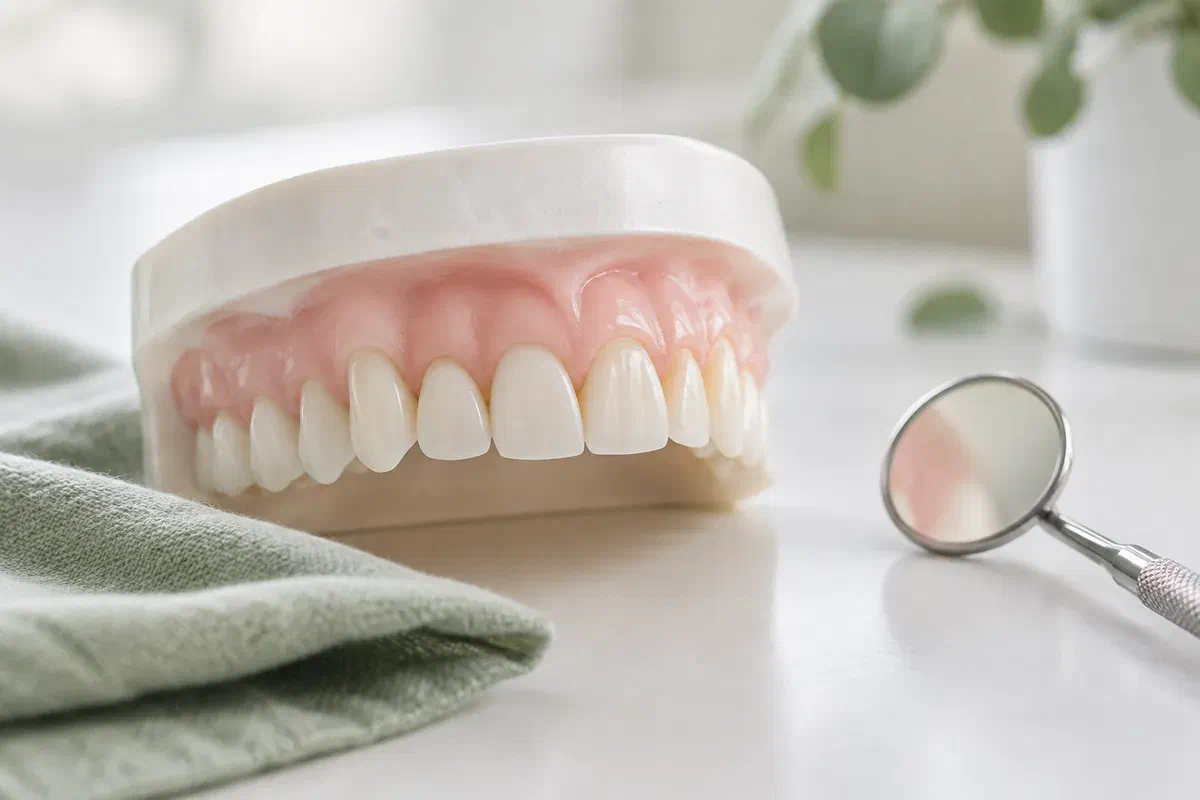
Illustrative upper-teeth teaching model showing modest natural variation in tooth corners
Helping set the limit

Three things that tell the clinician how far is too far

What you describe and what the examination finds together decide whether a small change is safe. Mention everything, even details that seem unrelated.

A feature you want softened

Show precisely which corner or tip bothers you and what you would like instead. The clinician can explain whether it is a healthy natural shape and how much reduction would visibly change it. Sometimes the amount needed is more than the tooth should lose.

A surface that feels rough or catches

Explain when you first noticed it and whether it followed dental work. A rough restoration, a fractured edge and worn enamel need different responses. Knowing which you have tells the clinician whether reshaping is even relevant.

Signs that enamel is already thinner

Mention grinding, acidic drinks, past erosion, repeated chips or sensitivity. Each suggests that less enamel may be available to work with. In that case, protection or repair often takes priority over removing more.

Home filing has no stopping point you can judge. Please avoid emery boards, sandpaper or abrasive pastes on your teeth, whatever the size of the area.

Small on purpose

Less removed means more kept for the future

On a suitable tooth, a minor contour change can sometimes be achieved without any new restoration, which keeps things simple. The intended improvement should be narrow and stated in advance. Reshaping is not designed to clear stains, deal with decay or correct crowding.

Every bit of enamel removed is permanent, which is why understanding the limits counts as a benefit in its own right. You can compare the likely change with the risks and decide whether it is worth it. Leaving a healthy feature untouched is always one of the options on the table.

Patient information: Cleveland Clinic — enameloplasty · Clinical report — selective enamel reduction and aesthetic planning

A defined area, agreed in advance

Find out which surface is being considered and how it relates to your concern. Clear agreement reduces the chance of expecting more change than is planned. If comfort is your main goal, the plan can focus on that.

Honesty about bigger goals

If your preferred result would need more than a small adjustment, ask to discuss alternatives before any enamel is removed. Extending a reduction because a bolder look is appealing is not good practice.

Attention to the rest of your mouth

Mention retainers, guards, recent restorations and treatment planned elsewhere. Contacts between teeth and the fit of appliances can change with even a small adjustment. Coordinating care, or waiting, may come first.

The appointment

Measure twice, refine once

Ask ahead of time what the visit covers and whether treatment could follow on the same day. Sometimes the assessment leads to records, a further opinion or a different procedure.

  1. Assess thickness, shape and bite

    The clinician examines the area, neighbouring teeth and your bite and reviews your symptoms and history. Records may be recommended when they would answer something specific, such as the condition of the tooth beneath the surface. Mention any earlier home attempts.

  2. Set the limit together

    You confirm the reason for adjusting, that the change is permanent, and how far it would go. Ask about possible sensitivity and whether another option would keep more enamel. Treatment begins only once the limit is clear to both of you.

  3. Refine within that limit

    If you decide to proceed and reshaping suits, the agreed surface is adjusted with dental instruments. Arrange a way to signal a pause. Speak up about discomfort rather than accepting it as necessary.

  4. Polish and confirm the result

    The treated area is smoothed and polished, and contacts and bite are rechecked. Tell us how it feels without biting on hard objects to test it. You will hear any particular instructions and how to get in touch about later concerns.

After the visit

Protect what remains

Follow the specific advice you were given. If reshaping formed part of a plan with bonding or another treatment, ask which extra care that part needs.

Brush softly with fluoride toothpaste

Continue gentle brushing and the interdental cleaning suited to your mouth. An unfamiliar surface does not call for harder scrubbing. Ask about lingering sensitivity or trouble cleaning before changing to more abrasive products.

Manage any cause of wear

If the examination found grinding, erosion or another contributor, keep following that plan. Talk about the next steps and any medical or dental referral. A refined outline does not stop the process behind continuing surface loss.

Tell us if something feels different

Explain which tooth feels changed and at what moments. The surface, contacts or an unrelated cause may need attention. Further reduction should not be assumed to be the fix for a new symptom.

Patient information: American Dental Association — recognising and managing dental erosion

If reshaping is not the answer

Start with the cause, then pick the treatment

Clarify whether the plan would alter healthy enamel, replace missing structure or address another problem. A cosmetic procedure’s name should not decide what is wrong.

Where a small change sits within safe limits

Limited reshaping of suitable enamel

A defined reduction may suit a minor feature when enamel and bite allow it. Ask what will be preserved and what difference to expect. The plan should not depend on removing more over successive visits until every variation is gone.

Where structure is missing or damaged

Bonding or another restoration

A chipped, short or worn area may need material added instead of more removed. Discuss the size of the defect, the tooth that remains and how the material is looked after. Repair has a different aim from elective refinement.

Where reshaping would not touch the real issue

Investigation, orthodontic advice, or no elective change

A position-related concern or unexplained surface change may need another assessment. A healthy, stable feature can reasonably be left and watched. Ask how the alternative addresses your concern and what to monitor.

Mississauga FAQ

Questions about limits and permanence

Answers about how much is removed, how decisions are made and what happens afterwards. Your own answers depend on the tooth assessed.

(905) 876-4488
Can a reshaped tooth be put back the way it was?
Not with natural enamel. If you later regret a change, material such as bonding might be added to rebuild shape in some cases, but that is a new treatment with its own upkeep. This is why the limit is agreed carefully beforehand.
How does the clinician judge how much enamel a tooth can lose?
By examining the tooth, its wear, the bite and your history, and sometimes by taking records. The aim is to stay well within what that particular tooth can afford. Ask the clinician to explain their reasoning for your case.
Is reshaping the same thing as having my bite adjusted?
They can overlap, since both may involve small changes to tooth surfaces, but the purpose differs. Reshaping is usually aimed at appearance or comfort, while bite adjustment is about how teeth meet. Ask which one is being proposed and why.
Would an X-ray be needed before reshaping?
Not always. Records may be suggested if they would answer a specific question, such as the condition of a tooth or an old restoration. The clinician should explain why any record is recommended.
Does reshaping work on a stain that has been there for years?
Long-standing colour is often within the tooth rather than on the surface, and removing enamel is generally not the way to address it. Ask what is causing the colour and which options preserve healthy structure.
Can toothpaste with fluoride make up for the enamel that was removed?
No. Fluoride strengthens the enamel you still have and helps with very early mineral loss, but it does not rebuild a removed contour. Treat any reduction as permanent when deciding.

Patient information: American Dental Association — fluoride and enamel protection

Travelling from Mississauga

Learn your tooth’s limits first

Reach out to our Bronte Street practice to arrange an assessment of a contour or rough area. We will explain how much change would be sensible, where reshaping should stop and which alternatives fit your situation.

The terms reshaping and recontouring overlap. Suitability depends on the individual tooth, and removed enamel does not regrow.

Visit Milton Dental Clinic
Unit 1, 342 Bronte St. S, Milton, ON L9T 5B7
Get directions Clinic hours
Monday–Thursday
11am–7pm
Friday–Sunday
By appointment only

Areas we serve

  • Milton
  • Oakville
  • Mississauga
  • Georgetown
  • Halton Hills
  • Acton
  • Campbellville
  • Brampton
  • Burlington
  • Puslinch
  • Rockwood
  • Erin
  • Caledon
  • Etobicoke
  • Old Milton
  • Bronte Meadows
  • Timberlea
  • Dorset Park
  • Dempsey
  • Clarke
  • Beaty
  • Coates
  • Harrison
  • Scott
  • Willmott
  • Ford
  • Bowes
  • Cobden
  • Walker
  • Mountain View
  • Milton Heights
  • Hawthorne Village
  • Valley View
  • Fallingbrook
  • Nassagaweya
  • Trafalgar
  • Esquesing
  • Nelson
  • Brookville
  • Moffat
  • Glen Williams
  • Norval
  • Limehouse
  • Stewarttown
  • Ashgrove
  • Hornby
  • Silver Creek
  • Speyside
  • Scotch Block
  • North Oakville
  • River Oaks
  • Glen Abbey
  • West Oak Trails
  • Palermo
  • Bronte Creek
  • College Park
  • Joshua Creek
  • Uptown Core
  • Preserve
  • Iroquois Ridge
  • Lisgar
  • Meadowvale
  • Meadowvale Village
  • Churchill Meadows
  • Erin Mills
  • Central Erin Mills
  • Streetsville
  • East Credit
  • Creditview
  • Heartland
  • Sheridan
  • Mount Pleasant
  • Credit Valley
  • Huttonville
  • Churchville
  • Springbrook
  • Northwest Brampton
  • Bram West
  • Fletcher's Meadow
  • Fletcher's Creek South
  • Alton Village
  • Orchard
  • Millcroft
  • Headon Forest
  • Tansley
  • Brant Hills
  • Tyandaga
  • Kilbride
  • Lowville
  • Aberfoyle
  • Morriston
  • Arkell
  • Hillsburgh
  • Freelton
  • Carlisle
  • Waterdown
  • Flamborough
  • Mountsberg

How can we help?

Milton Dental Clinic

Have a question about your smile? Choose the option that works best for you.

For urgent dental concerns, please call.
Messages are reviewed during clinic hours.