

Illustrative patient discussing a tooth-shape question with a dental clinician
Cosmetic Dentistry

Enamel Reshaping in Rockwood

For some people the reason to reshape is comfort, not appearance: a lower edge that rubs the lip, or a point that snags the cheek. Coming from Rockwood, you can have that spot examined and hear whether a small enamel adjustment, a repair or another step would ease it.

Rockwood · comfort first

An edge that rubs, catches or snags

You might notice it while talking, playing a wind instrument or resting your chin on your hand: a spot inside the lip or cheek that keeps meeting a sharp point. Sometimes a small sore follows. It is easy to put up with for months, especially when a trip in from Rockwood has to be fitted around work and family, but it is worth having checked. A small irritation often has a simple explanation.

Reshaping, which you may also hear described as recontouring or enameloplasty, can soften a suitable edge by removing a small amount of enamel. When the cause is a healthy but slightly sharp contour, that may be all that is needed. When the cause is a chip, a broken filling, worn enamel or a tooth that has shifted, a different approach usually works better.

An examination tells you which you are dealing with. You can ask how much would be changed, whether your bite would be affected and what else could help. A sore that does not heal within a couple of weeks should also be looked at, regardless of the tooth.

Have a sharp edge checked
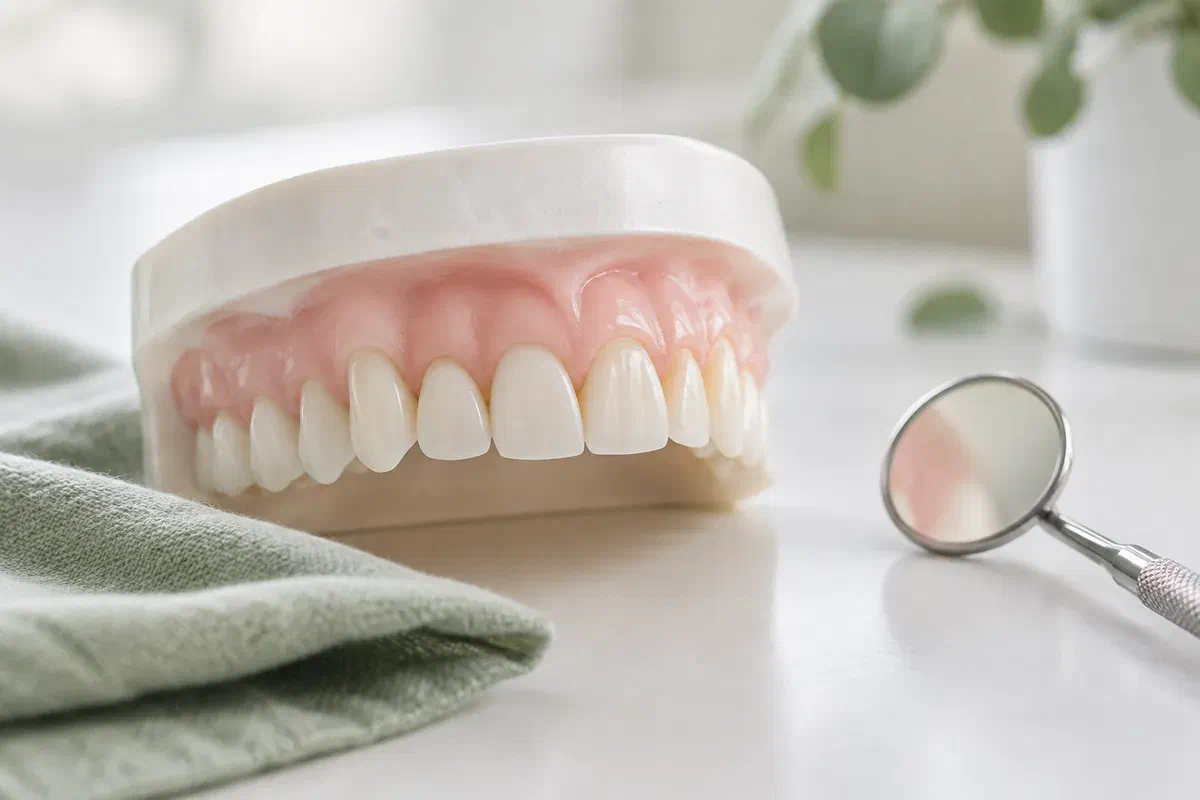
Illustrative upper-teeth teaching model showing modest natural variation in tooth corners
Telling us about the irritation

Where it rubs, and since when

Knowing the location, timing and any sore spots helps the clinician find the cause. A rough description is perfectly fine.

A point that seems more prominent

Show which tooth and which part of the lip or cheek it meets. A healthy natural contour can sometimes be softened slightly. The clinician will explain how that would affect the tooth and whether the difference is likely to solve the rubbing.

A newly rough or jagged edge

Say whether it appeared suddenly, after a knock, after dental work or gradually. A chip, a cracked filling and worn enamel can all create a sharp spot. Identifying the source decides whether smoothing or repair is appropriate.

Thin edges, sensitivity or recurring chips

Mention grinding, acidic drinks, past erosion or teeth that react to cold. When enamel is already thin, removing more may be unwise. Protection, repair or treating the cause may come first.

Please do not try to blunt a sharp tooth with a nail file. Home attempts can leave a rougher surface and damage enamel.

Why a small change can help

Relief from a small source of irritation

On a suitable tooth, a slight softening of one edge can sometimes stop it catching soft tissue, without adding any material. The goal is specific and limited. Reshaping does not repair a crack, treat decay, whiten a tooth or move teeth.

Because enamel removal is permanent, it helps to be sure the edge is really the cause before changing it. The consultation lets you weigh relief against risks such as sensitivity. If another cause is found, the plan changes accordingly. Choosing to leave a healthy edge as it is, perhaps once a sore has healed, is still a sensible option.

Patient information: Cleveland Clinic — enameloplasty · Clinical report — selective enamel reduction and aesthetic planning

A clear target

Point out the exact edge and the spot it irritates, and make sure the clinician is looking at the same place. That keeps the change focused on the source of the problem. Say whether you also care about appearance or only about comfort.

Honest advice when smoothing is not enough

Ask whether relief would need more than a minor adjustment. If so, alternatives should be talked through before enamel is removed. An attractive idea is no reason to extend treatment.

Attention to appliances and other work

Mention retainers, guards, dentures, recent fillings and any treatment elsewhere. A sharp spot can sometimes come from an appliance or restoration instead. The team can coordinate or suggest waiting.

Your visit, step by step

Find the culprit, then decide how to soften it

Ask when you book what the visit includes and whether a small adjustment could be done the same day. The assessment may lead to records, a review of a sore or a different procedure.

  1. Examine the edge and the soft tissue

    The clinician looks at the tooth, its neighbours, your bite and the area of lip or cheek it meets. Images may help if a crack or deeper problem is suspected. Mention any home attempts to blunt the edge.

  2. Settle on the approach together

    You discuss whether softening the edge would solve the problem, that it is permanent and how much would change. Ask about sensitivity and whether a repair would suit better. Treatment begins only after you agree.

  3. Soften the edge, if chosen

    If reshaping suits and you decide to proceed, the sharp point is carefully refined with dental instruments. Agree on a signal for a pause. Report discomfort straight away.

  4. Polish and check comfort

    The area is smoothed and the clinician confirms how your teeth meet and how the edge sits against your lip. Tell us how it feels without testing it on hard foods. You will leave with aftercare and contact details.

In the days that follow

Let the lip settle while the tooth stays clean

Follow the instructions for your treatment. If bonding or another procedure was involved, ask what extra care applies.

Brush gently and keep cleaning between teeth

Use fluoride toothpaste and a soft brush with your usual interdental cleaning. Do not scrub the new surface. If sensitivity lingers or the area is hard to clean, ask before switching products.

Watch the sore spot heal

A small area of irritation on the lip or cheek often settles once the rubbing stops. If it does not heal within about two weeks, have it checked. Keep following any advice about grinding or wear.

Report any new rubbing or bite change

If a fresh spot starts rubbing, note where it is and what you were doing when it caught. Another edge, a contact or something unrelated may need looking at. Further smoothing should not be assumed to be the fix.

Patient information: American Dental Association — recognising and managing dental erosion

Ways to stop the rubbing

Soften, repair or rethink

Work out whether the plan is to refine healthy enamel, restore damaged structure or deal with another cause. The source of the irritation should guide the treatment.

For a sharp but healthy contour

A limited softening of the edge

A small reduction may stop a sound edge catching soft tissue provided the enamel is sound and the bite permits. You should hear how much the edge will change and what will be left. The plan should not keep removing more each time a point is noticed.

For a chip or broken filling

Bonding or another restoration

If the sharp spot comes from damage, rebuilding it with material may be better than smoothing it away. Talk about the size of the break, the tooth that remains and the upkeep. Repair has a different aim from refinement.

For position changes or appliance edges

Investigation, orthodontic advice, or adjusting an appliance

A tooth that has shifted, or a retainer or denture edge, may be the real cause. Further assessment can clarify this. Ask how each option eases your concern and what to watch for.

Comfort questions from Rockwood

When the reason to reshape is comfort

General answers about sharp edges, soft-tissue irritation and reshaping. Your clinician will tailor them to you.

(905) 876-4488
Can a lower front tooth be reshaped if it rubs my lip?
Sometimes. Lower teeth are smaller and thinner, so the amount that can be changed may be very limited. The clinician will assess the enamel and bite before suggesting smoothing or another option.
Will smoothing an edge change the way I speak?
A small adjustment is unlikely to have a noticeable effect, but tell the clinician if you are a singer, speaker or wind-instrument player so the plan considers it. Front-tooth edges play a part in some sounds, which is one more reason changes are kept modest.
My cheek has a sore spot from a sharp tooth. Should I wait for it to heal first?
Have both looked at. The sore may settle once the edge is smoothed or repaired, but a sore that persists beyond about two weeks needs checking in its own right.
Could my retainer or denture be causing the irritation instead?
It is possible. Appliances can develop rough edges, crack slightly or fit differently as teeth and gums change over time. Bring yours to the appointment so it can be checked along with your teeth, rather than assuming the tooth is at fault.
Is the sharp edge on my tooth or on an older filling?
The clinician will identify which surface is involved. A rough filling may need polishing, repair or replacement, which is different from reshaping natural enamel.
Will I need freezing to have one sharp point softened?
Often not for a small enamel adjustment, but it depends on the tooth and your comfort. Ask what you are likely to feel and how to pause if needed.

Patient information: American Dental Association — fluoride and enamel protection

Booking from Rockwood

Stop putting up with that sharp spot

Call our Bronte Street practice to arrange an assessment of an edge that rubs or catches. We will find the source, explain whether reshaping would help and compare repairs and other options.

Enamel reshaping and recontouring are overlapping terms. Each tooth is assessed individually, and removed enamel does not regrow.

Visit Milton Dental Clinic
Unit 1, 342 Bronte St. S, Milton, ON L9T 5B7
Get directions Clinic hours
Monday–Thursday
11am–7pm
Friday–Sunday
By appointment only

Areas we serve

  • Milton
  • Oakville
  • Mississauga
  • Georgetown
  • Halton Hills
  • Acton
  • Campbellville
  • Brampton
  • Burlington
  • Puslinch
  • Rockwood
  • Erin
  • Caledon
  • Etobicoke
  • Old Milton
  • Bronte Meadows
  • Timberlea
  • Dorset Park
  • Dempsey
  • Clarke
  • Beaty
  • Coates
  • Harrison
  • Scott
  • Willmott
  • Ford
  • Bowes
  • Cobden
  • Walker
  • Mountain View
  • Milton Heights
  • Hawthorne Village
  • Valley View
  • Fallingbrook
  • Nassagaweya
  • Trafalgar
  • Esquesing
  • Nelson
  • Brookville
  • Moffat
  • Glen Williams
  • Norval
  • Limehouse
  • Stewarttown
  • Ashgrove
  • Hornby
  • Silver Creek
  • Speyside
  • Scotch Block
  • North Oakville
  • River Oaks
  • Glen Abbey
  • West Oak Trails
  • Palermo
  • Bronte Creek
  • College Park
  • Joshua Creek
  • Uptown Core
  • Preserve
  • Iroquois Ridge
  • Lisgar
  • Meadowvale
  • Meadowvale Village
  • Churchill Meadows
  • Erin Mills
  • Central Erin Mills
  • Streetsville
  • East Credit
  • Creditview
  • Heartland
  • Sheridan
  • Mount Pleasant
  • Credit Valley
  • Huttonville
  • Churchville
  • Springbrook
  • Northwest Brampton
  • Bram West
  • Fletcher's Meadow
  • Fletcher's Creek South
  • Alton Village
  • Orchard
  • Millcroft
  • Headon Forest
  • Tansley
  • Brant Hills
  • Tyandaga
  • Kilbride
  • Lowville
  • Aberfoyle
  • Morriston
  • Arkell
  • Hillsburgh
  • Freelton
  • Carlisle
  • Waterdown
  • Flamborough
  • Mountsberg

How can we help?

Milton Dental Clinic

Have a question about your smile? Choose the option that works best for you.

For urgent dental concerns, please call.
Messages are reviewed during clinic hours.