

Illustrative patient discussing tooth spacing and bonding with a dental clinician
Cosmetic Dentistry

Gap Closure with Dental Bonding

Considering a change to a gap between your teeth? Explore dental bonding in Milton with an assessment of the space, tooth proportions, gum health, and bite, then compare whether adding composite is a suitable way to achieve the appearance you prefer.

A closer look at gap closure with bonding

Consider the space and the shape of the teeth beside it.

Dental bonding may reduce or close a suitable gap by adding tooth-coloured composite to the adjacent tooth surfaces. The teeth are reshaped with material rather than moved together. That distinction matters when deciding whether the proposed change will produce appropriate proportions and a cleanable result.

A gap can be a healthy part of a smile, and keeping it is a valid choice. If you want it changed, the cause, size, and location need consideration. A longstanding space between otherwise healthy teeth is a different situation from a new gap associated with movement or gum problems.

At Milton Dental Clinic, explain how much change you want and what you like about the rest of your smile. We can assess the area and discuss bonding alongside other appropriate options. The aim is to make the choice understandable, not to assume every space should be removed.

Discuss a gap between your teeth
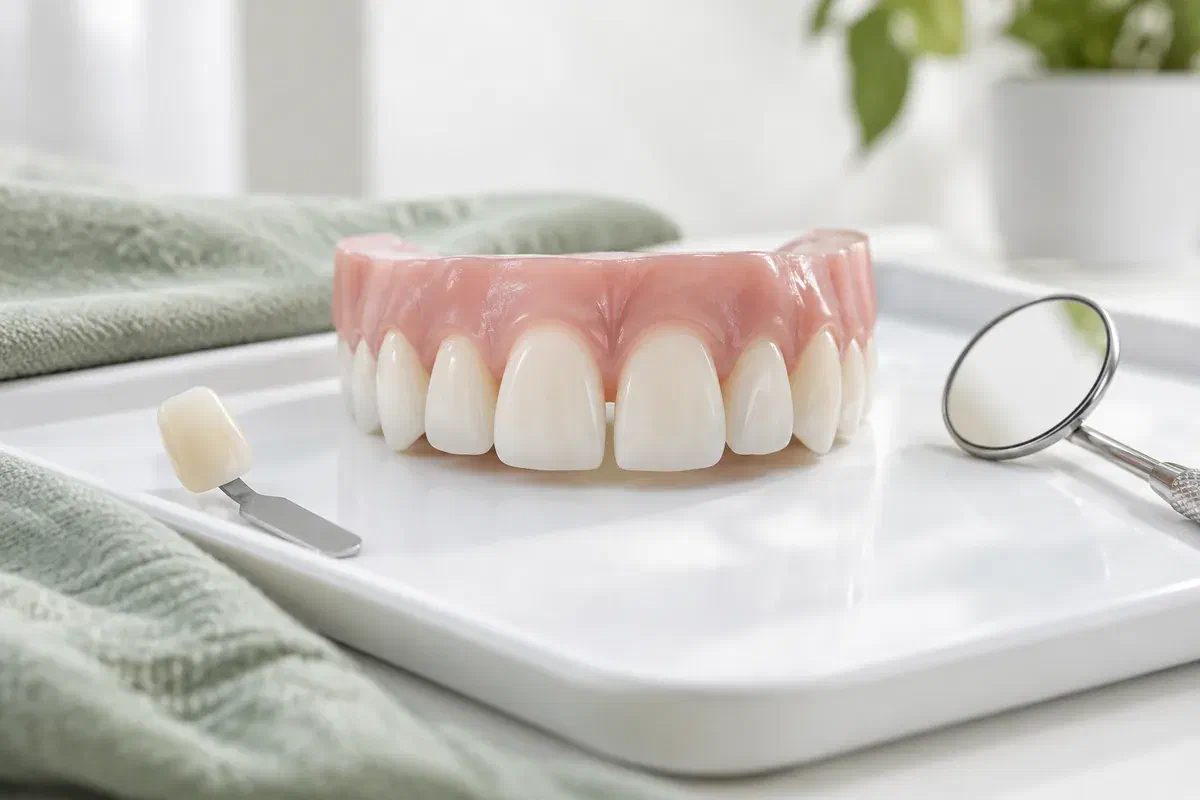
Illustrative front-teeth teaching model with a narrow central gap beside a shade sample
Understanding the spacing

Ask why the gap is there before choosing how to close it.

Share the history of the space and any symptoms or previous treatment. Those details help identify whether the next step is a cosmetic discussion or another assessment first.

A stable gap you would prefer to change

Explain whether you want complete closure or simply a smaller space. Discuss how added material would affect the width of each tooth. The most suitable result may depend on the existing proportions rather than the gap measurement alone.

A space that has appeared or widened

Mention changes in the gums, bleeding, looseness, or how the teeth meet. A new gap deserves assessment of the supporting tissues and other possible contributors. Covering the space cosmetically should not replace understanding why the teeth have changed.

Spacing after orthodontics or previous bonding

Bring your retainer and explain the earlier treatment. The clinician can review the current position, any remaining composite, and the intended retention plan. Ask how changing tooth contours would affect an appliance or other ongoing care.

A space left by a missing tooth is not automatically suitable for simple gap-closing bonding. Tell the team if a tooth never developed, was removed, or was lost so the replacement options can be assessed.

What a suitable bonded change can offer

Reduce the visible space while respecting proportion and function.

For selected teeth, composite can be shaped to modify the sides next to the gap and create a different outline. Shade selection and surface finishing help the added material relate to the existing tooth. The plan must also consider the contact between teeth and the bite.

Bonding introduces a material that will need care and review. It can stain, wear, or chip, and maintenance may involve polishing, repair, or replacement. Ask about those possibilities before choosing the treatment so the initial appearance is not the only factor in your decision.

Patient information: Canadian Dental Association — bonding for small gaps and shape changes · Cleveland Clinic — tooth gaps and their causes

A focused discussion of one visible feature

You can ask about the gap without requesting a wider smile makeover. Discuss which teeth would receive material and why. The proposal should explain any effect on neighbouring proportions rather than assuming every nearby tooth also needs cosmetic treatment.

A comparison with changing tooth position

Ask whether the gap is better approached by altering tooth shape, moving teeth, or combining care in a planned sequence. These options have different commitments. A shorter procedure is not automatically the most appropriate response to the reason for the space.

An agreed balance between appearance and cleaning

The new contour should be discussed with everyday care in mind. Ask how you will clean the contact and gumline after treatment. A reduction in the visible gap is only useful if the surrounding area can still be maintained appropriately.

Planning a bonded gap closure

Assess the space, agree on the contours, and check the contact.

The procedure should follow a clear discussion of suitability and alternatives. Ask how the proposed shape will be assessed and whether any other care is needed beforehand.

  1. Review the gap and surrounding oral health

    Discuss how long the space has been present, previous orthodontics, restorations, and any changes or symptoms. The clinician assesses the teeth, gums, and bite. Further records or another opinion may be needed before a cosmetic recommendation can be made.

  2. Agree on the amount and location of added material

    Talk through the intended width and outline of the treated teeth and whether closure should be complete or partial. Ask about preparation, shade, costs, and maintenance. Confirm how the proposal compares with orthodontic treatment or leaving the healthy space unchanged.

  3. Place and shape the composite when suitable

    For an agreed bonding procedure, the tooth surfaces are prepared and resin is added and sculpted. A curing light hardens the material. The clinician shapes the surfaces with attention to the neighbouring tooth and the area near the gums.

  4. Finish the surfaces and demonstrate cleaning

    The restoration is polished, and the clinician checks the bite and contact. Ask to see how to clean between the treated teeth. Review the appearance and any remaining space, and clarify the follow-up plan before leaving.

Looking after the bonded space

Keep the contact clean and the restoration under review.

Follow the cleaning technique demonstrated for your new contours. The treated teeth remain separate teeth that need ongoing hygiene, even when the visible gap has been reduced.

Clean between the teeth without forcing an aid

Use the recommended interdental method gently and ask for help if it does not pass as demonstrated. Repeated catching, shredding floss, or difficulty reaching the gumline should be assessed. Do not stop cleaning the area because the original open space is no longer visible.

Avoid habits that stress the bonded surfaces

Do not use the teeth to open packages or bite hard objects. Tell the clinician about grinding or clenching and ask whether further assessment is needed. Protection should be planned for your situation rather than assumed to come automatically with bonding.

Report chips, staining concerns, or changing spaces

Arrange a review if the contour feels rough, material breaks away, or the space appears to change. The cause determines whether polishing, repair, or another assessment is needed. Do not attempt to glue, sand, or reshape the restoration at home.

Patient information: Cleveland Clinic — maintaining dental bonding

Comparing ways to manage a gap

Choose the approach that addresses the space and its cause.

Ask what each option changes and what it leaves untouched. A plan can be cosmetic, orthodontic, restorative, or focused first on gum health, depending on the findings.

When adding material creates appropriate proportions

Composite bonding for a suitable gap

Bonding may work where the space and adjacent teeth allow a reasonable shape and contact. Discuss whether adding to one or both teeth is proposed and how the surfaces will be maintained. There is no universal gap size that makes every case suitable.

When position or the distribution of space matters

Orthodontic assessment or a coordinated restorative plan

Moving teeth can address spacing differently from making them wider. Some situations may need coordinated treatment rather than a single addition. Ask about the reason for the proposed sequence and any retention or restoration needed afterwards.

When the gap calls for another response

Gum care, tooth replacement assessment, or observation

Disease-related movement or a missing tooth needs an appropriate assessment of its own. A stable healthy gap can also remain untreated if you prefer. Clarify what matters for oral health and which decisions are about your chosen appearance.

Questions about closing a gap with bonding

Understand the new shape as well as the smaller space.

Ask how the proposal relates to your tooth width, bite, and cleaning routine. Suitability is more individual than deciding whether a gap looks small.

(905) 876-4488
Does gap-closing bonding move my two front teeth closer together?
No. It adds material to change the tooth contours and reduce the space between them. Orthodontic treatment moves teeth. Ask which approach better addresses the reason for your gap and the proportions of the teeth beside it.
Can I choose to reduce a gap without closing it completely?
That preference can be discussed. The clinician needs to assess whether the proposed contours and contact arrangement are appropriate. Explain how much of the space you want to retain and ask about cleaning and the likely appearance.
Will bonding both sides of a front-tooth gap make the teeth look too broad?
It can change their apparent width, so proportions need planning. Ask how the added material would be distributed and whether another approach would better preserve the outline you like. Complete closure is not automatically the best cosmetic choice.
Why should a gap that recently widened be checked before cosmetic bonding?
A change in spacing can have an underlying cause, including a problem with supporting tissues. The assessment should establish what is happening before the space is covered. Tell the clinician about bleeding, looseness, discomfort, or changes in the bite.
Is a small triangle near the gums the same as a gap extending between the front teeth?
They can have different causes and planning considerations. A triangular opening near the gumline may relate to tissue shape or support as well as tooth contours. Show the exact space you mean so the clinician can assess the appropriate options.
Will my teeth be joined into one solid piece after gap closure with composite?
The aim is to create appropriate individual contours and a cleanable contact, not simply seal the teeth together. Ask for a demonstration of interdental cleaning after treatment. Report a contact that blocks cleaning or repeatedly catches floss.
Gap closure with dental bonding in Milton

Talk through the space you want to change and the smile you want to keep.

Arrange an assessment at our Bronte Street practice to discuss a gap between your teeth. We can review its history, the surrounding tissues, and the options for a change that respects your preferences and oral health.

Bonding suitability depends on the cause of the gap, tooth proportions, and bite. A new or widening space should be assessed before elective closure is planned.

Visit Milton Dental Clinic
Unit 1, 342 Bronte St. S, Milton, ON L9T 5B7
Get directions Clinic hours
Monday–Thursday
11am–7pm
Friday–Sunday
By appointment only

How can we help?

Milton Dental Clinic

Have a question about your smile? Choose the option that works best for you.

For urgent dental concerns, please call.
Messages are reviewed during clinic hours.