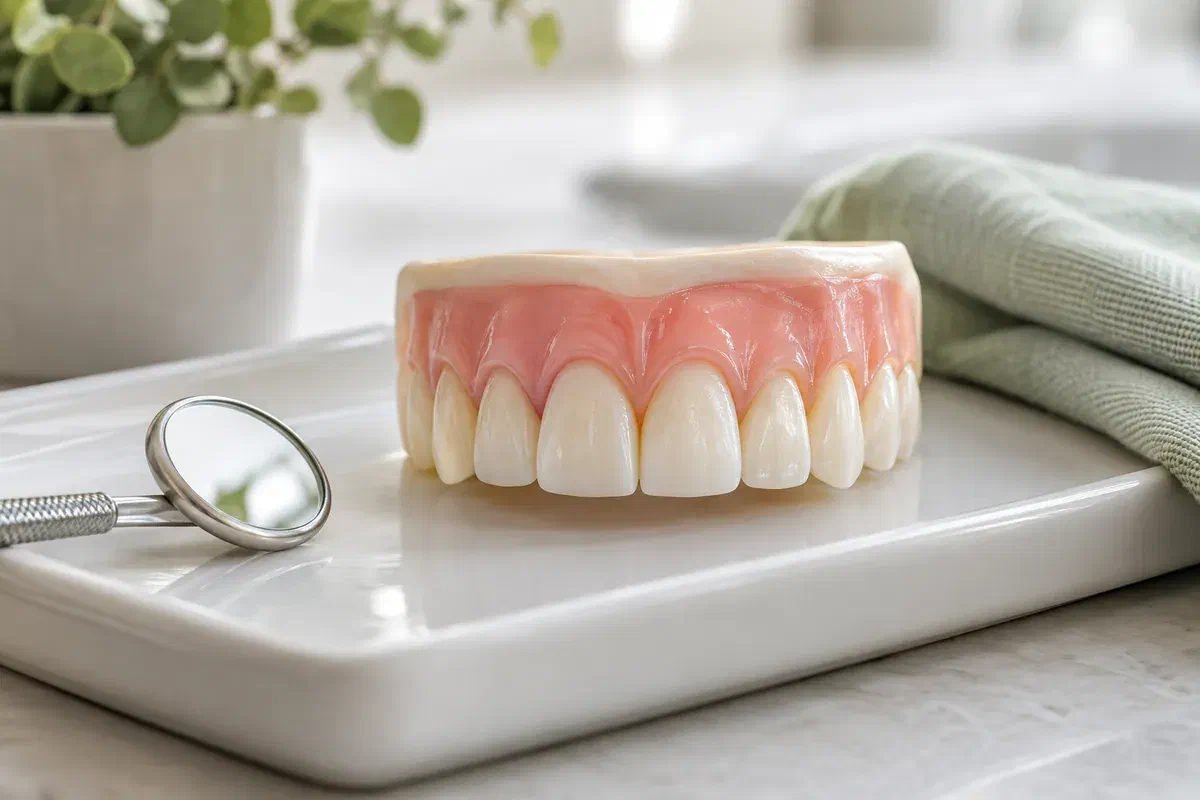
Teeth partly covered by gum tissue
Whether gum or bone is responsible for a short-looking tooth affects which procedure, and which provider, would fit. Wear or tooth shape could also be involved. A photo cannot settle this, but an exam can.


Who would actually reshape your gums, and why? Some cases suit a general dental setting; others benefit from a periodontist. We assess your tissue first, then explain who should be involved and how care would be coordinated.
A question we hear often is simple: would you do this, or would I be sent somewhere else? The honest answer depends on what the examination shows. A small soft tissue change and a procedure that involves bone are different undertakings, and they may call for different providers. Being referred is not a setback; it simply means the plan is being matched to the person best equipped to carry it out.
Gum contouring itself is a planned reshaping of the gum margin in selected spots, usually where extra tissue or an irregular outline changes how the teeth look. Its suitability depends on how the gum, the tooth and the bone beneath relate. Many smiles with plenty of gum showing are healthy, and keeping them unchanged is always an option.
From Bolton or any of the villages across Caledon, your first step can be a visit to our Bronte Street practice. We examine your gums, explain what the findings mean, and tell you clearly whether treatment would be planned with us, with a periodontist, or not at all.
Share what you want to change and mention bleeding, tenderness, swelling or gum receding. Health findings, more than cosmetic wishes, often decide who should be involved.
Whether gum or bone is responsible for a short-looking tooth affects which procedure, and which provider, would fit. Wear or tooth shape could also be involved. A photo cannot settle this, but an exam can.
Show us the area and explain the look you want. Some natural irregularity is worth keeping. A change limited to one area may be simpler than one that rebalances the whole smile.
Tell us about health changes, medicines and your cleaning routine. Enlarged gum may need its cause treated, and recession is a separate problem that sometimes benefits from specialist assessment.
If a prescribed medicine might be affecting your gums, keep taking it as directed. Let us and the prescribing clinician know, so any review can be arranged together.
When the case suits it, reshaping can reveal more of a natural tooth or even out part of the outline. Getting there safely means matching the complexity of the procedure with the right clinician. Visible gum in a smile is not, by itself, a reason to treat.
Whoever provides treatment, it is still surgery, with healing time and possible complications, and tissue that can move as it recovers. Ask about tenderness, bleeding, infection, sensitivity, gum rebound and whether further care might be required.
Patient information: Cleveland Clinic — gum contouring, assessment, and recovery · American Academy of Periodontology — cosmetic periodontal procedures
You should understand which teeth are included, why, and whether the work stays in the gum or reaches other structures. That scope often determines whether a referral makes sense.
The intended gum edge should suit your tooth length and lip movement. Preferences count within healthy limits. Ask what would and would not change, so the specialist and general team share the same goal.
If veneers, crowns or orthodontics are also planned, several clinicians may be involved. With your consent, records and timing can be shared. Ask when the gum will be reassessed before anyone designs further work around it.
Each step depends on findings. You are welcome to ask who would treat you, how a referral would work, and what preparation and follow-up each route involves.
We discuss your aims, medical history, medicines and previous gum care. The clinician assesses the tissue and its relationship to the teeth, and records or X-rays may be taken. Anything that needs managing first is identified.
Options, including monitoring, are compared. You will learn whether soft tissue alone is involved or whether a crown lengthening procedure that reshapes bone is likely, and whether a periodontist should plan it. Fees, risks and healing are discussed before you agree.
Whoever provides the procedure uses the anaesthetic and technique planned for your case. Ask in advance how to signal for a break and what to expect on the day. The method should suit your tissue.
You receive guidance on cleaning, food, any recommended medicine and activity. Reviews may be with the treating clinician, with us, or both. Ask who to contact with questions and when the tissue can be assessed for further work.
Healing varies with the extent and method of the procedure. If a specialist performed it, their instructions take priority over general advice, including ours.
Ask your treating clinician how to look after the healing gum and when your usual brushing can resume nearby. Eat as advised. Avoid pulling your lip back to examine the result.
Use only the medicines and doses recommended, considering allergies and other treatment. Check whether exercise, work, smoking or vaping should pause. Not every recovery involves an antibiotic or rinse.
The early appearance may change as healing continues. Keep follow-ups and mention lasting tenderness, sensitivity or concerns about the edge. Ask when the final look can be assessed.
Ask why a procedure is recommended, who would provide it and how care would be coordinated. Answers should relate to your findings.
Book an assessment at our Bronte Street practice. After examining your gums, we will explain suitable options, whether a periodontist should be involved, and how care would be coordinated if you go ahead.
Suitability and provider depend on gum health and anatomy. The procedure and recovery plan are confirmed after assessment.
