

Illustrative patient and dental clinician comparing tooth shades during a consultation
Cosmetic Dentistry

Internal Tooth Bleaching in Erin

Much of internal bleaching happens while you are at home, with a temporary filling holding the treatment in place between visits. From Erin, we can assess the darker root-treated tooth and explain what daily life with that temporary seal looks like before you decide.

Life between appointments

Most of the waiting happens at your kitchen table.

People tend to picture whitening as something done in a chair in one go. Internal bleaching for a root-treated tooth usually works differently. Your dentist places bleaching material inside the crown, closes the tooth with a temporary filling, and you carry on with breakfast, work, and bedtime brushing until the next review. Nothing is applied to the outer enamel.

Before that routine begins, the tooth itself has to be suitable. Your dentist examines where the discolouration comes from, how well the root canal treatment has held, the state of the gum and bone near the root, and how much natural tooth is left. Discomfort or an unresolved issue would usually be taken care of first.

Coming from Erin or Hillsburgh, it is worth asking practical questions at the start: what you can eat, how to brush near the temporary, what to do if it loosens. Bring the tooth’s history too, including any injury, the root canal, and earlier whitening, and tell us whether the colour is still changing. We can then explain the assessment and whether bleaching suits the tooth.

Ask what treatment is like day to day
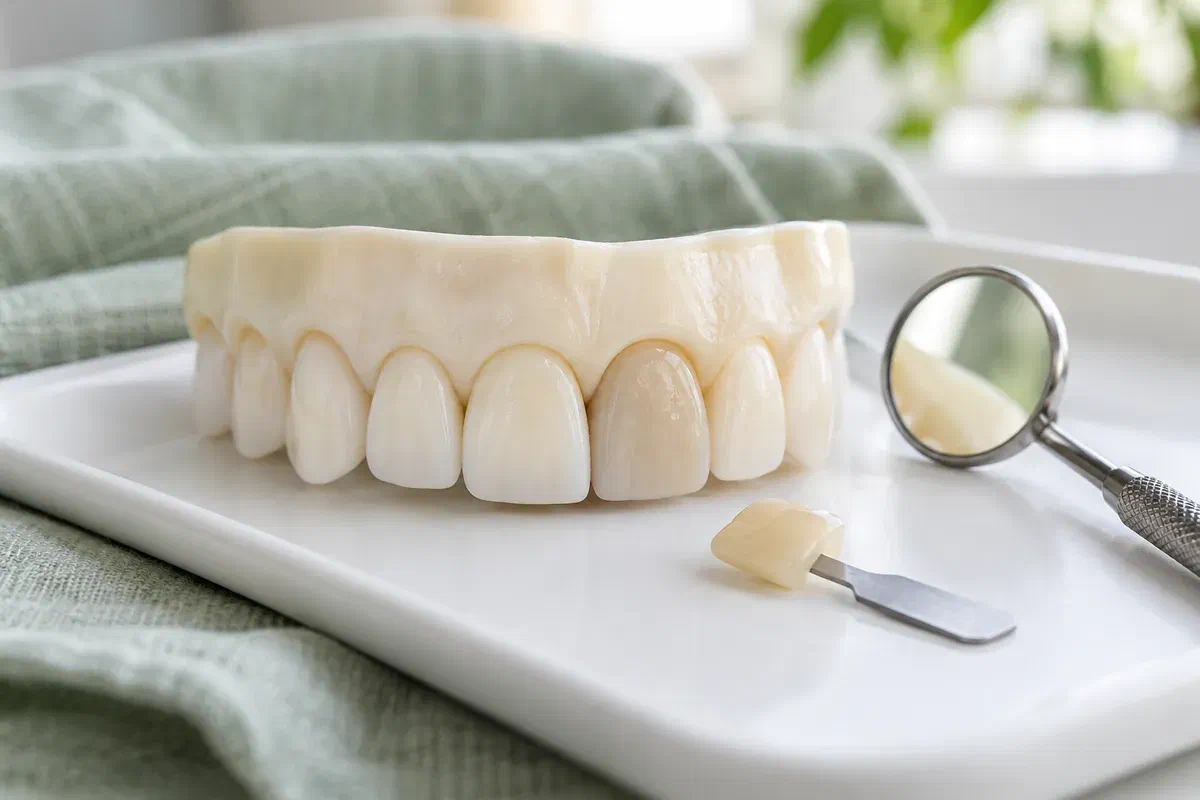
Illustrative front-teeth model with one subtly darker central tooth beside a shade sample
Before the routine starts

What your dentist will want to know

The tooth’s background decides whether a home routine with a temporary seal is even on the table. Talk it through openly, so appearance is discussed only after the tooth has been properly understood.

An injury in the tooth’s past

Let us know roughly when it happened and the care you had afterwards. That history helps your dentist judge the tooth and the risks of bleaching. A dark shade by itself gives no clear picture of how the inner tissues are doing.

A root canal tooth that has dulled

Describe which part of the tooth seems darkest and any fillings or whitening already tried. Darkness might come from the tooth, from a restorative material, or from another source. The answer affects what bleaching might be able to change.

A sore spot or a filling that feels wrong

Tenderness, gum swelling, or a rough or cracked filling over the access opening should be mentioned. Bleaching cannot treat infection or reseal a leak. Your dentist may suggest root canal or restorative care before anything cosmetic.

Your part at home is to protect the tooth, not to treat it. Never open it, take out a filling, or add whitening material inside; the root filling must be shielded and every step planned by your dentist.

What the effort may bring

A more even smile, with natural enamel kept

For a suitable tooth, internal bleaching may reduce discolouration without preparing the surface for a veneer or crown. The extent of change is different for every tooth. It may blend better with its neighbours, but an exact match, or one that never fades, is not something that can be promised.

There are trade-offs alongside. Colour can creep back, a visible filling may stop matching, and the tooth may need further work later. One complication is rare yet can be serious: external cervical root resorption, which involves structure being lost from the tooth where root and crown join.

Patient information: Leeds Teaching Hospitals — whitening and non-vital bleaching · Research review — internal bleaching and external cervical resorption

Treatment for the tooth that stands out

Confirm that the plan tackles the real reason this tooth is dark. Usually the aim is for it to fit in rather than to whiten everything. Find out how the starting and target shades are recorded.

Structure preserved where possible

Weigh bleaching against covering, and ask how much tooth each would remove. A permanent restoration is needed in either case. Your dentist will consider colour and protection as related but separate goals.

Progress you can follow

Ask how your dentist will gauge the response and when they would stop or try another approach. Know how many review visits to expect. A sensible plan finishes at a defined point rather than continuing open-ended.

In the chair, then at home

Clinic visits bookend each stretch at home.

Your dentist selects the method after examining the tooth. Ask how long each stretch at home is likely to last, what the temporary seal is made to handle, and when the tooth will be permanently closed.

  1. Assessment and shade record

    The visit covers history, symptoms, the existing filling, and the root canal, with X-rays and colour photos as needed. Ask whether the tooth is ready or needs review, repair, or further testing before bleaching.

  2. Explanation of technique and home care

    You will learn how the bleaching works, what protects the root filling and gum, and what to do at home between stages. Discuss limits, complications, fees, and the choice to leave the colour. Check what follow-up is included.

  3. Bleaching placed and sealed in

    Your dentist opens the crown, isolates the root filling with a protective layer, and places the bleaching agent according to protocol. A temporary filling then closes the tooth until your next review. Follow the home instructions closely.

  4. Review, finish, and permanent seal

    At each review the colour is assessed, and your dentist decides when enough has been done. A suitable permanent restoration then closes the access. Ask whether a visible filling should be re-matched and how often the tooth will be checked afterwards.

Your home routine

Eat, brush, and check, gently.

Details depend on the technique and stage. Keep your written instructions by the bathroom sink, and save our number for the day the seal, tooth, or gum feels different.

Change nothing about the treatment

Keep home whitening products in the cupboard, do not extend a stage, and leave the temporary seal alone. If you are unsure, phone rather than guess. Your dentist needs an accurate account of what the tooth has been exposed to.

Chew and brush around the temporary

Follow the advice about foods and cleaning near the treated tooth. If the temporary filling feels loose, chips, or comes out, call us that day. Do not leave it until the next booked review.

Finish the treatment and keep check-ups

Come in for the permanent restoration even if the colour already looks right. Keep regular dental visits and mention changes you notice later. A lighter root-treated tooth still needs monitoring.

Patient information: American Association of Endodontists — root resorption

If a home routine does not suit

Bleaching is one option among several.

Ask what each route would change, how much ongoing care it needs, and whether a health issue should be dealt with first. The least extensive choice that suits your tooth may differ from someone else’s.

Where the findings support a staged colour change

Internal bleaching for a suitable tooth

This may be considered for internal discolouration once your dentist has looked closely at the root canal and its seal. Discuss how much change is realistic, the protective layer, and the permanent restoration. It is quite unlike strips or trays from a shop.

If a symptom or failing seal turns up

Root canal or restorative care before colour

Treatment for a health or structural issue may need to come first. Ask why and how it might affect later choices. Bleaching cannot stand in for treating an active problem.

If another path fits the tooth or your life better

Covering, surface whitening, or no change

A veneer, crown, or different whitening may suit some causes. Compare preparation, upkeep, and matching. Leaving a sound tooth untreated is a fair decision once you know the findings.

Everyday questions

Living with a tooth that is mid-treatment

Answers to practical questions from Erin about eating, brushing, and caring for the temporary seal.

(905) 876-4488
Can I eat normally while the temporary filling is in place?
Your dentist will give advice for your tooth, which often includes avoiding very hard or sticky foods on that side. Follow those instructions until the permanent restoration is placed.
Should I floss around a tooth that has a temporary seal?
Ask your dentist how to clean around it. Gentle cleaning is usually important, but the technique may need adjusting to avoid dislodging the temporary filling.
Will coffee or tea undo the bleaching?
Internal bleaching works from inside the tooth, but surface staining from food and drinks can still affect overall appearance. Ask your dentist whether any habits should change during treatment.
What if the temporary falls out while I am at home in Erin?
Call the clinic for advice as soon as you can. Avoid chewing on that tooth in the meantime. If you have significant pain or swelling and cannot reach us, seek urgent care nearby.
Why will the dentist take an X-ray before starting?
Images help your dentist check the root filling and surrounding tissue and confirm whether the tooth is suitable. Ask what the image is meant to show for your tooth.
Do I still need the last visit if the tooth looks fine?
Yes. The access needs a permanent seal, and a temporary filling is not meant to stay indefinitely. Keep that appointment even if you are already happy with the colour.
Booking from Erin

Know what the weeks in between will ask of you.

Call our Bronte Street practice about a darker root-treated tooth. We will examine it, tell you whether internal bleaching suits it, and walk you through the home care between visits so you can decide with confidence.

Bleaching is only appropriate for some root-treated teeth. Results vary, each stage is dentist-supervised, and a permanent restoration completes the treatment.

Visit Milton Dental Clinic
Unit 1, 342 Bronte St. S, Milton, ON L9T 5B7
Get directions Clinic hours
Monday–Thursday
11am–7pm
Friday–Sunday
By appointment only

Areas we serve

  • Milton
  • Oakville
  • Mississauga
  • Georgetown
  • Halton Hills
  • Acton
  • Campbellville
  • Brampton
  • Burlington
  • Puslinch
  • Rockwood
  • Erin
  • Caledon
  • Etobicoke
  • Old Milton
  • Bronte Meadows
  • Timberlea
  • Dorset Park
  • Dempsey
  • Clarke
  • Beaty
  • Coates
  • Harrison
  • Scott
  • Willmott
  • Ford
  • Bowes
  • Cobden
  • Walker
  • Mountain View
  • Milton Heights
  • Hawthorne Village
  • Valley View
  • Fallingbrook
  • Nassagaweya
  • Trafalgar
  • Esquesing
  • Nelson
  • Brookville
  • Moffat
  • Glen Williams
  • Norval
  • Limehouse
  • Stewarttown
  • Ashgrove
  • Hornby
  • Silver Creek
  • Speyside
  • Scotch Block
  • North Oakville
  • River Oaks
  • Glen Abbey
  • West Oak Trails
  • Palermo
  • Bronte Creek
  • College Park
  • Joshua Creek
  • Uptown Core
  • Preserve
  • Iroquois Ridge
  • Lisgar
  • Meadowvale
  • Meadowvale Village
  • Churchill Meadows
  • Erin Mills
  • Central Erin Mills
  • Streetsville
  • East Credit
  • Creditview
  • Heartland
  • Sheridan
  • Mount Pleasant
  • Credit Valley
  • Huttonville
  • Churchville
  • Springbrook
  • Northwest Brampton
  • Bram West
  • Fletcher's Meadow
  • Fletcher's Creek South
  • Alton Village
  • Orchard
  • Millcroft
  • Headon Forest
  • Tansley
  • Brant Hills
  • Tyandaga
  • Kilbride
  • Lowville
  • Aberfoyle
  • Morriston
  • Arkell
  • Hillsburgh
  • Freelton
  • Carlisle
  • Waterdown
  • Flamborough
  • Mountsberg

How can we help?

Milton Dental Clinic

Have a question about your smile? Choose the option that works best for you.

For urgent dental concerns, please call.
Messages are reviewed during clinic hours.