

Illustrative patient and dental clinician comparing tooth shades during a consultation
Cosmetic Dentistry

Internal Tooth Bleaching in Etobicoke

Internal bleaching usually means more than one visit, with a temporary filling in between. If you are coming from Etobicoke, we can assess the darker tooth, map out the appointments in advance, and talk through what to do if something changes between trips.

Planning a multi-visit treatment

Know the whole route before the first appointment.

Lightening a root-treated tooth from the inside is rarely done in a single sitting. The dentist places bleaching material within the crown, closes it temporarily, and checks the response later, sometimes more than once. That staged rhythm is what separates internal bleaching from a whitening product brushed or pressed onto the outer surface.

So the first appointment has two jobs. One is clinical: finding out why the tooth darkened, whether the root canal treatment is sound, how the gum and bone look, and how much tooth remains. Symptoms or an open problem would be handled before appearance. The other job is practical, which is setting out how many visits the plan might need.

For anyone travelling in from Etobicoke, it saves time to arrive prepared. Bring notes on any injury, the root canal and where it was done, and earlier whitening attempts. Tell us whether the shade has shifted lately and how close a match you hope for. We can then describe the assessment, the likely number of visits, and whether bleaching suits the tooth.

Plan an assessment from Etobicoke
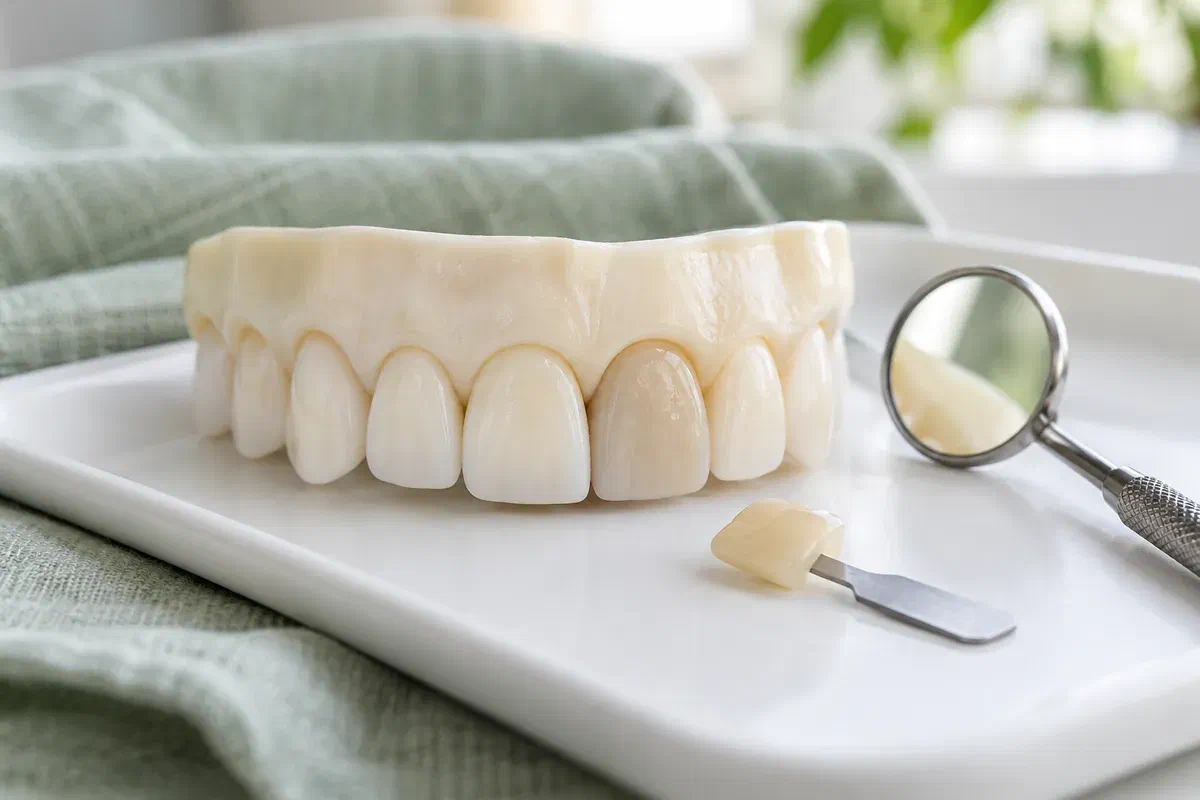
Illustrative front-teeth model with one subtly darker central tooth beside a shade sample
Before you book the sequence

A few details that change the plan

Your history affects both the clinical decision and the number of appointments. Mention it early, so the plan around appearance rests on a clear picture of the tooth.

An old knock to a front tooth

Let us know roughly when it happened and what care followed. Trauma history can shape how your dentist reads the tooth and its risks. The colour does not reveal on its own what condition the inner tissue or the root is in.

A root canal tooth that no longer matches

Point out what looks different and mention any fillings or prior whitening. Your dentist will look at whether the tooth tissue, a restorative material, or something else is responsible. That difference decides how much bleaching might be able to change.

Symptoms that need a check first

Tenderness, swelling, or damage to the filling over the old root canal opening should be mentioned right away. Bleaching does not treat infection or fix a leak. Further root canal or restorative care may need to come before any shade work.

Never try to open the tooth, remove its filling, or put whitening gel inside it at home. Internal bleaching depends on a protective seal over the root filling and a treatment plan your dentist has prepared.

Is the trip worth it?

What a suitable tooth might gain

When the tooth qualifies, internal bleaching may lift discolouration without reshaping it for a veneer or crown. How much it changes depends on the individual tooth. A closer blend with your other teeth may be achievable, although nobody can promise an exact or permanent match.

Set that against the downsides. Colour may return over time, fillings that show may need replacing, and the tooth may require further care later. External cervical root resorption, a rare but potentially serious loss of structure where root and crown meet, is part of the risk discussion.

Patient information: Leeds Teaching Hospitals — whitening and non-vital bleaching · Research review — internal bleaching and external cervical resorption

Effort aimed at one tooth

Make sure the plan is built around the actual cause of this tooth’s colour. The goal is usually harmony with your existing smile, not overall whitening. Ask how the target shade will be recorded and compared at each review.

Enamel kept intact

Ask how bleaching compares with covering the tooth and how much preparation each requires. A suitable permanent restoration will still be needed afterwards. Colour and protection are connected, but your dentist will look at each separately.

A defined number of rounds

Find out how progress will be judged and the point at which your dentist would stop. Knowing the expected reviews in advance makes travel easier to plan. A good plan has a clear end rather than open-ended bleaching.

The appointment sequence

Assess, agree, bleach, close.

The technique is chosen after examination, and it determines how many trips you will make. Ask about spacing between visits, the temporary filling, the protection for the root, and when the final seal is placed.

  1. First visit: examine and record

    Your dentist goes over the history, symptoms, current filling, and root canal treatment, and may take X-rays and shade photos. Ask whether you can move straight on or whether a root canal review, repair, or further test is needed first.

  2. Agree on technique, timeline, and risks

    You will hear how the bleaching works and how the root filling and gum are shielded. Talk about limits, complications, fees, and the option of doing nothing. Ask for a realistic visit schedule and confirm what final restoration is included.

  3. Bleaching visits with temporary seals

    The crown is opened, a barrier is placed over the root filling, and bleaching material goes in under a set protocol. A temporary filling usually closes the tooth between appointments. Keep each review and resist changing anything yourself.

  4. Last review and permanent filling

    When the colour has been assessed, your dentist decides it is time to stop. A suitable final restoration then seals the access. Ask whether a visible older filling should be redone to match and how often the tooth should be checked later.

Between trips

If the temporary filling comes loose far from the clinic

Your instructions depend on the method and stage. Keep them in writing, save our phone number, and know in advance where you would go for urgent care closer to home.

Leave the treatment as it was set

Do not add whitening products, extend a stage, or adjust the temporary filling. Questions are best answered by a quick call rather than a guess. Your dentist needs to know exactly what has been applied and how the tooth has reacted.

Call first if the temporary changes

Follow the eating and brushing advice for the tooth. If the temporary filling cracks, loosens, or comes out, phone us the same day so we can advise whether to come in or arrange care nearer to you. Do not simply wait for the next booked visit.

Make the final visit count

Attend the appointment that permanently closes the tooth, even if you already like the shade. Keep up with regular check-ups and report later changes. A lighter root-treated tooth still needs ongoing monitoring.

Patient information: American Association of Endodontists — root resorption

Weighing the alternatives

Not every dark tooth needs the same answer.

Ask what each route would accomplish, how many visits it would take, and whether there is a health concern to settle first. The most conservative suitable choice varies by tooth.

Where the examination clears the tooth

Supervised internal bleaching

This may be suggested when the discolouration sits inside a root-treated tooth that has been properly reviewed. Discuss realistic change, the protective barrier, and the closing restoration. A strip or tray from the pharmacy does something quite different.

If the tooth needs care for its health

Dealing with root canal or restoration problems

A defective seal or new symptom could mean investigation or treatment comes before any whitening. Ask why it is needed and how it affects the cosmetic plan. Bleaching never substitutes for fixing an active issue.

For a cause or preference better met another way

Covering the tooth, other whitening, or no treatment

Some causes of colour suit a different method. Compare preparation, upkeep, matching limits, and visit count. Leaving a healthy tooth as it is remains a fair choice once you know the findings.

Practical questions

Timing, travel, and treatment for a darker tooth

Answers about scheduling, what happens between visits, and the clinical questions people raise before starting.

(905) 876-4488
Can the assessment and the first bleaching stage happen on the same day?
Sometimes, if the tooth is clearly suitable and there is time, but it depends on the findings. Images or other care may be needed first. Ask when booking so we can tell you what is realistic.
What should I do if my temporary filling falls out on a weekend?
Contact the clinic as soon as you can and follow the advice given. If you have pain or swelling and cannot reach us, seek urgent dental or medical care nearby. Avoid chewing on that side in the meantime.
I live in Etobicoke. How can I keep the number of trips down?
Ask at the first visit for the expected sequence and book the appointments together. Bringing records and images from previous care may also reduce what needs to be repeated.
How long should I wait between bleaching appointments?
Spacing depends on the technique your dentist uses and how the tooth responds. Your dentist will set the interval and explain why. Keep to it rather than moving visits earlier or later on your own.
Does bleaching damage the root filling?
Protecting the root filling is part of the technique, usually with a barrier placed before bleaching material goes in. Ask your dentist how your root filling will be protected and checked.
Why is the permanent filling so important after bleaching?
The access opening needs a proper long-term seal. A temporary filling is not designed to stay indefinitely. Keep the final appointment and ask about timing even if you are happy with the colour.
Coming from Etobicoke

Map out your visits with us before you begin.

Contact our Bronte Street practice about a darker root-treated tooth. We can examine it, explain whether internal bleaching fits, and lay out a visit plan that makes the longer trip as manageable as possible.

Whether a tooth can be bleached depends on its condition and root canal history. Results vary, and treatment needs professional supervision and a suitable final restoration.

Visit Milton Dental Clinic
Unit 1, 342 Bronte St. S, Milton, ON L9T 5B7
Get directions Clinic hours
Monday–Thursday
11am–7pm
Friday–Sunday
By appointment only

Areas we serve

  • Milton
  • Oakville
  • Mississauga
  • Georgetown
  • Halton Hills
  • Acton
  • Campbellville
  • Brampton
  • Burlington
  • Puslinch
  • Rockwood
  • Erin
  • Caledon
  • Etobicoke
  • Old Milton
  • Bronte Meadows
  • Timberlea
  • Dorset Park
  • Dempsey
  • Clarke
  • Beaty
  • Coates
  • Harrison
  • Scott
  • Willmott
  • Ford
  • Bowes
  • Cobden
  • Walker
  • Mountain View
  • Milton Heights
  • Hawthorne Village
  • Valley View
  • Fallingbrook
  • Nassagaweya
  • Trafalgar
  • Esquesing
  • Nelson
  • Brookville
  • Moffat
  • Glen Williams
  • Norval
  • Limehouse
  • Stewarttown
  • Ashgrove
  • Hornby
  • Silver Creek
  • Speyside
  • Scotch Block
  • North Oakville
  • River Oaks
  • Glen Abbey
  • West Oak Trails
  • Palermo
  • Bronte Creek
  • College Park
  • Joshua Creek
  • Uptown Core
  • Preserve
  • Iroquois Ridge
  • Lisgar
  • Meadowvale
  • Meadowvale Village
  • Churchill Meadows
  • Erin Mills
  • Central Erin Mills
  • Streetsville
  • East Credit
  • Creditview
  • Heartland
  • Sheridan
  • Mount Pleasant
  • Credit Valley
  • Huttonville
  • Churchville
  • Springbrook
  • Northwest Brampton
  • Bram West
  • Fletcher's Meadow
  • Fletcher's Creek South
  • Alton Village
  • Orchard
  • Millcroft
  • Headon Forest
  • Tansley
  • Brant Hills
  • Tyandaga
  • Kilbride
  • Lowville
  • Aberfoyle
  • Morriston
  • Arkell
  • Hillsburgh
  • Freelton
  • Carlisle
  • Waterdown
  • Flamborough
  • Mountsberg

How can we help?

Milton Dental Clinic

Have a question about your smile? Choose the option that works best for you.

For urgent dental concerns, please call.
Messages are reviewed during clinic hours.