

Illustrative patient and dental clinician comparing tooth shades during a consultation
Cosmetic Dentistry

Internal Tooth Bleaching in Halton Hills

Lightening a root-treated tooth can leave an old tooth-coloured filling looking out of place, so the result is often a two-part plan. From Halton Hills, book an assessment that considers the tooth, its fillings, and how the finished shade will be matched.

Tooth and filling, together

Lightening the tooth is half the plan.

Picture a front tooth that has had a root canal and a couple of white fillings over the years. It has drifted darker, and you would like it to blend again. Internal bleaching may lighten the tooth tissue from inside the crown, a dentist-run process quite separate from surface whitening. The fillings, though, keep the colour they already have.

That is why the assessment looks at the tooth as a whole. Your dentist works out what is actually dark, whether the root canal treatment is in good order, how the gum and bone are doing, and how much natural structure is present. A symptom or unresolved problem comes ahead of any cosmetic plan.

From Halton Hills, a single well-prepared visit can cover a lot. Bring the history of the tooth: an accident, the root canal, each filling you remember, and any whitening attempts. Say whether the shade is still changing and what kind of match you want. We can then explain what the tooth and its fillings might each need.

Plan the tooth and its fillings
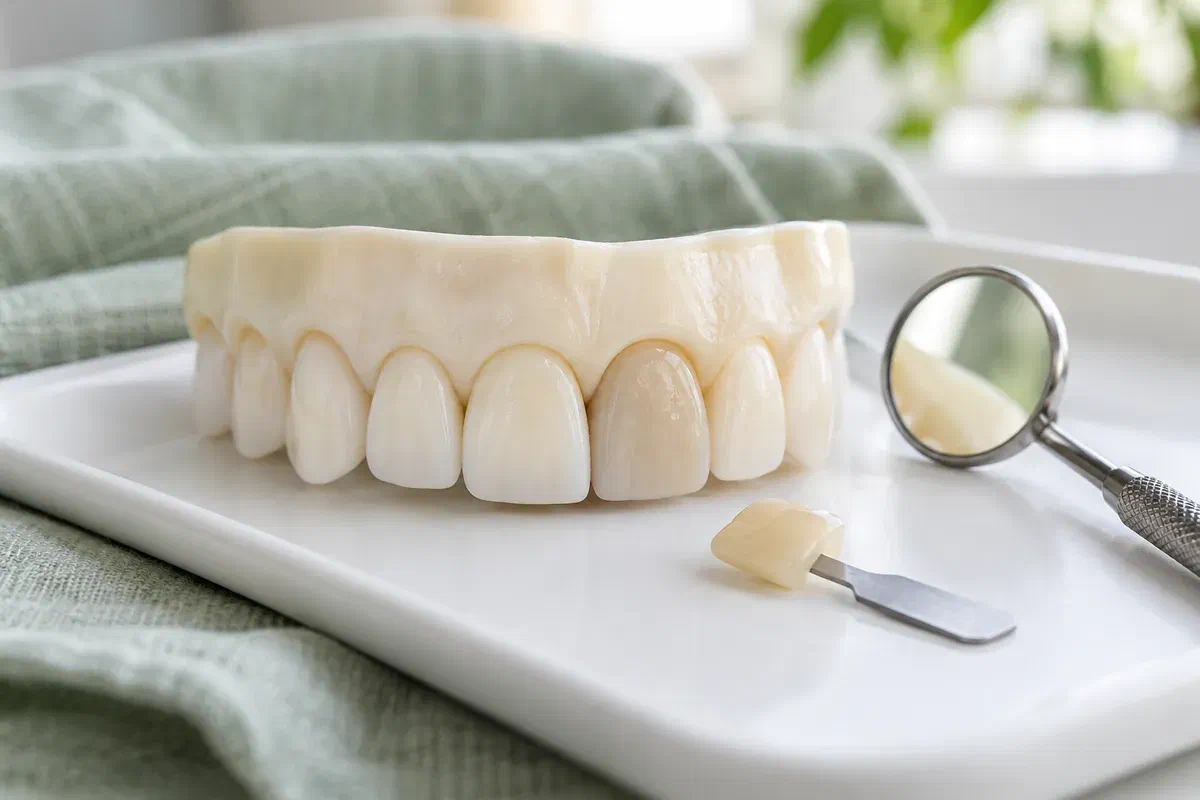
Illustrative front-teeth model with one subtly darker central tooth beside a shade sample
Where the darkness lives

Tooth tissue, old filling, or both?

These respond to different treatments. Describe the tooth’s past as well as you can, and let the examination sort out the health questions before colour is planned.

A tooth hurt years ago

An old injury may be where the change began. Share what you recall about it and any treatment afterwards. Your dentist cannot read the condition of the tissues from colour alone, so the story helps fill in what an image might not.

White fillings that have yellowed or greyed

Restorative materials can stain or age, and they will not respond to bleaching. Show which areas bother you most. Separating filling colour from tooth colour helps your dentist predict what bleaching could change and what might need replacing.

A rough edge, a gap, or a sore spot

A filling that has chipped or pulled away over the root canal opening may let bacteria in. Mention any tenderness or gum swelling too. Bleaching cannot repair a seal or settle infection, so restorative or root canal review may come first.

Do not scrape at a filling or apply any whitening product inside a tooth yourself. Internal bleaching relies on a barrier that protects the root filling and on steps your dentist plans and carries out.

The potential gain

A lighter base for a better-matched restoration

If the tooth is suitable, bleaching it from within may improve its colour without covering the whole front surface. Sometimes that lighter base also makes it easier to match a new filling. How much change happens is unpredictable, and a perfect or lasting blend cannot be promised.

The plan should also cover what could go wrong. Darkness may return, a filling may need to be replaced to match, and the tooth may need more treatment later. A rare but serious complication called external cervical root resorption means tooth structure breaks down near the gumline portion of the root.

Patient information: Leeds Teaching Hospitals — whitening and non-vital bleaching · Research review — internal bleaching and external cervical resorption

Colour work aimed at the true cause

Confirm that the plan targets the part of the tooth that is actually discoloured. Usually the hope is a tooth that blends, not a brighter smile overall. Ask how the target shade will be recorded and checked.

Filling replacement planned, not improvised

Discuss whether existing fillings will likely need redoing once the shade settles, and when that would happen. A suitable final restoration closes the bleaching access in any case. Planning both steps together avoids surprises.

An agreed finish to the bleaching

Ask what result would signal it is time to stop and what happens if the change is limited. Know the review schedule up front. Bleaching should have a clear end, after which restoration and monitoring take over.

Sequence of care

Bleach first, match the filling afterwards.

After examining the tooth, your dentist selects a technique. Ask about visit numbers, the temporary seal, protection of the root, and when the permanent restoration and any filling replacement will happen.

  1. Examination and shade baseline

    Your dentist reviews the history, any symptoms, the current fillings, and the root canal work. X-rays and colour photos may be used. Ask whether the tooth is ready, or whether repair, root canal review, or another investigation should come first.

  2. Plan the bleaching and the restoration

    You will learn the technique, how the root filling and gums are protected, and the likely limits. Discuss risks, fees, and the option of leaving the colour. Confirm what the final restoration includes and whether filling replacement is expected.

  3. Supervised bleaching stages

    Access is opened in the crown, a protective barrier covers the root filling, and bleaching material is placed according to the protocol. A temporary seal often holds it between visits. Keep each review and stick to your instructions.

  4. Shade review, then final restoration

    Once the response is judged, your dentist ends the bleaching phase. The access is closed permanently, and visible fillings may be replaced to match the new shade at the planned time. Ask how the tooth will be monitored from there.

Caring for it in the meantime

What to do, and avoid, during treatment

Your instructions will depend on the technique and stage. Ask for a written copy, and keep a way to contact us if the temporary seal breaks or the tooth or gum feels different.

Keep to the professional plan

Avoid extra whitening, do not lengthen any stage, and leave the temporary seal undisturbed. If something seems unclear, phone before you act. Your dentist needs an exact record of what has been used and how the tooth has responded.

Chew carefully on that side

Follow the eating and cleaning advice for the treated tooth. Let us know promptly if the temporary filling cracks, shifts, or is lost. A broken seal should be reported, not held until the next review.

Finish the restoration, then stay on recall

Come in for the permanent filling even if the shade already looks right. Keep regular dental visits and mention later changes. A root-treated tooth needs ongoing checks whatever its colour.

Patient information: American Association of Endodontists — root resorption

Possible routes

From bleaching to replacing a filling to doing nothing

Each option changes something different. Ask what it would achieve for your tooth, and whether any health issue should be addressed first. The least extensive suitable route is individual.

If the exam confirms the tooth can go ahead

Bleaching a suitable root-treated tooth

This may be considered where the darkness sits in the tooth tissue and the tooth has been reviewed. Ask about likely improvement, protection, and the final filling. Over-the-counter whitening does not work this way.

If health or structure needs fixing

Repairing the seal or root canal first

A leaking filling or a new symptom may need treatment before anything cosmetic. Ask what the concern is and how it affects later choices. Whitening never takes the place of treating a problem.

If the colour is mainly in the fillings, or you prefer another path

New fillings, a covering, or keeping the current look

Where restorative material is the main cause, replacing it may be enough. A veneer or crown is another option. Compare preparation, maintenance, and matching, and remember that leaving a sound tooth alone is a valid choice.

Halton Hills questions

Fillings, shade matching, and internal bleaching

Common questions about how a lighter tooth and its existing restorations fit together.

(905) 876-4488
Will I need new fillings after my tooth is bleached?
Possibly. Existing tooth-coloured fillings will not lighten, so they may stand out against the new shade. Your dentist can assess whether replacement is likely and discuss timing and cost before treatment.
Why wait before replacing a filling after bleaching?
Dentists often allow the shade to settle before matching a new restoration. Your dentist will advise when the final filling or any replacement should be placed for your tooth.
Could the dark colour be coming from my old filling rather than the tooth?
Yes, sometimes. Aged or stained restorative material can cause or add to the darkness. Your dentist can help distinguish between filling colour and tooth colour, which affects whether bleaching would help.
What is external cervical resorption, and why does it matter here?
It describes tooth structure being lost close to where the root meets the crown, and it is an uncommon but significant potential complication of internal bleaching. Ask how your tooth’s history affects the risk and how it will be monitored.
Is the shade likely to stay lighter for good?
Not necessarily. Some teeth hold their colour well, and others darken again over time. A returning difference should be reassessed by your dentist rather than retreated automatically.
Can I book the bleaching and filling appointments together?
Ask about the full sequence at your first visit. Your dentist can explain which appointments need to be spaced apart and which might be combined, so you can plan around your schedule.
Halton Hills to Bronte Street

One plan for the tooth and everything on it.

Bring a darker root-treated tooth and its older fillings to our Bronte Street practice. We will examine both, explain how they interact, and help you decide whether internal bleaching belongs in the plan.

Each tooth’s condition and root canal history determine whether bleaching is appropriate. Outcomes vary, every stage is dentist-supervised, and the tooth must be properly restored afterwards.

Visit Milton Dental Clinic
Unit 1, 342 Bronte St. S, Milton, ON L9T 5B7
Get directions Clinic hours
Monday–Thursday
11am–7pm
Friday–Sunday
By appointment only

Areas we serve

  • Milton
  • Oakville
  • Mississauga
  • Georgetown
  • Halton Hills
  • Acton
  • Campbellville
  • Brampton
  • Burlington
  • Puslinch
  • Rockwood
  • Erin
  • Caledon
  • Etobicoke
  • Old Milton
  • Bronte Meadows
  • Timberlea
  • Dorset Park
  • Dempsey
  • Clarke
  • Beaty
  • Coates
  • Harrison
  • Scott
  • Willmott
  • Ford
  • Bowes
  • Cobden
  • Walker
  • Mountain View
  • Milton Heights
  • Hawthorne Village
  • Valley View
  • Fallingbrook
  • Nassagaweya
  • Trafalgar
  • Esquesing
  • Nelson
  • Brookville
  • Moffat
  • Glen Williams
  • Norval
  • Limehouse
  • Stewarttown
  • Ashgrove
  • Hornby
  • Silver Creek
  • Speyside
  • Scotch Block
  • North Oakville
  • River Oaks
  • Glen Abbey
  • West Oak Trails
  • Palermo
  • Bronte Creek
  • College Park
  • Joshua Creek
  • Uptown Core
  • Preserve
  • Iroquois Ridge
  • Lisgar
  • Meadowvale
  • Meadowvale Village
  • Churchill Meadows
  • Erin Mills
  • Central Erin Mills
  • Streetsville
  • East Credit
  • Creditview
  • Heartland
  • Sheridan
  • Mount Pleasant
  • Credit Valley
  • Huttonville
  • Churchville
  • Springbrook
  • Northwest Brampton
  • Bram West
  • Fletcher's Meadow
  • Fletcher's Creek South
  • Alton Village
  • Orchard
  • Millcroft
  • Headon Forest
  • Tansley
  • Brant Hills
  • Tyandaga
  • Kilbride
  • Lowville
  • Aberfoyle
  • Morriston
  • Arkell
  • Hillsburgh
  • Freelton
  • Carlisle
  • Waterdown
  • Flamborough
  • Mountsberg

How can we help?

Milton Dental Clinic

Have a question about your smile? Choose the option that works best for you.

For urgent dental concerns, please call.
Messages are reviewed during clinic hours.