

Illustrative patient and dental clinician reviewing an aligner beside its protective case
Cosmetic Dentistry

Invisalign Attachment Repair in Brampton

A half-broken attachment can leave a scratchy edge your tongue will not stop finding. For anyone travelling from Brampton, we check the tooth, deal with the rough spot properly, and confirm your aligner still fits the plan.

Chipped, not gone

Rough edge, restless tongue

Not every attachment problem is a clean break. Sometimes only a corner chips away, leaving a jagged ridge that scrapes your lip when the tray is out. It is distracting, and the urge to file it down with a fingernail can be strong.

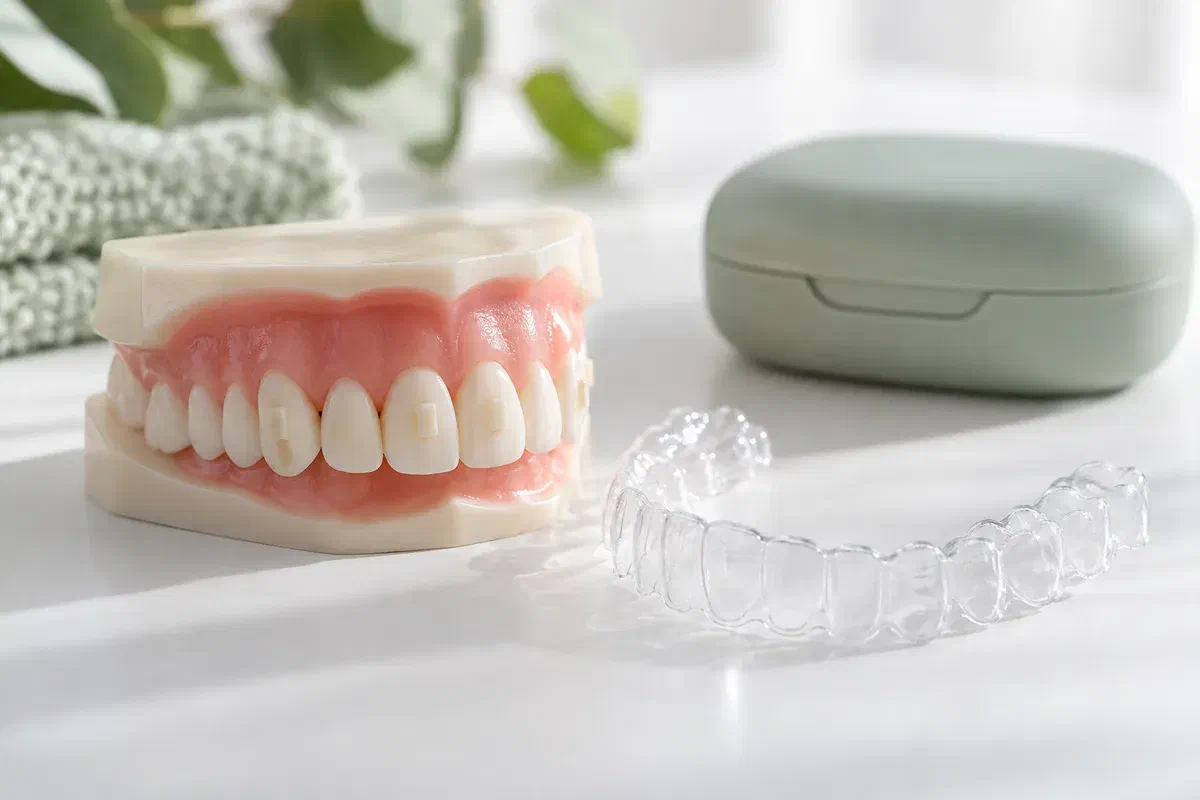
An attachment is a tooth-coloured composite shape bonded to a tooth so the aligner can press on it in a planned direction. Even a partial chip can change how well the tray engages. The clinician will want to know which tooth, how the tray now seats, and where you are in the series.

If we supervise your aligners, call with those details and mention the rough spot. If another office leads treatment, contact them first so any help we offer is coordinated. Please avoid smoothing, filing, or covering the edge with household products in the meantime.

Get a chipped attachment checked
Illustrative tooth model with small tooth-coloured attachments beside an aligner and case
Telling us about it

Sharp spot? Loose tray? Repeat chip?

You do not have to judge how serious it is or what caused it. Describing what you notice is enough for the clinician to plan a sensible next step.

A partly missing or smaller bump

Point out the side and tooth and when you first felt the change. Mention whether a piece broke during a meal or as the tray came out. If you are unsure whether there was ever an attachment there, we can check your plan.

A tray that has started fitting oddly

Describe any lifting at the edge of a tooth, new looseness, a bent area, or difficulty seating it. Note the tray number. Please do not press a resistant tray into place or move to the next one hoping it fits better.

Irritation, tenderness, or history

Tell us if the rough edge is rubbing your tongue, lip, or cheek, and whether this attachment has given trouble before. Repeats help the clinician think about the surface, fit, or handling. Candour is useful, and no one is looking to blame you.

Bring the aligners you are wearing now to the appointment. Ask which tray to stay in and whether your next change date should hold.

More than a quick polish

Comfort matters, and so does the movement

Smoothing a chipped attachment may relieve irritation, but the attachment still has a job. If it needs to be rebuilt, the replacement should follow your plan’s design. The same visit lets the clinician check whether the aligner is seating properly or whether another issue is at play.

Getting in touch early helps you avoid guessing how long to wear a tray. The clinician can say whether to come in before switching and what to do until then. There is no one waiting time or schedule adjustment that suits every damaged attachment.

Patient information: Invisalign — the purpose and placement of attachments

A decision that fits your stage

Ask whether the chipped attachment is still doing work in the current movement and how the damage changes your instructions. The answer should be specific to you. A general reassurance cannot substitute for a look.

Relief from the rough spot, done properly

Let the clinician address the edge rather than trying it yourself. They can tell whether the irritation comes from the attachment or from the tray. Dealing with both helps prevent a lingering sore spot after the repair.

Instructions you can rely on

Before leaving, check that you know which tray to wear tonight, when to switch, and when you are due back. If anything differs from your original schedule, ask to hear it again. A repaired attachment should come with a plan you understand.

A typical Brampton patient’s visit

How a chipped attachment is handled

The steps depend on whether the attachment is fully lost, partly chipped, or tied to another problem. Mention any filling, crown, or recent work on that tooth.

  1. Review your tray, timing, and comfort

    We go over your current tray, how consistently it has been worn, when the chip happened, and where it is bothering you. The clinician checks the plan for that tooth. If another office supervises, their records may be needed first.

  2. Inspect the remaining material and fit

    The clinician assesses what is left of the attachment and tries the aligner in where useful. Ask whether the concern goes beyond the attachment. You should hear an explanation before anything is removed or rebuilt.

  3. Rebuild or reshape as indicated

    If a new attachment is needed, any damaged remnant may be removed, the surface is readied for bonding, and composite is formed to the planned shape, usually with a template. Blue curing light sets the material, then stray composite is polished away. This is a clinical procedure, not a home task.

  4. Check comfort, seating, and next steps

    The tray is tried over the result and the clinician explains how to continue. Run your tongue over the area and mention anything still rough. Confirm your stage, change date, and what to do if it chips again.

Living with the repaired attachment

Smooth surfaces, steady habits

Keep following your treating clinician’s wear and change advice. A repair does not mean you should go back a tray, jump ahead, or add days on your own.

Take trays out carefully

If the aligner catches on the attachment, ask for a refresher on removal. Avoid taking it out more often than necessary and never bend the tray to get around a ridge. Report fit problems instead of trimming the plastic.

Keep the area clean and comfortable

Brush gently around each attachment and keep up your flossing or interdental routine. Ask for help with a hard-to-reach spot. If your lip or tongue stays sore, let us know rather than avoiding that side when cleaning.

Leave the attachment alone

Try not to explore it with your tongue or fingernails, and avoid biting hard objects. If a new rough edge appears, note when and call. Repeated chipping needs a review, not filing at home or forcing the tray on.

What might be recommended

Three paths for a damaged attachment

Your plan, the aligner’s fit, and the tooth’s condition guide the choice. Ask the clinician to explain why they suggest a particular route and what to wear until then.

When the feature is still needed

Rebuild the attachment

Fresh composite is built up to the prescribed form, then the tray is seated to make sure it grips. Ask how this affects your next change. Think of it as part of your aligner sequence rather than a separate filling appointment.

When the cause of irritation is unclear

Assess the tray or tooth first

A split tray, a rough tooth edge, or unexpected soreness may need care alongside the attachment. Describe every change you have noticed. The clinician may suggest another step or an updated plan before you continue.

When the original plan should guide timing

Monitor or coordinate with your provider

You may be given a short monitoring period with specific instructions. If another office supervises, coordination comes first. Reproducing an attachment correctly requires the treatment information.

Brampton questions about chipped attachments

Comfort, chips, and next steps

A phone call goes further when you can name the tooth, read off the tray number, and say whether the edge is bothering you. Here are answers to what people tend to ask first.

(905) 876-4488
Can I file down a sharp attachment edge myself?
Please do not. Filing or scraping can damage the tooth or the remaining attachment. Call the team, describe the rough spot, and ask what to do until it can be assessed.
Is a chipped attachment as important as one that fell off completely?
It can be. Even a partial chip may change how the aligner engages the tooth. The clinician will check whether the attachment still does its job or needs to be rebuilt.
What can I do about lip irritation while I wait?
Keep wearing your tray as instructed, since it often covers the attachment. Rinse gently and call if a sore develops or does not settle. Do not cover the edge with glue or household products.
Can the clinician just smooth the attachment instead of replacing it?
That depends on how much is left and what the attachment needs to do. Sometimes smoothing is reasonable, other times a rebuild is better for your plan. Ask the clinician to explain their recommendation.
Should I move ahead to my next aligner while I wait?
Check with the clinician supervising your treatment first. The answer depends on your stage and fit. Do not skip ahead or go back based on general advice.
Why do my attachments keep chipping?
Hard foods, removal technique, tray fit, and the tooth surface can all play a role. Tell the team when it happens and what you were doing. The aim is to find a cause, not assign blame.
Attachment care in Milton

Describe the chip, and we will plan from there

If an attachment chips or comes off during aligner treatment with us, contact our Bronte Street practice. Share your tray number, the affected tooth, and any irritation or fit change so the next step suits your stage.

If another clinic supervises your aligners, call them first for instructions. Urgent symptoms need a phone call, not an online request.

Visit Milton Dental Clinic
Unit 1, 342 Bronte St. S, Milton, ON L9T 5B7
Get directions Clinic hours
Monday–Thursday
11am–7pm
Friday–Sunday
By appointment only

Areas we serve

  • Milton
  • Oakville
  • Mississauga
  • Georgetown
  • Halton Hills
  • Acton
  • Campbellville
  • Brampton
  • Burlington
  • Puslinch
  • Rockwood
  • Erin
  • Caledon
  • Etobicoke
  • Old Milton
  • Bronte Meadows
  • Timberlea
  • Dorset Park
  • Dempsey
  • Clarke
  • Beaty
  • Coates
  • Harrison
  • Scott
  • Willmott
  • Ford
  • Bowes
  • Cobden
  • Walker
  • Mountain View
  • Milton Heights
  • Hawthorne Village
  • Valley View
  • Fallingbrook
  • Nassagaweya
  • Trafalgar
  • Esquesing
  • Nelson
  • Brookville
  • Moffat
  • Glen Williams
  • Norval
  • Limehouse
  • Stewarttown
  • Ashgrove
  • Hornby
  • Silver Creek
  • Speyside
  • Scotch Block
  • North Oakville
  • River Oaks
  • Glen Abbey
  • West Oak Trails
  • Palermo
  • Bronte Creek
  • College Park
  • Joshua Creek
  • Uptown Core
  • Preserve
  • Iroquois Ridge
  • Lisgar
  • Meadowvale
  • Meadowvale Village
  • Churchill Meadows
  • Erin Mills
  • Central Erin Mills
  • Streetsville
  • East Credit
  • Creditview
  • Heartland
  • Sheridan
  • Mount Pleasant
  • Credit Valley
  • Huttonville
  • Churchville
  • Springbrook
  • Northwest Brampton
  • Bram West
  • Fletcher's Meadow
  • Fletcher's Creek South
  • Alton Village
  • Orchard
  • Millcroft
  • Headon Forest
  • Tansley
  • Brant Hills
  • Tyandaga
  • Kilbride
  • Lowville
  • Aberfoyle
  • Morriston
  • Arkell
  • Hillsburgh
  • Freelton
  • Carlisle
  • Waterdown
  • Flamborough
  • Mountsberg

How can we help?

Milton Dental Clinic

Have a question about your smile? Choose the option that works best for you.

For urgent dental concerns, please call.
Messages are reviewed during clinic hours.