

Illustrative patient and dental clinician reviewing an aligner beside its protective case
Cosmetic Dentistry

Invisalign Attachment Repair in Etobicoke

When the drive to your aligner provider is a longer one, a lost attachment is worth a phone call before a trip. From Etobicoke, we help you decide whether to come in, what to bring, and how to keep visits few and well organised.

Planning around a longer trip

Call first, travel once

Coming in from the west end of Toronto takes some planning, so it makes sense to treat a missing attachment as a phone conversation first. A few minutes on the line can tell you whether a visit is needed soon, can wait for your next review, or calls for something else entirely.

Attachments are the little tooth-coloured shapes bonded to certain teeth so your aligners can push them in planned ways. Each was designed for a purpose at a particular point in treatment. What the clinician needs to hear is which tooth lost one, how your tray fits now, and which number you are wearing.

If our practice supervises your aligners, phone us with those details and we will try to fold the repair into a single, efficient visit. If a different office leads your treatment, reach them first and ask how they would like it handled. Leave the tooth as it is until then.

Call before you make the trip
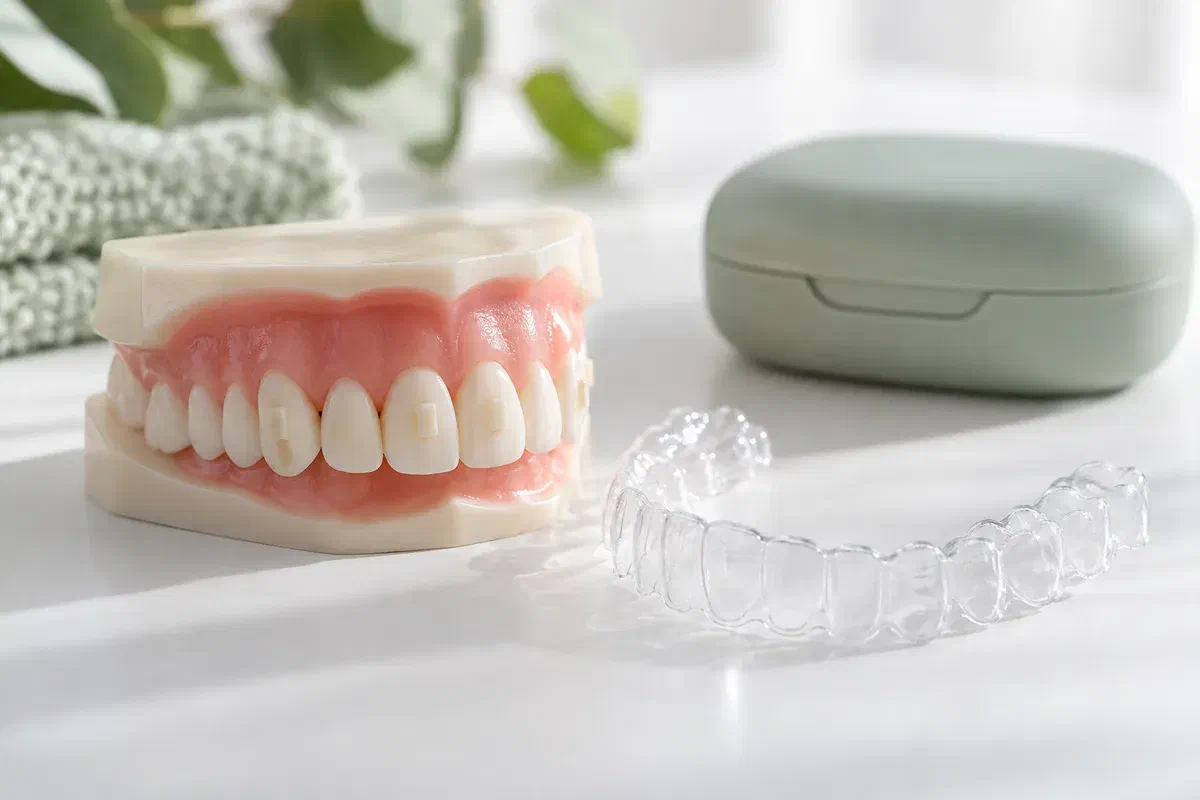
Illustrative tooth model with small tooth-coloured attachments beside an aligner and case
A short checklist from Etobicoke

Gather these before you dial

Judging urgency or the cause is our job, not yours. Having specific facts on hand means we can make a decision on the first call instead of a second one.

Where the attachment was

Note the side and tooth, and the day you first noticed it missing. Say whether it came away while chewing or as you lifted the tray out. A quick photo can help you describe it, and if you are unsure an attachment was ever there, we can check.

How the tray behaves now

Check for daylight between tray and tooth, a sloppy fit, a bent rim, or a tray that suddenly fights you going in. Read the tray number aloud when you call. Forcing a stubborn tray or skipping forward is not a workaround.

Comfort and repeat history

Mention soreness, a scratchy edge, or whether this same spot has lost an attachment before. A repeat may lead the clinician to look at the tooth surface, fit, or removal habits. Full honesty saves a trip; there is no judgement involved.

Pack all the aligners you are currently using, plus any others the team requests. Ask which tray to wear until your visit and whether your planned change should wait.

Making one visit count

A repair that fits the plan, done in as few trips as possible

Attachments are prescribed, not ornamental. Any replacement should match the shape and spot your plan specifies. Because you are travelling, the visit is also a good time to have the clinician check whether the aligner is tracking well or whether any other issue should be addressed at once.

Calling ahead keeps you from wearing a tray longer than needed, or switching too soon, while you wait. The clinician can tell you whether to come in before your next change. No single waiting window works for every lost attachment, so the advice should be specific.

Patient information: Invisalign — the purpose and placement of attachments

A decision before you set out

Ask whether this attachment matters for the current movement and how its loss changes this week’s instructions. Sometimes the answer lets you combine the repair with an upcoming review. A generic timetable cannot make that call for you.

Everything checked in one sitting

Bring up any crack, sharp area, or fit change in the tray along with the missing bump. The clinician can separate an attachment issue from an aligner problem and deal with both. That way you do not need a second trip for the same concern.

Instructions to carry home

Before you leave, confirm your current tray, your next change date, and your next review. Ask for anything unexpected to be repeated or written down. The drive home should not be spent wondering what the plan is.

What the visit involves

Plan, check, bond, confirm

How the appointment goes depends on whether the attachment is fully missing, partly chipped, or tied to another concern. Tell us in advance about fillings, crowns, or recent work on that tooth.

  1. Confirm your stage before the appointment

    Much of this can happen by phone: your current tray, wear habits, when the attachment came off, and any symptoms. The clinician reviews the plan for that tooth. If another office supervises, we can request their information ahead of time to avoid a wasted trip.

  2. Assess the tooth and the aligner

    On the day, any leftover composite is examined and the tray is tried in where needed. Ask whether the issue is limited to the attachment. The clinician should explain the findings before rebuilding.

  3. Replace the bump if your plan needs it

    If a replacement is called for, the enamel is conditioned for bonding and composite is moulded to the planned shape, typically with a template. The material is light-cured, and any excess is cleared away. This is a clinical step only.

  4. Test the fit and plan ahead

    The clinician checks the tray over the new attachment and explains how to carry on. Practise removal if it has been difficult. Confirm the stage, next change, and what to do if it lets go again, so you know whether to call before driving in.

Between visits

Keep the plan on track at home

Your treating clinician’s wear and change advice still applies. A new attachment does not mean restarting an earlier tray, moving ahead, or adding days unless you are told to.

Remove the tray with care

Use the method you were shown, and ask for a second demonstration if the tray catches. Take aligners out only when you need to, and do not twist the plastic to slip past a ridge. Report fit concerns instead of trimming.

Clean thoroughly around attachments

Brush around each attachment and stick with your interdental routine. Ask about any spot you struggle to reach. Do not let a bump stop you cleaning a tooth, and mention irritation that does not settle.

Watch quietly, then call

Avoid poking at attachments or chewing on pens and packaging. If one chips or vanishes again, note when and phone us before travelling. Repeated loss needs reassessment, not a firmer push on the tray or homemade glue.

Deciding on the next step

Not every lost attachment needs an immediate trip

Your plan, the tray’s fit, and the condition of the tooth guide the recommendation. Ask the clinician to explain the reasoning and what to wear until the next step.

When the planned feature is needed now

Rebuild the attachment

The clinician restores the attachment to its intended form and checks how the tray grips it. Ask whether this affects your next switch. Treat the repair as part of your aligner sequence, not as a separate filling.

When something else may be involved

Assess the tray or tooth before replacing

A split tray, a change in the tooth surface, or soreness you did not expect may need attention too. Describe each change you have noticed. The clinician may recommend a different step or adjust the plan before you continue.

When the plan allows some flexibility

Monitor until a planned visit, or coordinate

Sometimes the advice is to continue with specific instructions until an already scheduled review. If another provider manages treatment, ask how they want local help arranged. Correct reproduction requires the treatment information.

Questions from Etobicoke

Timing a repair around the trip

Have the tooth, tray number, and any fit or comfort changes ready when you call. It lets us decide on one well-planned visit.

(905) 876-4488
Can my attachment repair wait for my next scheduled review?
Sometimes, but only your supervising clinician can say. It depends on what the attachment is doing at your stage. Call and describe the situation; you may be able to combine the repair with an upcoming visit.
How can I avoid making two trips for one problem?
Call before coming in, share the details, and bring all the trays the team requests. If another office supervises your plan, ask them to send information ahead. That gives the clinician what they need on the day.
Should I take a photo of the tooth?
A clear photo can help you describe the problem, though it does not replace an assessment. Mention which tooth and when you noticed the change. The team may still need to see you in person.
When should I go somewhere closer instead?
For a dental injury, severe pain, swelling, or a cut that will not stop bleeding, seek care promptly wherever is nearest. Choking or breathing difficulty is a medical emergency. A missing attachment on its own is not.
Can I start my next aligner so I do not lose time?
Not without checking first. Moving ahead without an attachment that your plan relies on may not help. Ask the clinician supervising your treatment before changing trays.
Is losing an attachment a sign my treatment is failing?
No, not on its own. It is a problem to report and assess. The clinician looks at your fit and stage, explains any effect on the plan, and arranges the right response.
Etobicoke visits, organised ahead

Phone first, and we will plan the visit

If you are in aligner treatment with us and an attachment chips or comes away, call our Bronte Street practice before travelling. Share the tray number, the affected tooth, and how things feel, so we can arrange an efficient visit.

If another office supervises your aligners, contact them first for direction. For an urgent symptom, please phone or seek nearby care rather than booking online.

Visit Milton Dental Clinic
Unit 1, 342 Bronte St. S, Milton, ON L9T 5B7
Get directions Clinic hours
Monday–Thursday
11am–7pm
Friday–Sunday
By appointment only

Areas we serve

  • Milton
  • Oakville
  • Mississauga
  • Georgetown
  • Halton Hills
  • Acton
  • Campbellville
  • Brampton
  • Burlington
  • Puslinch
  • Rockwood
  • Erin
  • Caledon
  • Etobicoke
  • Old Milton
  • Bronte Meadows
  • Timberlea
  • Dorset Park
  • Dempsey
  • Clarke
  • Beaty
  • Coates
  • Harrison
  • Scott
  • Willmott
  • Ford
  • Bowes
  • Cobden
  • Walker
  • Mountain View
  • Milton Heights
  • Hawthorne Village
  • Valley View
  • Fallingbrook
  • Nassagaweya
  • Trafalgar
  • Esquesing
  • Nelson
  • Brookville
  • Moffat
  • Glen Williams
  • Norval
  • Limehouse
  • Stewarttown
  • Ashgrove
  • Hornby
  • Silver Creek
  • Speyside
  • Scotch Block
  • North Oakville
  • River Oaks
  • Glen Abbey
  • West Oak Trails
  • Palermo
  • Bronte Creek
  • College Park
  • Joshua Creek
  • Uptown Core
  • Preserve
  • Iroquois Ridge
  • Lisgar
  • Meadowvale
  • Meadowvale Village
  • Churchill Meadows
  • Erin Mills
  • Central Erin Mills
  • Streetsville
  • East Credit
  • Creditview
  • Heartland
  • Sheridan
  • Mount Pleasant
  • Credit Valley
  • Huttonville
  • Churchville
  • Springbrook
  • Northwest Brampton
  • Bram West
  • Fletcher's Meadow
  • Fletcher's Creek South
  • Alton Village
  • Orchard
  • Millcroft
  • Headon Forest
  • Tansley
  • Brant Hills
  • Tyandaga
  • Kilbride
  • Lowville
  • Aberfoyle
  • Morriston
  • Arkell
  • Hillsburgh
  • Freelton
  • Carlisle
  • Waterdown
  • Flamborough
  • Mountsberg

How can we help?

Milton Dental Clinic

Have a question about your smile? Choose the option that works best for you.

For urgent dental concerns, please call.
Messages are reviewed during clinic hours.