

Illustrative patient and dental clinician reviewing an aligner beside its protective case
Cosmetic Dentistry

Invisalign Attachment Repair in Milton

Noticed a smooth spot where a little bump used to be? Our Milton team can look at the tooth, check how your aligner sits, and tell you whether that attachment should be rebuilt before your next tray.

Spotted at the bathroom mirror

The bump is gone. Now what?

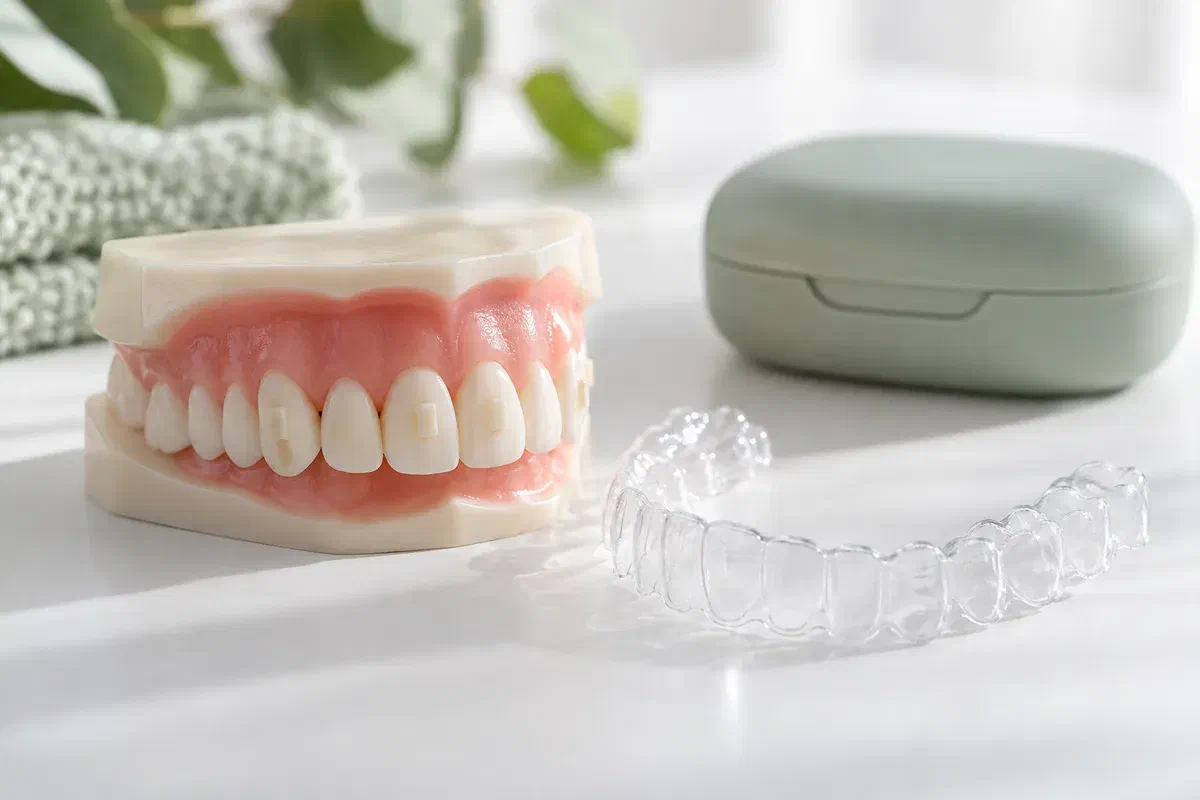
Most people find out during an ordinary evening routine. You brush, run your tongue along your teeth, and one surface feels flatter than it did this morning. That flat spot is often where a tooth-coloured attachment was bonded so the aligner could grip and guide that tooth.

Each attachment is shaped and placed for a particular movement in your plan. Losing one is worth reporting, but it says little on its own about how treatment is going overall. What matters is which tooth it came from, how the current tray now seats, and which stage you have reached.

Since you are already close to our Bronte Street practice, a quick call the next day usually lets us decide how soon to see you. If a different office runs your aligner treatment, start with them so any help from us fits their plan. Please leave the spot alone rather than trying to patch it.

Call about a missing attachment
Illustrative tooth model with small tooth-coloured attachments beside an aligner and case
Useful details for your call

Tell us what you see, what you feel, and which tray you are on

You are not expected to work out why the attachment let go or how serious it is. A few plain observations give the clinician enough to plan a sensible response.

A tooth that feels smoother than its neighbour

Say which tooth or side seems different and roughly when you first felt it. It helps to know whether something came loose while you were eating or when you popped the tray out. Not sure there was ever an attachment on that tooth? We can check your plan.

A tray that sits differently

Mention a visible gap above a tooth, a tray that feels loose or warped, or one that suddenly takes effort to press on. Share the number printed on it. Pushing hard on a tray that no longer fits, or jumping to the next one, is not a fix.

Soreness, a sharp edge, or a repeat

Let us know about any tender gum or cheek and whether this same spot has come away before. A pattern can point us toward the tooth surface, the tray, or the way it is being removed. Being candid helps; nobody is keeping score.

Hold on to the aligners you are using now and bring them with you. Ask which tray you should be in until the visit and whether your next change date still stands.

What a dedicated check in Milton offers

Repair the attachment with the tooth movement in mind

Attachments are working parts of your prescription, not cosmetic extras. When one needs to be rebuilt, the new one should match the planned shape and spot on the tooth. The same appointment lets the clinician see whether the aligner is still tracking properly or whether something else deserves attention.

Reaching out early saves you from guessing about how long to wear a tray. You will hear what comes next and whether you should be seen before moving on. No standard waiting time or schedule change fits every missing attachment, which is why the plan comes first.

Patient information: Invisalign — the purpose and placement of attachments

Guidance specific to that tooth and stage

Find out whether this attachment is doing work right now and how losing it changes today’s instructions. You deserve an answer about your own treatment. A reassuring forum post or generic timeline is no substitute for someone actually looking.

A look at the aligner as well

Point out cracks, rough edges, or any change in fit along with the missing bump. The clinician can tell an attachment problem apart from a tray problem. Sorting out both means you do not leave with a new attachment and the same old discomfort.

Instructions you can repeat back

Before leaving, confirm which tray to wear, when to switch, and when you will be reviewed. If the plan has shifted from what you expected, ask to hear it again. A replaced attachment should come with a clear next step, not a puzzle.

Inside a Milton repair visit

First the plan and the fit, then the material

How the visit runs depends on whether the attachment is fully gone, partly chipped, or tangled up with another issue. Let us know if that tooth has a filling, crown, or other recent work.

  1. Pinpoint the stage and the tooth

    We go over the tray you are wearing, how consistently you have worn it, when the attachment came off, and any symptoms. The clinician then looks at the plan for that tooth. When another office supervises care, their records may be needed before anything is placed.

  2. Examine the surface and the seating

    Any leftover material is inspected and the aligner is tried in where useful. Feel free to ask whether the issue is just the attachment or also involves the tooth or tray. You should hear what was found before any replacement begins.

  3. Rebuild the attachment if it is needed

    When a new attachment is called for, the tooth surface is prepared for bonding and composite is shaped to the prescribed form, usually with a placement template. A curing light sets the material and any excess is cleaned away. This is clinical work, never a do-it-yourself job.

  4. Test the fit and plan the next tray

    The clinician tries the tray over the new attachment and walks you through how to carry on. If removal has been a struggle, practise it before you go. Leave knowing your current stage, your change date, and who to call if it happens again.

Back to your routine

Settle back into the sequence with a clear plan

Wear and tray changes should follow what the treating clinician told you. A replaced attachment is not, by itself, a reason to go back a tray, jump ahead, or stretch out your wear time.

Take trays out the way you were shown

If the aligner snags on the new attachment or feels stubborn, ask to be shown again. Try not to remove it more often than needed, and never bend or twist it to clear a bump. Tell us about a poor fit instead of trimming or reshaping the tray.

Clean around each attachment

Brush gently around the edges of the material and keep up the flossing or interdental cleaning you were given. Ask for tips if one area is hard to reach. Nervousness about the attachment should never mean skipping a tooth, and ongoing irritation is worth mentioning.

Notice changes without poking at them

Avoid picking at attachments or opening packages with your teeth. If one looks chipped or missing again, note when it happened and get in touch. A recurring loss calls for a review, not harder pressing on the tray or a glue from the cupboard.

Deciding what happens next

One missing bump, several possible answers

Your plan, how the tray fits, and the state of the tooth shape the recommendation. Ask the clinician to explain why a particular option suits you and what to wear in the meantime.

When the planned feature still has work to do

Rebuilding a needed attachment

The clinician can restore the attachment to its intended design and check that the tray engages it. Ask whether the timing shifts your next change. The repair belongs to your aligner sequence and should not be handled like a separate filling visit.

When fit, damage, or discomfort is unclear

Checking the tray or tooth first

A split aligner, a change on the tooth surface, or soreness you did not expect may need attention as well. Describe everything you have noticed, even if it seems minor. The clinician may suggest a different step or an updated plan before you continue.

When the original plan should lead

Watching closely or working with your provider

Sometimes the right move is a short period of monitoring with specific instructions. If your aligners are managed elsewhere, we coordinate rather than guess. Recreating an attachment correctly depends on having the treatment details in hand.

Common questions in Milton

Answers about attachments, trays, and timing

When you get in touch, mention the tooth, your tray number, and any change in fit or comfort. Those details turn a vague worry into a plan.

(905) 876-4488
How can I tell an attachment has actually come off?
Compare the tooth with its partner on the other side and look inside the aligner for the small pocket that normally holds the bump. If the pocket sits empty against a flat surface, the attachment may be missing. Call and we can confirm against your plan.
Is it fine to keep wearing my current tray tonight?
Often the advice is to keep wearing the tray you are on while you wait, but this depends on your plan and how it fits. Do not force it if it no longer seats. Call the team supervising treatment for instructions specific to you.
What if I swallowed the piece that came off?
A small fragment of composite is usually not a medical concern, but mention it when you call. If you are coughing, choking, or having any difficulty breathing, seek emergency medical care right away rather than waiting for a dental visit.
Will having an attachment rebuilt need freezing?
Attachments are bonded to the outer surface of the tooth, so the process is usually done without freezing. Let the clinician know if the area is sensitive or if the tooth has recent work, and they can talk you through what to expect.
Can I simply leave the attachment off until my next scheduled check?
Please do not make that call on your own. Whether a missing attachment can wait depends on what it is doing at this stage. Reporting it promptly lets the clinician decide whether a sooner visit or a change to your instructions is needed.
My attachment fell off again. Did I do something wrong?
Not necessarily. Repeated loss can relate to the tooth surface, previous fillings, how the tray fits, or how it is removed. Tell us when it happens and what you were doing. The aim is to find the cause, not assign blame.
Attachment help here in Milton

A quick call can sort out the next step

If you are in aligner treatment with our Bronte Street practice and an attachment chips or lets go, phone us. Have your tray number ready, describe the tooth involved, and mention any change in comfort or fit so we can plan around your stage.

If another clinic supervises your aligners, contact them first for instructions. An online request is not the way to report an urgent symptom; please call.

Visit Milton Dental Clinic
Unit 1, 342 Bronte St. S, Milton, ON L9T 5B7
Get directions Clinic hours
Monday–Thursday
11am–7pm
Friday–Sunday
By appointment only

Areas we serve

  • Milton
  • Oakville
  • Mississauga
  • Georgetown
  • Halton Hills
  • Acton
  • Campbellville
  • Brampton
  • Burlington
  • Puslinch
  • Rockwood
  • Erin
  • Caledon
  • Etobicoke
  • Old Milton
  • Bronte Meadows
  • Timberlea
  • Dorset Park
  • Dempsey
  • Clarke
  • Beaty
  • Coates
  • Harrison
  • Scott
  • Willmott
  • Ford
  • Bowes
  • Cobden
  • Walker
  • Mountain View
  • Milton Heights
  • Hawthorne Village
  • Valley View
  • Fallingbrook
  • Nassagaweya
  • Trafalgar
  • Esquesing
  • Nelson
  • Brookville
  • Moffat
  • Glen Williams
  • Norval
  • Limehouse
  • Stewarttown
  • Ashgrove
  • Hornby
  • Silver Creek
  • Speyside
  • Scotch Block
  • North Oakville
  • River Oaks
  • Glen Abbey
  • West Oak Trails
  • Palermo
  • Bronte Creek
  • College Park
  • Joshua Creek
  • Uptown Core
  • Preserve
  • Iroquois Ridge
  • Lisgar
  • Meadowvale
  • Meadowvale Village
  • Churchill Meadows
  • Erin Mills
  • Central Erin Mills
  • Streetsville
  • East Credit
  • Creditview
  • Heartland
  • Sheridan
  • Mount Pleasant
  • Credit Valley
  • Huttonville
  • Churchville
  • Springbrook
  • Northwest Brampton
  • Bram West
  • Fletcher's Meadow
  • Fletcher's Creek South
  • Alton Village
  • Orchard
  • Millcroft
  • Headon Forest
  • Tansley
  • Brant Hills
  • Tyandaga
  • Kilbride
  • Lowville
  • Aberfoyle
  • Morriston
  • Arkell
  • Hillsburgh
  • Freelton
  • Carlisle
  • Waterdown
  • Flamborough
  • Mountsberg

How can we help?

Milton Dental Clinic

Have a question about your smile? Choose the option that works best for you.

For urgent dental concerns, please call.
Messages are reviewed during clinic hours.