

Illustrative patient and dental clinician reviewing an aligner beside its protective case
Cosmetic Dentistry

Invisalign Attachment Repair in Old Milton

An attachment that lets go from a tooth with an older filling or crown raises its own questions. From Old Milton, you can have the surface, the aligner, and your treatment stage reviewed before anything is rebonded.

Older dental work, newer aligners

When the tooth underneath has a history

Plenty of adults in Old Milton start clear aligner treatment with years of dental work already in place. An attachment, the small tooth-coloured ridge or bump that gives a tray something to push against, may sit on natural enamel next to one bonded over a filling or a crown. Those surfaces do not always hold composite the same way.

So when a bump disappears, the first useful question is not how fast it can be replaced. It is which tooth lost it, what that tooth is made of on the outside, and how well the aligner now seats. Your stage in the sequence also changes what the clinician will suggest.

Our Bronte Street practice is a short way from Milton’s historic downtown, so reaching us to talk it over is straightforward. If your aligners are supervised by another office, call them first so any help is coordinated. In the meantime, avoid filling the gap with anything from home.

Talk to us about the affected tooth
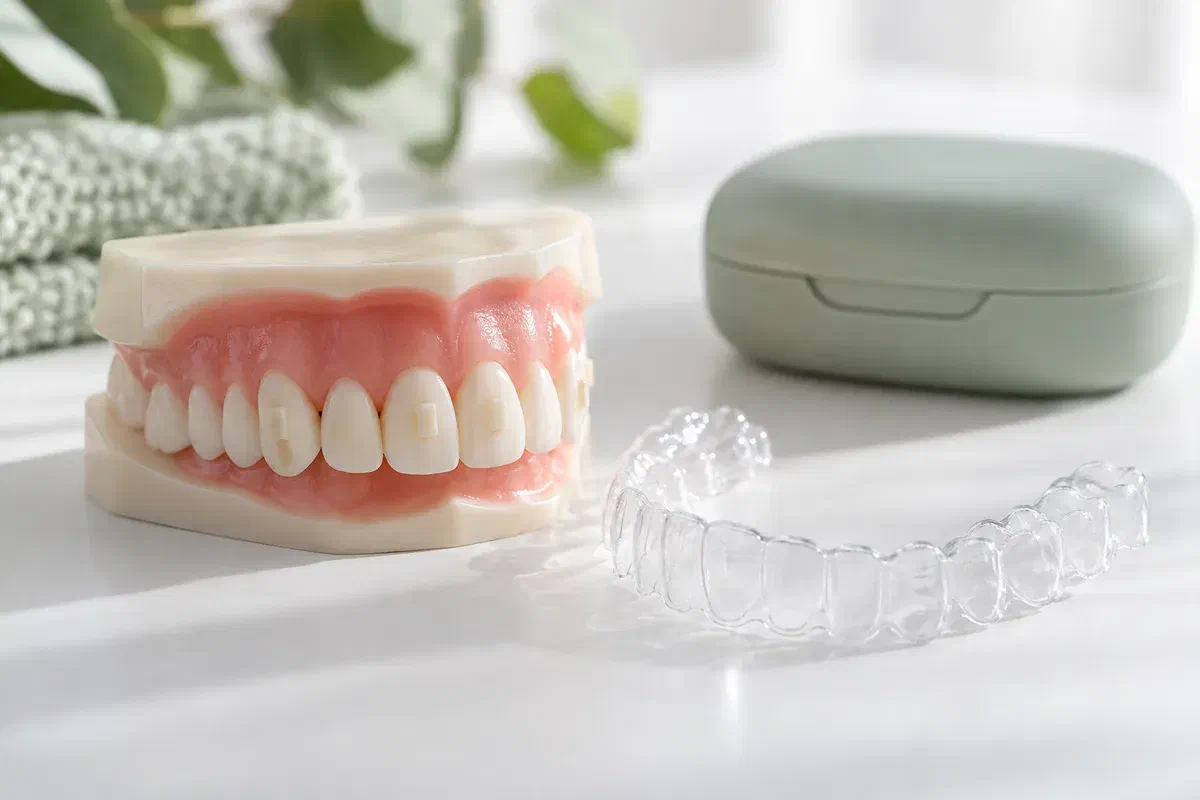
Illustrative tooth model with small tooth-coloured attachments beside an aligner and case
Before you phone from Old Milton

Three things the clinician will want to hear

Nobody expects you to judge urgency or explain why the bond failed. Short, honest observations are what make the conversation productive.

The missing or shrunken bump

Point to the tooth or side and say when you first noticed. Mention whether that tooth has a filling, crown, or veneer, if you know. Uncertain whether an attachment was ever placed there? The team can look it up rather than leaving you to guess.

Any change in how the tray behaves

A tray lifting away from one tooth, feeling slack, or needing real effort to click in is worth describing. Have the tray number handy. Avoid forcing a tray that has started to warp, and do not assume the next one in the box will correct things.

Tenderness or a familiar problem

Report a rough patch rubbing your lip, a sore spot, or a bump that has come away before. Repeated loss on a restored tooth may lead the clinician to consider the surface itself. Being upfront about it simply helps them help you.

Bring the aligners you are currently wearing. Ask which tray to stay in until you are seen and whether your planned switch date should change.

Why the surface matters

A repair that respects both the plan and the tooth

An attachment exists because your treatment design calls for it at that location. If it needs to be rebuilt, its form and placement should follow the original prescription. A careful look also tells the clinician whether an older restoration nearby is affecting the bond or the way the aligner fits.

Getting in touch soon means less guesswork about tray wear. You will learn whether to be seen before your next change and what to do until then. Since each case differs, there is no universal rule about how long a missing attachment can safely wait.

Patient information: Invisalign — the purpose and placement of attachments

A view on that particular tooth

Ask whether the attachment matters for the movement happening now and what its absence means for your current instructions. On a restored tooth, the answer may involve the restoration too. That is information a generic chart of timelines cannot give you.

A check on the tray itself

Mention any crack, sharp margin, or looseness alongside the lost bump. The clinician can separate a tray issue from a bonding issue. Dealing with both avoids walking out with a new attachment while the original irritation goes unexplained.

Next steps stated plainly

Make sure you know your current tray, when to switch, and when the next review happens. If any of that differs from your printed schedule, ask for it again. A repair should end with clarity, not with you working out the rest of the plan alone.

How the appointment unfolds

Review, examine, rebond, confirm

What happens depends on whether the bump is gone, chipped, or linked to some other problem. Tell us about crowns, fillings, veneers, or recent work on that tooth.

  1. Locate the tooth in your plan

    We talk through the tray you are in, how many hours a day you have been wearing it, when the loss happened, and how it feels. The clinician checks the treatment design for that tooth. If another office is in charge, we may need their records first.

  2. Look closely at the surface and fit

    Remaining composite is examined, along with any restoration on that tooth, and the aligner is tried in as needed. Ask whether the finding involves only the attachment. You should hear an explanation before a new one is placed.

  3. Bond a replacement where appropriate

    If one is needed, the surface is prepared to accept bonding and tooth-coloured composite is formed to the planned shape, usually with a template tray. A curing light hardens it and the excess is trimmed. Bonding to crowns or older fillings may call for a different preparation, which the clinician will explain.

  4. Confirm seating and what comes next

    The tray is checked over the result and you will hear how to proceed. If taking it out has been awkward, rehearse it with the team. Before leaving, confirm your stage, your next change, and how to reach us if it lets go again.

Once the bump is back

Pick up where the plan says, not where you guess

Keep to the wear and change schedule your clinician gives you. A new attachment does not mean starting an earlier tray, skipping forward, or adding extra days unless you are told to.

Remove trays with the technique you practised

If the aligner hooks on the attachment, ask for a refresher. Limit how often you take it out, and resist flexing the plastic to work around a ridge. A tray that seems off should be reported, not cut or filed.

Brush and floss around every edge

Clean gently where composite meets enamel or an older restoration, and keep up your flossing. Ask how to manage a spot that is hard to reach. Attachments are no excuse to skip a tooth, and gum irritation that lingers deserves a mention.

Stay alert without testing it

Leave the attachment alone with fingers, tongue, and fingernails, and do not bite threads or tags. If it chips or disappears again, jot down when and call. Recurring loss needs a fresh look rather than stronger pressing or improvised adhesive.

Choosing a response

The tooth, the tray, and the plan decide it

Your recommendation depends on the treatment design, how the aligner seats, and the condition of the surface. Ask why a particular path makes sense and what to wear until then.

When the feature is still needed

Rebuild the planned attachment

The clinician restores the attachment to its prescribed design and checks tray engagement. Ask how this affects your next switch. Treat it as a step in your aligner sequence, not as an unrelated filling.

When something else may be involved

Assess the restoration or tray first

A cracked tray, a worn or chipped filling, or unexpected soreness may need care before or alongside the attachment. Share each change, however small. The clinician may recommend another step or an adjusted plan before you move on.

When your original plan must lead

Monitor or coordinate with your provider

Specific timing or a short watch period may be the advice. If your treatment is run elsewhere, coordination matters. Without the right plan details, no office can be sure of recreating the attachment as designed.

Old Milton questions, answered

What adults with existing dental work often ask

When you call, share the tooth, the tray number, and anything that feels different. That gives the team something concrete to work with.

(905) 876-4488
Can an attachment be bonded onto a crown or an older filling?
Often it can, but these surfaces may need a different preparation than natural enamel. The clinician will look at the restoration and explain the approach. Let the team know what work that tooth has had when you call.
Why does the attachment on my filled tooth keep coming off?
Bonding to an older restoration can be less predictable, and tray fit or removal habits may also play a part. Tell us how often it happens and what you were doing. The clinician can look for a cause and suggest options.
Do I need to report a lost attachment if the aligner feels fine?
It is still worth calling. A comfortable tray does not confirm whether that attachment is needed right now. The team supervising your care can tell you whether to replace it and whether your schedule should change.
Will the new attachment look different from my other teeth?
Attachments are made from tooth-coloured composite chosen to blend in. Shade can look slightly different next to an older crown or filling. Ask the clinician if appearance is a concern, though the attachment’s shape and position are set by your plan.
Is there anything I should avoid eating while the attachment is missing?
Follow your usual aligner routine and take trays out to eat as instructed. Be gentle on that side until it is checked, and mention any sensitivity. Do not use the missing spot as a reason to leave the tray out longer.
Should I worry about the rest of my treatment?
One lost attachment is something to assess, not a verdict on your progress. The clinician reviews fit and stage, explains any effect on the plan, and recommends a response suited to where you are.
From Old Milton to Bronte Street

Bring us the tray and the story

If you are having aligner treatment with us and an attachment lets go, contact our Bronte Street practice. Mention the tray number, the tooth and any restoration on it, and any discomfort, so we can plan the visit around your stage.

If a different practice supervises your aligners, contact them for direction and coordination. For urgent symptoms, please phone rather than booking online.

Visit Milton Dental Clinic
Unit 1, 342 Bronte St. S, Milton, ON L9T 5B7
Get directions Clinic hours
Monday–Thursday
11am–7pm
Friday–Sunday
By appointment only

Areas we serve

  • Milton
  • Oakville
  • Mississauga
  • Georgetown
  • Halton Hills
  • Acton
  • Campbellville
  • Brampton
  • Burlington
  • Puslinch
  • Rockwood
  • Erin
  • Caledon
  • Etobicoke
  • Old Milton
  • Bronte Meadows
  • Timberlea
  • Dorset Park
  • Dempsey
  • Clarke
  • Beaty
  • Coates
  • Harrison
  • Scott
  • Willmott
  • Ford
  • Bowes
  • Cobden
  • Walker
  • Mountain View
  • Milton Heights
  • Hawthorne Village
  • Valley View
  • Fallingbrook
  • Nassagaweya
  • Trafalgar
  • Esquesing
  • Nelson
  • Brookville
  • Moffat
  • Glen Williams
  • Norval
  • Limehouse
  • Stewarttown
  • Ashgrove
  • Hornby
  • Silver Creek
  • Speyside
  • Scotch Block
  • North Oakville
  • River Oaks
  • Glen Abbey
  • West Oak Trails
  • Palermo
  • Bronte Creek
  • College Park
  • Joshua Creek
  • Uptown Core
  • Preserve
  • Iroquois Ridge
  • Lisgar
  • Meadowvale
  • Meadowvale Village
  • Churchill Meadows
  • Erin Mills
  • Central Erin Mills
  • Streetsville
  • East Credit
  • Creditview
  • Heartland
  • Sheridan
  • Mount Pleasant
  • Credit Valley
  • Huttonville
  • Churchville
  • Springbrook
  • Northwest Brampton
  • Bram West
  • Fletcher's Meadow
  • Fletcher's Creek South
  • Alton Village
  • Orchard
  • Millcroft
  • Headon Forest
  • Tansley
  • Brant Hills
  • Tyandaga
  • Kilbride
  • Lowville
  • Aberfoyle
  • Morriston
  • Arkell
  • Hillsburgh
  • Freelton
  • Carlisle
  • Waterdown
  • Flamborough
  • Mountsberg

How can we help?

Milton Dental Clinic

Have a question about your smile? Choose the option that works best for you.

For urgent dental concerns, please call.
Messages are reviewed during clinic hours.