

Illustrative adult patient discussing aligner treatment with a dental clinician
Cosmetic Dentistry

Invisalign Consultations in Burlington

Morning coffee, lunch at your desk, a snack after the gym: aligners touch every one of those moments. Our Invisalign consultation for Burlington adults checks whether trays suit your teeth and bite, and talks through how they would fit the way you eat and live.

Burlington Invisalign consultations

Straighter teeth start with an ordinary Tuesday.

Clear trays are easy to imagine in a mirror and harder to imagine at a dinner table. They come out for eating and for most drinks other than water, then go back in after a quick clean. That rhythm is as much a part of treatment as the trays themselves.

Clinically, Invisalign relies on a prescribed series of removable aligners that move teeth a little at a time. Its suitability depends on what needs to move, how the bite comes together and whether the gums and bone around the teeth are in good shape. A front-on smile photo cannot answer those questions.

During the visit you can ask what records would be required, who would oversee treatment and how many hours of wear would be expected. You are not agreeing to anything by coming in. For many people the most valuable outcome is simply a straight answer about whether aligners would work for them.

Talk to us about aligners
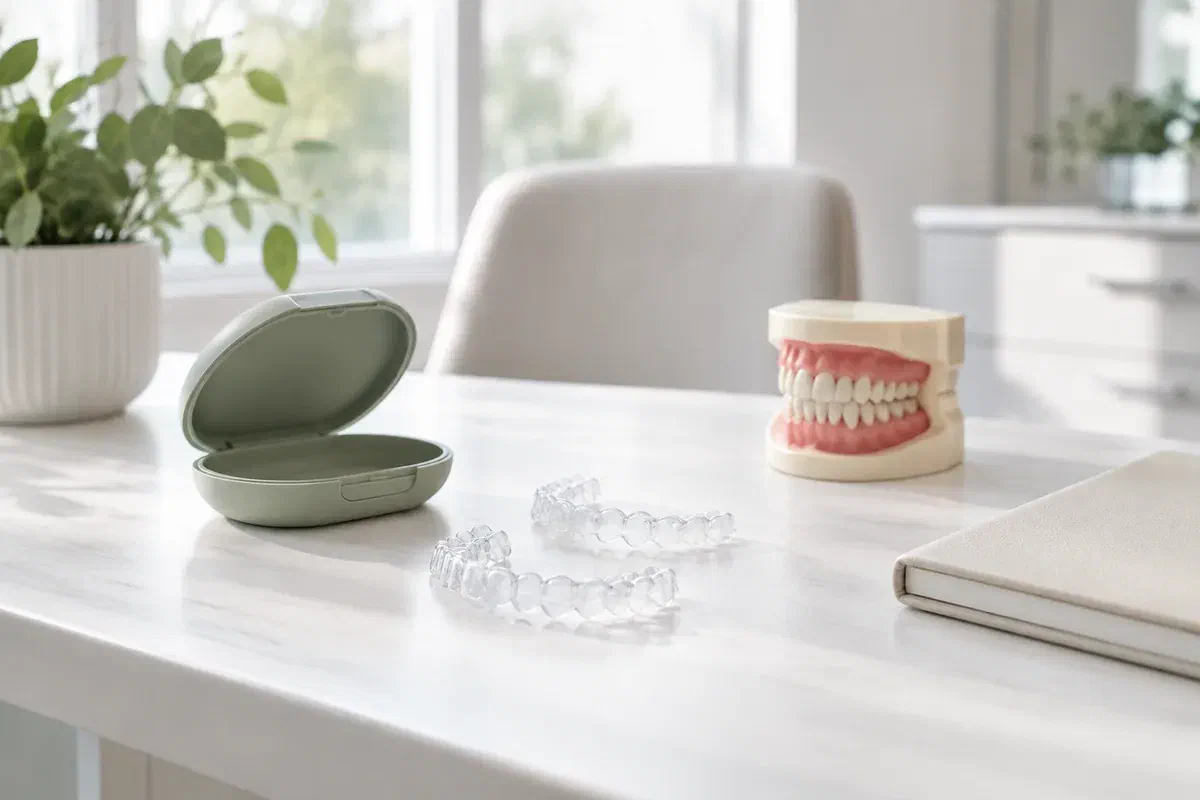
Illustrative aligners, protective case, tooth model, and notebook on a consultation desk
Topics to put on the table

Your goal. Your dental past. Your eating habits.

Each of these shapes what a sensible plan looks like. Mention anything that worries you about comfort, scheduling, fees or upkeep, since those concerns are part of the decision.

What you would like to look different

Show the tooth that overlaps or the space that bothers you. Ask whether moving it would change how your molars meet. A trustworthy plan describes its intended changes and its limits, without suggesting it will fix every feature of your smile.

Earlier orthodontics and existing restorations

Mention braces, retainers, crowns, bridges, implants, past trauma and gum care. Bring appliances if you are asked to. All of this can influence how treatment is staged and should be reviewed well before records are sent for tray fabrication.

Grazing, sipping and the clean-before-you-reinsert rule

If you snack often or sip sweet drinks through the day, say so. Each break means removing trays, then cleaning teeth before they go back. Asking now how that would fit your habits beats committing because aligners look subtle.

The first conversation might show that a more complete exam, records, other care or a referral should come before any firm recommendation. Ask what is included today and which steps would be separate.

What you should know by the end

The method matters more than the logo.

You should understand why removable aligners may or may not be able to make the movements you need, and which clinician would design and supervise the plan. Brand familiarity does not prove that a particular appliance is the right fit for your mouth.

Ask about life after the active trays as well. Retainers and occasional reviews keep teeth from drifting, and they have their own costs and routines. It is reasonable to ask how additional aligners or a revised plan would be handled if movement does not go quite as predicted.

Patient information: Invisalign Canada — treatment stages and retention · British Orthodontic Society — questions before orthodontic treatment

A target you understand

Ask which teeth would shift, how the bite would change and what would not be touched. Being able to describe the aim yourself makes it much easier to choose between a focused cosmetic plan and a more thorough one.

Meals, drinks and cleaning, mapped out

Ask how to handle trays at mealtimes, how to clean teeth and aligners, where to keep trays when they are out and how often reviews would be. Ask about attachments, which can be visible, and the snug feeling that follows each change.

Costs with clear edges

Ask what the estimate includes and what might be charged separately, such as additional records, replacement aligners, retainers or further stages. Clarify the assumptions underneath. Well-defined boundaries help you compare options instead of chasing the lowest headline figure.

What happens at the visit

A conversation first, an examination second, choices after that

The content of the visit depends on how it was booked and what records exist. Ask in advance whether it is an introductory talk or includes records for a full proposal.

  1. Explain what you are hoping for

    Describe the change you want and any past orthodontic treatment. Go over medical history, medicines, symptoms and dental work. A coming move or long stretch of travel is worth raising now, because it affects how follow-up would be arranged.

  2. Have the teeth, gums and bite assessed

    The clinician looks at how your teeth relate and whether more records would aid diagnosis. Photos, radiographs or a digital scan may be suggested for a specific reason. Ask if a dental problem should be fixed before anything else.

  3. Compare aligners with the alternatives

    Talk through suitability, probable stages, risks and the commitments of wear and follow-up. Ask about attachments or small amounts of tooth reshaping to create space if mentioned. Any simulation is a planning image, not a promised result.

  4. Clarify what comes before commitment

    Further records, a specialist opinion or simply time with the estimate may be next. Make sure you know what has been agreed, whether the next stage costs anything and how to follow up with questions.

Taking the proposal home

Try the routine on before saying yes.

The usual next step is clarifying the plan and completing any dental care that was advised. Carry on with regular brushing, flossing and hygiene visits while you think.

Rehearse a day of wear

Invisalign guidance often mentions 20 to 22 hours a day in the trays, with your clinician setting your own instructions. Count how often you eat and drink anything other than water. Raise any conflict now rather than expecting lighter wear to produce the same movement.

Ask who checks in on progress

Confirm who would monitor your treatment, how often you would be seen and whom to call if a tray stops fitting or is lost. Ask what would happen if teeth lagged behind the plan. Responsibilities should be clear from start to finish.

Keep other treatment in sequence

Let the team know about fillings, crowns or other dental work booked elsewhere. A change to tooth shape can affect records and fit. Follow the agreed order and check whether another assessment is needed before starting.

Patient information: Invisalign Canada — patient questions and wear guidance

Possible next steps

More than one good answer

Ask why a suggestion suits you specifically. Wanting to learn about Invisalign does not mean you must begin, and an alternative is not a downgrade.

When the findings and your habits support it

Continue to Invisalign planning

If aligners suit the clinical goals, further records and a detailed proposal may follow. Confirm the scope, limits and responsibilities before ordering. The plan should include monitoring and retention along with the active movement.

When the bite or movements need a different approach

Consider another appliance or a specialist opinion

Some situations are better handled with another appliance or an orthodontist’s input. Ask what makes that a good fit and what a referral would clarify. Your interest in removable trays can still be weighed alongside the clinical picture.

When oral-health findings or timing suggest a pause

Treat something else first, wait or monitor

A filling, gum care or a busy period might need to come first. You may also decide not to pursue elective treatment after hearing the options. Ask which findings still need attention and how any monitoring would be organised.

Asked by Burlington adults

Food, drink and other practical questions

Ask about your own teeth, the planned scope and day-to-day realities. General advertising cannot answer questions about an individual plan.

(905) 876-4488
Can I drink coffee while wearing aligners?
Invisalign instructions generally advise removing trays for drinks other than water, since hot or coloured drinks can stain or affect the trays and sugary ones can be held against teeth. Ask your clinician how to manage the drinks you have most often.
How often will I have to brush during the day?
Teeth are usually cleaned before trays go back in after eating, so brushing may happen more often than you are used to. Ask about a practical routine for workdays and what to carry with you.
Do I have to say yes to treatment at the first appointment?
No. The visit is for understanding findings and options. Ask what records or decisions come next and whether they have their own fee. It is sensible to take your time with an elective proposal.
Will aligners change the way I speak?
Some people notice a slight change in speech while adjusting to new trays, which often settles with practice. Ask the clinician what to expect and mention it if your work involves a lot of speaking.
Should I tell you about a tooth that was replaced with an implant?
Yes. An implant is fixed in the bone and will not move with aligners as a natural tooth would. Its position and the neighbouring teeth have to be considered before any plan is recommended.
What makes one Invisalign estimate more complete than another?
Ask for the included stages and exclusions to be explained, such as records, reviews, extra aligners, replacements and retainers. Confirm any assumptions about duration. Compare the overall scope rather than only the starting payment.

Patient information: Align Technology — patient instructions and treatment considerations

Visiting from Burlington

Tell us how you eat, drink and work. We will tell you what aligners would ask.

Arrange a visit to our Bronte Street practice to find out whether Invisalign or another orthodontic approach suits you. We will explain the assessment, the daily commitment and your options before you decide anything.

Suitability, the extent of treatment and any referral depend on assessment. Ask about the consultation fee and included records when booking.

Visit Milton Dental Clinic
Unit 1, 342 Bronte St. S, Milton, ON L9T 5B7
Get directions Clinic hours
Monday–Thursday
11am–7pm
Friday–Sunday
By appointment only

Areas we serve

  • Milton
  • Oakville
  • Mississauga
  • Georgetown
  • Halton Hills
  • Acton
  • Campbellville
  • Brampton
  • Burlington
  • Puslinch
  • Rockwood
  • Erin
  • Caledon
  • Etobicoke
  • Old Milton
  • Bronte Meadows
  • Timberlea
  • Dorset Park
  • Dempsey
  • Clarke
  • Beaty
  • Coates
  • Harrison
  • Scott
  • Willmott
  • Ford
  • Bowes
  • Cobden
  • Walker
  • Mountain View
  • Milton Heights
  • Hawthorne Village
  • Valley View
  • Fallingbrook
  • Nassagaweya
  • Trafalgar
  • Esquesing
  • Nelson
  • Brookville
  • Moffat
  • Glen Williams
  • Norval
  • Limehouse
  • Stewarttown
  • Ashgrove
  • Hornby
  • Silver Creek
  • Speyside
  • Scotch Block
  • North Oakville
  • River Oaks
  • Glen Abbey
  • West Oak Trails
  • Palermo
  • Bronte Creek
  • College Park
  • Joshua Creek
  • Uptown Core
  • Preserve
  • Iroquois Ridge
  • Lisgar
  • Meadowvale
  • Meadowvale Village
  • Churchill Meadows
  • Erin Mills
  • Central Erin Mills
  • Streetsville
  • East Credit
  • Creditview
  • Heartland
  • Sheridan
  • Mount Pleasant
  • Credit Valley
  • Huttonville
  • Churchville
  • Springbrook
  • Northwest Brampton
  • Bram West
  • Fletcher's Meadow
  • Fletcher's Creek South
  • Alton Village
  • Orchard
  • Millcroft
  • Headon Forest
  • Tansley
  • Brant Hills
  • Tyandaga
  • Kilbride
  • Lowville
  • Aberfoyle
  • Morriston
  • Arkell
  • Hillsburgh
  • Freelton
  • Carlisle
  • Waterdown
  • Flamborough
  • Mountsberg

How can we help?

Milton Dental Clinic

Have a question about your smile? Choose the option that works best for you.

For urgent dental concerns, please call.
Messages are reviewed during clinic hours.