

Illustrative adult patient discussing aligner treatment with a dental clinician
Cosmetic Dentistry

Invisalign Consultations in Etobicoke

Aligner treatment unfolds over many months, so the trip matters. If you are coming from Etobicoke, an Invisalign consultation can cover suitability, how reviews might be grouped efficiently, and what to do closer to home if an urgent problem appears mid-treatment.

Planning aligner care from Etobicoke

A long course of care deserves a short, clear plan.

From Toronto’s west end, each appointment is a real commitment of time. So before thinking about tray counts or simulations, it is worth asking what the whole journey would look like: assessment, records, fitting, reviews and then retention, with an idea of how often you would need to come in.

Invisalign itself is a prescribed sequence of removable clear aligners, each changing tooth position slightly. It suits some problems well and others poorly. The clinician weighs the movement you want, how your teeth meet and the health of the gums and bone before saying which category you fall into.

You can use the consultation to ask how visits might be organised, who would supervise you and what to do between appointments. Coming in to learn more does not commit you. Sometimes the most practical recommendation is a different appliance, a specialist nearer home or a later start date.

Ask about planning your visits
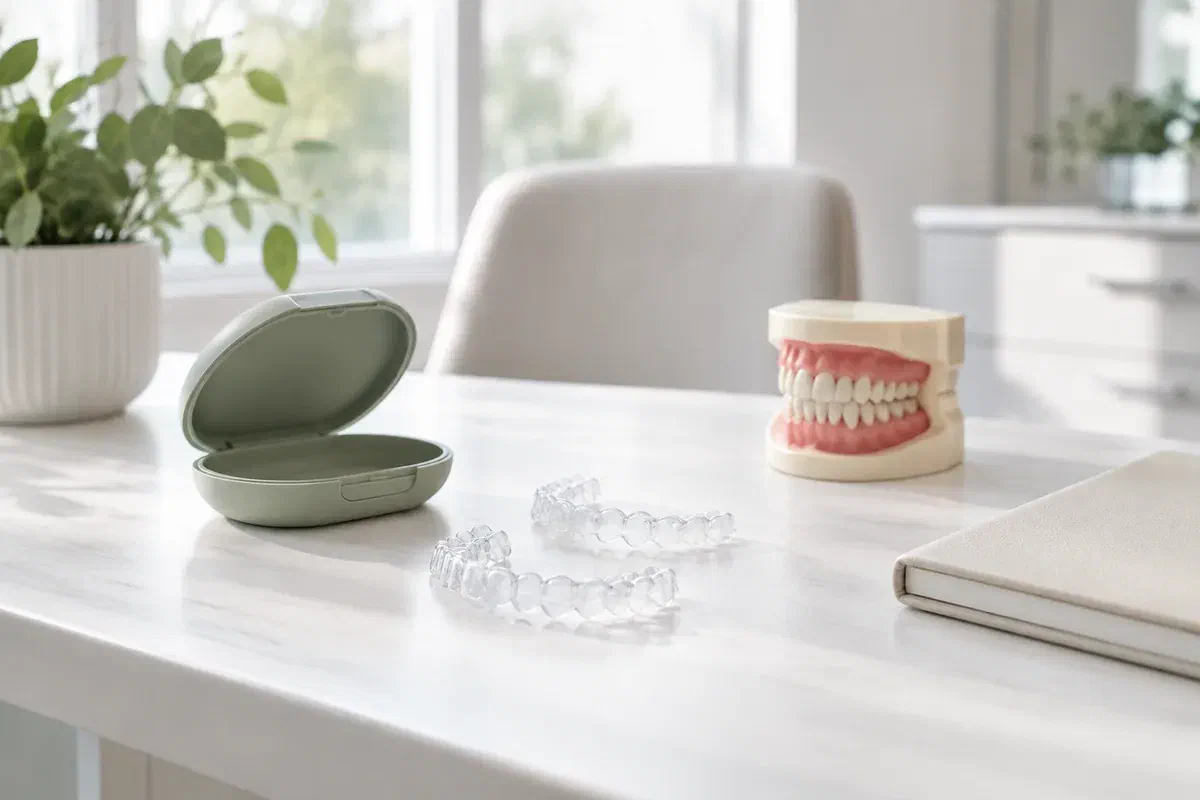
Illustrative aligners, protective case, tooth model, and notebook on a consultation desk
Bring these to the first visit

Goals, history and travel all shape the plan.

When the clinician hears about your concerns, past treatment and the realities of the trip, the advice becomes more practical. Mention comfort, scheduling and fee questions as well.

What you would like improved

Show the rotated tooth, crowding or space you are thinking about. Ask whether changing it would also change your bite. A sound plan describes its target and what it will leave alone, without implying that every flaw will be removed.

Records and restorations you already have

Bring details of braces, retainers, crowns, bridges, implants, injuries or gum care, and ask your current dentist for recent X-rays if helpful. Having that ready can avoid an extra trip and lets existing work be considered before any trays are ordered.

How wear and travel fit your weeks

Think about commuting, long workdays and trips away. Trays must be worn steadily and cleaned carefully. Ask how that would play out in your routine instead of deciding on looks alone, and raise any doubt about keeping up with the schedule.

Sometimes the first conversation shows that a full exam, more records, other treatment or a referral is needed first. Ask what can be done in one visit, so you are not surprised by a second appointment.

Leave with a plan you can travel with

What would treatment ask of you, and how often?

By the end you should understand whether removable aligners can make the movements involved and who would be responsible for planning and checking your progress. A recognisable name on the box does not establish that it is the right approach for your teeth.

Retention is part of the commitment, and so are follow-up checks after the active stage. Ask how those would be scheduled from a distance and what they cost. It is also sensible to ask what happens if extra trays are needed, since that may mean added visits.

Patient information: Invisalign Canada — treatment stages and retention · British Orthodontic Society — questions before orthodontic treatment

An aim that can be explained simply

Ask which teeth would move, which bite changes are planned and what would stay as is. Being able to say the goal in plain words helps you compare a limited plan with a more involved one.

A review pattern you can manage

Ask how often appointments would be expected and whether some steps can be combined. Ask about removing trays for meals, cleaning and storage, and whether attachments will be used. Each new tray usually feels tight for a short time.

A fee outline with no grey areas

Ask what the estimate includes and what could be extra, such as further records, replacement aligners, retainers or added stages. Find out what assumptions it rests on. Clear terms make comparison fair and help you avoid surprises later.

Making one trip count

What the consultation covers

The content depends on the appointment booked and what records you bring. When arranging it, ask whether planning records can be gathered at the same visit, which may save a journey.

  1. Set out your goals and background

    Explain the change you hope for and any earlier orthodontics. Share health information, medications, symptoms and dental work. If you might relocate or travel for long periods, say so now so continuity of care is part of the conversation.

  2. Assessment of teeth, gums and bite

    Upper and lower teeth are checked against each other, and the gums are looked at closely. If X-rays, photos or a scan would add something, you will be told what and why. Should decay or gum trouble need sorting out first, it is better to learn that now than after a second drive.

  3. A frank comparison of approaches

    Suitability, likely stages, risks and the demands of wear and review are discussed. Ask about attachments or making space if these come up. A digital simulation is a planning aid, not a promise of the precise outcome.

  4. A clear list of what comes next

    You may need more records, a specialist view or time with the estimate. Leave knowing what was agreed, any fees for the next stage and how to send questions without needing another trip.

Deciding from a distance

Plan for the months between visits.

Before treatment, the next step is usually clarifying the proposal and booking any recommended care. Keep your regular dental routine and checkups going while you decide.

Picture daily wear in your own week

Invisalign guidance commonly refers to 20 to 22 hours a day of wear, with your clinician providing specific instructions. Think through meals, cleaning and time away. Flag anything that might interfere rather than assuming partial wear will work as well.

Agree on how problems are handled remotely

Find out who monitors progress, how often you would be seen and whom to contact if a tray is lost or stops fitting. Ask which issues can be handled by phone and which would need a visit. Clear responsibilities save wasted trips.

Coordinate with your local dentist

Mention any fillings, crowns or other treatment planned with a dentist nearer home. Changes to tooth shape can affect scans and fit. Keep to the agreed sequence and ask whether further assessment is needed before starting.

Patient information: Invisalign Canada — patient questions and wear guidance

Possible paths forward

The right answer may not involve trays at all.

Ask why a recommendation suits your situation. Being curious about Invisalign does not commit you to it, and another approach is not a lesser choice.

When the assessment and the travel commitment both work

Continue with Invisalign planning

If aligners fit the goals, more records and a full proposal may be next. Confirm scope, limitations and responsibilities before ordering. The plan should include a review schedule and retention as well as the active stage.

When the movement or the logistics call for it

Another appliance, or an orthodontist nearer home

Some concerns are better treated another way. If a referral is suggested, ask what it should answer and whether a specialist closer to you is an option. Your preference for removable trays can still be discussed.

When oral-health findings or timing suggest a pause

Treat other needs, postpone or monitor

A cavity, gum concern or busy year might take priority. You may also decide not to pursue an elective change after hearing the options. If anything should be watched over time, ask whether your regular dentist nearer home could handle that monitoring.

Questions from the west end

Distance, timing and what to ask

Focus on your own teeth, the planned scope and how treatment would work with the travel involved. General advertising cannot answer those questions for you.

(905) 876-4488
Can the consultation and planning records happen in the same visit?
Sometimes. Ask when booking whether records can be gathered on the day if aligners look suitable. It depends on the assessment, so the clinician may still recommend another step first.
How should I plan visits if I am coming from Etobicoke?
Ask for a rough outline of the appointment pattern, and whether reviews can be timed to suit your schedule. Bring recent records from your regular dentist. Knowing the plan up front helps you decide whether the trip is workable.
What should I do if a tray breaks between appointments?
Call for advice before changing trays yourself. You may be told to wear the previous or next set while a replacement is arranged. Ask at the start how replacements are handled and whether they are included.
Can my regular dentist keep doing my cleanings during treatment?
Usually ordinary care can continue. Tell both offices so treatment is coordinated, especially if fillings or crowns are planned. Changes to tooth shape can affect how trays fit.
Is an Invisalign consultation a promise to start treatment?
No. The visit explains findings and options. Ask what records or decisions would follow and whether there are separate fees. Taking time with an elective proposal is wise.
If I had braces before, will aligners definitely work this time?
Not necessarily. Current tooth positions, gum health and bite all need to be assessed. Bring what you know about the earlier treatment and any retainer, and ask what approach fits your teeth now.

Patient information: Align Technology — patient instructions and treatment considerations

Booking from Etobicoke

Plan it well once, then decide.

Make the trip to our Bronte Street practice count by bringing your records and your questions. We will look at whether Invisalign or another orthodontic route suits you, explain what treatment would ask of you and sketch how the visits might be spaced, all before you commit to anything.

Suitability, scope and any referral depend on assessment. Ask about the consultation fee and whether records can be taken at the same visit when you book.

Visit Milton Dental Clinic
Unit 1, 342 Bronte St. S, Milton, ON L9T 5B7
Get directions Clinic hours
Monday–Thursday
11am–7pm
Friday–Sunday
By appointment only

Areas we serve

  • Milton
  • Oakville
  • Mississauga
  • Georgetown
  • Halton Hills
  • Acton
  • Campbellville
  • Brampton
  • Burlington
  • Puslinch
  • Rockwood
  • Erin
  • Caledon
  • Etobicoke
  • Old Milton
  • Bronte Meadows
  • Timberlea
  • Dorset Park
  • Dempsey
  • Clarke
  • Beaty
  • Coates
  • Harrison
  • Scott
  • Willmott
  • Ford
  • Bowes
  • Cobden
  • Walker
  • Mountain View
  • Milton Heights
  • Hawthorne Village
  • Valley View
  • Fallingbrook
  • Nassagaweya
  • Trafalgar
  • Esquesing
  • Nelson
  • Brookville
  • Moffat
  • Glen Williams
  • Norval
  • Limehouse
  • Stewarttown
  • Ashgrove
  • Hornby
  • Silver Creek
  • Speyside
  • Scotch Block
  • North Oakville
  • River Oaks
  • Glen Abbey
  • West Oak Trails
  • Palermo
  • Bronte Creek
  • College Park
  • Joshua Creek
  • Uptown Core
  • Preserve
  • Iroquois Ridge
  • Lisgar
  • Meadowvale
  • Meadowvale Village
  • Churchill Meadows
  • Erin Mills
  • Central Erin Mills
  • Streetsville
  • East Credit
  • Creditview
  • Heartland
  • Sheridan
  • Mount Pleasant
  • Credit Valley
  • Huttonville
  • Churchville
  • Springbrook
  • Northwest Brampton
  • Bram West
  • Fletcher's Meadow
  • Fletcher's Creek South
  • Alton Village
  • Orchard
  • Millcroft
  • Headon Forest
  • Tansley
  • Brant Hills
  • Tyandaga
  • Kilbride
  • Lowville
  • Aberfoyle
  • Morriston
  • Arkell
  • Hillsburgh
  • Freelton
  • Carlisle
  • Waterdown
  • Flamborough
  • Mountsberg

How can we help?

Milton Dental Clinic

Have a question about your smile? Choose the option that works best for you.

For urgent dental concerns, please call.
Messages are reviewed during clinic hours.