

Illustrative adult patient discussing aligner treatment with a dental clinician
Cosmetic Dentistry

Invisalign Consultations in Milton

Noticed a crowded tooth in a photo and wondered whether clear aligners could help? A Milton Invisalign consultation looks at your bite, gums and daily habits, explains what treatment would ask of you, and leaves the decision about any plan in your hands.

Aligner questions, close to home in Milton

Is it the look of your smile, or the way your teeth meet?

Many people book this visit after spotting a crooked incisor in a family picture. That is a reasonable starting point, but the teeth you see when you smile are only part of the picture. The clinician also looks at how your upper and lower teeth come together and how healthy the gums and bone around them are.

Invisalign uses a prescribed sequence of removable clear trays, each moving teeth a small amount. Some concerns suit that approach well. Others involve the bite in ways that call for a wider plan, a different appliance or an orthodontist’s opinion, and the consultation is where that difference gets sorted out.

Treat the appointment as a fact-finding conversation. You can ask what records would be needed, who would supervise the work and how much wearing trays would change your week. Being curious about aligners creates no obligation to begin, and a good visit ends with a clear sense of the next sensible step.

Book a Milton aligner consultation
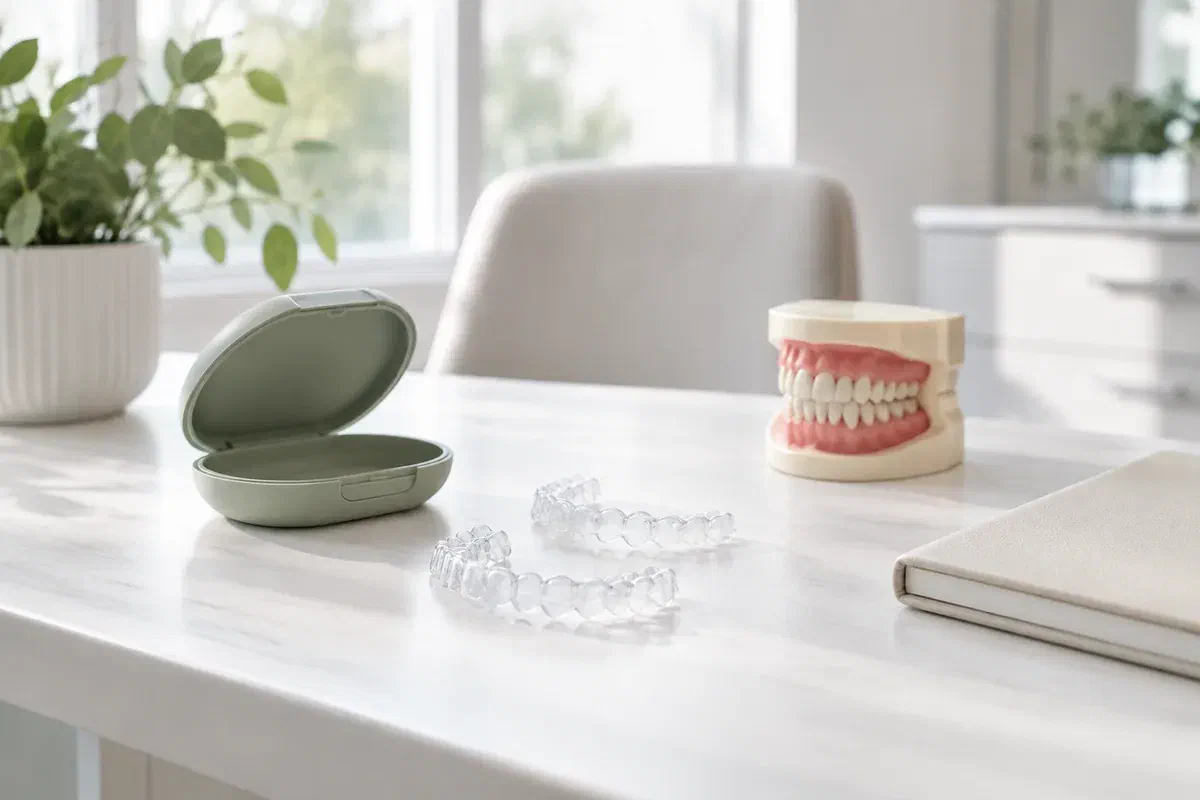
Illustrative aligners, protective case, tooth model, and notebook on a consultation desk
Worth raising at the first visit

Tell us what bothers you, then tell us what has been done before.

The more the clinician knows about your goals and history, the more useful the conversation becomes. Mention worries about comfort, schedules, fees or long-term upkeep too, since they shape what plan is realistic.

The specific change you have in mind

Show the gap, overlap or rotated tooth that catches your eye. Ask whether moving it would alter how your back teeth bite. A responsible plan names what it aims to change and what it will leave alone, instead of promising to perfect every detail of the smile.

Braces, retainers and restorations from the past

Let the team know about earlier orthodontics, crowns, bridges, implants, old injuries or gum therapy. Bring a retainer if you still have it. This history can change the order of treatment and needs to be weighed before any scans are used to order trays.

How removable trays would fit your days

Talk honestly about work hours, snacking, coffee, travel and how easily you remember routines. Aligners only work with steady wear and careful cleaning. It is wiser to test that against your actual life now than to commit because the trays look discreet.

A first discussion may show that a fuller examination, more records, other dental care or a referral should come before any firm recommendation. Ask what this appointment covers and which steps would be booked separately.

What a useful visit leaves you with

Clarity about the treatment, not a sales pitch for a product.

By the end you should know why aligners might or might not manage the movements involved, and who would be responsible for planning and checking your progress. A well-known brand name tells you little about whether it is the right tool for your particular mouth.

Expect the conversation to look past the last tray. Retainers and periodic checks are what hold teeth in their new positions, so ask about them and their cost early. It also helps to hear how refinement trays or a revised plan would be handled if progress differs from the forecast.

Patient information: Invisalign Canada — treatment stages and retention · British Orthodontic Society — questions before orthodontic treatment

An aim you could explain to someone else

Find out which teeth would move, which bite relationships would change and what would stay as it is. If you can describe the goal in plain words, it becomes much easier to weigh a short, limited plan against a more complete one.

A realistic sense of living with trays

Ask about taking trays out to eat, brushing before putting them back, storing them safely and how often reviews would be booked. Raise attachments if they are likely. Clear aligners can still show small bumps and take some getting used to.

Fees with the edges clearly drawn

Ask what a quoted fee covers and what could be billed separately, such as extra records, replacement trays, retainers or added stages. Find out what assumptions sit behind it. A clear outline lets you compare options rather than reacting to one headline number.

How the appointment usually unfolds

Four parts, one decision at the end.

What happens depends on the visit you book and any records you already have. When arranging it, ask whether this is a first conversation only or whether it includes the records needed for a detailed proposal.

  1. Talk through your goals and background

    Describe what you would like to change and any orthodontic treatment you had before. Share health details, medications, symptoms and existing dental work. If a move, new job or long trip is coming up, say so now so continuity can be planned.

  2. Examine teeth, gums and bite

    The clinician checks how the teeth relate to one another and decides whether further records would help with diagnosis. Photos, X-rays or scans may be suggested for a stated reason. Ask whether a cavity or gum issue should be treated first.

  3. Weigh aligners against other routes

    Go over suitability, likely stages, risks and the wear and review commitments. Ask about attachments or making space between teeth if these come up. A digital preview, if one is shown, is a planning picture and not a promise of the exact result.

  4. Agree on what comes next

    You might need more records, a specialist view or simply time to think about an estimate. Confirm what has been decided, whether the next stage carries a fee, and how to reach the team with questions before anything is ordered.

Once you leave the chair

Read the proposal as a whole year of care, not one appointment.

Before anything starts, the next step is usually settling the plan and finishing any recommended dental care. Keep brushing, flossing and your regular checkups going while you decide.

Picture the wear schedule in a normal week

Invisalign guidance often describes wearing trays 20 to 22 hours a day, with your own clinician setting the instructions. Walk through mealtimes, cleaning and weekends away. Raise any obstacle now instead of hoping part-time wear will give the same outcome.

Settle who oversees your progress

Confirm who will monitor treatment, how often you would be seen and whom to call about a poor fit or a lost tray. Ask what happens if teeth do not track as planned. Clear roles matter for the whole course, not only the day trays are fitted.

Line up other dental work in the right order

Mention any fillings, crowns or other treatment booked elsewhere. Reshaping a tooth can affect scans and how trays fit. Keep to the agreed order, and check whether another assessment is needed before going ahead.

Patient information: Invisalign Canada — patient questions and wear guidance

Where the conversation can lead

Three honest paths after an assessment.

Ask why a particular recommendation fits your situation. Arriving interested in Invisalign does not mean you must start, and choosing a different approach is not settling for less.

When the findings and your routine both support it

Move ahead with Invisalign planning

If aligners match the clinical goals, further records and a detailed proposal may follow. Confirm scope, limits and responsibilities before trays are ordered. The plan should cover monitoring and retainers, not just the months of active movement.

When the bite or movements call for something else

Look at another appliance or an orthodontist’s view

Some problems are better handled with a different appliance or with specialist input. Ask what makes that suggestion fit and what question a referral would answer. Your preference for removable trays can still be part of that discussion.

When health findings or timing point to a pause

Treat other needs first, wait or keep watch

A cavity, gum concern or busy season may need to come first. You may also decide, once you understand the options, that an elective change is not for you. Ask which findings still need care and how any monitoring would work.

Milton aligner questions

What people tend to ask before they decide

Bring questions about your own teeth, the proposed scope and day-to-day treatment. Advertising cannot speak to the details of a personal plan, but your clinician can.

(905) 876-4488
Is crowding that only shows in photos worth a consultation?
It can be. Mild crowding may be purely cosmetic, or it may sit alongside bite or cleaning concerns you have not noticed. An assessment explains which applies, and you can decide afterwards whether any treatment is worthwhile for you.
Can I leave the visit without signing up for anything?
Yes. The consultation is for understanding findings and options. Ask which records or decisions would come next and whether they carry a separate fee. Taking time to think over an elective proposal is entirely reasonable.
Do aligners make it harder to keep my teeth clean?
They add steps. Trays come out to eat, and teeth are usually brushed before trays go back in so food is not held against them. Ask how to clean the trays themselves and what to do if your routine is often rushed.
What happens if a tray cracks or goes missing partway through?
Contact the team rather than skipping ahead or going without. They can tell you whether to wear the previous or next tray in the meantime and whether a replacement is needed. Ask at the start whether replacements are included in the fee.
Does an old set of braces mean my teeth will move easily with aligners?
Not necessarily. Current tooth positions, gum health and the bite all need fresh assessment. Bring what you know about the earlier treatment and any retainer. The clinician can say whether aligners, another approach or retention advice fits best.
Will I need to wear a retainer after Invisalign ends?
Teeth tend to drift after any orthodontic movement, so retention is normally part of the plan. Ask what type of retainer is suggested, how long it should be worn and whether it is included in the estimate you receive.

Patient information: Align Technology — patient instructions and treatment considerations

Book in Milton

Come with your questions and an honest picture of your week.

Visit our Bronte Street practice to talk about whether Invisalign or another orthodontic option could work for you. We will walk you through the assessment, what treatment would ask of you and the possible next steps before you make any choice.

Suitability, scope and any referral are decided after assessment. When booking, ask about the consultation fee and which records are included.

Visit Milton Dental Clinic
Unit 1, 342 Bronte St. S, Milton, ON L9T 5B7
Get directions Clinic hours
Monday–Thursday
11am–7pm
Friday–Sunday
By appointment only

Areas we serve

  • Milton
  • Oakville
  • Mississauga
  • Georgetown
  • Halton Hills
  • Acton
  • Campbellville
  • Brampton
  • Burlington
  • Puslinch
  • Rockwood
  • Erin
  • Caledon
  • Etobicoke
  • Old Milton
  • Bronte Meadows
  • Timberlea
  • Dorset Park
  • Dempsey
  • Clarke
  • Beaty
  • Coates
  • Harrison
  • Scott
  • Willmott
  • Ford
  • Bowes
  • Cobden
  • Walker
  • Mountain View
  • Milton Heights
  • Hawthorne Village
  • Valley View
  • Fallingbrook
  • Nassagaweya
  • Trafalgar
  • Esquesing
  • Nelson
  • Brookville
  • Moffat
  • Glen Williams
  • Norval
  • Limehouse
  • Stewarttown
  • Ashgrove
  • Hornby
  • Silver Creek
  • Speyside
  • Scotch Block
  • North Oakville
  • River Oaks
  • Glen Abbey
  • West Oak Trails
  • Palermo
  • Bronte Creek
  • College Park
  • Joshua Creek
  • Uptown Core
  • Preserve
  • Iroquois Ridge
  • Lisgar
  • Meadowvale
  • Meadowvale Village
  • Churchill Meadows
  • Erin Mills
  • Central Erin Mills
  • Streetsville
  • East Credit
  • Creditview
  • Heartland
  • Sheridan
  • Mount Pleasant
  • Credit Valley
  • Huttonville
  • Churchville
  • Springbrook
  • Northwest Brampton
  • Bram West
  • Fletcher's Meadow
  • Fletcher's Creek South
  • Alton Village
  • Orchard
  • Millcroft
  • Headon Forest
  • Tansley
  • Brant Hills
  • Tyandaga
  • Kilbride
  • Lowville
  • Aberfoyle
  • Morriston
  • Arkell
  • Hillsburgh
  • Freelton
  • Carlisle
  • Waterdown
  • Flamborough
  • Mountsberg

How can we help?

Milton Dental Clinic

Have a question about your smile? Choose the option that works best for you.

For urgent dental concerns, please call.
Messages are reviewed during clinic hours.