

Illustrative adult patient discussing aligner treatment with a dental clinician
Cosmetic Dentistry

Invisalign Consultations in Rockwood

One small gap or a single tooth turned slightly out of line can bother you for years. An Invisalign consultation for adults from Rockwood explains whether a limited aligner plan is appropriate for that kind of concern, what it would leave unchanged, and which other options are worth weighing.

Small concerns, careful answers in Rockwood

Only one tooth bothers you.

A minor imperfection can feel like it should have a minor fix. Sometimes it does. Yet a slight gap or rotation may be connected to how the rest of the teeth meet, and moving one tooth can change contact with its neighbours. The consultation is where that link is checked.

Invisalign moves teeth with a prescribed series of removable clear trays. A short, limited plan can be appropriate for some front-tooth concerns, while others need wider treatment, a different appliance or an alternative such as bonding. The clinician also looks at gum and bone health before suggesting any movement.

Use the visit to ask what a limited plan would include and exclude, who would supervise it and how much wear it would demand. Showing up with a small concern does not oblige you to treat it. Many people leave simply knowing their choices, and that is a perfectly good result.

Ask about a small aligner plan
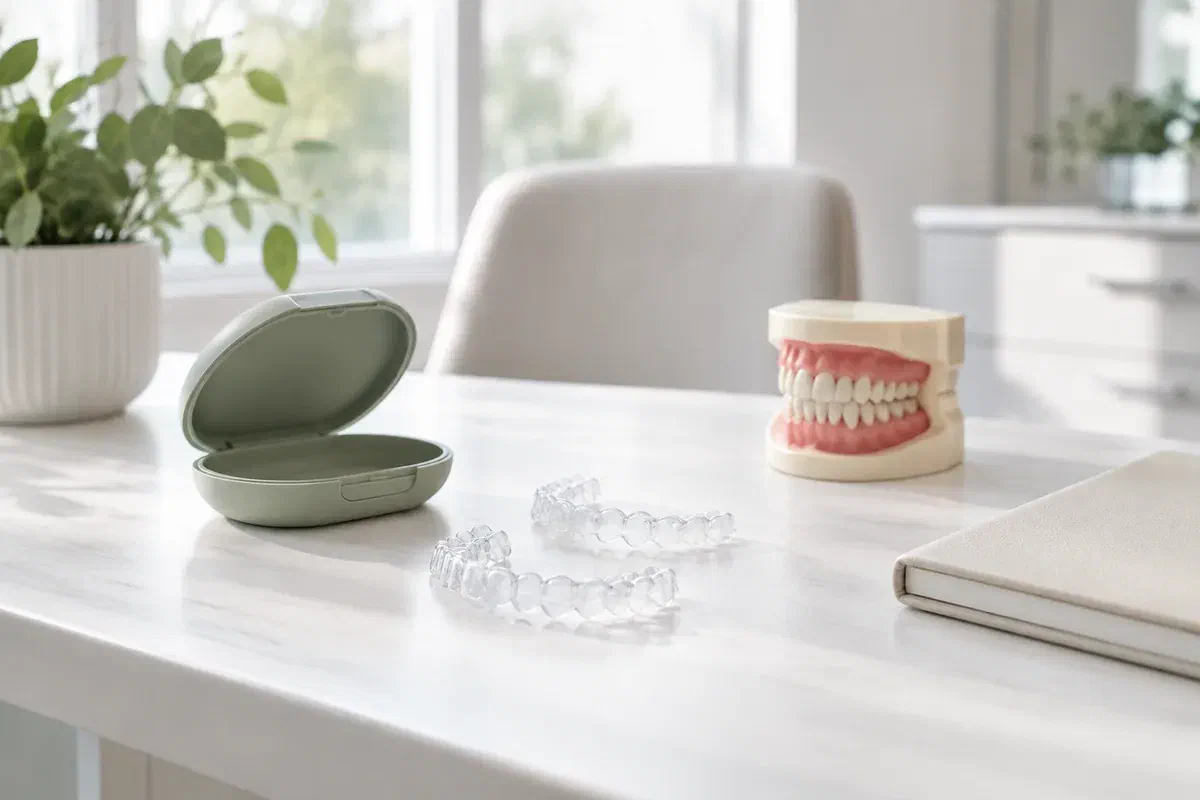
Illustrative aligners, protective case, tooth model, and notebook on a consultation desk
Bring the details

Small goals still need the full background.

Even a modest request is easier to advise on when the clinician understands your history and expectations. Mention questions about comfort, timing, fees and keeping the result as well.

Exactly what you would like to change

Show the gap, rotation or slight overlap. Ask whether closing or straightening it would affect your bite or the teeth beside it. A sensible plan names its target and what it leaves alone, without suggesting that one change will perfect the whole smile.

What has been done before

Mention braces, retainers, bonding, crowns, bridges, implants, injuries and gum care. A gap may have reopened after earlier treatment, or bonding may already be on a tooth. These details can change the approach and need review before trays are ordered.

Whether full-time wear feels worth it

Even a limited plan asks for trays to be worn most of the day and teeth cleaned before reinsertion. Weigh that against how much the concern bothers you. Ask how the routine would feel in practice rather than deciding on discretion alone.

Sometimes a first visit shows that an exam, records, other dental care or a specialist opinion is needed before any recommendation, even for a small concern. Ask what the appointment includes and what would come later.

Questions a good consultation answers

Is a small change a simple one?

You should learn whether removable aligners are suited to the movement you have in mind and who would plan and check it. A product being popular does not mean it is the right fit for a single tooth or a narrow gap in your particular mouth.

Small movements still need retention. A gap that closes can reopen and a rotated tooth can turn back if retainers are not worn. Ask about the retainer, its cost and how long it would be needed, along with what happens if extra trays are required.

Patient information: Invisalign Canada — treatment stages and retention · British Orthodontic Society — questions before orthodontic treatment

A limited goal, clearly defined

Ask which teeth would move, how the bite would be affected and what would not change. Understanding the aim lets you compare a short plan with a broader one, or with an option that does not involve moving teeth.

The routine, even for a short plan

Ask how trays come out for meals, how to clean and store them, how often reviews would be and whether attachments are needed. Short plans still involve an adjustment period and a few visible features.

Costs set out clearly

Ask what the fee includes and what may be charged separately, such as records, replacement trays, retainers or additional stages. Ask what it assumes about length. That helps you weigh a limited plan against alternatives.

What the visit involves

A small concern, looked at in context

The content depends on the appointment booked and the records you bring. Ask beforehand whether this is a first discussion or a visit that collects records for a detailed proposal.

  1. Describe the concern and its history

    Explain what you notice, when it appeared and any earlier orthodontics or bonding. The clinician reviews your health, medications, symptoms and dental work. If a move or long absence is ahead, mention it so supervision can be considered.

  2. Check the tooth, its neighbours and the bite

    The clinician examines how the affected tooth relates to the others and to the opposing teeth. Photos, X-rays or a scan may be suggested for a particular reason. Ask whether any gum or decay issue should be treated first.

  3. Compare a limited plan with the alternatives

    Suitability, likely stages, risks and the demands of wear and review are discussed, along with options like bonding or simply monitoring. Ask about attachments if mentioned. A simulation, if shown, illustrates the plan rather than guaranteeing it.

  4. Decide on a next step later

    More records, a specialist view or time to think may follow. Confirm what was agreed, whether the next stage costs anything and how to send questions before trays are ordered.

Once you are home

Weigh the size of the concern against the size of the commitment.

Before treatment, most people review the proposal and finish any dental care that was advised. Keep your regular cleaning routine and checkups in place while you decide.

Picture daily wear for a short plan

Invisalign guidance commonly mentions 20 to 22 hours of wear each day, and your clinician will set your instructions. Even a brief plan needs that consistency. Think through meals and cleaning, and raise any hesitation before starting.

Know who supervises the movement

Ask who will check progress, how frequently, and whom to call about a tray that fits badly or goes missing. Ask what happens if the tooth does not move as expected. Clear roles matter in a short plan too.

Decide the order of cosmetic work

If bonding, whitening or a crown is also being considered, ask whether it should come before or after movement. Changing tooth shape can affect tray fit. Tell the team about any work booked elsewhere.

Patient information: Invisalign Canada — patient questions and wear guidance

What might be recommended

A short plan, a different fix, or leave it be

Ask why a particular route suits your concern. Interest in Invisalign does not commit you to it, and another option is not a compromise.

When the movement is suitable and contained

A limited Invisalign plan

If a short aligner plan fits the goal, records and a written proposal may follow. Confirm what it covers, what it will not change and who is responsible, including retention after the trays.

When the concern is better handled another way

Another appliance, bonding or a specialist

Some small gaps or rotations respond better to another appliance or a restorative approach, and some need an orthodontist’s view. Ask what makes that suitable and what a referral would clarify.

When nothing is changing, or health needs come first

Monitor, treat other needs or do nothing

If the tooth is not causing problems, you might decide to leave it. Decay or gum concerns may need care first. Ask what still needs attention and whether the tooth should be watched over time.

Rockwood questions about small changes

Little gaps, single teeth and limited plans

Ask about your own teeth, the proposed scope and the realities of even a short course. Ads cannot tell you whether a small concern has a simple answer.

(905) 876-4488
Can aligners close a single small gap between my front teeth?
Sometimes. The clinician will check why the gap is there and how closing it would affect the bite and nearby teeth. Bonding or other approaches may also be discussed.
Is bonding an alternative to Invisalign for a small gap?
It can be in some cases, as it changes tooth shape rather than position. Ask how the two compare for your teeth, including how each would look and be maintained.
Why would a small change need records or X-rays?
Records help the clinician see roots, bone and how teeth meet, which may not be visible from the front. Ask what each record is for and whether it is included in the fee.
Will a gap come back after it is closed?
It can if retainers are not worn as advised. Ask what type of retainer is suggested and how long it should be used to keep the gap closed.
Can I decide to leave my teeth as they are?
Yes. An elective change is your choice. The clinician can tell you whether anything needs monitoring or treating for health reasons, separate from appearance.
If my front teeth are the only concern, is the rest of my bite still checked?
Yes. Moving front teeth can affect how the whole bite meets, so the assessment looks beyond the visible teeth. Ask what a limited plan would leave unchanged.

Patient information: Align Technology — patient instructions and treatment considerations

Booking from Rockwood

Show us the tooth. We will explain the choices.

Book a consultation at our Bronte Street practice to discuss whether a limited Invisalign plan, another approach or no treatment suits your concern. We will explain the assessment and the commitment before you decide.

Whether aligners suit your concern, and whether a referral would help, is decided after assessment. The team can explain fees and included records when you call.

Visit Milton Dental Clinic
Unit 1, 342 Bronte St. S, Milton, ON L9T 5B7
Get directions Clinic hours
Monday–Thursday
11am–7pm
Friday–Sunday
By appointment only

Areas we serve

  • Milton
  • Oakville
  • Mississauga
  • Georgetown
  • Halton Hills
  • Acton
  • Campbellville
  • Brampton
  • Burlington
  • Puslinch
  • Rockwood
  • Erin
  • Caledon
  • Etobicoke
  • Old Milton
  • Bronte Meadows
  • Timberlea
  • Dorset Park
  • Dempsey
  • Clarke
  • Beaty
  • Coates
  • Harrison
  • Scott
  • Willmott
  • Ford
  • Bowes
  • Cobden
  • Walker
  • Mountain View
  • Milton Heights
  • Hawthorne Village
  • Valley View
  • Fallingbrook
  • Nassagaweya
  • Trafalgar
  • Esquesing
  • Nelson
  • Brookville
  • Moffat
  • Glen Williams
  • Norval
  • Limehouse
  • Stewarttown
  • Ashgrove
  • Hornby
  • Silver Creek
  • Speyside
  • Scotch Block
  • North Oakville
  • River Oaks
  • Glen Abbey
  • West Oak Trails
  • Palermo
  • Bronte Creek
  • College Park
  • Joshua Creek
  • Uptown Core
  • Preserve
  • Iroquois Ridge
  • Lisgar
  • Meadowvale
  • Meadowvale Village
  • Churchill Meadows
  • Erin Mills
  • Central Erin Mills
  • Streetsville
  • East Credit
  • Creditview
  • Heartland
  • Sheridan
  • Mount Pleasant
  • Credit Valley
  • Huttonville
  • Churchville
  • Springbrook
  • Northwest Brampton
  • Bram West
  • Fletcher's Meadow
  • Fletcher's Creek South
  • Alton Village
  • Orchard
  • Millcroft
  • Headon Forest
  • Tansley
  • Brant Hills
  • Tyandaga
  • Kilbride
  • Lowville
  • Aberfoyle
  • Morriston
  • Arkell
  • Hillsburgh
  • Freelton
  • Carlisle
  • Waterdown
  • Flamborough
  • Mountsberg

How can we help?

Milton Dental Clinic

Have a question about your smile? Choose the option that works best for you.

For urgent dental concerns, please call.
Messages are reviewed during clinic hours.