

Illustrative adult patient discussing a limited aligner plan with a dental clinician
Cosmetic Dentistry

Invisalign Express in Etobicoke

Coming in from Etobicoke means each visit is worth planning well. We can talk through whether Invisalign Express suits a minor alignment concern, how many reviews to expect, and how to handle fit problems or urgent symptoms between appointments without unnecessary trips.

Planning limited treatment from a distance

Fewer trips work best when each one has a clear purpose.

For anyone travelling from the west end of Toronto, the practical question often comes first: how many appointments would this take? Invisalign Express, a short-scope aligner plan, is meant for selected small movements, including some shifting after earlier orthodontics. The number of visits, like suitability itself, depends on the movements your teeth need.

Even a short plan has review points that should not be skipped, and it has a fixed boundary on what it will change. Before you commit, understand where the teeth are meant to finish, how your bite would close, and whether a larger concern would be left outside the agreement.

Make your first visit to our Bronte Street practice count by bringing earlier orthodontic records, any retainer you still have, and a list of questions. From Etobicoke, it also helps to mention your travel constraints up front. We can explain the assessment and whether limited treatment is worth considering, and you can ask which product and terms would really apply.

Plan a well-organised first visit
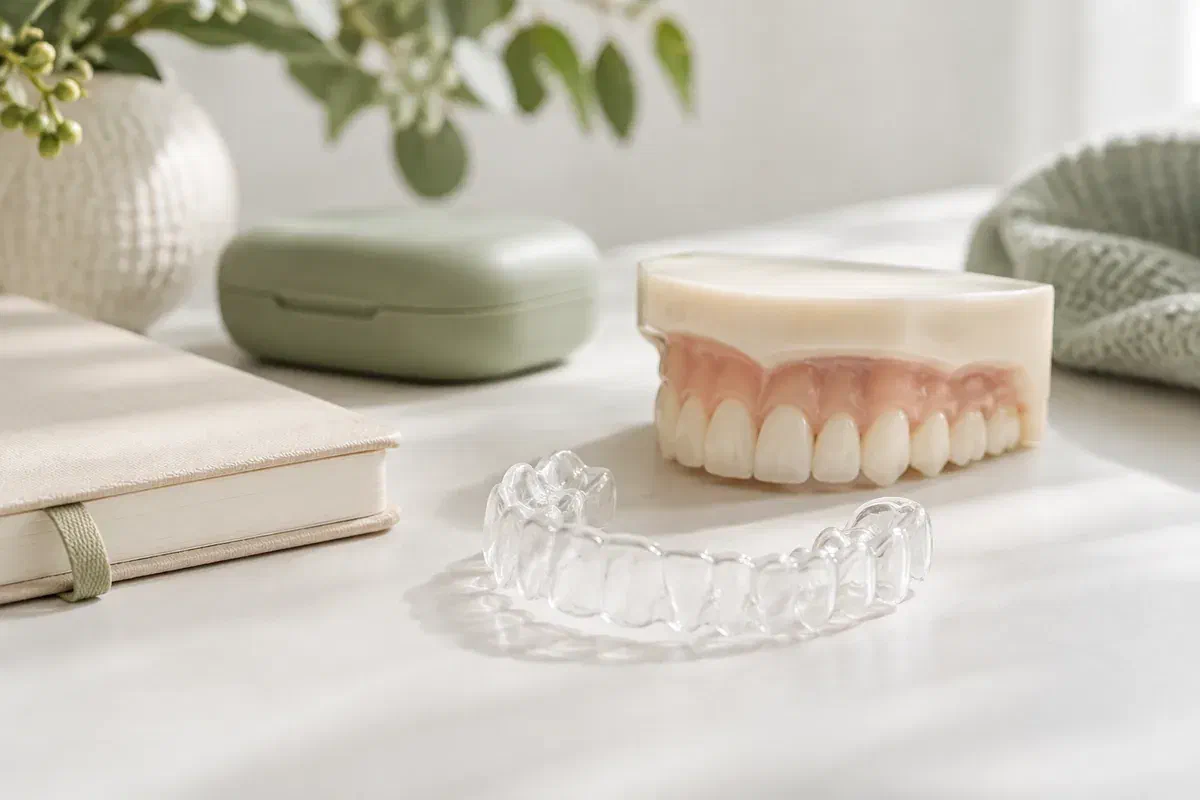
Illustrative clear aligner, tooth model, notebook, and protective case
Start with the specifics

Your concern, your history, your schedule.

A small gap, a rotated incisor, and relapse after braces can look much the same yet have different causes. The exam should link the change you see with the gums, neighbouring teeth, and bite, ideally in as few visits as is sensible.

Relapse after old orthodontics

Tell us roughly when the change began and whether your retainer fits, is missing, or has cracked, then bring it with you to save a return trip. A history of braces is a starting point for discussion, and an old retainer should never be forced into place as a workaround.

A front tooth that affects the bite

Correcting the tooth you notice may depend on room elsewhere or on how lower teeth meet it. Talk about appearance and function at the same appointment. Even a narrow plan needs to account for the teeth and contacts around that one tooth.

A target date and a long drive

If you are aiming for a particular occasion, say so early, and mention how often you can realistically come in. Neither factor can define a safe scope, but both shape the discussion. Ask what timing is realistic and what might extend it.

Tray count, time in treatment, fees, and access to more aligners are not set by the Express name. Have the exact proposal and its inclusions explained, ideally in writing you can take home, before you decide.

Why scope matters for planning

A defined target can mean a more predictable schedule.

When the concern genuinely suits a limited plan, treatment focuses on a small set of agreed changes, which can make visits easier to plan in advance. That is a consequence of the defined scope, not a shortcut around examination or reviews. The clinician should explain why the scope fits your teeth.

A detailed proposal also helps you compare alternatives without extra trips. If broader treatment is recommended, ask what further problem it would solve and how the visit schedule would differ. If you decide to wait, ask whether anything found during the exam still needs follow-up.

Patient information: Align Technology — limited-treatment product scope

A precise goal agreed in one sitting

Ask which teeth and contacts are included and how a satisfactory result would look and feel. Reaching that shared picture early means fewer surprises later, and it is a better basis than choosing a plan that merely sounds faster or cheaper.

Knowing what is left unchanged

Some crowding or bite features may stay as they are after limited treatment. Ask which, why, and what that might mean down the road. Understanding the limit before you start prevents disappointment at the last appointment.

Retention arranged without extra trips

Discuss retainers at the outset. Ask what type is proposed, when it would be ready, and whether its records can be taken during a visit you already have booked. Holding the result matters however short active treatment is.

Making each appointment count

What happens at each stage, and what to bring?

The plan follows the findings. Here is the usual sequence, with no fixed aligner count or finishing date assumed, and with tips for keeping travel manageable.

  1. Arrive with history and questions ready

    Show the change you want and describe any recent shifting, soreness, or retainer trouble. Bring earlier orthodontic records and your appliance. Share your priorities, travel constraints, and work schedule so the scope and visit plan reflect your actual life.

  2. A thorough exam and the right records

    The clinician checks oral health and how your teeth meet. Scans or images may be needed to plan movement. Ask whether these can be done at the same visit and whether any other dental issue should be treated first.

  3. Weigh the options before leaving

    Review the intended changes, boundaries, risks, responsibilities, and estimate. Ask if attachments are planned and for what purpose. If what you need exceeds a limited package, discuss broader treatment or a referral, possibly with a provider closer to home.

  4. Leave with a schedule you can keep

    If you start, confirm wear time, tray changes, and the dates of reviews, booking them ahead where possible. Know who to call about fit. Ask how the clinician will confirm movement is complete, because the final tray alone does not.

Between visits

Handling small problems at home, and bigger ones nearby

Follow your instructions and keep the reviews you have booked. A modest goal still depends on steady wear, clean trays, and a phone call before you make the trip when something changes.

A routine that works on long days

Ask how meals, coffee, cleaning, and your commute fit your instructions. Carry a case and a spare toothbrush, and settle the routine before a hectic week. Fewer stages never means shorter wear or switching trays early.

Call first when a tray will not fit

If a tray stops seating, gets damaged, or an attachment comes off, phone the treating team before driving in. Explain which stage you are on. Often the next step can be clarified by phone; do not skip or repeat trays on your own.

Combine the retainer step with a review

Before your last planned review, ask what follows and whether retainer records can be taken at that visit. Confirm what to wear in any interval and keep the instruction with your appointment details.

Choices from Etobicoke

Scope first, then convenience.

Ask what each option is designed to accomplish and how many visits it is likely to involve. A clear comparison shows scope differences instead of implying every aligner package works the same way.

When the minor movement has been confirmed

A limited Express plan

This may be offered if the changes you need fit an appropriate limited scope. Review what is included, what is excluded, and how slower progress would be handled. Confirm the actual package and its terms before agreeing.

When several teeth or the bite need change

Broader orthodontic care

Wider treatment or a specialist assessment may be recommended when movements go beyond the proposed limit. Ask why. If more visits are involved, it is reasonable to ask whether care closer to home would be more practical.

When you would rather wait or other care comes first

No movement for now

You may decide that the change is not worth the travel or commitment at present. Ask whether a retainer assessment or periodic monitoring would help, and whether anything else from the exam needs attention.

Etobicoke planning questions

Practical answers before you commit to the trip.

These questions help separate a package name from the treatment and visit schedule actually being recommended.

(905) 876-4488
How many in-person visits does a limited aligner plan usually involve?
It varies with the plan. Ask the clinician for an expected number of reviews and whether any steps, such as records and consultation, can be combined into one appointment.
What should I do if I lose an aligner between appointments?
Call the treating team and explain which tray you lost and which stage you are on. Ask whether to wear the previous or next tray in the meantime rather than deciding on your own.
Can the first consultation and the scan happen on the same day?
Ask when booking. Depending on the assessment and scheduling, records may be taken at the first visit or at a later one. Planning ahead can save a trip.
Does Invisalign Express promise I will finish before a set date?
No. Share your timeline and ask how the estimate relates to the planned movements, reviews, and possible adjustments, and avoid commitments that depend on a fixed finish.
Could an Express plan straighten one area and leave my bite unchanged?
Yes. A limited plan may deliberately leave some features as they are. Ask which ones, the possible implications, and whether a more comprehensive option should be considered.
Will retainers mean another trip after the trays are finished?
Possibly. Ask whether retainer records can be taken during a final review and how follow-up checks would be scheduled, so the transition fits your travel plans.
Coming from Etobicoke

One well-planned visit is a good start.

Reserve a consultation at our Bronte Street practice to explore limited aligner care. Bring your records and questions, and we will explain the assessment, the scope, the alternatives, and how visits could be grouped.

Suitability and package availability are confirmed only after assessment. The service name does not guarantee a treatment length, tray count, or result.

Visit Milton Dental Clinic
Unit 1, 342 Bronte St. S, Milton, ON L9T 5B7
Get directions Clinic hours
Monday–Thursday
11am–7pm
Friday–Sunday
By appointment only

Areas we serve

  • Milton
  • Oakville
  • Mississauga
  • Georgetown
  • Halton Hills
  • Acton
  • Campbellville
  • Brampton
  • Burlington
  • Puslinch
  • Rockwood
  • Erin
  • Caledon
  • Etobicoke
  • Old Milton
  • Bronte Meadows
  • Timberlea
  • Dorset Park
  • Dempsey
  • Clarke
  • Beaty
  • Coates
  • Harrison
  • Scott
  • Willmott
  • Ford
  • Bowes
  • Cobden
  • Walker
  • Mountain View
  • Milton Heights
  • Hawthorne Village
  • Valley View
  • Fallingbrook
  • Nassagaweya
  • Trafalgar
  • Esquesing
  • Nelson
  • Brookville
  • Moffat
  • Glen Williams
  • Norval
  • Limehouse
  • Stewarttown
  • Ashgrove
  • Hornby
  • Silver Creek
  • Speyside
  • Scotch Block
  • North Oakville
  • River Oaks
  • Glen Abbey
  • West Oak Trails
  • Palermo
  • Bronte Creek
  • College Park
  • Joshua Creek
  • Uptown Core
  • Preserve
  • Iroquois Ridge
  • Lisgar
  • Meadowvale
  • Meadowvale Village
  • Churchill Meadows
  • Erin Mills
  • Central Erin Mills
  • Streetsville
  • East Credit
  • Creditview
  • Heartland
  • Sheridan
  • Mount Pleasant
  • Credit Valley
  • Huttonville
  • Churchville
  • Springbrook
  • Northwest Brampton
  • Bram West
  • Fletcher's Meadow
  • Fletcher's Creek South
  • Alton Village
  • Orchard
  • Millcroft
  • Headon Forest
  • Tansley
  • Brant Hills
  • Tyandaga
  • Kilbride
  • Lowville
  • Aberfoyle
  • Morriston
  • Arkell
  • Hillsburgh
  • Freelton
  • Carlisle
  • Waterdown
  • Flamborough
  • Mountsberg

How can we help?

Milton Dental Clinic

Have a question about your smile? Choose the option that works best for you.

For urgent dental concerns, please call.
Messages are reviewed during clinic hours.