

Illustrative adult patient discussing a limited aligner plan with a dental clinician
Cosmetic Dentistry

Invisalign Express in Puslinch

A short aligner course ends; keeping its result is a longer job. For adults coming from Puslinch, we explain whether Invisalign Express suits a minor concern, what it would leave alone, and how retainers and follow-up fit into the plan from day one.

Thinking past the last tray

The trays finish. Holding the result does not.

Many adults who ask about short aligner plans have been here before: braces as a teen, a retainer that slowly fell out of use, and teeth that drifted. Invisalign Express is aimed at selected minor movements, and it can sometimes be discussed for that kind of relapse. What happens after the trays matters as much as the trays themselves.

Suitability still comes down to the specific movements your teeth need. A limited plan also has a firm edge. Ask where your teeth would finish, how the bite would close, what would be left as it is, and how the new positions would be maintained for years afterward.

Travelling from Puslinch, you may want to keep visits efficient, so bring any old retainer, earlier records, and a clear sense of what you would like to change. At our Bronte Street practice, the team can explain the assessment and share an honest view on limited treatment. Ask which product and terms would apply, including how retainers are handled.

Ask about treatment and retention
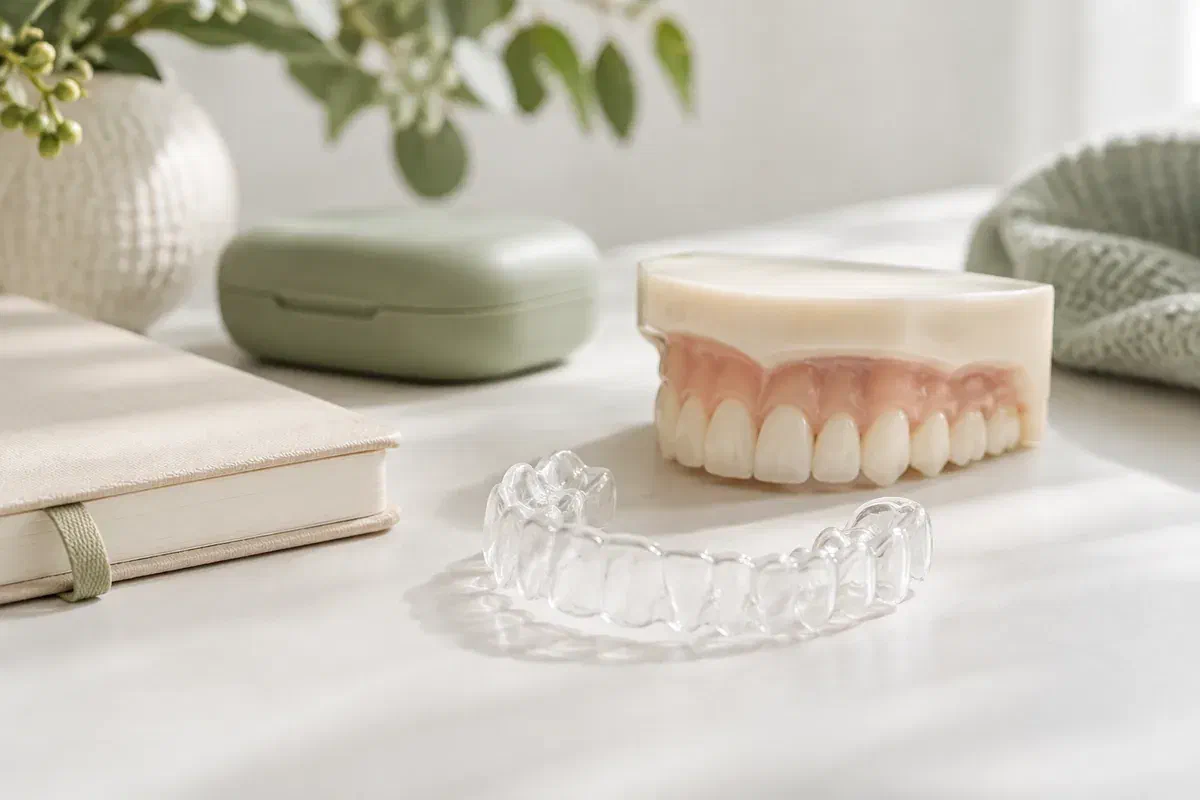
Illustrative clear aligner, tooth model, notebook, and protective case
Where things usually begin

Why did the teeth move, and will they move again?

Relapse, small spaces, and turned teeth can share a look but not a cause. The assessment ties the change you see to gums, nearby teeth, and the bite, which also shapes the retention you will need.

Shifting after earlier orthodontics

Tell us how long you wore your retainer, when you stopped, and when the shift became noticeable. Bring the appliance even if it no longer fits. Past braces open the conversation rather than settle it, and forcing a tight retainer back on can do harm.

A visible tooth and the bite behind it

Moving a front tooth may need space elsewhere or a change in how teeth meet. Forces from the bite can also influence whether a tooth stays put afterward. Discuss appearance, function, and long-term stability together.

Wanting results by a certain point

If an occasion is approaching, mention it before planning. Your timing is useful context but cannot set a safe scope. Ask what pace is realistic and whether the retainer stage would be in place by then.

Your tray count, duration, fee, and access to more aligners are not fixed by the Express name, nor is your retainer arrangement. Ask for the exact proposal, including retention, to be explained.

What a well-scoped plan offers

A focused correction with a plan to keep it.

If the concern genuinely suits it, limited treatment concentrates on a small, agreed set of changes. The benefit comes from that defined scope, paired with a retention plan agreed before you start. Examination and reviews are still part of the process, and the reasons for the scope should be explained.

A complete proposal also makes alternatives easier to judge. When broader care is advised, ask what it would correct and how retention would differ. If you would prefer to wait, ask whether a new retainer alone, or monitoring, might be reasonable for now.

Patient information: Align Technology — limited-treatment product scope

A precise target

Have the clinician point to the exact teeth being moved and describe the finish you are both aiming for. Shared expectations make a better basis for choosing than a package that simply seems shorter or less expensive.

Honesty about the rest of the bite

Short-scope treatment may leave some alignment or bite features as they are. Ask which, why, and whether those features could affect how stable the result is. Accept those limits knowingly, at the start.

A retainer plan you can live with

Ask what kind of retainer is recommended, when it will be ready, how many hours a day to wear it, how long to continue, and how follow-up checks work. This is the part that protects everything the aligners achieve.

How planning works

Retention belongs in the plan from the first visit.

We let findings decide the package. The stages below describe the assessment and conversation ahead, with no assumed number of aligners or promised end date.

  1. Start with what changed, and when

    Show the tooth or space that bothers you and describe recent shifting, soreness, or retainer problems. Share what you remember about earlier treatment and bring records if you have them. Mention travel constraints so visits can be planned sensibly.

  2. An exam of teeth, gums, and bite

    The clinician assesses oral health and how your teeth meet. A scan or photographs may be taken for planning. Ask what each record adds and whether any other dental concern should be treated before alignment.

  3. A full proposal, retention included

    Go through the planned changes, limits, risks, your responsibilities, the estimate, and the retainer arrangement. Ask about attachments and their purpose. If the movement exceeds a limited package, discuss broader care or a referral.

  4. Clear instructions for both phases

    If you proceed, confirm wear time, tray changes, reviews, and who to contact about fit, and agree on how the switch to retainers will happen. Ask how the clinician will judge that movement is done, since the last tray does not.

During and after

Steady wear now, steady retainer use later

Follow your instructions and keep your reviews. The habits that make a short course work are the same ones that help a retainer do its job afterward.

Build a dependable daily routine

Ask how meals, drinks, cleaning, and your working day fit the instructions. Keep a case close and practise the routine early. A brief sequence never justifies shorter wear or skipping ahead to the next set.

Get guidance when fit changes

If a tray stops seating, splits, or an attachment comes away, contact the treating team with your stage. Ask what to do next. Swapping trays out of order on your own can make the end point harder to reach.

Make the handover seamless

Ahead of the last planned review, confirm when retainer records will be taken and when the retainer will be fitted. Ask what to wear in between. After that, treat the retainer as a long-term habit rather than a short phase.

Options for Puslinch adults

Correct, retreat more broadly, or simply hold.

Ask what each option would achieve and what it would ask of you afterward. A useful comparison shows real scope differences rather than implying every aligner package leads to the same place.

For a minor movement that suits limited scope

Invisalign Express with a retention plan

This may be offered when the changes needed sit within an appropriate limited plan. Check what it covers, what remains, how slow progress would be managed, and how retainers are arranged. Confirm the package terms before agreeing.

When relapse involves more teeth or the bite

More comprehensive orthodontics

Broader aligners, braces, or an orthodontist's view may be advised when movements exceed the proposed limit. Ask why. Sometimes relapse is wider than it appears, and a more involved approach is the responsible choice.

When you would rather not move teeth now

A new retainer or monitoring alone

You may decide the change is acceptable once you understand the trade-offs. Ask whether a new retainer could prevent further drift, whether monitoring is wise, and whether anything else from the exam needs care.

Retention and Express questions

What to know about keeping a small correction.

These answers help separate a package name from the full course of care, including what happens after the last tray.

(905) 876-4488
What types of retainers might follow an Express plan?
Options can include removable clear retainers or a fixed wire bonded behind the teeth. Ask which is recommended for you and why, and how each is cared for.
How many hours a day will I need to wear my retainer?
It depends on the clinician’s advice for your case, and it may change over time. Ask for a clear schedule and when it is likely to be reviewed.
What should I do if my retainer cracks or goes missing?
Contact the clinic promptly and ask what to wear in the meantime. Going without a retainer for a while can allow teeth to start shifting again.
Could a new retainer alone stop my teeth drifting further?
Sometimes a retainer is discussed to hold teeth where they are now, without moving them. Ask whether that is a reasonable option for your situation.
Will Invisalign Express fix the shift but leave my bite unchanged?
It may. Limited treatment can intentionally leave some bite features alone. Ask which ones and whether they could affect long-term stability.
How can I keep retainer checks manageable from Puslinch?
Ask how often checks are recommended and book them alongside routine visits where possible. Call ahead if a retainer problem comes up, so you know whether a trip is needed.
Visit from Puslinch

Plan the correction and the years that follow.

Book a conversation at our Bronte Street practice about short-scope orthodontics. We will explain the assessment, the scope and alternatives, and how retention would work long after the last aligner.

Suitability and package availability need confirming. The service name guarantees no treatment length, tray count, or result.

Visit Milton Dental Clinic
Unit 1, 342 Bronte St. S, Milton, ON L9T 5B7
Get directions Clinic hours
Monday–Thursday
11am–7pm
Friday–Sunday
By appointment only

Areas we serve

  • Milton
  • Oakville
  • Mississauga
  • Georgetown
  • Halton Hills
  • Acton
  • Campbellville
  • Brampton
  • Burlington
  • Puslinch
  • Rockwood
  • Erin
  • Caledon
  • Etobicoke
  • Old Milton
  • Bronte Meadows
  • Timberlea
  • Dorset Park
  • Dempsey
  • Clarke
  • Beaty
  • Coates
  • Harrison
  • Scott
  • Willmott
  • Ford
  • Bowes
  • Cobden
  • Walker
  • Mountain View
  • Milton Heights
  • Hawthorne Village
  • Valley View
  • Fallingbrook
  • Nassagaweya
  • Trafalgar
  • Esquesing
  • Nelson
  • Brookville
  • Moffat
  • Glen Williams
  • Norval
  • Limehouse
  • Stewarttown
  • Ashgrove
  • Hornby
  • Silver Creek
  • Speyside
  • Scotch Block
  • North Oakville
  • River Oaks
  • Glen Abbey
  • West Oak Trails
  • Palermo
  • Bronte Creek
  • College Park
  • Joshua Creek
  • Uptown Core
  • Preserve
  • Iroquois Ridge
  • Lisgar
  • Meadowvale
  • Meadowvale Village
  • Churchill Meadows
  • Erin Mills
  • Central Erin Mills
  • Streetsville
  • East Credit
  • Creditview
  • Heartland
  • Sheridan
  • Mount Pleasant
  • Credit Valley
  • Huttonville
  • Churchville
  • Springbrook
  • Northwest Brampton
  • Bram West
  • Fletcher's Meadow
  • Fletcher's Creek South
  • Alton Village
  • Orchard
  • Millcroft
  • Headon Forest
  • Tansley
  • Brant Hills
  • Tyandaga
  • Kilbride
  • Lowville
  • Aberfoyle
  • Morriston
  • Arkell
  • Hillsburgh
  • Freelton
  • Carlisle
  • Waterdown
  • Flamborough
  • Mountsberg

How can we help?

Milton Dental Clinic

Have a question about your smile? Choose the option that works best for you.

For urgent dental concerns, please call.
Messages are reviewed during clinic hours.