

Illustrative adult patient discussing clear aligners with a dental clinician
Cosmetic Dentistry

Invisalign for Adults in Mississauga

Snacks at your desk, coffee on the commute and dinner at whatever hour the day ends: eating habits matter with removable aligners. From Mississauga, explore adult Invisalign through a conversation about your bite, gums, current dental work, daily wear and long-term retainers.

Aligners and the way you eat

Picture an ordinary day with trays in.

Most adults judge aligners by how they look. A more revealing test is to walk through a normal weekday: the drive or train in, the coffee, the mid-morning snack, lunch with colleagues, dinner late. Each time you eat or drink something other than water, the trays usually come out and go back in after cleaning.

Invisalign is a course of removable, prescribed aligners that move teeth in small stages. Whether it suits you is decided by examining your teeth, gums and bite, and by looking at crowns, implants or past gum treatment. How you eat, work and travel is part of that suitability question too.

For adults coming from Mississauga, including western areas such as Meadowvale and Churchill Meadows, a consultation at our Bronte Street practice is a chance to test the idea against your real routine. We can discuss assessment needs and whether aligners, another appliance or a specialist referral suits you.

Talk through an aligner routine
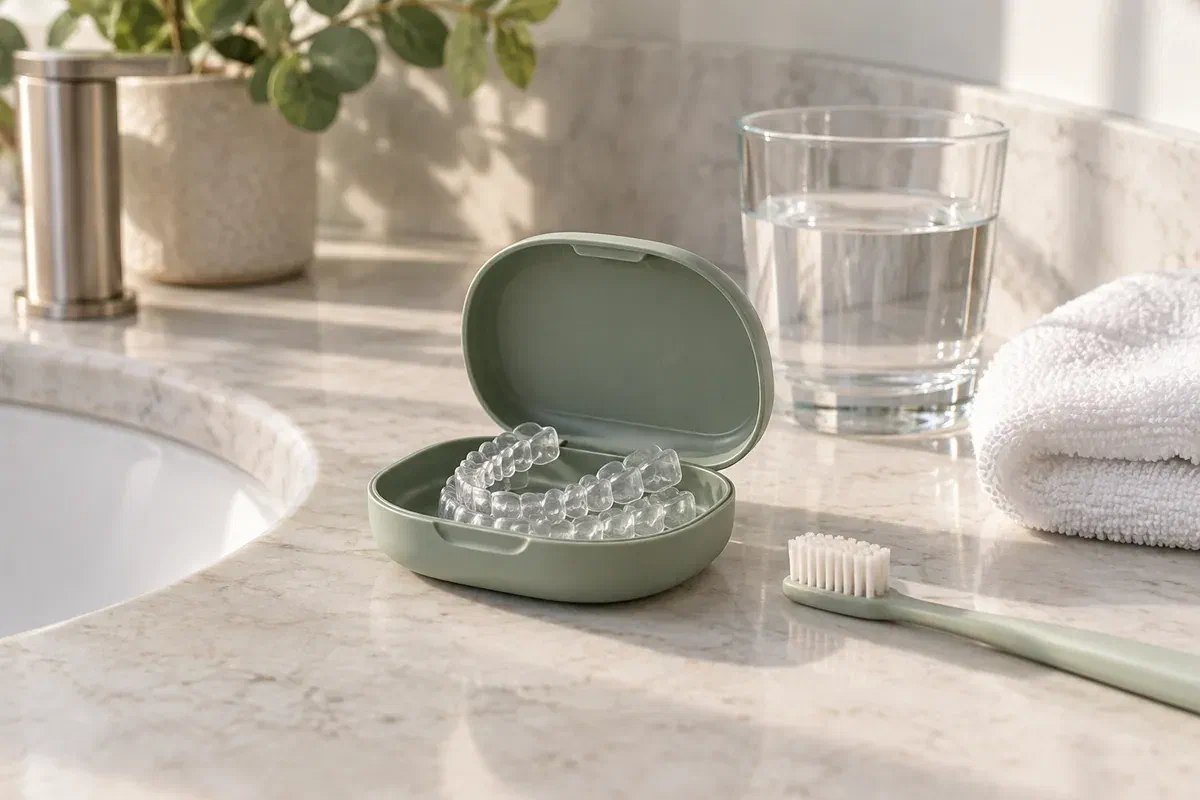
Illustrative adult aligner-care arrangement with a case, toothbrush, towel, and water
Mississauga commuters, start here

Three areas that shape any adult plan

Say what you want to change, and then what the plan has to fit around. A complete picture from the start helps the clinician be clear about limits and obligations.

Dental work you already have

Point out crowns, bridges, implants and sizeable fillings, and mention anything booked. These influence what can move and in which order. Implants stay fixed in the bone rather than drifting like natural teeth, so their location guides how nearby teeth are planned.

Signs from your gums

Bleeding, receding gumlines, a tooth that wiggles or earlier periodontal therapy are worth flagging. Supporting tissues are evaluated before anything is moved. If gum treatment comes first, ask who will carry it out and how it affects the schedule.

Eating patterns and long days

Frequent snacking, sipping sweet drinks, eating on the go or late meetings all affect how often trays come out. Describe your habits honestly. A plan that accounts for them is more realistic than one that assumes three tidy meals.

There is no age cut-off that decides suitability. Current oral health, the movements involved and whether the routine is workable are better guides.

Benefits and trade-offs

Freedom to remove them, responsibility to wear them

Being able to take aligners out means you can eat what you normally would and brush without obstacles. The catch is that every removal is your decision, so the prescribed wear depends on your discipline. Weigh that honestly when you compare aligners with fixed options.

Some adults have a single concern; others hope to address several. Ask the clinician which improvements are realistic and which features may stay. Knowing that difference helps you judge whether the effort is likely to be worthwhile.

Patient information: British Orthodontic Society — considering adult orthodontic treatment

Treatment shaped by your priority

You might be bothered by crowding, a rotated tooth or a change since earlier braces, or you may need space for future dental work. Tell the clinician which matters most. Ask how it fits the findings and whether other issues deserve attention first.

Aligners that fit with routine dental care

Find out how hygiene visits, checkups and any specialist appointments will be scheduled alongside reviews. Know who handles what. If several clinicians are involved, ask how they will keep in touch so the plan stays coherent.

Knowing the whole commitment

Ask about review visits, extra aligner stages, retainers and future maintenance, not just the starting estimate. Discuss what happens if you move or your situation shifts. These practicalities matter as much as the first trays.

How we plan with you

Assessment, options, then a decision that is yours

An adult consultation should give your history and worries real attention. Ask what is covered at the first appointment and what records or choices may follow.

  1. Describe your goals and health

    Explain what has brought you to consider treatment and what would make it worthwhile. Review your health conditions, medicines, any tooth injuries and past orthodontics. Raise symptoms even if they seem unconnected to appearance.

  2. Assess the mouth as it is now

    The relevant teeth, gums and bite are examined, and the clinician considers which records are needed. Ask whether fillings or gum care should come first. Where complexity calls for it, a specialist assessment may be suggested.

  3. Compare scope, risks and routine

    Discuss what the plan covers, possible risks, how you will be monitored and the alternatives. Ask about attachments and how they may affect eating and cleaning. Go through the estimate, further stages and retention before you decide.

  4. Start with a routine you can keep

    When treatment begins, you learn how to insert, remove and clean the trays and whom to call with problems. Confirm the wear and change schedule prescribed for you. Ask how progress is reviewed and which appointments to book ahead.

Eating, cleaning, wearing

Make the in-and-out routine automatic.

Habits that hold up on a hectic commute day are worth more than a perfect plan that only works at home. Your treating clinician gives the instructions and can help solve problems that arise.

Pack for the day, not just the morning

Carry your case and the cleaning supplies you have been shown, and keep a spare set of essentials at work if that helps. Think about how lunch, snacks and after-work plans will go. If cleaning is difficult, ask for advice rather than keeping trays out.

Keep checkups and cleanings going

Aligner reviews follow tooth movement; dental checkups protect teeth and gums. Continue the visits recommended for you. If a filling or crown is planned elsewhere, tell each clinician so its effect on fit can be considered.

Report soreness, damage or missed wear

Contact the team about significant discomfort, a damaged aligner or a routine that is not working. Give details about your stage and circumstances. Don’t move through several trays quickly to compensate for missed hours.

Patient information: Invisalign Canada — treatment responsibilities and follow-up

Deciding on an approach

The right choice depends on the findings and your life.

A preference for removable, discreet treatment is part of the discussion. It is weighed with the examination results, the movements needed and any other care planned.

When aligners can achieve the agreed goals

A fitting Invisalign plan

Aligners may suit you if they can address the agreed scope and your eating and work patterns allow consistent wear. Ask about limits, review frequency and retention. Make sure you understand the plan before appliances are ordered.

When another approach is better suited

A different appliance or specialist

Some movements or bite relationships may be better treated another way or with orthodontic specialist input. Ask what that would accomplish and why it is advised. A desire for discretion can still be discussed.

When health or timing should come first

Other care first, or not yet

Other dental treatment may need to come first, or now may not be a good time. Ask which findings need attention either way. Find out how alignment could be reconsidered when those issues or practical obstacles are dealt with.

Everyday aligner questions

Food, drinks and daily habits

Adult routines vary a great deal. These questions can help you start talking about yours.

(905) 876-4488
Do I need to brush every time I eat with aligners?
You will be given cleaning instructions for your plan. In general, teeth and trays should be clean before the aligners go back in, so food is not trapped against the teeth. Ask what is practical when you are away from a sink.
Can I sip drinks other than water while wearing trays?
Ask the clinician for specific guidance. Sugary or acidic drinks can collect under the aligners and sit against the teeth. You may be advised to remove the trays for these drinks and rinse or clean before putting them back.
How do I manage aligners if I snack throughout the day?
Frequent snacking means frequent removal, which can make prescribed wear harder to achieve. Describe your habits at the consultation. The clinician may suggest ways to structure eating so the routine is more manageable.
Is it normal for aligners to feel tight when I change to a new set?
Many people notice pressure when a new aligner is started. Ask what level of discomfort to expect and what to do about it. Contact the team if soreness is significant or does not settle as described.
Can I chew gum with Invisalign in?
Generally, gum is not chewed with aligners in place, but follow the instructions from your treating clinician. Ask about any habits like gum chewing or mints so you know what fits the routine.
What if my existing crown is on a tooth that needs to move?
Crowned teeth can sometimes be moved, but the restoration affects planning and appliance fit. Tell the clinician which teeth have crowns. Ask whether the crown might need replacing afterward and how that would be sequenced.
From Mississauga to Bronte Street

Test the idea against your real routine.

Visit our Bronte Street practice to discuss adult orthodontic assessment and whether Invisalign might work for you. We can go through the questions to ask, how care might be sequenced and the daily responsibilities involved before you choose.

Suitability, the scope of treatment and any specialist involvement depend on an individual assessment.

Visit Milton Dental Clinic
Unit 1, 342 Bronte St. S, Milton, ON L9T 5B7
Get directions Clinic hours
Monday–Thursday
11am–7pm
Friday–Sunday
By appointment only

Areas we serve

  • Milton
  • Oakville
  • Mississauga
  • Georgetown
  • Halton Hills
  • Acton
  • Campbellville
  • Brampton
  • Burlington
  • Puslinch
  • Rockwood
  • Erin
  • Caledon
  • Etobicoke
  • Old Milton
  • Bronte Meadows
  • Timberlea
  • Dorset Park
  • Dempsey
  • Clarke
  • Beaty
  • Coates
  • Harrison
  • Scott
  • Willmott
  • Ford
  • Bowes
  • Cobden
  • Walker
  • Mountain View
  • Milton Heights
  • Hawthorne Village
  • Valley View
  • Fallingbrook
  • Nassagaweya
  • Trafalgar
  • Esquesing
  • Nelson
  • Brookville
  • Moffat
  • Glen Williams
  • Norval
  • Limehouse
  • Stewarttown
  • Ashgrove
  • Hornby
  • Silver Creek
  • Speyside
  • Scotch Block
  • North Oakville
  • River Oaks
  • Glen Abbey
  • West Oak Trails
  • Palermo
  • Bronte Creek
  • College Park
  • Joshua Creek
  • Uptown Core
  • Preserve
  • Iroquois Ridge
  • Lisgar
  • Meadowvale
  • Meadowvale Village
  • Churchill Meadows
  • Erin Mills
  • Central Erin Mills
  • Streetsville
  • East Credit
  • Creditview
  • Heartland
  • Sheridan
  • Mount Pleasant
  • Credit Valley
  • Huttonville
  • Churchville
  • Springbrook
  • Northwest Brampton
  • Bram West
  • Fletcher's Meadow
  • Fletcher's Creek South
  • Alton Village
  • Orchard
  • Millcroft
  • Headon Forest
  • Tansley
  • Brant Hills
  • Tyandaga
  • Kilbride
  • Lowville
  • Aberfoyle
  • Morriston
  • Arkell
  • Hillsburgh
  • Freelton
  • Carlisle
  • Waterdown
  • Flamborough
  • Mountsberg

How can we help?

Milton Dental Clinic

Have a question about your smile? Choose the option that works best for you.

For urgent dental concerns, please call.
Messages are reviewed during clinic hours.