

Illustrative adult patient discussing clear aligners with a dental clinician
Cosmetic Dentistry

Invisalign for Adults in Puslinch

Clean trays, clean teeth and a safe place to keep aligners: the unglamorous habits decide how adult treatment goes. From Puslinch, explore Invisalign with a straightforward discussion of hygiene, your gums and bite, any crowns or implants, daily wear and the retainers that follow.

The everyday side of aligners

Less about the smile, more about the sink

Most of the work of aligner treatment happens far from the dental chair. It happens at the kitchen counter after breakfast, in a truck between jobs, at a picnic table at lunch. Trays come out, teeth get cleaned, trays get rinsed and go back in. Those small, repeated moments are what most adults underestimate.

Invisalign is a sequence of removable aligners, prescribed to move teeth in small steps. A clinician decides whether it suits you by assessing your teeth, gum health and bite, and by taking crowns, implants or past gum care into account. Your daily hygiene routine is part of that judgment, since trays sit snugly against teeth for most of the day.

For households in Puslinch, where days can be long and spread out, it is worth thinking about this before committing. A consultation on Bronte Street can explain what assessment involves and whether aligners, another appliance or a specialist referral is the more practical choice.

Ask about the aligner routine
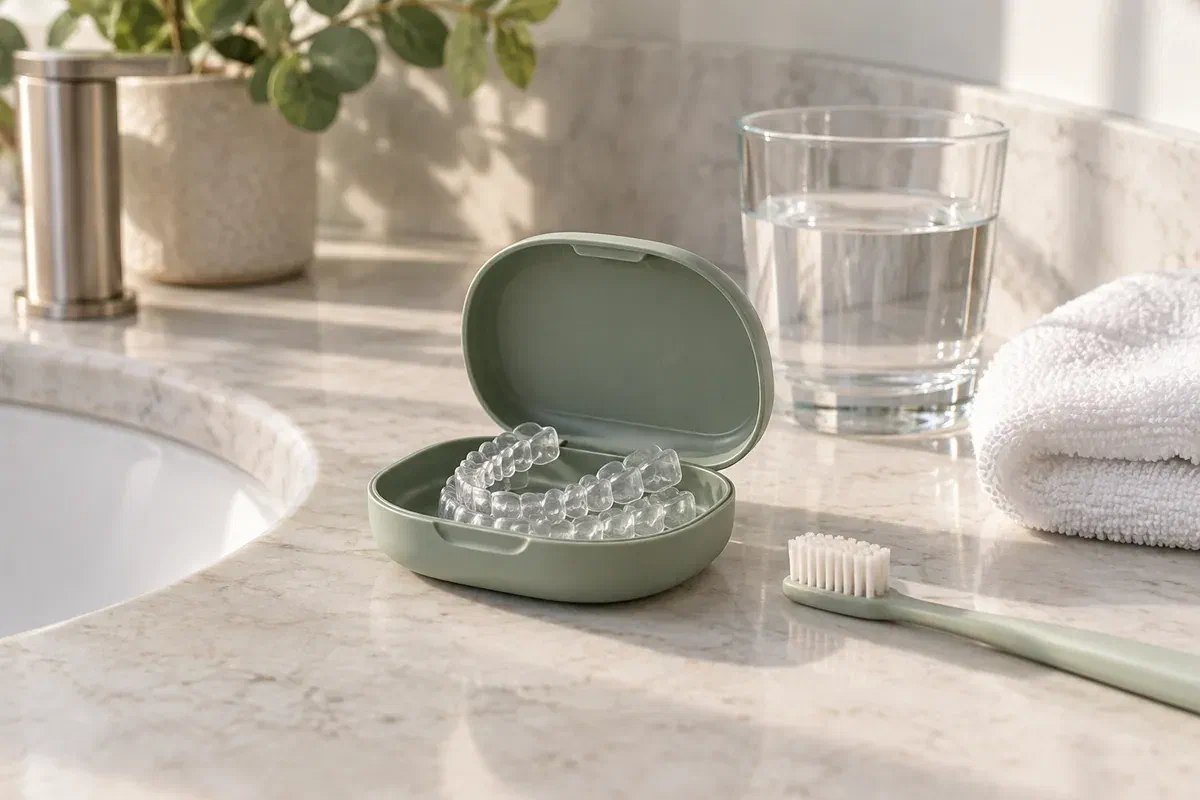
Illustrative adult aligner-care arrangement with a case, toothbrush, towel, and water
Tell us at the start

A plan has to fit your mouth and your habits.

Explain the change you are hoping for, then the realities a plan would need to work with. That way, limits and responsibilities can be explained clearly from the outset.

Current and future restorations

Crowns, bridges, implants and big fillings affect movement and the order of treatment, so list them and mention anything coming up. Implants do not reposition the way natural teeth do, which means neighbouring teeth must be planned carefully around them.

How your gums respond to cleaning

Bleeding when you floss, recession, a loose tooth or a history of periodontal treatment all deserve a mention. The tissues supporting your teeth are assessed before movement. If gum care is needed, ask who will provide it and how it changes the start date.

Where and when you can brush

Outdoor work, long drives, irregular meals and limited access to running water can make it hard to clean before trays go back in. Describe those limits plainly. A plan that respects them is more realistic than one built around an ideal bathroom routine.

Your age does not decide whether aligners will work. Current oral health, the movement needed and your ability to keep teeth and trays clean and worn are far more telling.

Upsides and obligations

Easier brushing, and a bigger share of the work

With aligners out, you can brush and floss normally, which many adults find easier than working around brackets and wires. The flip side is that the trays rely on you to put them back promptly after every meal and snack. Keep both in mind when comparing approaches.

Goals vary from a single tooth to several concerns. Ask the clinician to distinguish the changes that are realistic from features likely to remain. With that understanding, you can judge whether the expected result is worth months of careful routine.

Patient information: British Orthodontic Society — considering adult orthodontic treatment

Treatment shaped around your concern

You might want to fix crowding that makes flossing hard, a tooth that has drifted, relapse after braces, or create space for future work. Explain your priority. Ask how it fits the findings and whether other problems should be addressed first.

A routine linked to your regular dental care

Ask how hygiene appointments, checkups and any specialist visits will fit with aligner reviews. Clarify who looks after each part. When several clinicians are involved, it helps to know how they will share information.

An honest outline of the full commitment

Discuss reviews, possible additional stages, retainers and long-term maintenance, not only the starting estimate. Ask what happens if you relocate or your circumstances shift. These matters are as important as the first set of trays.

The steps involved

Plan carefully. Then practise the routine.

An adult consultation should give real time to your dental history and questions. Ask what the first visit includes and what further records or decisions may follow.

  1. Share your history and expectations

    Explain why you are looking into alignment and what result would feel worthwhile. Cover health conditions, medicines, tooth injuries and any earlier orthodontic care. Mention symptoms like dry mouth or sensitivity even if they seem unrelated.

  2. Assess teeth, gums and hygiene

    The clinician examines your teeth, gums and bite and considers which records are needed for planning. Ask whether cleanings, fillings or gum care should come before alignment. A specialist assessment may be advised if findings are complex.

  3. Go through the plan and its demands

    Review the scope, risks, monitoring and alternative approaches. Ask about attachments and how they affect cleaning. Talk through the estimate, potential extra stages and retention before deciding whether to proceed.

  4. Start with a hands-on demonstration

    If you begin treatment, you will be shown how to put in, remove and clean the trays and told who to call about problems. Confirm the wear and change schedule prescribed for you. Ask how progress will be checked and which visits to book ahead.

Keeping teeth and trays clean

Rinse, brush, store, repeat.

Good hygiene habits protect your teeth and help treatment stay on track. Follow the cleaning instructions you receive, and ask for help as soon as something makes them hard to manage.

A kit for wherever your day goes

Keep a travel toothbrush, your aligner case and anything else you have been advised to use in your vehicle, bag or lunch box. Plan ahead for meals on the go. If brushing is not possible, ask what to do rather than leaving the trays out for hours.

Hygiene visits matter more, not less

Your checkups and cleanings continue alongside aligner reviews, and they help keep gums healthy while teeth move. Keep the schedule recommended for you, and let each clinician know about planned procedures that could affect fit.

Report fit, cleanliness or comfort problems

Contact the team if a tray is cracked, warped, persistently cloudy or uncomfortable, or if soreness is significant. Explain which stage you are on. Avoid skipping ahead through trays to make up for missed wear.

Patient information: Invisalign Canada — treatment responsibilities and follow-up

Puslinch adults: deciding

Which route matches your findings and your habits?

Preferring a removable appliance is a reasonable starting point. It is weighed against the findings, the movements required, your hygiene routine and any other dental care planned.

When aligners fit the agreed goals

An Invisalign plan you can keep clean

Aligners can be a sensible choice when the agreed changes are within what they can do and you can stay on top of wear and cleaning. Ask where they fall short, how often check-ins happen and which retainer would follow. Understand the plan before trays are ordered.

When another method suits better

A different appliance or orthodontist

Certain movements or bite relationships may be better handled with another approach or by a specialist. Ask what the alternative would achieve and why it is suggested. Your interest in a discreet option can still be considered.

When gum or tooth health should lead

Improve oral health first

Gum care, fillings or other treatment may need to come first, or you may decide to wait. Ask which problems need treating either way. Find out how alignment could be reconsidered once your mouth or schedule is ready.

Cleaning and care questions

The practical side, answered plainly

Routines differ from one household to the next. These questions can help you work out yours.

(905) 876-4488
How should I clean my aligners each day?
Your clinician will give you specific cleaning instructions for your trays. In general, rinse them when you remove them and clean them as directed before putting them back. Ask before using toothpaste, hot water or household cleaners, as some can damage the plastic.
My trays look cloudy. Is that a problem?
Cloudiness can come from buildup on the plastic. Review your cleaning routine and ask the team for advice. If a tray looks damaged, warped or no longer fits well, contact them before continuing to wear it.
Where should I keep aligners when they’re out of my mouth?
Use the protective case, not a napkin or pocket, where trays are easily thrown out or crushed. Keep them out of reach of pets, which may chew them. If a tray is lost or damaged, contact the team for advice.
Can I use mouthwash while in aligner treatment?
Ask the clinician what is appropriate for you. Some products may affect the trays or be unsuitable to hold against the teeth. Follow the specific oral hygiene advice you are given during treatment.
What if I have dry mouth from medication?
Mention it during your health history. Dry mouth can affect comfort and oral health, which matters when trays are worn for long periods. The clinician can advise how to manage it as part of your plan.
Does adult Invisalign make bad breath more likely?
Trapped food and buildup on trays can contribute to unpleasant odours. Cleaning teeth and aligners as instructed helps. If the problem continues, raise it at your next visit so the cause can be looked into.
Visiting from Puslinch

Practical answers before you begin

Come to our Bronte Street practice to learn whether adult Invisalign could suit your teeth and your daily routine. We can explain the assessment, the likely order of care and the cleaning and wear responsibilities that come with aligners.

Whether aligners are suitable, the scope of care and any referral are determined through an individual assessment.

Visit Milton Dental Clinic
Unit 1, 342 Bronte St. S, Milton, ON L9T 5B7
Get directions Clinic hours
Monday–Thursday
11am–7pm
Friday–Sunday
By appointment only

Areas we serve

  • Milton
  • Oakville
  • Mississauga
  • Georgetown
  • Halton Hills
  • Acton
  • Campbellville
  • Brampton
  • Burlington
  • Puslinch
  • Rockwood
  • Erin
  • Caledon
  • Etobicoke
  • Old Milton
  • Bronte Meadows
  • Timberlea
  • Dorset Park
  • Dempsey
  • Clarke
  • Beaty
  • Coates
  • Harrison
  • Scott
  • Willmott
  • Ford
  • Bowes
  • Cobden
  • Walker
  • Mountain View
  • Milton Heights
  • Hawthorne Village
  • Valley View
  • Fallingbrook
  • Nassagaweya
  • Trafalgar
  • Esquesing
  • Nelson
  • Brookville
  • Moffat
  • Glen Williams
  • Norval
  • Limehouse
  • Stewarttown
  • Ashgrove
  • Hornby
  • Silver Creek
  • Speyside
  • Scotch Block
  • North Oakville
  • River Oaks
  • Glen Abbey
  • West Oak Trails
  • Palermo
  • Bronte Creek
  • College Park
  • Joshua Creek
  • Uptown Core
  • Preserve
  • Iroquois Ridge
  • Lisgar
  • Meadowvale
  • Meadowvale Village
  • Churchill Meadows
  • Erin Mills
  • Central Erin Mills
  • Streetsville
  • East Credit
  • Creditview
  • Heartland
  • Sheridan
  • Mount Pleasant
  • Credit Valley
  • Huttonville
  • Churchville
  • Springbrook
  • Northwest Brampton
  • Bram West
  • Fletcher's Meadow
  • Fletcher's Creek South
  • Alton Village
  • Orchard
  • Millcroft
  • Headon Forest
  • Tansley
  • Brant Hills
  • Tyandaga
  • Kilbride
  • Lowville
  • Aberfoyle
  • Morriston
  • Arkell
  • Hillsburgh
  • Freelton
  • Carlisle
  • Waterdown
  • Flamborough
  • Mountsberg

How can we help?

Milton Dental Clinic

Have a question about your smile? Choose the option that works best for you.

For urgent dental concerns, please call.
Messages are reviewed during clinic hours.