

Illustrative patient and dental clinician reviewing an aligner and tooth model
Cosmetic Dentistry

Invisalign Refinements in Brampton

When a teenager reaches the end of their aligners and the word refinements comes up, parents and teens often hear it differently. For households in Brampton, a progress review explains what is still unfinished, why extra trays might help, and how retention would follow, in terms the whole family can follow.

Teens, parents, and refinements in Brampton

“More trays?” is a fair question at the kitchen table.

A teen may be disappointed, a parent may worry about cost, and both may wonder whether someone did something wrong. Those reactions are normal. The useful step is to find out what the examination actually shows and what a further series is supposed to accomplish.

Refinements are additional aligners prescribed once progress has been reassessed. They are still active treatment, aimed at goals that have not been fully met. Retainers serve a separate purpose: they come after the clinician says movement is complete and help keep teeth in their new positions.

If our team supervises the aligners, bring the questions from home to the progress review, and encourage your teen to ask their own. If another office manages treatment, start there; we can arrange a separate opinion when it is appropriate. Everyone should leave understanding the next step.

Book a family progress visit
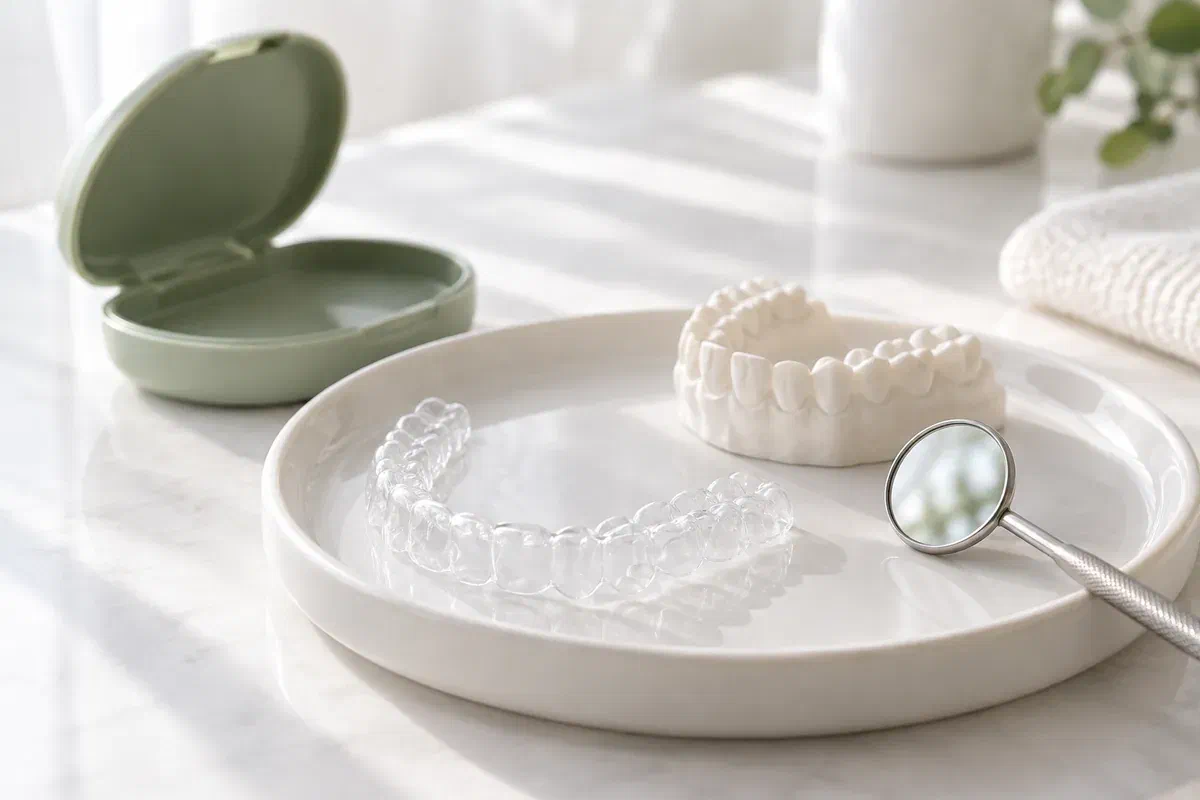
Illustrative clear aligner, tooth model, dental mirror, and protective case
Concerns to share at the review

Let the person wearing the trays describe them first.

Teens often notice fit and comfort details that parents cannot see. Hearing what is visible and what is felt helps the clinician tell an unfinished movement from a fit or tooth-shape issue.

Teeth that have not reached their target

Encourage your teen to point out the space, rotation, or overlap that bothers them. Ask how it compares with the agreed plan and whether more movement is warranted. A selfie may help explain it, but the exam is what counts.

Fit, bite, or comfort changes

Mention a tray that pops up at the edge, teeth that meet differently, or soreness when chewing. Give the tray number and timing. Wait for the cause to be assessed before assuming a refinement set is the answer.

Motivation, cost, and the family routine

Another round affects school mornings, sports, and the household budget. Share those worries openly. Ask what the further stage would achieve and what alternatives exist. A clear rationale should come before the family agrees to more.

Refinements being suggested does not, by itself, mean the teen failed to wear the trays or that the plan was flawed. Ask for the findings that support the recommendation.

What the family should come away with

Everyone on the same page

A good review links what was found with one specific next step. It distinguishes concerns that affect the bite or oral health from those that are cosmetic, and from details that relate to a tooth’s natural shape rather than its position.

It also sets expectations. Extra aligners cannot guarantee perfection, and some requested changes may not be advisable. The clinician should talk through likely benefits, risks, remaining uncertainty, and whether your teen is ready to keep going.

A goal your teen can understand

Ask the clinician to explain, in plain language, what the new trays will change and why. If several issues remain, ask which is most important. Teens tend to stay with a plan better when they know its purpose.

Planning that reflects today’s teeth

A new scan or photos may be taken so the series starts from current positions. Ask what is being re-examined and whether attachments will change. Growth, new teeth coming in, or a new dental problem should all be part of the review.

A realistic route to retainers

Ask how the next check will assess the goals and how the switch to retention will be handled. Confirm any practical or financial limits. Knowing the finish line helps the family plan, even though no end date is certain.

The visit, from start to finish

A short review with four clear parts

The sequence depends on treatment history and the concern raised. Ask for guidance on the appointment and on what your teen should wear while new trays are prepared.

  1. Hear from the teen and the parent

    Bring the current aligners and describe what each of you has noticed. Be candid about missed wear, lost attachments, or soreness, without assigning blame. The clinician compares those observations with the records and the original goals.

  2. Assess teeth, bite, and growth

    Tooth positions, bite, gum health, and any changes from growth are checked. Scans, photos, or impressions may be advised for a specific reason. Ask what each adds and whether a cavity or other issue needs attention first.

  3. Explain the proposal and its alternatives

    Discuss what more aligners would aim to do, what they might not achieve, and any change to attachments. Ask about fees and what the agreement covers. If another approach is recommended, ask why it suits the findings.

  4. Agree on the wear plan at home

    Confirm which appliance to wear, the daily hours, and who to call about damage or loss. When the refinement series arrives, go through its own schedule together. The earlier change rhythm may not apply.

At home between series

Make the gap a team effort.

Waiting for planning or delivery can loosen routines, especially in a busy Brampton household with several schedules to juggle. Ask your questions early so everyone knows what to wear and when the next review is.

Stick with the holding appliance

Your teen may be asked to stay in a specific tray or another appliance until the refinements arrive. Help them keep to the hours given. An empty box is not permission to stop. Call if the appliance cracks or no longer fits.

Restart with a clear routine

Check the tray order, switching days, and any new attachments or elastics. Keep reviews on the calendar and bring what is requested. If sports, exams, or a new schedule have changed things, say so and adjust together.

Ask the last questions before retainers

Before anyone calls it finished, let your teen say what still bugs them about their smile or the way their teeth meet. The clinician can explain whether more movement would help or whether the detail is something else. Then confirm when active movement ends and how the retainer will be worn and looked after.

Deciding together

Three ways treatment might finish

Recommendations should follow the exam and the goals agreed with your family. Ask how each option handles what remains and what it means for future care.

When specific movement is still sensible

A focused refinement series

Additional aligners may be proposed for particular teeth or the bite. Ask what will change and how the team will check progress. Confirm appointment plans and any additional fees before the series is ordered.

When the concern needs a different look

A modified plan or specialist advice

Findings can point to a change of method, a referral, or a tooth-shape question. Ask the clinician whether continuing the same type of movement is likely to help, and which professional will manage the next recommendation.

When the treatment goals have been met

Moving on to retainers

If active treatment is judged complete, discuss any small compromises and the retainer plan, and make sure your teen understands it. Ask about the retainer type, wear hours, follow-up visits, and what to do if it is lost.

Patient information: British Orthodontic Society — aligner treatment and retention

Parent and teen questions

Answers for the household

Every answer depends on records and examination. A classmate’s number of refinement trays says little about what your teen will need.

(905) 876-4488
Does my teen need refinements because they didn’t wear their trays enough?
Not necessarily. Teeth do not always follow the plan exactly, even with good wear. Ask the clinician which goals were reached and what the findings show. An honest talk about wear is useful, but the recommendation should rest on the exam.
Can growth or new teeth affect a refinement plan?
They can. In younger patients, erupting teeth or jaw growth may influence timing and planning. Ask the clinician how growth is being considered and whether it changes when refinements or retention should happen.
What should my teen do if a tray is lost at school?
Contact the treating team promptly. They may advise wearing a previous tray or another appliance until a replacement arrives. Keeping the case in a backpack and never wrapping a tray in a napkin can help prevent losses.
Can my teen play sports during refinements?
Generally yes, but ask about mouth protection. The clinician can advise whether to remove the aligner and use a mouthguard during contact sports, and what to do if the mouth is injured.
Are refinement trays the same as the retainer my teen will get later?
No. Refinement trays continue active movement, while a retainer helps hold the result once treatment is complete. Ask which appliance your teen has and what it is for before changing the wear routine.
Are additional refinement sets covered by our original agreement?
Check the agreement and ask the treating office directly. Clarify what is included, such as further records, reviews, or extra stages, and confirm the cost of the proposed step before it is ordered.
From Brampton to our Milton office

Bring your teen, their trays, and the questions from home.

Book a progress review at our Bronte Street practice. We will explain the assessment needed and what any further aligners would aim to do. If another provider manages your teen’s care, mention it when booking.

Whether refinements are right for your teen, along with timing, fees, and any change of provider, depends on assessment. Further aligners cannot promise a specific outcome.

Visit Milton Dental Clinic
Unit 1, 342 Bronte St. S, Milton, ON L9T 5B7
Get directions Clinic hours
Monday–Thursday
11am–7pm
Friday–Sunday
By appointment only

Areas we serve

  • Milton
  • Oakville
  • Mississauga
  • Georgetown
  • Halton Hills
  • Acton
  • Campbellville
  • Brampton
  • Burlington
  • Puslinch
  • Rockwood
  • Erin
  • Caledon
  • Etobicoke
  • Old Milton
  • Bronte Meadows
  • Timberlea
  • Dorset Park
  • Dempsey
  • Clarke
  • Beaty
  • Coates
  • Harrison
  • Scott
  • Willmott
  • Ford
  • Bowes
  • Cobden
  • Walker
  • Mountain View
  • Milton Heights
  • Hawthorne Village
  • Valley View
  • Fallingbrook
  • Nassagaweya
  • Trafalgar
  • Esquesing
  • Nelson
  • Brookville
  • Moffat
  • Glen Williams
  • Norval
  • Limehouse
  • Stewarttown
  • Ashgrove
  • Hornby
  • Silver Creek
  • Speyside
  • Scotch Block
  • North Oakville
  • River Oaks
  • Glen Abbey
  • West Oak Trails
  • Palermo
  • Bronte Creek
  • College Park
  • Joshua Creek
  • Uptown Core
  • Preserve
  • Iroquois Ridge
  • Lisgar
  • Meadowvale
  • Meadowvale Village
  • Churchill Meadows
  • Erin Mills
  • Central Erin Mills
  • Streetsville
  • East Credit
  • Creditview
  • Heartland
  • Sheridan
  • Mount Pleasant
  • Credit Valley
  • Huttonville
  • Churchville
  • Springbrook
  • Northwest Brampton
  • Bram West
  • Fletcher's Meadow
  • Fletcher's Creek South
  • Alton Village
  • Orchard
  • Millcroft
  • Headon Forest
  • Tansley
  • Brant Hills
  • Tyandaga
  • Kilbride
  • Lowville
  • Aberfoyle
  • Morriston
  • Arkell
  • Hillsburgh
  • Freelton
  • Carlisle
  • Waterdown
  • Flamborough
  • Mountsberg

How can we help?

Milton Dental Clinic

Have a question about your smile? Choose the option that works best for you.

For urgent dental concerns, please call.
Messages are reviewed during clinic hours.