

Illustrative patient and dental clinician reviewing an aligner and tooth model
Cosmetic Dentistry

Invisalign Refinements in Burlington

It is often a photo that does it: a smile picture where one tooth still looks turned or a small space still shows. If you are coming from Burlington, a refinement review can tell you whether that detail is about position, shape, or perspective, and what further aligners could or could not do.

Burlington smiles, one last look

The tooth you notice in every photo

Cameras are unforgiving, and phone lenses can exaggerate the front teeth. Still, a picture is a reasonable prompt for a conversation. What you see may be a movement that has not fully happened, an uneven edge, a shadow from a gap near the gum, or simply the angle.

When movement is the issue, refinements may be part of the answer. These are additional aligners designed after a reassessment so specific goals can still be pursued. They are active treatment, separate from retainers, which come later and are meant to hold teeth steady once movement is declared finished.

If your aligners are managed here, take your photos and observations to the progress review. If another practice supervises your case, talk with that clinician first, and ask us about a separate opinion when it would help. The point is to understand the next decision clearly, not to collect trays.

Talk through your aligner progress
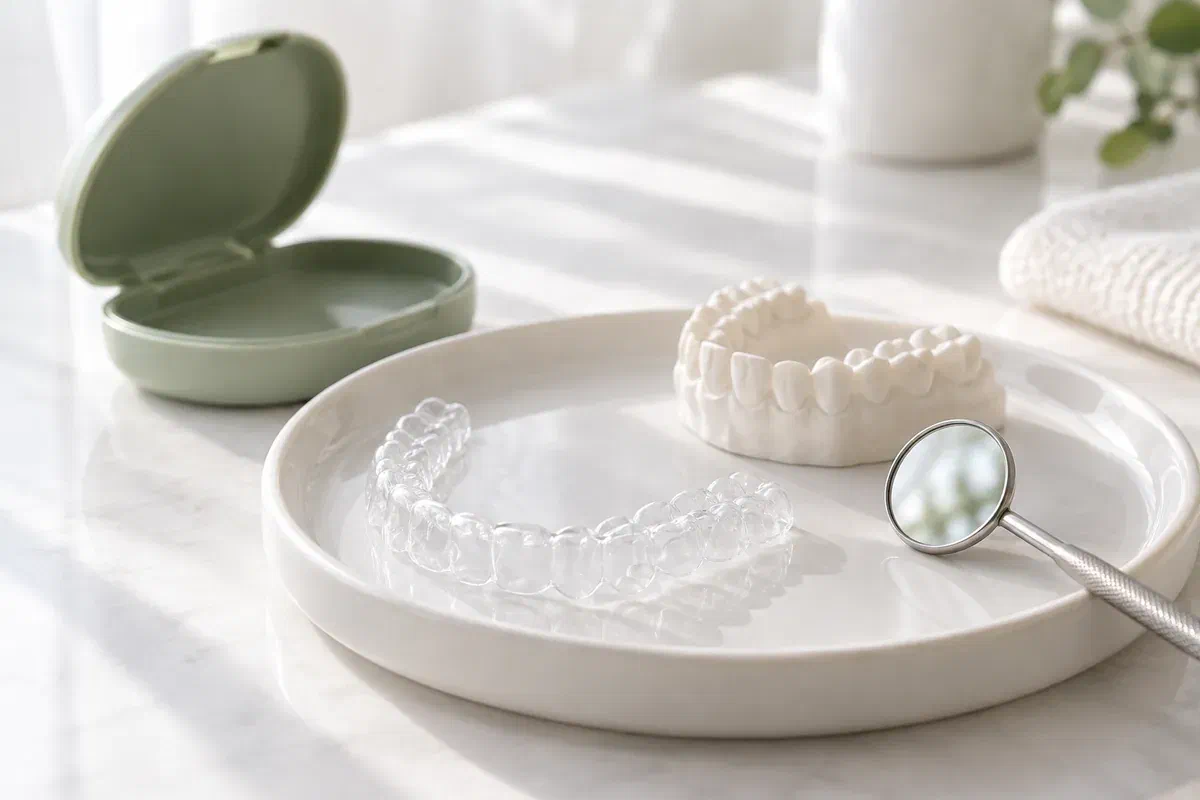
Illustrative clear aligner, tooth model, dental mirror, and protective case
What you might be seeing

Position, outline, or angle?

Similar-looking concerns can have very different causes. Describe what draws your eye and what you feel, and the examination can separate an unfinished movement from a shape or fit issue.

A tooth that still looks rotated or out of line

Show the exact tooth or space in the mirror and in your photo. Ask whether it differs from the agreed goal and whether moving it further is sensible. A picture helps explain the concern, yet the decision rests on examining your teeth and bite.

Edges, contacts, or trays that feel wrong

Mention any tray that sits proud of a tooth, teeth meeting unevenly, or a different feel when biting into food. Note when it started. Leave room for assessment before assuming that more aligners would correct it.

Wanting it perfect, but not forever

Cosmetic goals are personal, and so is your patience. Be candid about how much more time, cost, and wear you are willing to accept. Ask what a further series would realistically improve and what else could be considered.

A refinement proposal is not evidence of a mistake or of poor wear. Ask what the examination showed and how that shaped the recommendation.

Seeing the detail clearly

Know which part a tray can change.

A worthwhile review sorts your concerns into groups. Some relate to how your teeth meet and function. Some are purely about appearance. Others come from the natural outline, colour, or wear of a tooth, which aligners do not alter.

That sorting also shows the limits. More aligners do not guarantee a camera-perfect smile, and some changes may not be advisable. Expect a frank look at likely benefit, risk, uncertainty, and how much more treatment you want. If each visit means a trip from Burlington, it is fair to weigh that effort against the size of the change on offer, too.

A precise reason for further trays

Ask which teeth would move and why aligners are the right tool for it. If several details remain, ask which one the clinician would prioritize. Reasons tied to your exam are more useful than hearing that refinements are a typical step.

Records that reflect today

New photographs or a scan may be taken so any plan starts from your current positions. Ask what is being re-evaluated and whether attachments or other components would change. New dental findings belong in the plan too.

A sense of when to stop

Ask how the next review will judge the goals and how retainers would follow. Confirm practical or financial limits. A defined endpoint keeps a cosmetic stage from drifting on, though no finish date is assured.

The review, step by step

From your photo to a decision

Your history and concern set the exact sequence. Ask for directions covering both the appointment and any wait before new aligners arrive.

  1. Show what you see

    Bring your current trays and, if you like, the photo that prompted the visit. Mention missed wear, a lost attachment, or tenderness honestly. The clinician will compare what you describe with your records and the goals set at the start.

  2. Examine and choose useful records

    Your teeth, bite, gums, and any fillings or crowns are assessed. New scans or photos may be advised for a clear purpose. Ask what each would add and whether an oral-health issue should be handled before more movement.

  3. Discuss what more trays could achieve

    Talk through the aim of extra aligners, where they may fall short, and any change to attachments. Ask about fees and what your agreement includes. If bonding, reshaping, or another approach is raised, ask why it might suit better.

  4. Agree on what to wear meanwhile

    Before leaving, confirm the appliance to wear, the daily hours, and who to contact about damage. When the refinement series arrives, follow its own schedule rather than carrying over the old one.

While new trays are planned

Hold your ground until the next set arrives.

Planning and manufacturing can leave a gap of some weeks. Ask early about your current trays, and if you are heading back to Burlington between visits, make sure you know how the next appointment will be booked.

Follow your holding instruction

You might be asked to stay in a specific aligner or use another appliance. Keep to the hours you were given. Finishing the series is not a reason to stop wearing it. Call the team if the appliance cracks or loosens.

Learn the new series from scratch

Check the order of trays, when to switch, and any added attachments or elastics. Keep reviews and bring what is asked. If your routine has changed since you began, mention it so the plan still fits.

Ask the cosmetic questions before retainers

Bring up any lingering concern about appearance, position, or bite at the planned check. Ask whether it is orthodontic or better addressed another way. Confirm when active movement ends and how retention will work.

Options for the final detail

Which finish suits the concern?

The recommendation should follow your examination and goals. Ask how each choice addresses the remaining detail and what it means for later care.

When a position can still be improved

A short refinement series

Additional aligners may be suggested to adjust specific teeth or contacts. Ask what will change and how progress will be reviewed. Confirm visit arrangements and any additional fees before approving it.

When the detail is not about position

Shape, restorative, or specialist input

An uneven edge or an old filling may call for a separate cosmetic or restorative conversation, and sometimes specialist advice is useful. Ask whether moving the tooth again could change what bothers you, and find out who will organize the follow-up.

When the agreed goals are confirmed

Accept the result and begin retention

Sometimes the best choice is to accept a tiny imperfection and protect everything else. If your clinician agrees active treatment is complete, get that said plainly and ask which retainer you will wear, how often, when it will be checked, and who to call if it starts to feel tight.

Patient information: British Orthodontic Society — aligner treatment and retention

Cosmetic finishing questions

What can still change, and what will not?

Your examination and records drive these answers. Comparing your trays with a friend’s refinement count will not predict your path.

(905) 876-4488
Why does one tooth look crooked in photos but not in the mirror?
Lenses, angles, and lighting can distort tooth shapes and shadows. The clinician can check whether the tooth is actually out of position, has an uneven edge, or looks different because of the camera. Bring the photo so you can compare.
Can refinements close a small dark triangle near the gums?
Sometimes aligning teeth changes these spaces, but they can also relate to gum levels or tooth shape. Ask what is causing yours and whether movement, another treatment, or no treatment is most appropriate.
Can I whiten my teeth during a refinement series?
Ask your treating clinician before starting. Timing may depend on attachments, sensitivity, and any planned bonding or reshaping. They can advise whether to wait until active movement is finished.
If my last tray fits perfectly, why would I need more?
A tray can fit well while teeth still fall short of the intended position. The review compares your current teeth with the goals, not only with the appliance. Ask what was found and why any further stage is being considered.
How are refinement aligners different from retainers?
Refinement aligners are designed to keep moving teeth toward remaining goals. Retainers help maintain positions after active treatment ends. Ask which you have been given before changing how you wear it.
Should I confirm what refinements cost before they are ordered?
Yes. Review your treatment agreement and ask what it includes, such as further records, reviews, or additional stages. Get the cost of the proposed step clarified first instead of assuming it matches someone else’s package.
Burlington aligner progress visits

Bring the photo, the trays, and your honest goals.

Arrange a review at our Bronte Street practice to learn what assessment is needed and what any further aligners would be meant to do. Let us know when booking if another provider supervises your treatment.

Whether refinements are suitable, and what they would cost and involve, can only be judged after an examination. Further aligners do not guarantee any particular cosmetic result.

Visit Milton Dental Clinic
Unit 1, 342 Bronte St. S, Milton, ON L9T 5B7
Get directions Clinic hours
Monday–Thursday
11am–7pm
Friday–Sunday
By appointment only

Areas we serve

  • Milton
  • Oakville
  • Mississauga
  • Georgetown
  • Halton Hills
  • Acton
  • Campbellville
  • Brampton
  • Burlington
  • Puslinch
  • Rockwood
  • Erin
  • Caledon
  • Etobicoke
  • Old Milton
  • Bronte Meadows
  • Timberlea
  • Dorset Park
  • Dempsey
  • Clarke
  • Beaty
  • Coates
  • Harrison
  • Scott
  • Willmott
  • Ford
  • Bowes
  • Cobden
  • Walker
  • Mountain View
  • Milton Heights
  • Hawthorne Village
  • Valley View
  • Fallingbrook
  • Nassagaweya
  • Trafalgar
  • Esquesing
  • Nelson
  • Brookville
  • Moffat
  • Glen Williams
  • Norval
  • Limehouse
  • Stewarttown
  • Ashgrove
  • Hornby
  • Silver Creek
  • Speyside
  • Scotch Block
  • North Oakville
  • River Oaks
  • Glen Abbey
  • West Oak Trails
  • Palermo
  • Bronte Creek
  • College Park
  • Joshua Creek
  • Uptown Core
  • Preserve
  • Iroquois Ridge
  • Lisgar
  • Meadowvale
  • Meadowvale Village
  • Churchill Meadows
  • Erin Mills
  • Central Erin Mills
  • Streetsville
  • East Credit
  • Creditview
  • Heartland
  • Sheridan
  • Mount Pleasant
  • Credit Valley
  • Huttonville
  • Churchville
  • Springbrook
  • Northwest Brampton
  • Bram West
  • Fletcher's Meadow
  • Fletcher's Creek South
  • Alton Village
  • Orchard
  • Millcroft
  • Headon Forest
  • Tansley
  • Brant Hills
  • Tyandaga
  • Kilbride
  • Lowville
  • Aberfoyle
  • Morriston
  • Arkell
  • Hillsburgh
  • Freelton
  • Carlisle
  • Waterdown
  • Flamborough
  • Mountsberg

How can we help?

Milton Dental Clinic

Have a question about your smile? Choose the option that works best for you.

For urgent dental concerns, please call.
Messages are reviewed during clinic hours.