

Illustrative patient and dental clinician reviewing an aligner and tooth model
Cosmetic Dentistry

Invisalign Refinements in Caledon

Once teeth are lined up, an uneven edge or a chipped corner can suddenly become obvious. That detail may not be a position problem at all. From Bolton or elsewhere in Caledon, a refinement review helps you learn whether more aligners, a separate shape or restorative discussion, or retainers fit what remains.

Position versus shape, for Caledon smiles

Straight teeth can still have uneven edges.

Crowded teeth hide their edges. When they straighten, you may notice for the first time that one front tooth is shorter, a corner is worn, or two neighbours have different outlines. It is natural to wonder whether more trays would even things out. Sometimes they can help; often the issue is shape rather than position.

Refinements are additional aligners prescribed after reassessment, and their job is movement: rotating, tipping, or shifting teeth toward goals still open. Changing the physical outline of a tooth is a separate matter. Retainers are separate again, used once active movement is judged complete to keep teeth stable.

If our team oversees your aligners, raise the edge or outline concern at your progress review. If another office manages your treatment, start there; an independent opinion from us is possible when it would help. The goal is to know which kind of problem you have before deciding on a solution.

Ask about your remaining concern
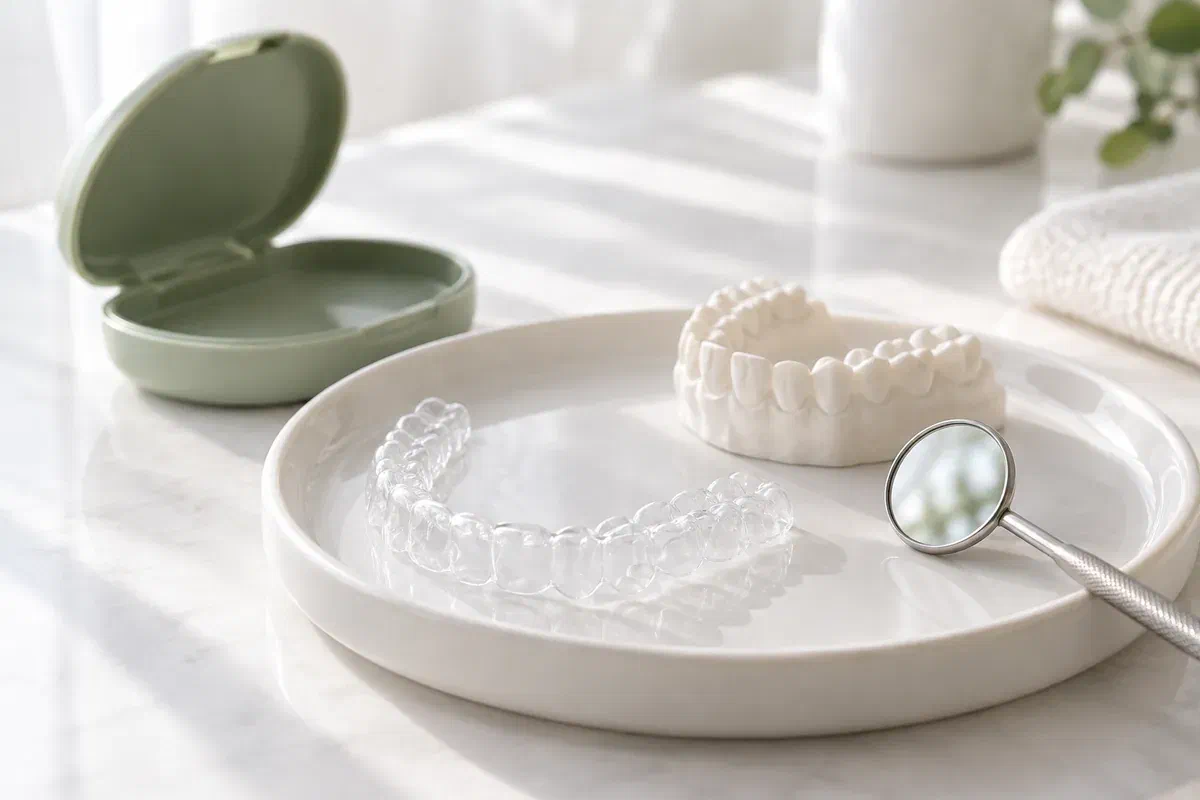
Illustrative clear aligner, tooth model, dental mirror, and protective case
Sorting out the detail

Is it where the tooth sits, or how it is shaped?

A remaining rotation, a fit issue, and a worn or irregular edge can look similar in the mirror. Describing what you see and feel helps the clinician separate them.

A tooth still slightly out of line

Show the space, overlap, or turned tooth you notice. Ask whether its position falls short of the plan you agreed to and whether further movement is sensible. Photos are a helpful prompt, though the clinician needs to see your teeth and bite.

Edges that meet unevenly when you bite

Mention front teeth that click together, a tray that lifts, or chewing that feels different. Note when it started. Uneven contact can come from position, wear, or both, so let it be assessed before assuming more trays are needed.

Deciding how far to go

Addressing shape as well as position may mean more than one kind of treatment. Be clear about your priorities and limits on time and cost. Ask what each option would achieve before agreeing to any of them.

A suggestion of refinements, or of shape-related treatment, does not on its own mean something went wrong or that you did not wear your trays. Ask what the examination shows.

What the review should untangle

The right tool for the right problem

The biggest benefit of reassessment is clarity about the cause. Ask which concern is about position and might respond to aligners, which comes from the shape or wear of a tooth, and which relates to function or oral health rather than appearance.

Knowing the limits is just as useful. Further trays will not reshape enamel or guarantee perfect symmetry, and some changes may not be advisable. Expect an honest look at likely benefit, risk, uncertainty, and how much more treatment you want.

A defined movement goal, if any

If refinements are proposed, have the clinician name the teeth and the movement involved, and explain why aligners suit it. Where both position and shape concerns remain, ask how they will be sequenced.

An up-to-date picture

New photographs or a scan may be taken to plan from your current positions and to record edge and outline details. Ask what is being reassessed and whether attachments or other parts of treatment will change.

A plan that reaches a stable finish

Find out how the clinician will judge the orthodontic goals and when retention would begin, especially if shape-related treatment is planned afterward. Confirm practical and financial limits. Projected timing is a guide, not a guarantee.

Working through the review

Examine first, then match the treatment to the cause.

Your history and concern set the order. Ask for guidance on the appointment and on what to wear while any next step is arranged.

  1. Point out the detail and its history

    Bring your current aligners and explain what you notice, including when the edge or outline concern first appeared. Mention missed wear or lost attachments honestly. The clinician will compare your account with the records and original goals.

  2. Assess position, shape, and health

    Your teeth are checked for alignment, edge wear, existing fillings, and gum health, along with your bite. Close-up photos or a scan can help document edges, and the clinician should explain why any record is worth taking. Ask whether anything needs treatment before more movement.

  3. Compare movement with other approaches

    Discuss what extra aligners could achieve and their limits, and whether a separate restorative or cosmetic discussion would be more suitable for the shape concern. Clarify fees and inclusions for each step.

  4. Agree on the interim and the sequence

    Confirm which appliance to wear meanwhile, the daily hours, and whom to contact about damage. If refinements and shape work are both planned, ask about their order. Follow new aligner instructions when they arrive.

While next steps are arranged

Hold the alignment while other questions are answered.

Planning further aligners, or arranging a separate consultation, can take time. Ask early so you know what to wear and how the next visit will be scheduled from Caledon.

Wear the appliance you were assigned

The clinician may ask you to keep wearing a specific tray or another appliance during the wait. Keep to the hours given. An empty box is not permission to stop. Let the team know if the appliance chips or will not seat.

Treat a refinement series as new

Check the tray order, change interval, and any new attachments. Keep reviews and bring what is requested. If your routine has changed since you began, mention it so the plan remains practical.

Settle shape questions at the right time

Discuss whether any edge or outline treatment should happen before, during, or after retention begins. Ask how it will be coordinated with your retainer. Confirm that active movement is formally finished before shape work is planned.

Matching the option to the cause

When the answer is more trays, and when it is not

The recommendation should follow your examination and goals. For each option, ask what it would change about the remaining concern and how it fits with retention.

When the detail is about where a tooth sits

Refinements for a position concern

A further series may target specific rotations, spaces, or contacts. Ask what difference to expect and how it will be judged. Confirm the visits involved and any additional fees before the series is ordered.

If the outline, not the alignment, is the issue

A restorative or cosmetic shape discussion

Worn or uneven edges may be better addressed by a separate discussion, which might involve bonding, reshaping, or no treatment. Ask why aligner movement would or would not change the concern, and who will coordinate the next step.

When alignment goals are confirmed

Finishing movement and starting retention

If active treatment is judged complete, discuss any accepted limitations and the retainer plan, including how it will work with any later shape treatment. Ask about wear instructions, follow-up, and what to do if fit changes.

Patient information: British Orthodontic Society — aligner treatment and retention

Shape and position questions

Telling alignment issues from edge issues

These are general answers. Your own will come from your examination and records, not from how someone else’s refinements turned out.

(905) 876-4488
Why do my front teeth look uneven now that they are straight?
Crowding can hide differences in tooth length or edge wear. Once teeth line up, those differences become visible. The clinician can check whether the issue is position, shape, or both, and explain what each would need.
Can refinement aligners fix a worn or chipped edge?
Aligners move teeth; they do not change a tooth’s physical outline. If the concern is wear or a chip, ask whether a separate restorative or cosmetic discussion is appropriate, or whether no treatment is needed.
Should edge reshaping or bonding happen before or after refinements?
It depends on the plan. Many clinicians prefer to finish movement before changing tooth shape, but your situation may differ. Ask about the sequence and how it fits with your retainer.
If a refinement is recommended, does that mean my first series fell short?
Not by itself. Teeth sometimes respond differently than predicted. Ask the clinician to walk you through what the first series accomplished, what it did not, and what in your exam points toward more aligners.
Is a retainer the same as the aligners I am wearing now?
No. Your current aligners, and any refinements, are for moving teeth. A retainer helps hold the result once active treatment is complete. Ask which you are using and what its purpose is.
Can bonding affect how my retainer fits later?
It can, because changes to tooth shape may alter the fit of a retainer made beforehand. Ask your clinician how they will coordinate any shape treatment with retainer fitting so both work together.
Caledon refinement reviews

Bring the trays, and point to the edge that bothers you.

Book a review at our Bronte Street practice. We will explain the assessment you need and whether further aligners, a separate discussion, or retention best suits the concern. Let us know if another provider manages your care.

Suitability for refinements or shape-related treatment, along with fees, timing, and any change of provider, depends on assessment. No treatment can guarantee a particular result.

Visit Milton Dental Clinic
Unit 1, 342 Bronte St. S, Milton, ON L9T 5B7
Get directions Clinic hours
Monday–Thursday
11am–7pm
Friday–Sunday
By appointment only

Areas we serve

  • Milton
  • Oakville
  • Mississauga
  • Georgetown
  • Halton Hills
  • Acton
  • Campbellville
  • Brampton
  • Burlington
  • Puslinch
  • Rockwood
  • Erin
  • Caledon
  • Etobicoke
  • Old Milton
  • Bronte Meadows
  • Timberlea
  • Dorset Park
  • Dempsey
  • Clarke
  • Beaty
  • Coates
  • Harrison
  • Scott
  • Willmott
  • Ford
  • Bowes
  • Cobden
  • Walker
  • Mountain View
  • Milton Heights
  • Hawthorne Village
  • Valley View
  • Fallingbrook
  • Nassagaweya
  • Trafalgar
  • Esquesing
  • Nelson
  • Brookville
  • Moffat
  • Glen Williams
  • Norval
  • Limehouse
  • Stewarttown
  • Ashgrove
  • Hornby
  • Silver Creek
  • Speyside
  • Scotch Block
  • North Oakville
  • River Oaks
  • Glen Abbey
  • West Oak Trails
  • Palermo
  • Bronte Creek
  • College Park
  • Joshua Creek
  • Uptown Core
  • Preserve
  • Iroquois Ridge
  • Lisgar
  • Meadowvale
  • Meadowvale Village
  • Churchill Meadows
  • Erin Mills
  • Central Erin Mills
  • Streetsville
  • East Credit
  • Creditview
  • Heartland
  • Sheridan
  • Mount Pleasant
  • Credit Valley
  • Huttonville
  • Churchville
  • Springbrook
  • Northwest Brampton
  • Bram West
  • Fletcher's Meadow
  • Fletcher's Creek South
  • Alton Village
  • Orchard
  • Millcroft
  • Headon Forest
  • Tansley
  • Brant Hills
  • Tyandaga
  • Kilbride
  • Lowville
  • Aberfoyle
  • Morriston
  • Arkell
  • Hillsburgh
  • Freelton
  • Carlisle
  • Waterdown
  • Flamborough
  • Mountsberg

How can we help?

Milton Dental Clinic

Have a question about your smile? Choose the option that works best for you.

For urgent dental concerns, please call.
Messages are reviewed during clinic hours.