

Illustrative patient and dental clinician reviewing an aligner and tooth model
Cosmetic Dentistry

Invisalign Refinements in Erin

After months of aligners, the routine runs on autopilot: trays out for meals, a quick brush, trays back in. A refinement series resets some of that. For households in Erin and Hillsburgh, a progress review explains what is left to do and how your daily routine should change if more trays are ordered.

Daily life and refinements, from Erin

A new box of trays means a fresh routine.

By the end of a first series, most people have a rhythm: the case by the sink, a set day for switching trays, a habit of brushing before putting them back. Refinements can interrupt that rhythm with new attachments, a different change interval, or a waiting period between boxes.

Refinements are additional aligners prescribed after a reassessment of your progress. They continue active treatment toward goals not yet met. Retainers belong to a later phase: once your clinician decides active movement is complete, a retainer helps hold teeth steady, with a wear routine of its own.

If our team supervises your treatment, bring your questions about the routine as well as your teeth when you come in. When a different office handles your aligners, start with them; we can provide a separate opinion when that would be useful. Leave knowing what changes at home and why.

Plan your progress review
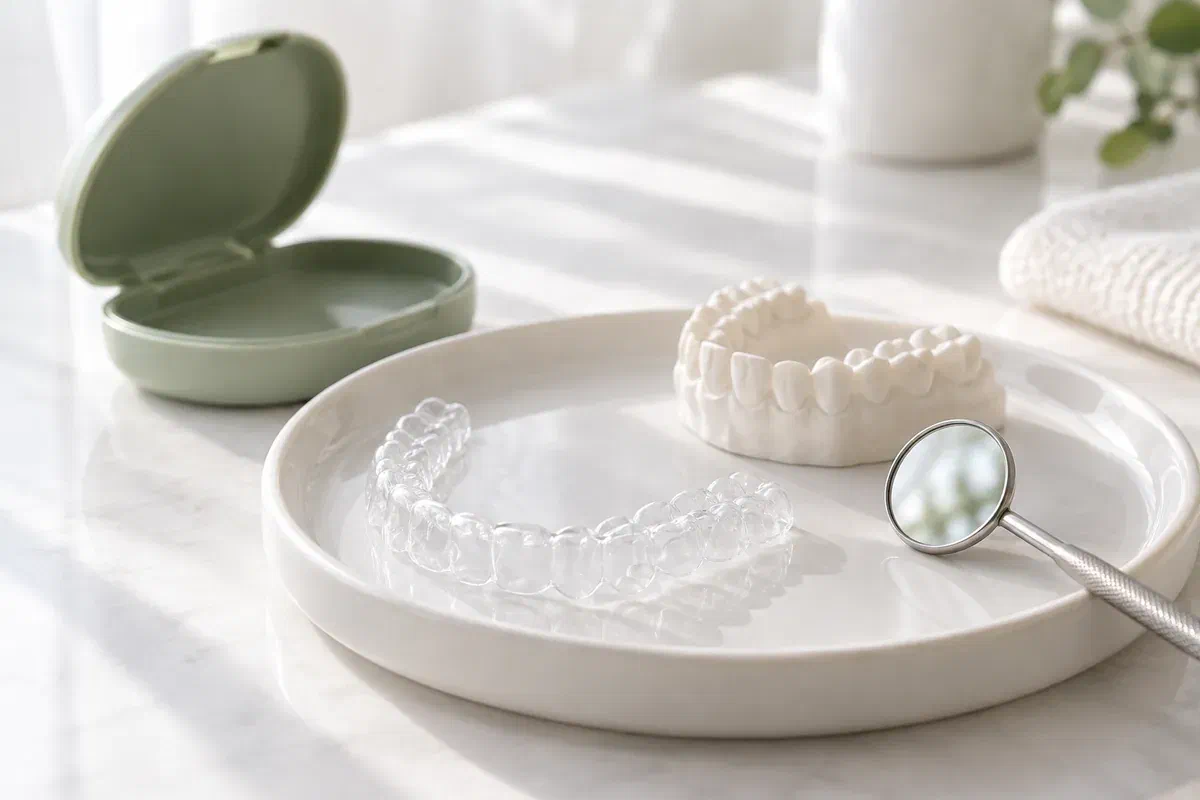
Illustrative clear aligner, tooth model, dental mirror, and protective case
What you have noticed at home

Small daily clues are worth sharing.

The way trays feel when you put them in, how they look in the mirror, and how chewing feels after meals can all help. Describe them, and the clinician can sort unfinished movement from a fit or tooth-shape issue.

A tooth that still stands out in the mirror

Show which space, overlap, or rotation you keep seeing while brushing. Ask whether it misses the agreed target and whether more movement is a reasonable idea. A picture can support what you describe, though examination of your teeth and bite decides.

Trays that are harder or easier to seat

Mention a tray that suddenly pops off, one that no longer clicks into place, or a change in how your teeth meet after meals. Note the tray number. Let the clinician find the cause before assuming another series will solve it.

Routine fatigue

Months of taking trays in and out can wear on anyone. Say honestly how you feel about more time, fees, or wear. Ask what a further series would achieve and what the alternatives are, including finishing now.

Refinements being suggested does not on its own show an error or poor wear. Ask for the findings that apply to your own progress.

What the review should settle

Purpose first, routine second

A helpful reassessment explains why any further step is being suggested and what it would change. It should distinguish concerns that affect function or oral health from cosmetic ones, and from features of tooth shape that aligners do not change.

It should be candid about limits, too. More trays do not promise perfection, and some changes are not advisable. The clinician should weigh expected benefit against risk, uncertainty, and how ready you are to keep up the routine.

A reason worth the daily effort

Have the clinician name the movement the new trays target and why aligners suit it. If more than one issue remains, ask which matters most. Knowing the purpose makes it easier to stay consistent with wear.

Records that start from today

A new scan or photos may be taken so the plan reflects your teeth as they are now. Ask what is being remeasured and whether attachments will change, since new attachments may affect brushing and tray removal.

A routine that ends in retention

Find out how the follow-up review will judge the goals and when you would switch to a retainer routine. Confirm practical and financial limits. A target date helps planning, but it can move with your progress.

How the review is structured

Check in, look closely, plan, and reset the routine.

Your history and concern shape the details. Ask for instructions that cover the visit and the weeks before any new aligners reach you.

  1. Talk about the routine and the results

    Bring your current trays and case, and describe what you notice. Be open about missed hours, lost attachments, or soreness. The clinician sets your account beside the records and the goals you started with.

  2. Examine and agree on records

    The clinician checks how your teeth sit and meet, plus the health of gums and enamel. If new records would help, you should hear what they are for before they are taken. Ask whether anything needs treatment before more movement.

  3. Hear the proposal and alternatives

    Discuss what further aligners would aim for, their limits, and any change to attachments or elastics. Clarify fees and what is included. If a different approach is advised, ask why it suits your findings.

  4. Write down the new routine

    Note which appliance to wear meanwhile, the daily hours, and who to call about damage. When the refinement trays arrive, record the new switching interval rather than relying on your old habit.

Keeping up at home

Habits that carry you through the gap

A pause between series can loosen good habits. Ask about the interval before you leave, so the household routine stays on track back in Erin.

Keep the holding tray in

You may be asked to continue wearing a specific aligner or another appliance until refinements arrive. Wear it for the stated hours, even without a new tray to look forward to. Call the team if it splits or starts to feel loose.

Rebuild the routine for the new series

Check the tray order, switching day, and any added attachments or elastics. Brush and rinse before putting trays back in, and clean them as advised. If your week has changed since you started, mention it so the schedule fits.

Store old trays as instructed

Ask whether to keep your most recent tray as a backup and how to store it. Keep it clean and in a case. Before treatment is called complete, confirm the end of active movement and how the retainer will be worn.

Ways to complete treatment

More trays, another method, or a retainer routine

Your examination and goals should drive the recommendation. For each option, ask what it would do about the remaining concern and how it would change your routine.

When further movement is appropriate

A refinement series for a clear goal

Extra aligners may be planned for specific teeth or the bite. Ask what difference to expect, when it will be reviewed, and how the new series changes your daily wear. Confirm any added fees before it is ordered.

When aligners may not address it

A different approach or opinion

Findings can point toward specialist advice, another technique, or a tooth-shape or restorative discussion. Ask whether more movement is likely to help and who will coordinate any further care.

When the goals have been confirmed

Switching to a retainer routine

If active treatment is complete, discuss any limitations you are accepting and the retainer plan. Ask how often the retainer should be worn, how to clean it, when it will be checked, and what to do if it no longer fits.

Patient information: British Orthodontic Society — aligner treatment and retention

Routine and refinement questions

Living with a second round of trays

General answers only. Your own depend on your examination and records, not on how another household got on with refinements.

(905) 876-4488
How should I clean refinement aligners?
Follow the cleaning advice from your treating team. Generally, rinse trays when you remove them, brush them gently, and avoid hot water, which can warp them. Clean your teeth before putting the trays back in, and let the case dry out now and then so it stays fresh.
Can I drink coffee or tea with refinement trays in?
Ask your clinician. Many advise removing aligners for anything other than plain water, as other drinks can stain trays or trap sugars against teeth. If you do drink with them in, rinse well afterward.
Should I keep using the same switching day as my first series?
Not automatically. Refinement series may have a different change interval. Check the new instructions and follow them, even if they break your old habit. A calendar reminder or a note on the case can help you keep track of which tray you are on and when the next one is due.
Is needing refinements a sign I wasn’t careful enough?
Not by itself. Teeth do not always move exactly as planned, even with consistent wear. A good explanation will separate what has gone to plan from what has not, and say what you can do differently, if anything.
What is the difference between my refinement trays and a retainer?
Refinement trays continue to move teeth toward remaining goals. A retainer helps keep teeth in place afterward. Ask which you are wearing, because the wear routines differ. Keeping them in separate, clearly marked cases makes it much harder to mix them up on a hurried morning.
Where should I keep my aligners when I’m away from home?
Always use the case. Wrapping trays in a napkin is a common way they get thrown out. Keep a spare case in a bag or car if that helps, and ask your team what to do if a tray is lost.
Refinement reviews for Erin

Come with your trays, your case, and your routine questions.

Book a progress visit at our Bronte Street practice. We will outline the assessment you need and what any further aligners would aim to do. Let us know when booking if another provider manages your care.

Refinement suitability, cost, timing, and any change in who provides your care need assessment first. More aligners cannot promise a particular outcome.

Visit Milton Dental Clinic
Unit 1, 342 Bronte St. S, Milton, ON L9T 5B7
Get directions Clinic hours
Monday–Thursday
11am–7pm
Friday–Sunday
By appointment only

Areas we serve

  • Milton
  • Oakville
  • Mississauga
  • Georgetown
  • Halton Hills
  • Acton
  • Campbellville
  • Brampton
  • Burlington
  • Puslinch
  • Rockwood
  • Erin
  • Caledon
  • Etobicoke
  • Old Milton
  • Bronte Meadows
  • Timberlea
  • Dorset Park
  • Dempsey
  • Clarke
  • Beaty
  • Coates
  • Harrison
  • Scott
  • Willmott
  • Ford
  • Bowes
  • Cobden
  • Walker
  • Mountain View
  • Milton Heights
  • Hawthorne Village
  • Valley View
  • Fallingbrook
  • Nassagaweya
  • Trafalgar
  • Esquesing
  • Nelson
  • Brookville
  • Moffat
  • Glen Williams
  • Norval
  • Limehouse
  • Stewarttown
  • Ashgrove
  • Hornby
  • Silver Creek
  • Speyside
  • Scotch Block
  • North Oakville
  • River Oaks
  • Glen Abbey
  • West Oak Trails
  • Palermo
  • Bronte Creek
  • College Park
  • Joshua Creek
  • Uptown Core
  • Preserve
  • Iroquois Ridge
  • Lisgar
  • Meadowvale
  • Meadowvale Village
  • Churchill Meadows
  • Erin Mills
  • Central Erin Mills
  • Streetsville
  • East Credit
  • Creditview
  • Heartland
  • Sheridan
  • Mount Pleasant
  • Credit Valley
  • Huttonville
  • Churchville
  • Springbrook
  • Northwest Brampton
  • Bram West
  • Fletcher's Meadow
  • Fletcher's Creek South
  • Alton Village
  • Orchard
  • Millcroft
  • Headon Forest
  • Tansley
  • Brant Hills
  • Tyandaga
  • Kilbride
  • Lowville
  • Aberfoyle
  • Morriston
  • Arkell
  • Hillsburgh
  • Freelton
  • Carlisle
  • Waterdown
  • Flamborough
  • Mountsberg

How can we help?

Milton Dental Clinic

Have a question about your smile? Choose the option that works best for you.

For urgent dental concerns, please call.
Messages are reviewed during clinic hours.