

Illustrative patient and dental clinician reviewing an aligner and tooth model
Cosmetic Dentistry

Invisalign Refinements in Etobicoke

A refinement stage can add scans, reviews, and a new box of trays to the calendar. Coming from Etobicoke, it pays to make each visit count. A well-prepared progress review explains what remains, what more aligners would do, and how to manage the weeks in between with fewer trips.

Refinement planning for Etobicoke

Fewer appointments, better prepared

When the drive is part of every appointment, nobody wants a review that ends with “come back next week for records.” Preparation helps. Knowing what refinements are, and what the clinician will look for, means more can often be done in a single visit when it is clinically sensible.

Refinements are a further set of aligners prescribed after your progress has been reassessed. They extend active movement toward goals that are still open. They are not retainers. A retainer is used once the clinician confirms active treatment is complete, and its job is to hold teeth steady.

If your aligners are supervised here, gather your concerns and bring them to the progress review. If another practice manages your treatment, talk with them first; a separate opinion can be arranged when it is appropriate. In either case, you should understand the next decision before more trays are ordered.

Plan a well-organized progress visit
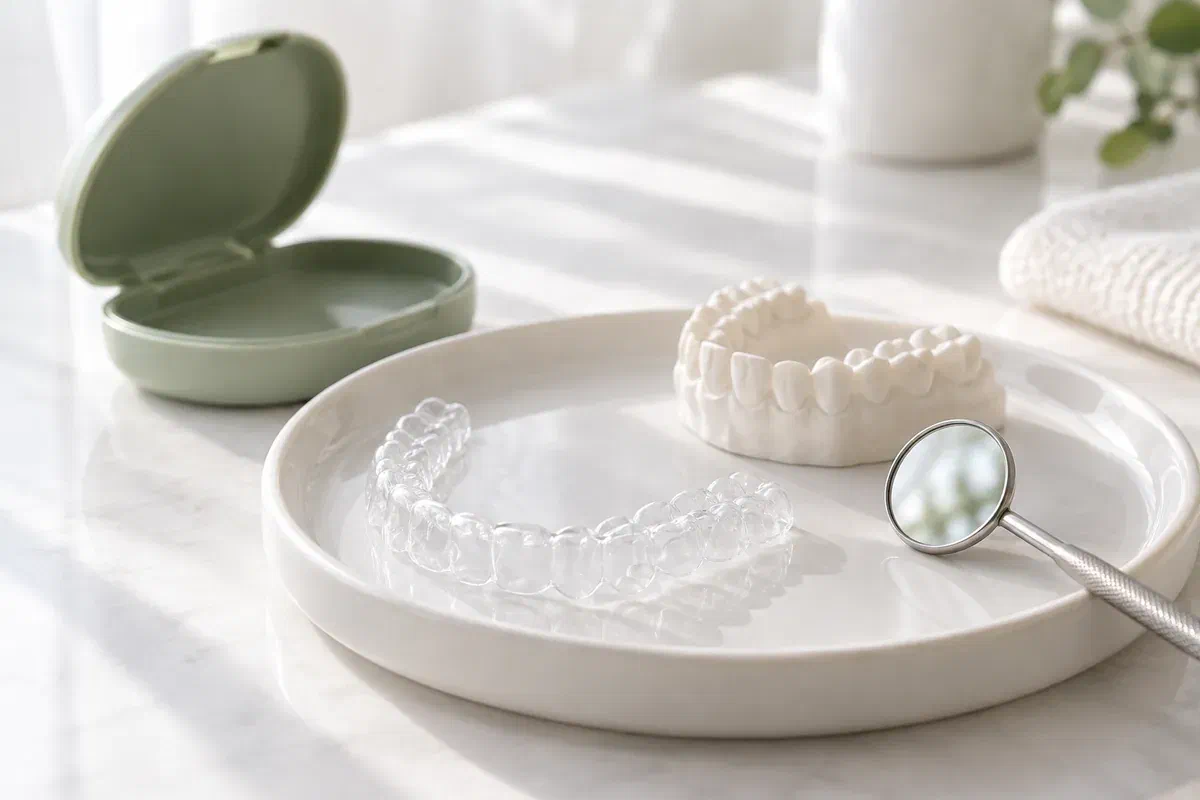
Illustrative clear aligner, tooth model, dental mirror, and protective case
Prepare before you set out

Write the concerns down, so nothing is left in the car.

A checklist keeps the visit focused. Note what you see and what you feel, because the clinician needs to separate unfinished movement from a fit problem or a tooth-shape question.

The positions you hoped would change

List each tooth, space, or overlap that still bothers you. Ask how it compares with the agreed result and whether further movement is wise. Dated photos can help you track a change over time, although only an examination can confirm it.

Tray fit and bite changes

Record which tray first lifted at the edge, when the bite started to feel different, or when chewing became uncomfortable. Those details help the clinician. Try not to assume a new series is the solution before the cause is known.

Time on the road and in treatment

Extra visits and months of wear carry a real cost when each appointment involves a long trip. Say so. Ask what a further stage would achieve, how many visits it may need, and what alternatives exist before you agree.

Being advised to have refinements does not on its own mean that something went wrong or that you wore your trays poorly. Ask the clinician to share the specific findings.

Getting the most from the review

One visit that answers the main question

The core benefit is linking today’s findings with a defined next step. Ask which concern matters for function or oral health, which is cosmetic, and which may reflect the natural shape or wear of a tooth rather than its alignment.

Equally important is knowing the limits. More trays cannot promise a flawless smile, and not every change you would like is appropriate. A thoughtful clinician weighs benefit, risk, uncertainty, and your willingness to keep travelling for treatment before suggesting another stage.

A clear target for new aligners

Ask what exactly the next series would change and why it suits your case. If several items remain, ask which matters most. Reasons drawn from your own records make it easier to decide whether the extra trips are worthwhile.

Records taken efficiently

A scan or photographs may be needed to plan from your present tooth positions. Ask whether these can be done at the same appointment when appropriate, and whether attachments will change. Any new dental issue should be noted too.

A visit plan through to retainers

Ask how many reviews are likely, how progress will be judged, and when the move to retention would come. Confirm practical and cost limits. A sketch of future appointments helps you plan, though timing can change with your progress.

How the appointment is organized

Arrive prepared, leave with a plan.

The exact order depends on your history and concern. Ask for instructions covering the review itself and any interval before new trays arrive, including how they will reach you.

  1. Match your notes to the original goals

    Bring your current aligners, your written list, and any paperwork from a previous provider. Mention missed wear, loose attachments, or soreness openly. The clinician will compare your observations with the records and the outcomes you agreed on.

  2. Examine and gather any needed records

    Tooth positions, bite, and oral health are assessed. Scans, photos, or impressions may be recommended for a defined reason. Ask what each provides and whether any issue, such as a cracked filling, should be treated before more movement.

  3. Discuss the proposal and the options

    Talk through what the additional aligners would aim to do, their limitations, and any attachment changes. Ask about fees and what is included. If another approach is suggested, ask why it fits your findings, and how many visits it would require.

  4. Settle the interval and the pick-up plan

    Confirm which appliance to wear, the daily hours, and who to contact if it breaks. Ask how the refinement trays will be delivered and fitted. When they arrive, follow the new instructions rather than the old change schedule.

At home in Etobicoke between stages

Know what to wear, and when to call before you drive.

Waiting for planning or new trays can raise practical questions. A quick call often settles them and can save an unnecessary trip.

Hold steady with the assigned appliance

You may be asked to stay in a particular tray or another appliance until the refinements are ready. Keep to the hours. Reaching the end of the box is not a reason to stop. Phone the team if the appliance cracks or will not seat.

Start the new series with confidence

Go over the tray order, when to switch, and any new components before you leave the clinic. Keep a spare in your case if advised. If your work or commute has changed since you began, mention it so the plan stays realistic.

Bring final concerns to the planned review

Save unresolved questions about appearance or bite for the scheduled check, unless they are urgent. Ask whether a detail is orthodontic or another kind of issue. Confirm the end of active movement and the retainer arrangements before you consider treatment done.

Weighing the finishing options

Each path asks something different of your calendar.

The recommendation should come from your exam and agreed goals. Ask how each choice deals with the remaining concern and how many future visits it may involve.

When more movement is justified

A refinement series with a clear aim

Extra aligners may be recommended for specific teeth or the bite. Ask what will change, how it will be reviewed, and how often you will need to come in. Confirm any additional fees before approving the order.

When aligners may not address it

Another method, referral, or opinion

Some findings point toward a specialist, a change in technique, or a tooth-shape or restorative question. Ask whether further aligner movement is likely to make a difference, and who will coordinate care so you are not repeating visits.

When the endpoint has been confirmed

Completing treatment with retainers

If active treatment is judged complete, go over any accepted compromises and the retention plan. That decision should be explicit. Ask about the retainer type, wear schedule, future checks, and how to arrange a replacement if one cracks.

Patient information: British Orthodontic Society — aligner treatment and retention

Planning-ahead questions

Practical answers before you book

Answers come from your records and examination. A friend’s refinement experience will not predict how many visits or trays you need.

(905) 876-4488
Can scans for refinements be taken at my first review visit?
Often, if the clinician decides they are needed and the appointment allows. Mention when booking that you are coming from a distance, so the team can plan time accordingly. Some cases still need a separate visit for records.
How many appointments does a refinement stage usually involve?
It depends on what is being corrected and how progress is checked. Ask the clinician for an outline of likely visits. Fewer, well-planned appointments may be possible, but progress reviews should not be skipped.
What should I do if my aligner breaks on a weekend?
Contact the treating team as soon as you can for instructions. Follow any advice about wearing a previous tray. If you have pain, swelling, or an injury, seek appropriate urgent care rather than waiting.
Do refinements mean my original treatment didn’t work?
Not by themselves. Teeth can move differently than predicted. Ask which goals have been achieved and what the examination shows about the rest. The recommendation should be explained, not assumed.
Is a refinement aligner the same as a retainer?
No. Refinement aligners continue active movement. Retainers help maintain the result afterward. Ask which one you are wearing so your routine matches its purpose.
Should I check what my agreement covers before more trays are ordered?
Yes. Review your treatment agreement and ask what it includes, such as additional records, reviews, or stages. Confirm the cost of the proposed series first rather than assuming it is covered.
Etobicoke aligner reviews

Pack your trays, your notes, and any records from before.

Plan a progress discussion at our Bronte Street practice. Tell us you are travelling from Etobicoke when you book so we can organize the appointment well, and mention it if another provider manages your care.

Refinement suitability, costs, timing, and any transfer of care need assessment. Additional aligners cannot guarantee a set outcome.

Visit Milton Dental Clinic
Unit 1, 342 Bronte St. S, Milton, ON L9T 5B7
Get directions Clinic hours
Monday–Thursday
11am–7pm
Friday–Sunday
By appointment only

Areas we serve

  • Milton
  • Oakville
  • Mississauga
  • Georgetown
  • Halton Hills
  • Acton
  • Campbellville
  • Brampton
  • Burlington
  • Puslinch
  • Rockwood
  • Erin
  • Caledon
  • Etobicoke
  • Old Milton
  • Bronte Meadows
  • Timberlea
  • Dorset Park
  • Dempsey
  • Clarke
  • Beaty
  • Coates
  • Harrison
  • Scott
  • Willmott
  • Ford
  • Bowes
  • Cobden
  • Walker
  • Mountain View
  • Milton Heights
  • Hawthorne Village
  • Valley View
  • Fallingbrook
  • Nassagaweya
  • Trafalgar
  • Esquesing
  • Nelson
  • Brookville
  • Moffat
  • Glen Williams
  • Norval
  • Limehouse
  • Stewarttown
  • Ashgrove
  • Hornby
  • Silver Creek
  • Speyside
  • Scotch Block
  • North Oakville
  • River Oaks
  • Glen Abbey
  • West Oak Trails
  • Palermo
  • Bronte Creek
  • College Park
  • Joshua Creek
  • Uptown Core
  • Preserve
  • Iroquois Ridge
  • Lisgar
  • Meadowvale
  • Meadowvale Village
  • Churchill Meadows
  • Erin Mills
  • Central Erin Mills
  • Streetsville
  • East Credit
  • Creditview
  • Heartland
  • Sheridan
  • Mount Pleasant
  • Credit Valley
  • Huttonville
  • Churchville
  • Springbrook
  • Northwest Brampton
  • Bram West
  • Fletcher's Meadow
  • Fletcher's Creek South
  • Alton Village
  • Orchard
  • Millcroft
  • Headon Forest
  • Tansley
  • Brant Hills
  • Tyandaga
  • Kilbride
  • Lowville
  • Aberfoyle
  • Morriston
  • Arkell
  • Hillsburgh
  • Freelton
  • Carlisle
  • Waterdown
  • Flamborough
  • Mountsberg

How can we help?

Milton Dental Clinic

Have a question about your smile? Choose the option that works best for you.

For urgent dental concerns, please call.
Messages are reviewed during clinic hours.