

Illustrative patient and dental clinician reviewing an aligner and tooth model
Cosmetic Dentistry

Invisalign Refinements in Mississauga

Between a final tray and a possible new series there is often a waiting period, and that is where busy schedules can trip people up. For Mississauga commuters and working parents, a refinement review sets out what remains, what extra aligners would aim to do, and exactly what to wear meanwhile.

Refinements for busy Mississauga schedules

Plan the pause as carefully as the next set.

Picture the week your last aligner is due to come out. There is a work deadline, a school event, and no new box on the counter. Without a clear instruction, it is easy to stop wearing anything at all, and teeth can begin to shift during that gap.

That is why the review matters. Refinements are a further series of aligners created after the clinician reassesses how your teeth have responded. They remain part of active movement. Retainers have another purpose: holding teeth steady after your clinician confirms the active phase is over.

With treatment supervised by our team, bring your concerns and your calendar to the progress visit. If another office oversees your aligners, contact them first; a separate opinion can be arranged when it is appropriate. You should come away knowing the reason for any new trays and how the interval will be handled.

Plan your aligner progress visit
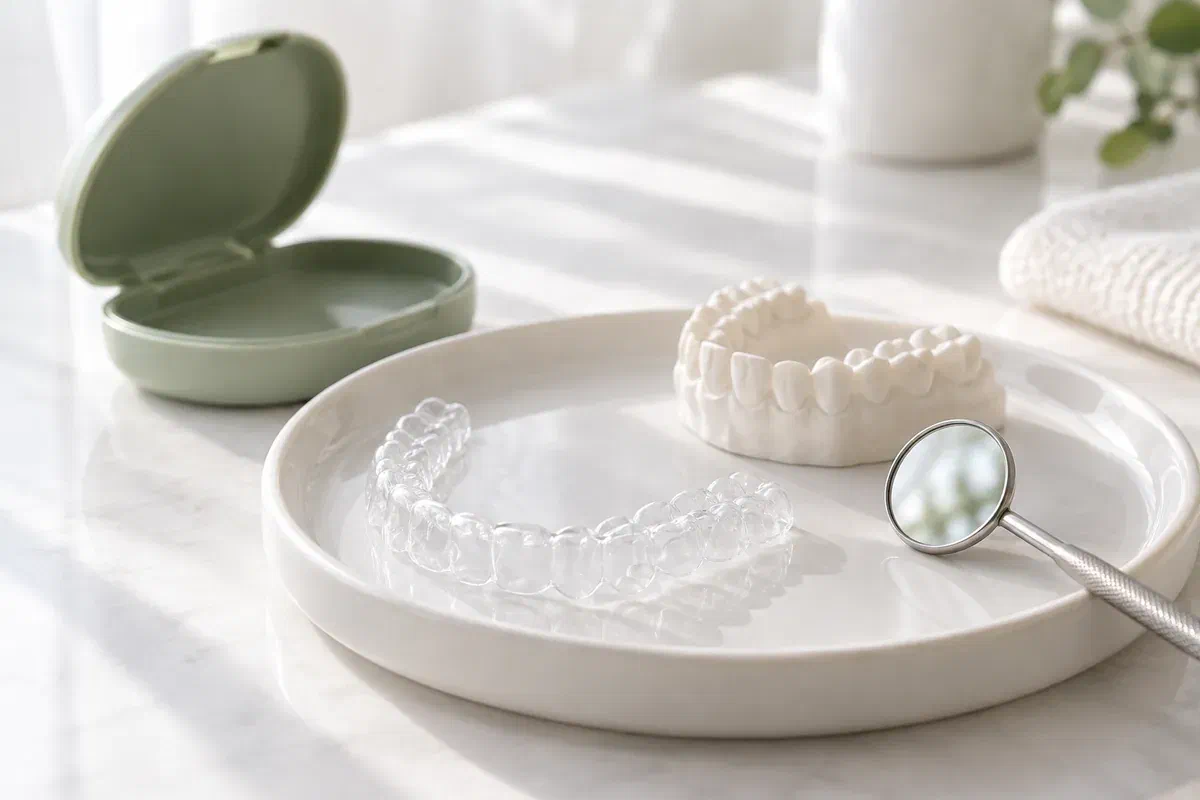
Illustrative clear aligner, tooth model, dental mirror, and protective case
Things to bring up

Small details, explained in your own words

From across a desk, a lingering gap, a loose-fitting tray, and an irregular edge can look much alike. Say what you see and what you feel so the examination can tell them apart.

Spaces or overlaps that remain

Point to the tooth or gap that still stands out to you. Ask whether it matches the outcome you agreed on and whether further movement is a good idea. A quick photo on your phone can remind you, though it does not replace an exam.

Aligners that stop seating fully

If a tray floats above a tooth, your bite feels altered, or eating has become uncomfortable, mention the tray number and when you first noticed. The cause needs assessing before anyone decides another series is the fix.

The strain of a longer timeline

Extra months in aligners can be hard to fit around work, travel, and family. Share what concerns you most, whether it is time, cost, or the routine. Ask what the next stage would accomplish and what alternatives are available before agreeing.

Hearing that refinements are recommended does not mean the plan failed or that you were careless with wear. Ask what was seen in your own mouth and records.

Why a structured review helps

A plan that fits a full calendar

A well-run review ties each finding to a concrete action. It should tell you which concern affects your bite or oral health, which is about how your smile looks, and which may come from the outline of a tooth rather than where it stands.

It should be realistic, too. Additional trays will not make every detail perfect, and not every change is worth the effort. Expect the clinician to weigh the benefit against risks, uncertainty, and how much more treatment fits your life right now.

One clear purpose per series

Ask exactly what the new aligners are supposed to change and why that approach suits you. If more than one issue remains, find out which comes first. Reasons tied to your findings help you stay motivated through the extra weeks.

Planning from fresh measurements

A new scan or photographs may be needed so the plan reflects your teeth as they sit today. Ask what is being remeasured and whether attachments will change. New dental issues, such as a chipped filling, should be considered as well.

A timeline you can schedule around

Ask how the next check will judge progress and when retainers would come in. Clarify practical and financial limits. An outline of upcoming appointments makes the stage easier to manage, even though any predicted finish can shift.

How we approach the review

Listen, examine, explain, then bridge the gap.

The order depends on your history and concern. Ask for instructions that cover the appointment and the weeks until new trays are ready, so nothing is left to guesswork.

  1. Talk through the goals and your experience

    Bring the aligner you are wearing and describe what you notice. Mention days you missed, attachments that fell off, or tenderness, without trying to pin down a cause. The clinician compares your report with your records and original aims.

  2. Check teeth and bite, and decide on records

    Current tooth positions, bite, and oral health are assessed. A scan, photos, or impressions may be recommended for a stated reason. Ask what is missing and whether any problem should be treated before more movement is planned.

  3. Review the proposal and the alternatives

    Discuss what the additional trays would aim for, their limits, and any change to attachments or elastics. Confirm costs and which stages are included. If a different route is advised, ask what makes it a better match.

  4. Leave with written interval instructions

    Note which appliance to wear, how many hours a day, and who to call if it cracks. Put the next appointment in your calendar. When refinement trays arrive, follow the new schedule rather than the one you used before.

During the wait for new aligners

Keep wearing what you were asked to wear.

Gaps for scanning, planning, and delivery can stretch across a few weeks. Ask your questions at the review so the interval runs smoothly once you are back home in Mississauga.

Treat the holding tray as part of treatment

Your clinician may ask you to remain in a specific aligner, or wear another appliance, until the refinements arrive. Wear it for the hours given, even on busy days. Call if it splits or no longer clips into place.

Set up the new series deliberately

Check the order of trays, the switching interval, and any extra components. Set reminders if that helps. If your commute or work hours have changed since you started, mention it so the plan suits your days.

Raise final questions before retention

Share any leftover concern about appearance, bite, or position at the next scheduled check. Ask whether it is orthodontic or something different. Get confirmation that active movement is finished, and how retainers will work, before you consider yourself done.

Mapping the final stage

Not every finish involves more trays.

Recommendations should come from the exam and your goals. Ask how each path addresses the concern that remains and what it means for future visits.

When more movement is appropriate

Refinement trays for a named goal

A further series may be suggested for specific teeth or the way your bite comes together. Ask what will change, how often it will be checked, and what any extra stage costs before it is ordered.

When aligners alone may not be the answer

A different plan or a specialist’s view

Findings sometimes point to another technique, a specialist, or a tooth-shape or restorative question. Ask the clinician to explain whether repeating aligner movement is likely to help, and who will look after the next recommendation.

When the endpoint has been reviewed

Finishing and moving to retainers

If active treatment is complete, talk through any trade-offs you have agreed to and how retention will be handled. That choice should be stated clearly. Ask which retainer is planned, the wear routine, check-ups, and what to do if it no longer fits.

Patient information: British Orthodontic Society — aligner treatment and retention

Scheduling and refinement questions

Fitting refinements into real life

Answers depend on your records and examination. A colleague’s experience with extra trays will not tell you much about your own.

(905) 876-4488
How long is the wait between scanning and receiving refinement trays?
It varies with planning and manufacturing. Ask the treating team for an estimate and what to wear in the meantime. Do not stop wearing your appliance while you wait unless the clinician has told you to.
Can I travel for work during a refinement series?
Usually, with some planning. Tell the team your dates in advance. Ask whether to bring extra trays, what to do if one is lost, and how a missed review might be rescheduled. Pack your case and a spare if advised.
What if I can’t wear my trays for the full hours on some days?
Be honest about it at your review. Reduced wear can affect progress, and the clinician may adjust the plan or advice. Ask what wear time is needed for your series and talk through ways to make it more manageable.
Will refinements require new attachments or elastics?
They might. The next movements may need attachments to be added, replaced, or removed, and some plans use elastics. Ask what your series involves so you can prepare for any extra steps.
Is my refinement series a retainer?
No. Refinements are for additional movement; a retainer helps keep teeth where they are after treatment. Confirm which appliance you have and what it is for before you change how often you wear it.
Can an earlier review be arranged if my current trays stop fitting?
Yes. Contact the treating team if you notice a fit change, new symptoms, or a concern about progress. They can tell you whether to come in sooner. Avoid skipping ahead to later trays or forcing a tray that will not seat.
Visiting from Mississauga

Bring your trays, your calendar, and your remaining questions.

Choose a time that works around your Mississauga workday, and we will see you at our Bronte Street practice to go over the assessment you need and the purpose of any further aligners. If another clinic manages your care, mention it when you book.

Suitability, timing, and costs for refinements, along with any change of provider, require assessment first. No refinement series can promise a specific result.

Visit Milton Dental Clinic
Unit 1, 342 Bronte St. S, Milton, ON L9T 5B7
Get directions Clinic hours
Monday–Thursday
11am–7pm
Friday–Sunday
By appointment only

Areas we serve

  • Milton
  • Oakville
  • Mississauga
  • Georgetown
  • Halton Hills
  • Acton
  • Campbellville
  • Brampton
  • Burlington
  • Puslinch
  • Rockwood
  • Erin
  • Caledon
  • Etobicoke
  • Old Milton
  • Bronte Meadows
  • Timberlea
  • Dorset Park
  • Dempsey
  • Clarke
  • Beaty
  • Coates
  • Harrison
  • Scott
  • Willmott
  • Ford
  • Bowes
  • Cobden
  • Walker
  • Mountain View
  • Milton Heights
  • Hawthorne Village
  • Valley View
  • Fallingbrook
  • Nassagaweya
  • Trafalgar
  • Esquesing
  • Nelson
  • Brookville
  • Moffat
  • Glen Williams
  • Norval
  • Limehouse
  • Stewarttown
  • Ashgrove
  • Hornby
  • Silver Creek
  • Speyside
  • Scotch Block
  • North Oakville
  • River Oaks
  • Glen Abbey
  • West Oak Trails
  • Palermo
  • Bronte Creek
  • College Park
  • Joshua Creek
  • Uptown Core
  • Preserve
  • Iroquois Ridge
  • Lisgar
  • Meadowvale
  • Meadowvale Village
  • Churchill Meadows
  • Erin Mills
  • Central Erin Mills
  • Streetsville
  • East Credit
  • Creditview
  • Heartland
  • Sheridan
  • Mount Pleasant
  • Credit Valley
  • Huttonville
  • Churchville
  • Springbrook
  • Northwest Brampton
  • Bram West
  • Fletcher's Meadow
  • Fletcher's Creek South
  • Alton Village
  • Orchard
  • Millcroft
  • Headon Forest
  • Tansley
  • Brant Hills
  • Tyandaga
  • Kilbride
  • Lowville
  • Aberfoyle
  • Morriston
  • Arkell
  • Hillsburgh
  • Freelton
  • Carlisle
  • Waterdown
  • Flamborough
  • Mountsberg

How can we help?

Milton Dental Clinic

Have a question about your smile? Choose the option that works best for you.

For urgent dental concerns, please call.
Messages are reviewed during clinic hours.