

Illustrative patient and dental clinician reviewing an aligner and tooth model
Cosmetic Dentistry

Invisalign Refinements in Old Milton

Many adults choose aligners because teeth they straightened years ago have drifted. When the planned trays run out, a refinement review in Old Milton helps you see what has settled, what has not, and whether a short further stage or a well-planned retainer is the sensible way to close this chapter.

Refinement reviews near Old Milton’s historic downtown

Straightened once already? This time, plan the finish carefully.

Plenty of people who had braces as teenagers notice crowding creep back decades later, often after retainers were quietly abandoned. If that sounds familiar, the end of your aligner series carries extra weight. You want the remaining details handled properly and a retention plan you can actually keep.

Refinements are additional trays ordered after the clinician reassesses your progress. They continue active movement toward goals that have not yet been reached. A retainer, by contrast, is there to hold positions once active treatment is judged complete. Knowing which of the two you are being offered keeps your daily routine on track.

For aligners supervised at our clinic, raise every lingering concern at the progress review. If another office handles your case, start the conversation there; a separate opinion can be arranged when it makes sense. The aim is a clear explanation of the next step, whether that means more trays or none.

Arrange a progress review
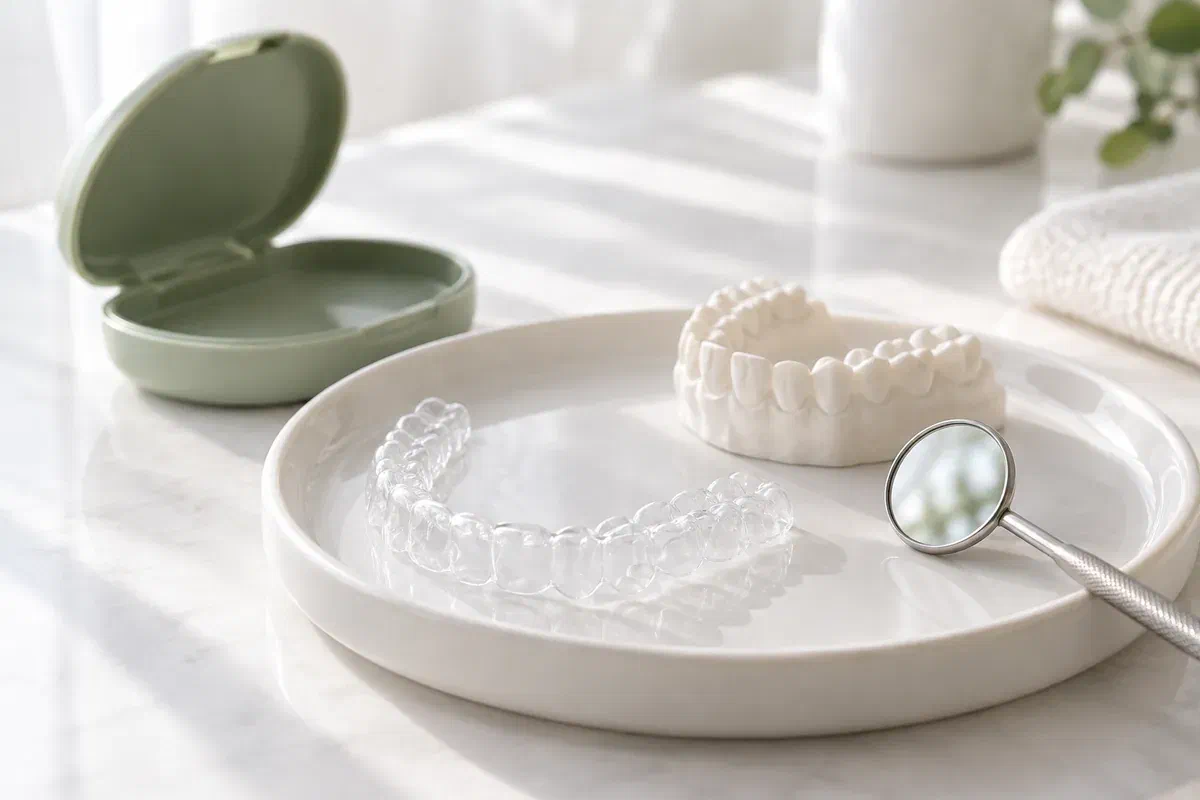
Illustrative clear aligner, tooth model, dental mirror, and protective case
Details worth mentioning

What still looks or feels off to you?

Older restorations, worn edges, and years of shifting can make it harder to tell position from shape. Describe the detail clearly and let the examination sort out the cause.

A tooth that has not quite lined up

Name the tooth, gap, or overlap you keep noticing. Ask whether it falls short of the plan you agreed to and whether moving it further is reasonable. A photo from before treatment can help you explain what has changed, but the exam decides.

A bite that feels unfamiliar

After years with one bite, even small shifts can feel strange. Mention where teeth now touch first, any tray that rides up, or a change when chewing. Share when it began. Wait for an assessment before assuming new trays will correct it.

Weighing more time against the result

You may have planned around a finish date. Be open about concerns over time, fees, or keeping up the routine. Ask what a further stage is meant to achieve and what the alternatives are. A clear rationale should come before any agreement.

A suggestion of refinements does not by itself mean an error was made or that your wear fell short. Ask for the specific findings behind the recommendation.

Why the review matters

Clarity first. Then a decision.

The real benefit is connecting today’s findings with one specific step. Ask which remaining concern affects function or oral health, which is about appearance, and which may reflect a worn or naturally irregular tooth outline rather than its alignment.

Limits deserve equal attention. Additional aligners do not deliver perfection, and some requests may not be wise. A careful discussion weighs likely benefit, possible risks, what remains uncertain, and your own appetite for continuing before another stage is proposed.

A specific job for any new trays

Ask the clinician to say which movement the next series targets and why it suits you. If several concerns remain, ask how they are ranked. Reasons drawn from your own records are worth more than hearing that refinements are simply standard.

Fresh records, not old predictions

New scans or photographs may be needed to plan from your teeth as they are now. Ask what is being re-evaluated and whether attachments or other parts of treatment will change. Older fillings or crowns should be considered in that planning.

A retention plan you can live with

Given your history, ask how the next review will judge success and how the move to retainers will be handled. Discuss the type of retainer and how long it is expected to be worn. A projected finish is a guide, not a promise.

How the review unfolds

Look back, look closely, then plan ahead.

The order depends on your history and what you want reviewed. Ask for guidance on the appointment and on what to wear if new aligners take time to arrive.

  1. Recall the original goals

    Bring the trays you are using and describe what you notice. Mention skipped wear, lost attachments, or tenderness honestly, without guessing at causes. Your clinician compares your description with the treatment records and the targets agreed at the start.

  2. Examine teeth, gums, and existing work

    The current position of your teeth and your oral health are assessed, including older fillings or crowns. Scans, photos, or impressions may be suggested for a stated reason. Ask what is missing and whether anything needs care before further movement.

  3. Weigh the proposal against other paths

    Discuss what extra aligners would aim to do, where they might fall short, and whether attachments or other components would change. Confirm fees and what is covered. If a different approach is suggested, ask why it better fits what was found.

  4. Settle the plan for the waiting period

    Before you go, confirm which appliance to wear, for how long each day, and who to call if it breaks. When the new series arrives, follow its instructions. The earlier change schedule may not apply to the refinement trays.

While the next stage takes shape

Steady habits through a changing plan

Waiting for scans, planning, or delivery can raise practical questions about your trays. Ask them early so you know what to wear and when you will be seen again.

Keep to the holding instruction

Your clinician may ask you to stay in a specific tray, or another appliance, during the wait. Follow the wear hours given. Running out of trays is not a reason to stop. Call if that appliance no longer fits or gets damaged.

Treat refinement trays as a new routine

Check the tray sequence, switching interval, and any added components. Bring what is requested to each visit. If your daily life has changed since the first series, such as a new job or retirement, mention it so the plan suits you.

Clear up doubts before retention

Share any remaining concern about position, bite, or appearance at the scheduled review. Ask whether it is orthodontic or something else, such as a worn edge. Confirm the end of active movement and the retainer arrangements before considering treatment done.

Ways to finish

Three possible endings to active treatment

The right path follows the examination and your agreed goals. Ask how each choice addresses what remains and what it means for care in the years ahead.

When further movement is reasonable

A targeted refinement series

Extra trays may be proposed to adjust particular teeth or how the arches meet. Ask what will change and how you will know it is working. Confirm visit plans and any additional fees before the series is ordered.

When the issue needs a fresh look

A different approach or another opinion

The findings may suggest specialist input, a change in method, or attention to a worn tooth or older restoration. Ask why more of the same movement would or would not help, and who will coordinate the recommendation.

When the agreed endpoint is reached

Moving into long-term retention

If active treatment is judged complete, discuss any limitations you have accepted and the retainer plan. That choice should be stated plainly. Ask about the retainer type, how to wear it, follow-up, and what to do if it stops fitting.

Patient information: British Orthodontic Society — aligner treatment and retention

Questions from adult aligner wearers

Finishing well, the second time around

Answers should come from your records and examination. Someone else’s experience with refinement trays is not a reliable guide to yours.

(905) 876-4488
My teeth relapsed after braces years ago. How do I avoid that after aligners?
Teeth can continue to shift throughout life, which is why retention matters. Ask what retainer is recommended, how long it should be worn, and how fit will be checked. Keeping up with that plan is the main safeguard against drift.
Can older fillings or crowns affect a refinement plan?
They can. Existing restorations may influence attachment placement, tray fit, or how a tooth looks once aligned. Mention any dental work you have had, and ask whether it should be reviewed before or after further movement.
Is a refinement series a sign I didn’t follow instructions?
Not on its own. Teeth do not always track the plan exactly. Ask which goals were met, which remain, and what the examination suggests. An honest discussion of wear is helpful, but the recommendation should be based on findings.
Will refinement trays move my teeth or just keep them steady?
Refinements are designed for further active movement. Holding teeth steady is the job of a retainer. Ask which appliance you are being given and what it is for, so you do not change your wear routine by mistake.
How will I know when to stop asking for more changes?
Start by having the clinician separate concerns that are orthodontic from those linked to tooth shape or wear. Discuss the benefit and trade-offs of each further step. Agreeing on a clear endpoint helps you judge when active treatment has done what it reasonably can.
Should I keep my old aligners after starting refinements?
Ask your treating team. Some clinicians suggest keeping the most recent tray as a backup in case a new one is lost or damaged. Store it clean and dry, and only wear it if you have been told to.
Old Milton aligner reviews

Your current trays, and the history behind them

From Old Milton, book a progress visit at our Bronte Street practice to learn what assessment is needed and the purpose of any further treatment. Let us know if another clinic manages your care.

Suitability for refinements, fees, timing, and any transfer of care all require assessment. No series of aligners can guarantee a set result.

Visit Milton Dental Clinic
Unit 1, 342 Bronte St. S, Milton, ON L9T 5B7
Get directions Clinic hours
Monday–Thursday
11am–7pm
Friday–Sunday
By appointment only

Areas we serve

  • Milton
  • Oakville
  • Mississauga
  • Georgetown
  • Halton Hills
  • Acton
  • Campbellville
  • Brampton
  • Burlington
  • Puslinch
  • Rockwood
  • Erin
  • Caledon
  • Etobicoke
  • Old Milton
  • Bronte Meadows
  • Timberlea
  • Dorset Park
  • Dempsey
  • Clarke
  • Beaty
  • Coates
  • Harrison
  • Scott
  • Willmott
  • Ford
  • Bowes
  • Cobden
  • Walker
  • Mountain View
  • Milton Heights
  • Hawthorne Village
  • Valley View
  • Fallingbrook
  • Nassagaweya
  • Trafalgar
  • Esquesing
  • Nelson
  • Brookville
  • Moffat
  • Glen Williams
  • Norval
  • Limehouse
  • Stewarttown
  • Ashgrove
  • Hornby
  • Silver Creek
  • Speyside
  • Scotch Block
  • North Oakville
  • River Oaks
  • Glen Abbey
  • West Oak Trails
  • Palermo
  • Bronte Creek
  • College Park
  • Joshua Creek
  • Uptown Core
  • Preserve
  • Iroquois Ridge
  • Lisgar
  • Meadowvale
  • Meadowvale Village
  • Churchill Meadows
  • Erin Mills
  • Central Erin Mills
  • Streetsville
  • East Credit
  • Creditview
  • Heartland
  • Sheridan
  • Mount Pleasant
  • Credit Valley
  • Huttonville
  • Churchville
  • Springbrook
  • Northwest Brampton
  • Bram West
  • Fletcher's Meadow
  • Fletcher's Creek South
  • Alton Village
  • Orchard
  • Millcroft
  • Headon Forest
  • Tansley
  • Brant Hills
  • Tyandaga
  • Kilbride
  • Lowville
  • Aberfoyle
  • Morriston
  • Arkell
  • Hillsburgh
  • Freelton
  • Carlisle
  • Waterdown
  • Flamborough
  • Mountsberg

How can we help?

Milton Dental Clinic

Have a question about your smile? Choose the option that works best for you.

For urgent dental concerns, please call.
Messages are reviewed during clinic hours.