

Illustrative patient discussing treatment information with a dental clinician
Cosmetic Dentistry

Invisalign Second Opinions in Burlington

Treatment ended, yet the result isn't what you pictured, or your teeth seem to have moved since the retainers arrived. From Burlington, you can arrange a second opinion that looks at your history, records and present findings, and explains what further steps may or may not involve.

After treatment, from Burlington

Done with aligners, but not done wondering.

Some questions only surface once treatment is over. A gap reappears. Front teeth look slightly crowded again. Or the finish simply differs from the simulation you remember. Another opinion can help you understand what you're seeing and whether anything further is worth considering.

Plenty of factors shape a final result, including the original goals, the scope that was agreed, retainer wear and how the teeth have behaved since. Looking at a selfie next to an old preview can't sort those out. Records and an examination give a far more reliable picture.

When you contact our Bronte Street practice, tell us when treatment ended and what retainers you were given. We'll explain what information to gather and what the appointment can cover. An opinion visit doesn't change who is responsible for your retention instructions unless you separately agree to a transfer.

Ask about a post-treatment review
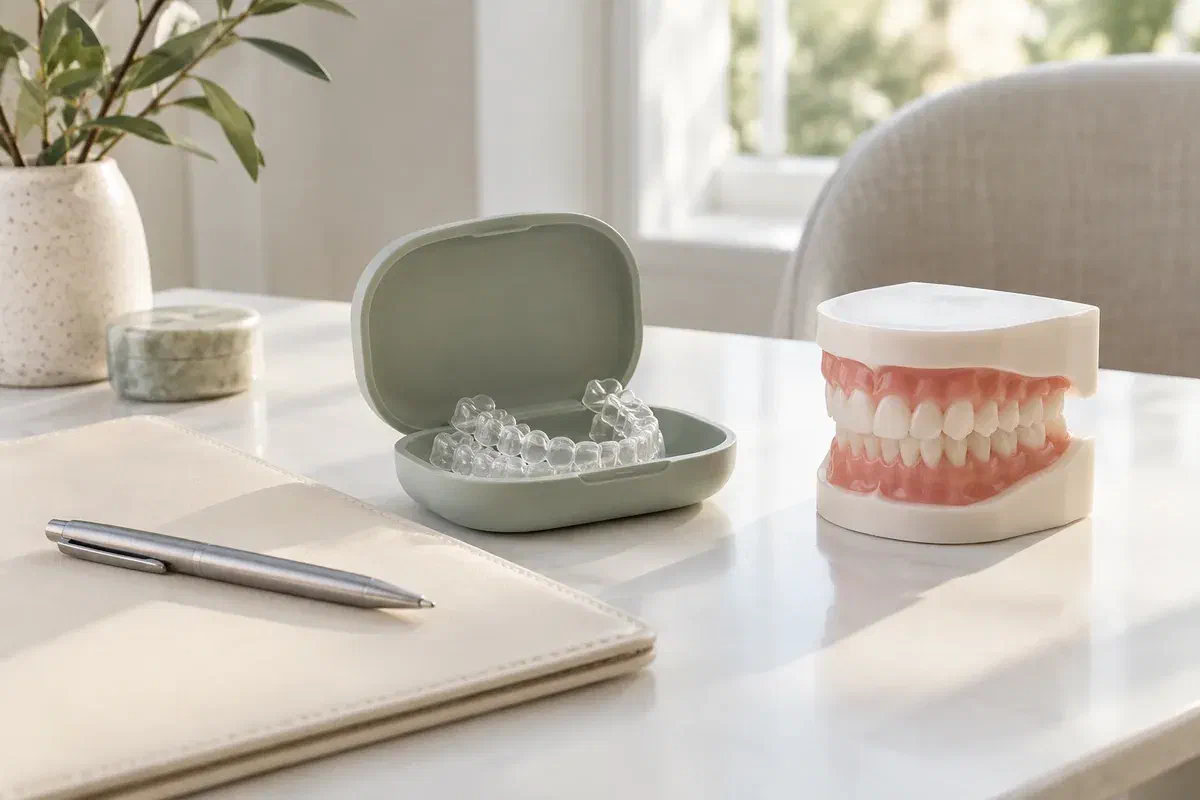
Illustrative consultation folder, pen, clear aligners, protective case, and tooth model
Why people come back with questions

Shifting, a different finish, or a plan you never quite understood?

Start with what you notice now and what you'd like explained. You don't need to work out the cause before booking.

A scope you'd like to revisit

Your treatment may have been planned around a limited cosmetic change rather than a full bite correction. Bring the original proposal if you have it. Seeing what was planned helps explain whether today's result matches the intended goal.

Changes since treatment finished

Note when you first saw movement and how you've been wearing your retainers. Bring them along if asked. An assessment should look at findings and history together rather than settle on a cause from a short conversation.

A suggestion to restart or add treatment

Someone may have proposed new aligners, a different approach or a change to retention. Ask which records would help assess that idea. Be clear about whether you want it explained, independently reviewed, or discussed as a possible move to another provider.

Asking questions about a finished result is reasonable and common. It doesn't oblige you to assume your earlier treatment was handled poorly.

What a review offers

An honest picture of where your teeth are now.

You might leave with reassurance, a clearer explanation, or a short list of options. A second assessment can show what the original plan delivered, which gaps in information remain, and whether an orthodontic specialist would be the right person to ask next.

It helps to know the limits going in. Records from the earlier treatment may be needed before anyone comments on it. A view of your current situation isn't a judgment of fault, a means of resolving a payment question, or a promise that more treatment will achieve a specific look.

Original goals set against today's result

Find out what the first plan aimed to change and whether the current position reflects that aim. A limited cosmetic plan, a comprehensive bite correction and a restorative option end in different places. That context often explains a lot.

Clarity about what can be said with confidence

Ask which conclusions the available records support and which can't yet be reached. Careful advice keeps findings apart from guesses about why. If more records are suggested, ask what they're for and how they might affect the opinion.

Choices laid out, decisions left with you

You could go back to your original provider with focused questions, seek specialist care, or explore new treatment elsewhere. Ask what each path would involve. The visit should help you weigh those routes without pressure to commit on the day.

How we approach the visit

Start with history, then look at the present.

Let us know how long ago treatment ended and whether you're currently wearing retainers. That helps us suggest the right appointment and records.

  1. Describe what has changed and what you want answered

    When you book, outline the concern and any discomfort. Ask whether you're scheduling a conversation, an exam or a fuller assessment. Check the fee and what can sensibly be reviewed in that appointment.

  2. Track down earlier treatment records

    Useful items may include the original plan, before-and-after photos, X-rays, progress notes and retainer instructions. Ask the treating office for copies, or arrange direct sharing with your consent. Bring retainers and your questions if we ask.

  3. Compare the history with an examination

    Walk through how treatment and retention went, including any changes in instructions. The clinician weighs the records against what the examination shows now. If the information is incomplete, further records may be needed first.

  4. Talk through the findings and who follows up

    Ask what the review shows, what's still unclear and whether a specialist referral would help. Agree how findings could be shared with your previous provider. Confirm who is guiding your retention for now, and whether any new treatment would be a separate discussion.

In the weeks that follow

Think it over before starting anything new.

A second view can make some things clearer and open other questions. Take time to understand what was suggested before adjusting your retainer routine.

Note what the review resolved

List the points that now make sense and those that don't. If opinions differ, ask whether it's a matter of diagnosis, goals, scope or approach. Where helpful, ask for findings to be discussed between clinicians so you aren't left reconciling technical detail alone.

Keep to your current retention instructions

Until you decide on next steps, follow the retainer schedule from the clinician responsible for your care. Don't stop wearing retainers or try old aligners on your own. If something new makes wear uncomfortable, ask for advice promptly.

Treat new treatment as a fresh agreement

Starting again elsewhere means agreeing on acceptance, records, responsibilities, fees and a plan. A consultation alone doesn't begin treatment. Ask how care would be coordinated and who to contact with urgent questions in between.

Paths forward

Reassurance, more information, or a new plan.

The best fit depends on the findings and the question you brought. Ask which advice the evidence supports and which decisions are left to you.

When the explanation settles your concern

Return to your original provider

A clearer understanding may be all you needed. Take any lingering questions back to the team who treated you. Ask whether anything noted in the review is worth sharing with them.

When a firm answer needs more detail

Arrange more records or orthodontic advice

The records available may not allow a confident view, or the concern may need specialist training. Ask what further assessment would aim to answer. Clarify how a referral works and who oversees your retention meanwhile.

When you'd like to explore a different arrangement

Consider treatment with a new clinician

Ask whether another clinician could take on the case and what a plan would require. Look over records, estimates, responsibilities and limitations first. Any change should be organised with continuity in mind rather than assumed after one visit.

Burlington questions after treatment

When the aligners are gone but the questions remain

A clear question, your retainers and any records you can obtain make the visit more useful. Tell us how long ago treatment finished when you call.

(905) 876-4488
My teeth have shifted since finishing Invisalign. Can I get a second opinion?
Yes. A review can look at how things have changed and consider your retention history. It can’t promise a particular outcome, and more records may be needed before discussing any further treatment.
Can I still get my records if treatment ended years ago?
Ask your previous office. Dental records are kept for a period and can be copied with your request. Explain that you’re seeking a second opinion, and ask what they can provide and how.
Is it normal for a final result to differ from the digital preview?
A preview is a planning aid rather than a guarantee. Results depend on many factors. A second opinion can compare the plan’s goals with current findings and explain the difference, without assigning blame from images alone.
Should I start wearing my old aligners again if teeth move?
Don’t do that on your own. Old trays may no longer fit correctly. Ask the clinician responsible for your retention what to do, and raise the question at your second-opinion visit if you have one booked.
Will a second opinion tell me whether my first dentist made a mistake?
A visit can describe current findings and what the records support, but it isn’t designed to decide fault. Ask about the limits of the assessment so you know what it can and can’t answer.
Can I get a second opinion on just my retainers?
You can ask. Some concerns relate mainly to retainer fit or wear rather than the original treatment. Describe the issue when booking, so the clinic can suggest the appropriate appointment and what to bring.
Burlington second-opinion bookings

Bring your retainers and the question you've been sitting on.

Get in touch with our Bronte Street practice to arrange an appointment. Tell us when treatment ended and what you've noticed, and we'll explain the records, the visit scope and what usually comes next.

A second opinion doesn't guarantee a different recommendation or that we can offer new treatment. Ask about assessment fees and records when booking.

Visit Milton Dental Clinic
Unit 1, 342 Bronte St. S, Milton, ON L9T 5B7
Get directions Clinic hours
Monday–Thursday
11am–7pm
Friday–Sunday
By appointment only

Areas we serve

  • Milton
  • Oakville
  • Mississauga
  • Georgetown
  • Halton Hills
  • Acton
  • Campbellville
  • Brampton
  • Burlington
  • Puslinch
  • Rockwood
  • Erin
  • Caledon
  • Etobicoke
  • Old Milton
  • Bronte Meadows
  • Timberlea
  • Dorset Park
  • Dempsey
  • Clarke
  • Beaty
  • Coates
  • Harrison
  • Scott
  • Willmott
  • Ford
  • Bowes
  • Cobden
  • Walker
  • Mountain View
  • Milton Heights
  • Hawthorne Village
  • Valley View
  • Fallingbrook
  • Nassagaweya
  • Trafalgar
  • Esquesing
  • Nelson
  • Brookville
  • Moffat
  • Glen Williams
  • Norval
  • Limehouse
  • Stewarttown
  • Ashgrove
  • Hornby
  • Silver Creek
  • Speyside
  • Scotch Block
  • North Oakville
  • River Oaks
  • Glen Abbey
  • West Oak Trails
  • Palermo
  • Bronte Creek
  • College Park
  • Joshua Creek
  • Uptown Core
  • Preserve
  • Iroquois Ridge
  • Lisgar
  • Meadowvale
  • Meadowvale Village
  • Churchill Meadows
  • Erin Mills
  • Central Erin Mills
  • Streetsville
  • East Credit
  • Creditview
  • Heartland
  • Sheridan
  • Mount Pleasant
  • Credit Valley
  • Huttonville
  • Churchville
  • Springbrook
  • Northwest Brampton
  • Bram West
  • Fletcher's Meadow
  • Fletcher's Creek South
  • Alton Village
  • Orchard
  • Millcroft
  • Headon Forest
  • Tansley
  • Brant Hills
  • Tyandaga
  • Kilbride
  • Lowville
  • Aberfoyle
  • Morriston
  • Arkell
  • Hillsburgh
  • Freelton
  • Carlisle
  • Waterdown
  • Flamborough
  • Mountsberg

How can we help?

Milton Dental Clinic

Have a question about your smile? Choose the option that works best for you.

For urgent dental concerns, please call.
Messages are reviewed during clinic hours.