

Illustrative patient discussing treatment information with a dental clinician
Cosmetic Dentistry

Invisalign Second Opinions in Oakville

You reached the last tray and were offered another round of aligners, or told you're finished when it doesn't feel that way. If you're coming from Oakville, we can review the records and today's findings with you and explain what the recommendation is based on.

For Oakville aligner wearers

The final tray, and a recommendation you didn't see coming.

Near the end of a series, a lot of decisions arrive at once. Additional aligners may be suggested, the move to retainers may be scheduled, or you may notice a tooth that still sits differently from what you expected. A second opinion can help you understand that advice before agreeing to the next stage.

Refinements are a familiar part of aligner treatment for some people, but whether they suit you depends on the starting goals, what the plan aimed to change, and what an examination shows now. A comparison of photos or a count of remaining trays isn't enough to judge that.

Call our Bronte Street practice and let us know where you are in treatment and what has been proposed. We'll explain what to bring and what the appointment can address. Your treating clinician still guides your daily wear unless a separate transfer is arranged.

Talk to us about a second opinion
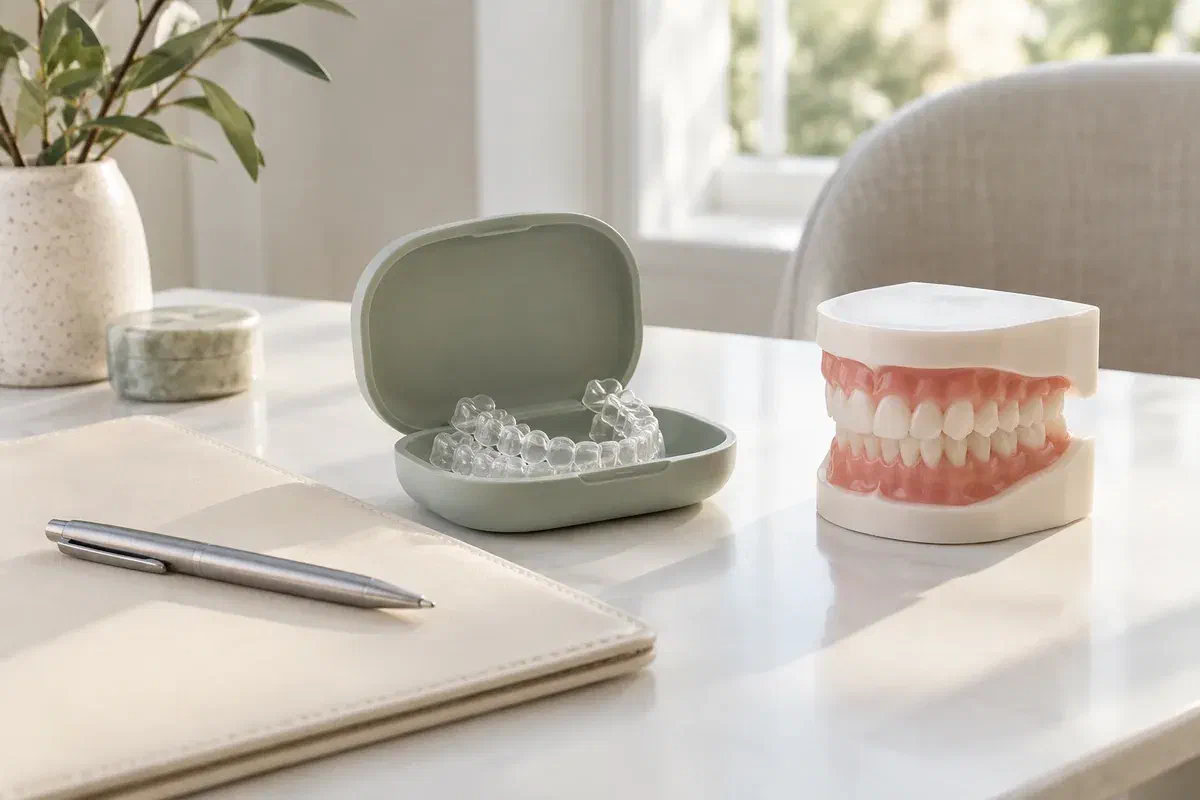
Illustrative consultation folder, pen, clear aligners, protective case, and tooth model
Common turning points

Bring the moment that made you pause.

There's no need to arrive with an explanation. Tell us what was recommended or what you noticed, and what you would like to understand by the end of the visit.

Options that didn't line up at the start

Perhaps one office proposed a narrower change and another a fuller correction of the bite. Bring the plans and ask what each was meant to achieve. Different aims can account for very different lengths and estimates.

Teeth or trays that feel off near the end

Describe when you first noticed the fit change, any bite difference, and what still concerns you. Bring the current aligners if asked. A careful review separates symptoms, examination findings and possible reasons rather than jumping to one explanation.

Extra aligners, a new approach, or retainers

Each of these may be offered at the end of a series. Ask which records would help someone else evaluate the suggestion. Decide whether you want the reasoning explained, an independent view, or a conversation about a possible change of provider.

Wanting to understand a recommendation before saying yes is part of informed consent. It doesn't mean you believe the advice is mistaken.

Why another view can help

Reasons, not just a yes or no.

The outcome you value most may be an explanation. A second assessment can point out what your current plan has already addressed, where information is thin, and whether an orthodontic specialist should weigh in before you agree to more treatment.

Keep the scope in mind as well. Commenting on a refinement proposal may require an exam and fresh records. An opinion about your present needs doesn't determine fault, settle a cost question with another office, or guarantee that additional aligners will produce a particular result.

Clearer sense of what's left to achieve

Find out what the original plan set out to do and how close things are now. A limited goal, a broader bite change and a restorative option all lead to different finishing points. Knowing which one you're working toward makes the advice easier to weigh.

A clear split between findings and theories

Ask which conclusions the records can support today and what remains uncertain. Good advice distinguishes what is observed from what might explain it. If more records are proposed, ask what they would reveal and how they might change the opinion.

Room to decide the next step

You may return to your provider with sharper questions, look for specialist input, or look into moving care. Ask what each choice involves in practice. The discussion should support your decision rather than push you toward one.

What happens, step by step

From a phone call to a clear answer

Say whether you're considering more aligners, still wearing the original set, or about to start retainers. The stage you're at determines the visit type and useful records.

  1. Tell us the recommendation in question

    When booking, describe what was proposed and any discomfort or changes you've noticed. Ask whether the visit will be a discussion, an exam or a more thorough assessment. Confirm the fee and what can fairly be reviewed in that time.

  2. Collect the plan and progress records

    Ask which items would help, perhaps the original proposal, the refinement plan, X-rays, photos or progress notes. Request copies, or have offices share them with your consent. Bring your current trays and questions if we ask for them.

  3. Review your progress and examine your bite

    Explain how the series went, including any instruction changes or symptoms. The clinician compares the records with what the examination shows today. Further records may be suggested if what's available can't answer the question.

  4. Discuss the view and the next steps

    Ask what the review suggests, what can't yet be known, and whether specialist care is advisable. Agree on how findings might reach your treating clinician. Confirm who directs your aligners or retainers from here and whether a transfer would need its own discussion.

Making sense of it afterward

No rush to sign off on more trays.

Fresh advice can settle one question and raise another. Be sure what's been recommended, and by whom, before you change anything about your wear.

Compare the two explanations calmly

Write down what's now clear and what isn't. If advice differs, ask whether it's about diagnosis, goals, scope or technique. You can ask the clinicians to discuss findings with each other instead of trying to reconcile the details on your own.

Keep following your current clinician's directions

Until you decide, the person supervising active treatment should tell you which aligners or retainers to wear and when to return. Avoid stopping, skipping or combining advice from two plans. If a new problem makes that difficult, call for guidance.

Get a transfer agreed before counting on it

Moving care involves a clear understanding of acceptance, records, responsibilities, fees and the revised plan. A consultation isn't a takeover. Ask how care will be coordinated through the handover and who handles urgent questions in the meantime.

Possible outcomes

What you might do once you've heard a second view

The right next move depends on what was found and what you needed explained. Ask which advice the evidence supports and which choices sit with you.

When the refinement plan now makes sense

Proceed with your original provider

Once the goals and limits are clearer, continuing may feel straightforward. Bring any remaining questions back to the team treating you. Ask whether anything from the review is worth sharing with them.

When a firmer answer needs more detail

Request more records or an orthodontic consult

Current records may not allow a confident opinion, or the issue may warrant specialist expertise. Ask what a further assessment would aim to answer. Clarify referral steps and who keeps supervising your treatment in the interim.

When you'd like to explore another arrangement

Weigh a structured change of provider

Ask whether another clinician could accept your case and what their plan would require. Look at records, estimates, responsibilities and limitations before agreeing. A change should be planned for continuity rather than taken for granted after one visit.

Oakville second-opinion FAQ

Refinements, retainers and what a review can tell you

Clear questions and relevant records make the appointment more useful. Mention any active treatment when you call so we can book the right visit.

(905) 876-4488
Are Invisalign refinements a sign that something went wrong?
Not necessarily. Additional aligners are sometimes part of planned treatment. Whether they’re appropriate for you depends on the goals and examination findings. A second opinion can help explain the recommendation, but it can’t assign fault from a brief look.
Can I ask for a second opinion before starting retainers?
Yes. If you’re unsure whether treatment is complete, a review can look at records and current findings. Keep following your supervising clinician’s instructions until a decision is made, including any retainer schedule they’ve given you.
What should I bring if I've been offered additional aligners?
Ask the clinic for a specific list. Helpful items may include the original plan, the refinement proposal, photographs, radiographs and your current trays. Copies shared directly between offices, with your consent, are often the most complete.
Does a second opinion include a new treatment plan?
Not automatically. The visit may focus on explaining current findings. Developing a new plan usually needs further assessment and records, and it’s a separate step from offering an opinion.
Can the reviewing clinician tell me how many more trays I'll need?
That’s rarely possible at a single review without full records and planning. An opinion can describe what seems to remain and what’s uncertain. Ask what additional information would be needed for a more specific answer.
How do I plan a second-opinion visit from Oakville around work?
Our weekday hours run Monday to Thursday, 11am to 7pm, with Friday to Sunday by appointment only. Ask which records to send ahead so the time is well used, and confirm the visit length when you book.
Second opinions for Oakville

Not sure about more aligners? Let's look together.

Reach our Bronte Street team to book a second-opinion appointment. Tell us what's been proposed and where you are in treatment, and we'll explain the records, scope and possible next steps.

A review doesn't guarantee a different recommendation or acceptance of a transfer. Ask about assessment fees and records needed when booking.

Visit Milton Dental Clinic
Unit 1, 342 Bronte St. S, Milton, ON L9T 5B7
Get directions Clinic hours
Monday–Thursday
11am–7pm
Friday–Sunday
By appointment only

Areas we serve

  • Milton
  • Oakville
  • Mississauga
  • Georgetown
  • Halton Hills
  • Acton
  • Campbellville
  • Brampton
  • Burlington
  • Puslinch
  • Rockwood
  • Erin
  • Caledon
  • Etobicoke
  • Old Milton
  • Bronte Meadows
  • Timberlea
  • Dorset Park
  • Dempsey
  • Clarke
  • Beaty
  • Coates
  • Harrison
  • Scott
  • Willmott
  • Ford
  • Bowes
  • Cobden
  • Walker
  • Mountain View
  • Milton Heights
  • Hawthorne Village
  • Valley View
  • Fallingbrook
  • Nassagaweya
  • Trafalgar
  • Esquesing
  • Nelson
  • Brookville
  • Moffat
  • Glen Williams
  • Norval
  • Limehouse
  • Stewarttown
  • Ashgrove
  • Hornby
  • Silver Creek
  • Speyside
  • Scotch Block
  • North Oakville
  • River Oaks
  • Glen Abbey
  • West Oak Trails
  • Palermo
  • Bronte Creek
  • College Park
  • Joshua Creek
  • Uptown Core
  • Preserve
  • Iroquois Ridge
  • Lisgar
  • Meadowvale
  • Meadowvale Village
  • Churchill Meadows
  • Erin Mills
  • Central Erin Mills
  • Streetsville
  • East Credit
  • Creditview
  • Heartland
  • Sheridan
  • Mount Pleasant
  • Credit Valley
  • Huttonville
  • Churchville
  • Springbrook
  • Northwest Brampton
  • Bram West
  • Fletcher's Meadow
  • Fletcher's Creek South
  • Alton Village
  • Orchard
  • Millcroft
  • Headon Forest
  • Tansley
  • Brant Hills
  • Tyandaga
  • Kilbride
  • Lowville
  • Aberfoyle
  • Morriston
  • Arkell
  • Hillsburgh
  • Freelton
  • Carlisle
  • Waterdown
  • Flamborough
  • Mountsberg

How can we help?

Milton Dental Clinic

Have a question about your smile? Choose the option that works best for you.

For urgent dental concerns, please call.
Messages are reviewed during clinic hours.