

Illustrative patient discussing a small alignment concern with a dental clinician
Cosmetic Dentistry

Minor Tooth Movement in Caledon

A tooth that looks out of place after a fall or a knock needs a dental check before anyone talks about alignment. For people in Caledon, we explain that order of care, and when a limited orthodontic change might later be discussed.

Injury first, appearance later

After the knock, before the cosmetic question

A bump during hockey, a slip on ice, a ladder that tipped: afterward a front tooth sits slightly differently. The first job is a dental assessment of the injury itself. Minor tooth movement, which means a limited orthodontic aim rather than any particular appliance, only becomes a question once the tooth and its support are stable.

An injured tooth is part of a wider picture. Its root, the bone and gum around it, the neighbouring teeth and how the bite closes may all have been affected. Any later plan for a small correction should rest on an examination, with what it would change, and what it would not, stated clearly.

Caledon covers a lot of rural ground, so if an injury is recent and serious, nearer urgent care may be the right first stop. Once things have settled, bring any notes from that visit. We can explain what records would help and whether limited movement, a fuller orthodontic opinion or restorative care is worth discussing.

Ask about a tooth that shifted after an injury
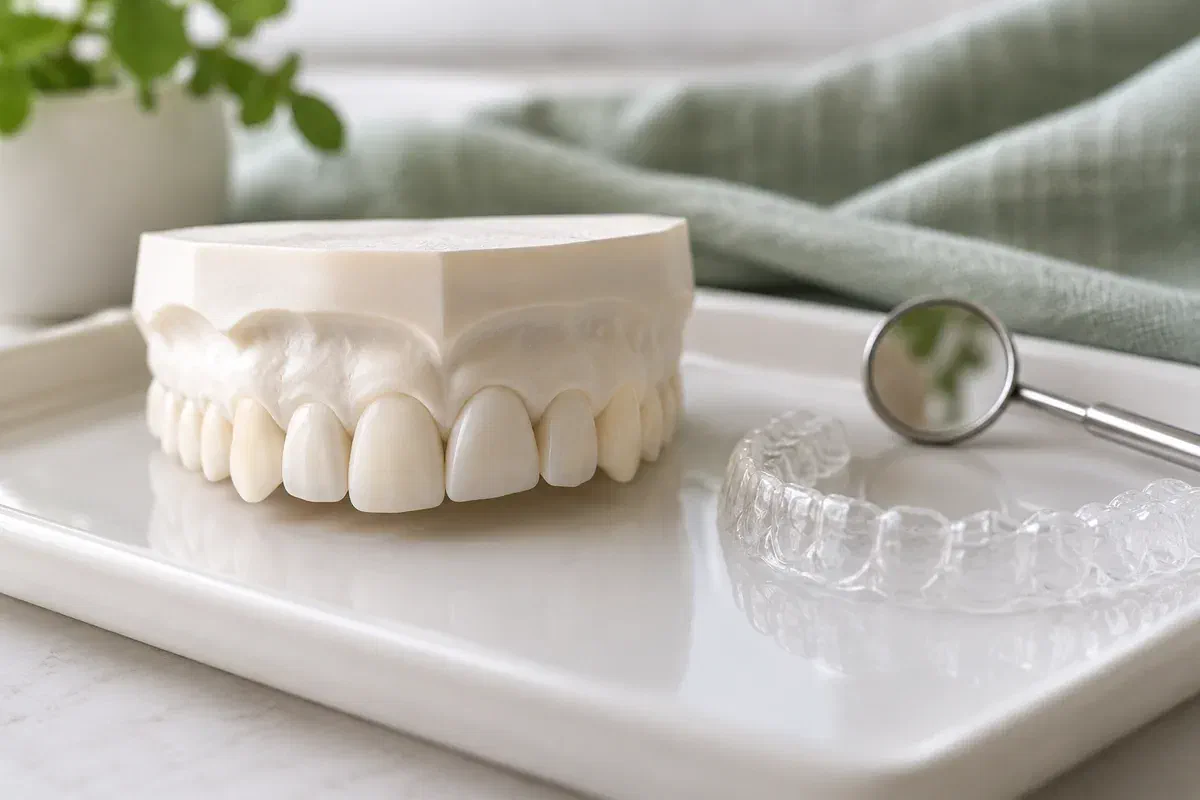
Illustrative upper-teeth model with a subtly rotated tooth beside a clear appliance
What people notice after an injury

Signs that send people back to the dentist

Tell us how and when the injury happened, what has changed since and whether biting, temperature or comfort feel different. Those details help separate an injury question from an alignment one.

One tooth now sitting slightly out of line

Explain whether the position changed at the time of the knock or gradually afterward. Ask what the examination shows about the root and support. Even if one tooth looks different, its neighbours and the opposing teeth may need checking.

Damage that may need a restoration

If the tooth chipped, cracked or may need a crown or bonding, say so. Ask whether a later change in position would affect that repair and who would plan the order. Clinicians involved should agree on the target before treatment.

An injury to a tooth that had braces

Bring records of earlier orthodontic care and any retainer if asked. Describe whether the retainer fit changed after the injury. Previous treatment does not make a post-injury correction simple; current findings must lead.

Looseness, severe pain, darkening, or a tooth pushed out of place by a blow calls for prompt dental care. Do not wait for a cosmetic appointment, and do not try to reposition it yourself.

Why the order of care matters

Stabilize, assess, and only then consider a small change.

Once an injury has been assessed and the tooth is stable, a limited plan may be one way to address a lasting change in position. Ask why movement would be appropriate now and what it would intentionally leave alone. The choice of scope should be considered, not hurried.

Injury can change both position and shape. A chipped edge is a shape problem; a tooth pushed out of line is a position problem. Orthodontics moves teeth, while bonding or a crown changes form, so ask which applies to you.

Patient information: British Orthodontic Society — limited treatment objectives and alternatives

A clearly stated aim

Ask the clinician to explain the intended change simply. Is it the look of the tooth, how it meets the opposite teeth, or room for a repair? A clear aim helps you weigh the recommendation and recognize the result.

Honest limits after trauma

A narrow plan may not correct every change caused by an injury. Ask what would remain and whether leaving it is appropriate. Understand the other approaches, including a full orthodontic opinion where needed, before agreeing.

A coordinated sequence

Repairs, monitoring of the injured tooth and retention may all be part of the plan. Ask about the timing of each and who looks after it. Settle the order before movement begins, since an injured tooth may need watching for some time.

After the urgent visit

How a later alignment discussion is planned

The goal is to establish whether a limited scope is safe and sensible once the injury has been managed. Appliance choice follows after the needed movement and the health of the tooth and its support are known.

  1. Share the injury history

    Describe what happened, the care you received and what still bothers you. Mention previous braces, retainers and any planned repairs. If you have a time constraint, mention it so expectations can be set realistically.

  2. Examine the injured tooth and its neighbours

    The clinician checks the tooth, gums and bite, and decides which records are needed. Ask what radiographs would show about the root and bone. Some injured teeth need monitoring or other treatment before any movement.

  3. Compare movement, repair and monitoring

    Go over what each approach would alter, the limits and risks involved, your part in it and the estimate. Find out whether an appliance, a restoration or specialist input suits. If a broader plan is recommended, find out which finding leads there.

  4. Agree on supervision and the endpoint

    Confirm who oversees treatment, how often reviews take place and what would prompt reassessment. Discuss retention and any later repair. The end point should be defined by the agreed goal, not by an estimated length of time.

During and after a correction

Watch the injured tooth as well as the alignment

Your appliance and the planned movement determine the instructions. Keep them somewhere easy to find, and ask about anything that is unclear rather than adapting the plan.

Use the appliance as directed

Keep to the wear, cleaning and review routine. Tell the team if something breaks or the tooth feels different. Never alter wires, add elastics or change the sequence because of something you read online.

Keep all your dental care connected

Continue regular visits and tell the supervising clinician about repairs or treatment planned elsewhere. A repair placed mid-treatment may affect appliance fit, so ask about the order of appointments.

Hold the result and keep monitoring

Ask about the retainer before movement ends, how often to wear it and when it is checked. An injured tooth may need follow-up even after alignment, so keep those appointments and the clinic's contact details.

Options once the tooth is stable

Realign, repair, or simply keep watch

For every recommendation, ask what is being altered and what is being left alone. Your findings, your priorities and the commitment involved should shape the choice.

When an assessed, narrow goal is appropriate

Limited orthodontic correction

Possible when the tooth is stable, the needed movement is modest and the limits are acceptable. Ask about appliance choice, reviews and retention. Even limited treatment carries orthodontic risks and has no guaranteed length.

When the injury affected the wider bite

A comprehensive orthodontic opinion

A fuller plan, or referral to an orthodontist, may be suggested if correcting one tooth would leave an unsuitable compromise. Ask which teeth or contacts are involved and how the scope would differ, and decide once you understand why.

When shape or healing is the main issue

Restoration, monitoring, or no elective change

If a chipped edge or ongoing healing explains what you see, repair or watchful waiting may be more useful. Consider what adding or removing material would mean, and that deferring elective care is reasonable. The injured tooth still needs follow-up.

Injury-related questions

What Caledon adults ask after a tooth gets knocked

Minor refers to how much movement is planned. It does not decide whether an injured tooth is ready, which appliance to use or what follow-up is needed.

(905) 876-4488
How soon after an injury can a tooth be moved?
There is no fixed timeline. The tooth and its support need to be assessed and, in some cases, monitored first. Ask the clinician what they would want to see before any movement is considered.
Can an injured tooth be moved safely with orthodontics?
Sometimes, once healing and the root and bone have been checked. Some injured teeth carry extra risks during movement. Ask what your findings mean and whether specialist input is advised.
My tooth has darkened since the knock. Does that matter?
A change in colour after an injury should be assessed, as it can reflect changes inside the tooth. Mention it promptly; it may need attention before any cosmetic discussion.
Should I push a shifted tooth back into place myself?
No. Pushing on an injured tooth can cause further damage. Arrange prompt dental care so the tooth can be examined and managed appropriately.
Would bonding hide the change instead of moving the tooth?
It may address some shape or chip concerns, but it does not change position. Ask which feature causes your concern and what each approach would involve over time.
Does wearing a mouthguard matter during treatment?
If you play contact sports, ask whether a mouthguard is recommended with your appliance and how it should fit. Protecting a previously injured tooth is worth discussing early.
From Caledon, once things settle

Bring the injury history and the change you still see.

Book a consultation on Bronte Street about a tooth that looks different since an injury. We will explain the assessment, the options that might suit, and how any change relates to your wider dental care and follow-up.

Assessment determines the scope, the appliance and whether to refer you. An injured tooth may need monitoring, and a small visible change does not guarantee simple treatment.

Visit Milton Dental Clinic
Unit 1, 342 Bronte St. S, Milton, ON L9T 5B7
Get directions Clinic hours
Monday–Thursday
11am–7pm
Friday–Sunday
By appointment only

Areas we serve

  • Milton
  • Oakville
  • Mississauga
  • Georgetown
  • Halton Hills
  • Acton
  • Campbellville
  • Brampton
  • Burlington
  • Puslinch
  • Rockwood
  • Erin
  • Caledon
  • Etobicoke
  • Old Milton
  • Bronte Meadows
  • Timberlea
  • Dorset Park
  • Dempsey
  • Clarke
  • Beaty
  • Coates
  • Harrison
  • Scott
  • Willmott
  • Ford
  • Bowes
  • Cobden
  • Walker
  • Mountain View
  • Milton Heights
  • Hawthorne Village
  • Valley View
  • Fallingbrook
  • Nassagaweya
  • Trafalgar
  • Esquesing
  • Nelson
  • Brookville
  • Moffat
  • Glen Williams
  • Norval
  • Limehouse
  • Stewarttown
  • Ashgrove
  • Hornby
  • Silver Creek
  • Speyside
  • Scotch Block
  • North Oakville
  • River Oaks
  • Glen Abbey
  • West Oak Trails
  • Palermo
  • Bronte Creek
  • College Park
  • Joshua Creek
  • Uptown Core
  • Preserve
  • Iroquois Ridge
  • Lisgar
  • Meadowvale
  • Meadowvale Village
  • Churchill Meadows
  • Erin Mills
  • Central Erin Mills
  • Streetsville
  • East Credit
  • Creditview
  • Heartland
  • Sheridan
  • Mount Pleasant
  • Credit Valley
  • Huttonville
  • Churchville
  • Springbrook
  • Northwest Brampton
  • Bram West
  • Fletcher's Meadow
  • Fletcher's Creek South
  • Alton Village
  • Orchard
  • Millcroft
  • Headon Forest
  • Tansley
  • Brant Hills
  • Tyandaga
  • Kilbride
  • Lowville
  • Aberfoyle
  • Morriston
  • Arkell
  • Hillsburgh
  • Freelton
  • Carlisle
  • Waterdown
  • Flamborough
  • Mountsberg

How can we help?

Milton Dental Clinic

Have a question about your smile? Choose the option that works best for you.

For urgent dental concerns, please call.
Messages are reviewed during clinic hours.