

Illustrative patient discussing a small alignment concern with a dental clinician
Cosmetic Dentistry

Minor Tooth Movement in Georgetown

A front tooth that sits a little forward may do more than look uneven; it can take the brunt of your bite. From Georgetown, find out how we assess that contact, when limited movement is worth discussing, and what else might protect the tooth.

Looks and function together

The tooth that keeps catching on the bite

Sometimes the first clue is not a photo but a feeling: one upper tooth meets the lower teeth before the others, or its edge keeps chipping. Minor tooth movement can be part of that conversation. The phrase describes a limited orthodontic aim, which different appliances can work toward.

A tooth that takes extra load is a bite question as much as a cosmetic one. How the upper and lower teeth slide together, the space in the arch, root position, and the health of the gums and bone all matter. Any narrow plan should come from an examination that is clear about what it will change and what it will not.

Driving in from Georgetown, bring any notes about past chips or repairs on that tooth. We can explain what records would help and whether limited movement, a broader orthodontic assessment, or protective and restorative care is worth weighing. There is no need to decide on an appliance first.

Ask about a tooth that takes the bite
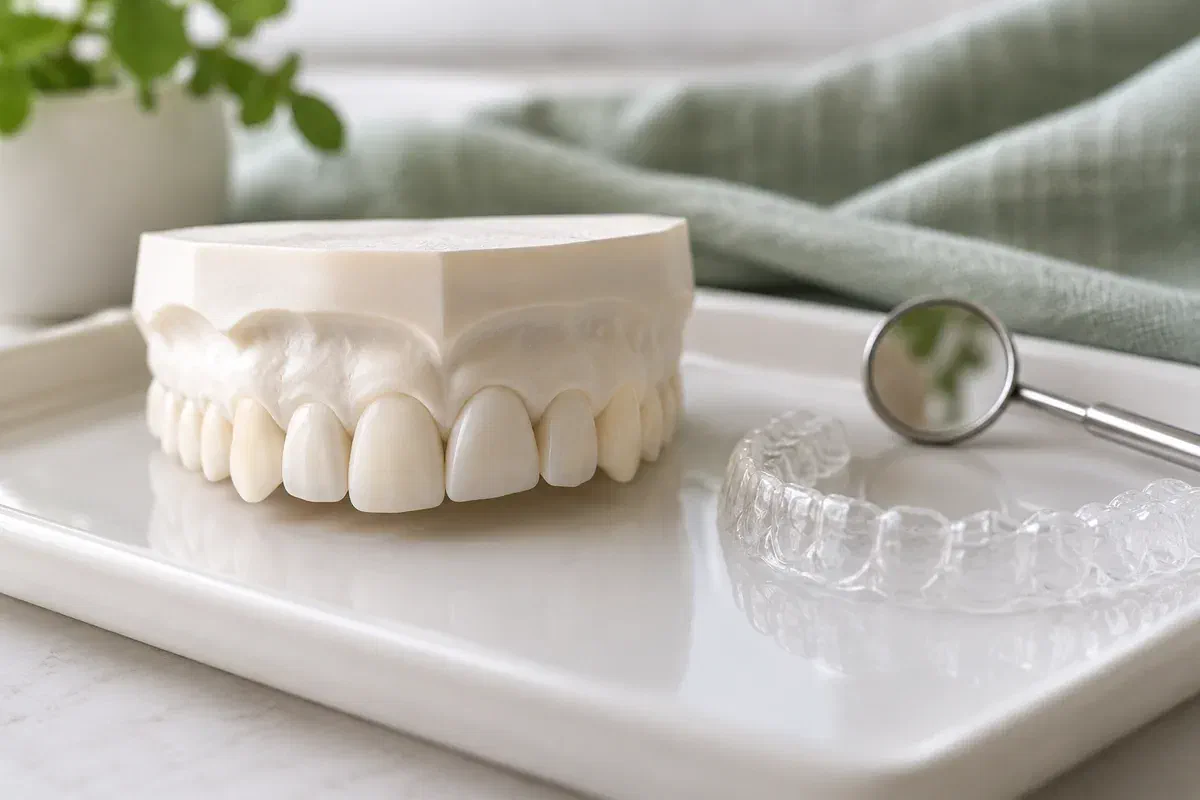
Illustrative upper-teeth model with a subtly rotated tooth beside a clear appliance
What people describe

Uneven contact, chipped edges, a tooth that stands out

Explain what you feel or see, when it started and whether chewing or comfort has changed. Those details clarify the question a treatment plan would be answering.

An upper tooth sitting ahead of the row

Show the tooth and whether it has moved recently. Ask how its position relates to the lower teeth and what room would be needed to bring it back. Even when only one tooth stands out, the plan may need to involve others.

Repeated chipping or a repair that keeps failing

Mention any bonding or crown on the tooth and how often it has been fixed. Ask whether a change in position would help a future restoration last, and who would order the steps. Everyone involved should agree on the aim first.

A shift since earlier orthodontic treatment

Bring past records and a retainer if requested. Say whether the change is gradual or recent. A previous course of braces does not make a new correction simple automatically; what the examination finds today is what counts.

Pain on biting, a crack or a tooth that feels loose is a dental concern before it is a cosmetic one. Swelling or rapid movement should also be assessed promptly.

Why the purpose comes first

Appearance, protection, or both? Name it before choosing a scope.

When the findings support it, a limited plan can target a specific problem with clear edges. Ask what the movement is meant to accomplish and what it is designed to leave alone. A narrower scope works best as an informed choice rather than the shortest-sounding option.

Position and shape are different questions here too. Orthodontics moves the tooth; bonding or a crown changes its form and may protect a worn edge. Sometimes both are considered. The cause of the uneven contact decides which conversation is useful.

Patient information: British Orthodontic Society — limited treatment objectives and alternatives

A goal for the contact, not only the look

Ask whether the aim is how the tooth appears, how it meets the lower teeth, or room for a restoration. A goal stated in plain words helps you weigh the advice and later check whether it was met.

Clear trade-offs

A narrow plan may leave some bite features unchanged. Ask which remain and whether that is sensible given the chipping. Make sure you know the other routes, a broader assessment among them, before you accept that limit.

A sequence for repair and retention

If a repair or retainer follows, ask when and who provides it. Settle the order before any movement starts, because a restoration placed at the wrong time may need redoing and an unretained tooth may drift back.

How we work it through

Check the contact, then talk about the options.

The visit aims to find out whether a limited scope is responsible for this concern. Appliance choice is a later step, taken once the required movement and the health of the mouth are understood.

  1. Describe what happens when you bite

    Tell us what you notice, what has chipped, and why it matters to you. Mention past braces, injuries, retainers and planned dental work. If grinding or clenching is a possibility, say so, along with any timing pressures.

  2. Examine the tooth, gums and bite

    The clinician checks how the teeth meet and what records would help. Ask what photographs, radiographs or bite records would show. A crack, decay or gum problem may need care before movement is even discussed.

  3. Compare movement with protective or restorative care

    Look at what each route changes, its limits and risks, what it asks of you, and the estimate. Ask whether an appliance, a restoration, a night guard or a specialist opinion suits. If a broader plan is advised, ask what tips it.

  4. Confirm supervision and the finish

    Agree who supervises, how reviews are booked and what would prompt a rethink. Talk about retention and any repair that follows. Completion should be measured by the agreed goal for the bite and appearance, not by an estimated timeline.

While the tooth is moving

Protect the edge, follow the plan.

What you are asked to do depends on the appliance and the movement planned. Keep the instructions handy and ask about anything unclear, especially if chewing feels different during treatment.

Wear and look after the appliance

Follow the wear, cleaning and review schedule for your plan. Let us know if the routine gets hard or the appliance is damaged. Do not reshape the appliance, add elastics or move through the sequence faster than directed.

Coordinate repairs and checkups

Keep regular dental visits and tell the supervising clinician before any bonding or crown work elsewhere. A new restoration can affect the fit of an appliance, so agree on the order rather than booking separately.

Keep the new position stable

Raise retention before movement ends: the retainer, how long to wear it and who reviews it. If a repair is planned afterward, confirm how the tooth will be held until then. Keep a way to contact the clinic about later fit problems.

Routes worth comparing

Move it, protect it, or look wider

Ask each time what a recommendation would change and what it would leave. The exam findings, your priorities and the commitment involved should shape the choice.

When a narrow goal has been assessed as suitable

Limited movement of the forward tooth

An option when the movement needed and the accepted limits are appropriate. Discuss the appliance, reviews and retention. Limited treatment still carries orthodontic risks and offers no promise of a short course.

When the uneven contact comes from the wider bite

A fuller orthodontic assessment

If bringing back one tooth would leave the bite in an unsuitable state, a broader plan or an orthodontist's opinion may be the better advice. Ask which relationships are involved and how the plan would expand, and decide once the reasons make sense to you.

When protection matters more than position

A restoration, a guard, or monitoring

Where shape, wear or grinding explains the problem, a restorative or protective approach may be more useful. Weigh what adding or removing material would mean, and the option to defer elective care. Any crack or decay still needs treatment.

Georgetown bite questions

Questions about a tooth that meets the bite first

Minor describes the intended amount of movement. It leaves open why the contact is uneven, which appliance to use, and what happens once movement stops.

(905) 876-4488
Why does one front tooth keep chipping?
Possible reasons include its position, the way the lower teeth meet it, grinding, or an older repair. Ask the clinician to look at the bite as well as the tooth, so the cause is addressed rather than just the chip.
Would a night guard help instead of moving the tooth?
A guard may protect teeth if grinding is part of the problem, but it does not change position. Ask whether your findings point to grinding, alignment or both, and how each option would help.
Can a bonded or crowned tooth be moved orthodontically?
Natural teeth with restorations can often be moved, though the restoration may need attention afterward. Ask how your existing work affects the plan and whether it might need replacing once the position changes.
Will moving one tooth change how my back teeth fit?
It may affect contacts elsewhere, because the bite works as a whole. Ask what the clinician will check during treatment and how the overall bite will be reviewed at the end.
Is limited treatment the same as a short treatment?
Not necessarily. Limited refers to scope, not speed. Ask for an estimate after assessment and what could make it longer, and expect completion to be judged by the result rather than the date.
Can I push the tooth back with my finger or tongue?
Please don’t. Repeated pressure without supervision is not a controlled way to move teeth and could harm the tooth or its support. Arrange an assessment so the cause and options can be explained.
From Georgetown

Tell us how your teeth come together.

Book a conversation at our Bronte Street practice about the tooth that sits forward or keeps chipping. We will explain the assessment needed, the approaches that might suit, and how they connect with your wider dental care.

Whether movement suits you, which appliance, and any referral are decided after assessment. A small visible problem does not mean treatment will be quick.

Visit Milton Dental Clinic
Unit 1, 342 Bronte St. S, Milton, ON L9T 5B7
Get directions Clinic hours
Monday–Thursday
11am–7pm
Friday–Sunday
By appointment only

Areas we serve

  • Milton
  • Oakville
  • Mississauga
  • Georgetown
  • Halton Hills
  • Acton
  • Campbellville
  • Brampton
  • Burlington
  • Puslinch
  • Rockwood
  • Erin
  • Caledon
  • Etobicoke
  • Old Milton
  • Bronte Meadows
  • Timberlea
  • Dorset Park
  • Dempsey
  • Clarke
  • Beaty
  • Coates
  • Harrison
  • Scott
  • Willmott
  • Ford
  • Bowes
  • Cobden
  • Walker
  • Mountain View
  • Milton Heights
  • Hawthorne Village
  • Valley View
  • Fallingbrook
  • Nassagaweya
  • Trafalgar
  • Esquesing
  • Nelson
  • Brookville
  • Moffat
  • Glen Williams
  • Norval
  • Limehouse
  • Stewarttown
  • Ashgrove
  • Hornby
  • Silver Creek
  • Speyside
  • Scotch Block
  • North Oakville
  • River Oaks
  • Glen Abbey
  • West Oak Trails
  • Palermo
  • Bronte Creek
  • College Park
  • Joshua Creek
  • Uptown Core
  • Preserve
  • Iroquois Ridge
  • Lisgar
  • Meadowvale
  • Meadowvale Village
  • Churchill Meadows
  • Erin Mills
  • Central Erin Mills
  • Streetsville
  • East Credit
  • Creditview
  • Heartland
  • Sheridan
  • Mount Pleasant
  • Credit Valley
  • Huttonville
  • Churchville
  • Springbrook
  • Northwest Brampton
  • Bram West
  • Fletcher's Meadow
  • Fletcher's Creek South
  • Alton Village
  • Orchard
  • Millcroft
  • Headon Forest
  • Tansley
  • Brant Hills
  • Tyandaga
  • Kilbride
  • Lowville
  • Aberfoyle
  • Morriston
  • Arkell
  • Hillsburgh
  • Freelton
  • Carlisle
  • Waterdown
  • Flamborough
  • Mountsberg

How can we help?

Milton Dental Clinic

Have a question about your smile? Choose the option that works best for you.

For urgent dental concerns, please call.
Messages are reviewed during clinic hours.