

Illustrative patient discussing a small alignment concern with a dental clinician
Cosmetic Dentistry

Minor Tooth Movement in Halton Hills

Floss that shreds between two lower front teeth is often the first sign that they have started to crowd. For households across Halton Hills, we explain how a small alignment change is assessed, what it can and cannot fix, and how it is maintained.

Crowding you can feel

It started with the floss catching.

Crowding often announces itself during an ordinary routine: floss snags, a brush misses a corner, or a lower tooth now sits just behind its neighbour. Minor tooth movement is a term for a limited orthodontic aim in cases like this. It is not a single appliance, and it has to suit the mouth as a whole.

Crowded teeth are crowded for a reason. Available space, root angles, gum and bone support, and how the upper teeth close over the lower ones all influence whether moving one or two teeth is sensible. Any narrow plan should rest on an examination that sets out the intended change and what will be left as it is.

Families in Halton Hills often juggle several schedules, so a clear first conversation saves time later. Show us where cleaning has become awkward, and we can explain which records would help and whether a focused plan, a fuller orthodontic opinion, or simpler measures make more sense.

Ask about crowded front teeth
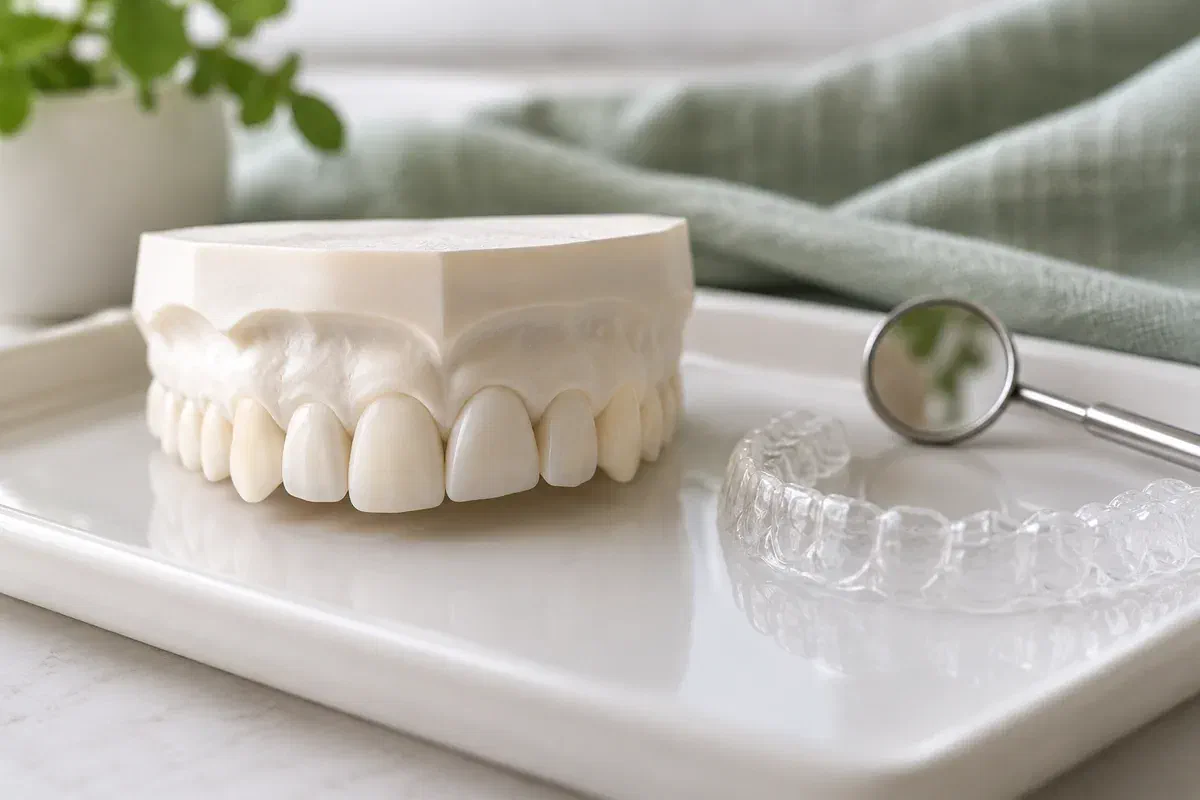
Illustrative upper-teeth model with a subtly rotated tooth beside a clear appliance
Signs worth raising

When alignment and cleaning start to overlap

Mention when you first noticed the change, whether it seems to be progressing, and whether gums bleed or feel sore around those teeth. Each detail helps define the actual problem.

A lower tooth tucked behind its neighbours

Point out the tooth and say whether the overlap is getting worse. Ask what room would need to be made, and where it would come from. A single tooth sitting out of line can still mean a plan has to look at the whole front segment.

Space or crowding near planned dental work

If a crown, bonding, a bridge or a replacement tooth has been discussed, bring that up. Ask whether adjusting tooth position would make the work more predictable, and who coordinates the order. Clinicians on each stage should share one target.

Crowding returning years after braces

Previous orthodontic records, and your retainer if asked, can help. Note whether the crowding has crept back gradually. Earlier treatment does not make re-treatment simple by default; the present examination decides what is reasonable.

Bleeding, tender gums or a tooth that feels loose can signal a gum problem that needs attention before any thought of alignment. Pain, swelling or fast change in position should be assessed as a dental concern first.

What a narrow plan should deliver

A reason, a boundary and a way to keep it

A limited plan can be reasonable once the crowding has been assessed and the goal is defined. Ask why moving these particular teeth makes sense and what is deliberately not being changed. A smaller scope should be chosen on its merits, not because it sounds less involved.

Not every awkward-looking tooth is out of position. Some are simply shaped or worn differently. Orthodontics changes where a tooth sits; bonding or recontouring changes its form. The real cause should steer which of those conversations you have.

Patient information: British Orthodontic Society — limited treatment objectives and alternatives

A goal tied to what you can do at home

Ask whether the aim is easier cleaning, a neater appearance, room for other work, or a combination. A goal you can state clearly helps you judge whether the plan is worthwhile and whether it succeeded.

An honest list of what stays

Straightening the front lower teeth may not change other bite features. Ask what would remain and whether leaving it is appropriate. Hear about the alternatives first, a wider orthodontic review among them where the findings warrant it.

Retention planned from the beginning

Lower front teeth are known for drifting back. Ask what retainer would be used, who provides it and when, and how it fits with any restorative step. Agree on this before movement starts so the effort is not lost.

The assessment, step by step

Is this a cleaning problem, a crowding problem, or both?

The visit sets out to learn whether the concern suits a limited scope. Choosing an appliance waits until the movement required and the state of your gums and teeth are known.

  1. Share what you have noticed

    Explain where floss catches, what looks different and why it bothers you. Mention past braces, injuries, retainers and any dental work coming up. If school or work calendars limit when you can attend, say so early.

  2. Check gum health along with position

    The clinician examines the teeth, gums and bite and decides on useful records. Ask what radiographs, photos or scans would show. Gum inflammation or decay may need treatment first, because movement depends on healthy support.

  3. Compare movement with simpler measures

    Review what each option would change, its limits and risks, what it expects from you and the estimate. Ask whether an appliance, cleaning aids or specialist referral is appropriate. If a wider plan is suggested, ask what finding leads there.

  4. Agree on reviews and how the end is judged

    Confirm who supervises, how check-ins are booked and what would lead to a rethink. Discuss retention and any restorative visit afterward. The plan should define completion by the agreed goal, not just a forecast length of time.

Cleaning and caring during treatment

Appliances add a step to the daily routine

Instructions vary with the appliance and the movement planned. Keep them where the household can find them, and ask if anything is unclear rather than adapting it yourself.

Clean around the appliance carefully

Follow the wear and cleaning routine, and attend reviews as scheduled. Ask which brushes or floss aids suit the appliance. Report breakages or difficulty keeping up, and don't alter wires, add elastics or skip steps on your own.

Keep routine dental care going

Continue regular checkups and cleanings, and let the supervising clinician know about any work planned elsewhere. A new filling or crown may alter the fit of an appliance, so confirm the order before booking.

Hold the lower teeth in their new place

Discuss the retainer before movement ends: which type, how often, and who reviews it. If another procedure is due, confirm how the position is protected until then. Keep a contact route for any later fit problem.

Options for mild crowding

Straighten, broaden the plan, or manage it as it is

Ask what each choice would change and what it would not. The findings, your priorities and how much time you can give should guide the decision.

When a narrow goal has been assessed as suitable

Focused alignment of a few teeth

A possibility when the movement required and the accepted limits are appropriate. Discuss the appliance, reviews and long-term retention. Even a small plan carries orthodontic risks and has no guaranteed length.

When the crowding reflects the wider bite

Comprehensive orthodontic planning

A fuller plan or specialist view may be the better advice if aligning only the front teeth would create an unsuitable compromise. Ask what else is involved and how the scope would change, and be sure you understand why.

When moving teeth is not the priority

Cleaning aids, monitoring or reshaping

Sometimes better cleaning tools, monitoring or a shape change address the concern well enough. Weigh what removing or adding material would involve, and remember that deferring elective care is a choice. Gum or tooth problems still need treatment.

Halton Hills questions

Crowding, cleaning and keeping teeth straight

Minor refers to the planned scope of movement. It does not by itself answer questions about the cause, appliance choice or the commitment that follows.

(905) 876-4488
Does crowding make teeth harder to keep clean?
It can, because overlapping surfaces are harder to reach with a brush and floss. That alone does not mean treatment is needed. Ask whether different cleaning aids would help, and whether the crowding affects your gum health.
Why are my lower front teeth getting more crowded with age?
Teeth can shift gradually over life, and lower front teeth commonly do. Gum changes, tooth loss or bite forces may also play a part. Ask the clinician what is contributing in your case before deciding on any approach.
Will I need to wear a retainer forever?
Long-term retention is often recommended because teeth tend to drift. The type and wear schedule depend on your plan. Ask what is proposed, how it will be reviewed and what happens if it is lost or damaged.
Could a dentist file the edges instead of moving the teeth?
Reshaping removes a small amount of enamel to change the outline, which is different from changing position. It may suit some features and not others. Ask which is behind your concern and what each would involve.
Can teenagers and parents be assessed at the same visit?
Appointments can sometimes be booked back to back for convenience, but each person needs their own examination and plan. Ask the team about scheduling when you call.
Does a crowded lower tooth always need its neighbours moved too?
Often the space has to come from somewhere, so nearby teeth may be involved. Ask how the plan creates room and how the bite would be affected, rather than assuming only the visible tooth will move.
Booking from Halton Hills

Show us where the floss catches.

Arrange a conversation about crowded or shifting teeth at our Bronte Street practice. We can explain the assessment involved, which approaches might fit, and how any change would sit within your wider dental care.

Assessment decides the scope, the appliance and whether a referral is needed. A little crowding does not mean treatment will be simple or short.

Visit Milton Dental Clinic
Unit 1, 342 Bronte St. S, Milton, ON L9T 5B7
Get directions Clinic hours
Monday–Thursday
11am–7pm
Friday–Sunday
By appointment only

Areas we serve

  • Milton
  • Oakville
  • Mississauga
  • Georgetown
  • Halton Hills
  • Acton
  • Campbellville
  • Brampton
  • Burlington
  • Puslinch
  • Rockwood
  • Erin
  • Caledon
  • Etobicoke
  • Old Milton
  • Bronte Meadows
  • Timberlea
  • Dorset Park
  • Dempsey
  • Clarke
  • Beaty
  • Coates
  • Harrison
  • Scott
  • Willmott
  • Ford
  • Bowes
  • Cobden
  • Walker
  • Mountain View
  • Milton Heights
  • Hawthorne Village
  • Valley View
  • Fallingbrook
  • Nassagaweya
  • Trafalgar
  • Esquesing
  • Nelson
  • Brookville
  • Moffat
  • Glen Williams
  • Norval
  • Limehouse
  • Stewarttown
  • Ashgrove
  • Hornby
  • Silver Creek
  • Speyside
  • Scotch Block
  • North Oakville
  • River Oaks
  • Glen Abbey
  • West Oak Trails
  • Palermo
  • Bronte Creek
  • College Park
  • Joshua Creek
  • Uptown Core
  • Preserve
  • Iroquois Ridge
  • Lisgar
  • Meadowvale
  • Meadowvale Village
  • Churchill Meadows
  • Erin Mills
  • Central Erin Mills
  • Streetsville
  • East Credit
  • Creditview
  • Heartland
  • Sheridan
  • Mount Pleasant
  • Credit Valley
  • Huttonville
  • Churchville
  • Springbrook
  • Northwest Brampton
  • Bram West
  • Fletcher's Meadow
  • Fletcher's Creek South
  • Alton Village
  • Orchard
  • Millcroft
  • Headon Forest
  • Tansley
  • Brant Hills
  • Tyandaga
  • Kilbride
  • Lowville
  • Aberfoyle
  • Morriston
  • Arkell
  • Hillsburgh
  • Freelton
  • Carlisle
  • Waterdown
  • Flamborough
  • Mountsberg

How can we help?

Milton Dental Clinic

Have a question about your smile? Choose the option that works best for you.

For urgent dental concerns, please call.
Messages are reviewed during clinic hours.