

Illustrative patient discussing a small alignment concern with a dental clinician
Cosmetic Dentistry

Minor Tooth Movement in Milton

Noticed one front tooth turning slightly in recent photos? Talk with our Milton team about whether a limited orthodontic change makes sense, what the assessment involves, and how any result would be held in place afterward.

When a photo catches your eye

One tooth has turned a little. What now?

Many people first spot a small alignment change in a photo or the bathroom mirror: an edge that now overlaps, or a tooth that seems to sit slightly forward. Minor tooth movement names a limited orthodontic aim, not a brand or a single device, and that aim has to suit your whole mouth.

The visible part is rarely the full story. How much room exists, where the roots sit, the health of the gums and bone, and how upper and lower teeth meet all shape what is sensible. Any limited plan should come after an examination, with its goals and its boundaries spelled out.

Book a visit in Milton and point to the exact detail that bothers you. We can talk through which records would help, and whether a focused plan, a fuller orthodontic opinion, or a different kind of care is worth a look. Picking aligners or brackets can wait until then.

Ask about a tooth that has shifted
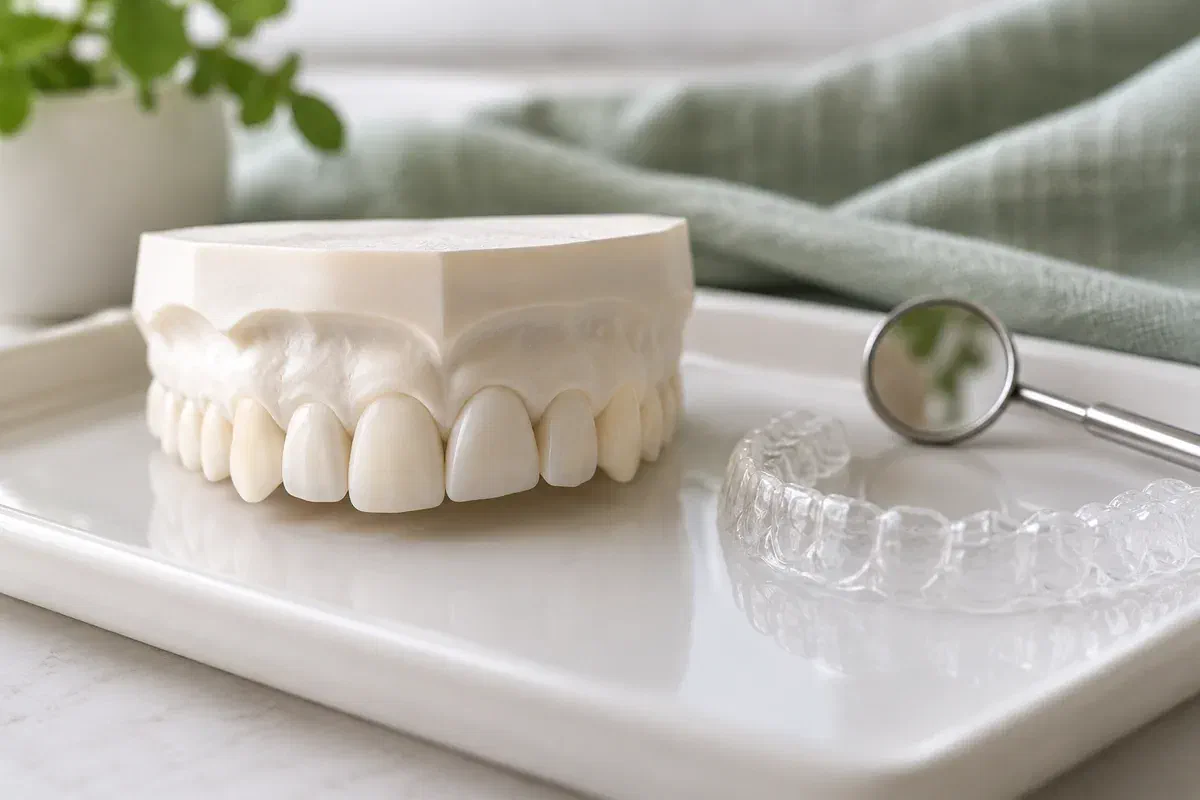
Illustrative upper-teeth model with a subtly rotated tooth beside a clear appliance
What people tend to point to

Small changes, each with its own question

Describe the change, roughly when you first saw it, and whether chewing or comfort is affected. That history helps frame what any treatment would actually be trying to solve.

An edge that has started to overlap

Show the tooth and say whether the overlap is new or has been there for years. Ask which neighbouring teeth would have to shift to make room. Seeing one tooth out of line does not tell you how many teeth a sensible plan would involve.

A gap tied to upcoming dental work

If a crown, bridge, bonding or a replacement tooth has been suggested, mention it early. Ask whether moving a tooth first would make that work more predictable, and who manages the order of steps. Everyone involved should agree on the space they are aiming for.

Teeth drifting after braces years ago

Bring any records you have from earlier orthodontic care, along with an old retainer if asked. Say whether the shift has been gradual or sudden. Having worn braces before does not make a new correction automatically straightforward; today's findings still decide the plan.

A tooth that feels loose is a different matter from one that looks out of line. Pain, swelling, or a tooth that shifts quickly should be checked as a dental problem first, not treated as a cosmetic question.

Why a narrow plan needs clear edges

Know what the change is for before deciding how far it goes.

A focused plan can be a reasonable choice once the concern has been assessed and its limits are plain. Ask why this particular movement is suggested and what it intentionally leaves alone. Choosing a smaller scope should come from understanding, not from picking whatever sounds fastest.

The discussion also separates two different things: where a tooth sits and what shape it has. Orthodontic movement alters position. Bonding or reshaping alters form. Which one fits depends on what is actually causing the look you dislike.

Patient information: British Orthodontic Society — limited treatment objectives and alternatives

A goal you can describe in plain words

Ask for the intended change in language that makes sense to you. Is the aim about appearance, about making room for other work, or about how two teeth touch? A clear target makes the recommendation easier to weigh and the final review easier to judge.

Honesty about what stays the same

A narrow plan may leave some bite or alignment features untouched. Ask which ones, and whether leaving them is sensible in your case. Hear the alternatives first, including a broader assessment if the findings point that way.

A clear picture of the next stage

When retention or restorative work belongs to the overall plan, find out when each happens and who provides it. Settle the order before any active movement begins, since the value of a small shift often depends on what comes after it.

How the planning visit runs

Look closely, lay out the options, then agree on a direction.

The aim is to learn whether your concern can sensibly be handled within a limited scope. Choosing an appliance comes later, once the needed movement and your oral health are understood.

  1. Tell us what you would change

    Describe what you see and why it matters. Mention earlier braces, past injuries, retainers you own, and any dental work already scheduled. If there is a date you are working toward or a practical constraint, raise it now so expectations can be discussed early.

  2. Check teeth, gums and the way they meet

    The clinician examines the relevant areas and decides what records would help. Ask how photographs, X-rays or scans would add to the picture. Gum disease, decay or another issue may need care before any movement is considered.

  3. Weigh a focused plan against alternatives

    Go over the planned changes, limits, risks, your own responsibilities, and the estimate. Ask whether aligners, a different appliance or a specialist referral fits. If a wider plan is advised, ask which finding tips the balance.

  4. Settle reviews and the finish line

    Before anything starts, confirm who oversees treatment, how check-ins are booked, and what would trigger a rethink. Talk about retention and any restorative visit afterward. Completion should be judged against the agreed goal, not just a calendar estimate.

Living with a small adjustment

A modest goal still depends on steady habits.

Even limited treatment needs dependable follow-up. Instructions vary with the appliance and the movement planned, so keep them somewhere handy and ask whenever something is unclear.

Wear and clean it the way you were shown

Stick to the wear time, cleaning steps and review dates set for your plan. Let the team know if the routine is hard to keep or something breaks. Never bend wires, add elastics or skip ahead in a sequence based on advice found online.

Keep other dental appointments in the loop

Carry on with routine checkups and tell the treating clinician about any work booked elsewhere. A new filling or crown can change how an appliance fits, so ask how visits should be ordered rather than assuming they are unrelated.

Plan for holding the new position

Raise retention before active movement wraps up: which retainer, how often to wear it, and when it is reviewed. If another procedure follows, confirm how the tooth position is protected in between. Keep a way to reach us if a retainer later feels wrong.

Choosing how far to go

One small concern, several reasonable paths

For each suggestion, ask what it changes and what it does not. The right path depends on the exam findings, what matters most to you, and the commitment involved.

When a narrow, assessed aim fits

A limited orthodontic plan

This route may suit you when the movement required and the accepted trade-offs are appropriate. Discuss appliance choices, check-ins and retention. A limited aim still carries orthodontic risks and does not promise a short timeline.

When the overall bite matters more

A full orthodontic opinion

A wider plan or specialist opinion may be advised if shifting only the visible tooth would leave a poor compromise. Ask which relationships need attention and how the scope would change. Understand the reasons before you decide.

When position is only part of the picture

Restorative care, watching, or no change

If tooth shape or another finding explains what you see, a different conversation may help more. Weigh what adding or removing tooth material involves, and remember that waiting on elective care is an option. Any underlying problem still needs its own plan.

Questions we hear in Milton

Straight answers about small alignment changes

Calling a change minor describes its intended scope. It does not settle the diagnosis, which appliance to use, or what you will need to do once treatment ends.

(905) 876-4488
Am I too old to have a tooth moved?
Adults can have orthodontic movement, provided the teeth and gums are healthy enough to support it. Age matters less than the condition of the supporting tissues. The examination will show whether gum or bone health needs attention first.
How long will I need to wear a retainer afterward?
Teeth can drift after movement, so some form of retention is usually recommended, often for the long term. Ask what type suits your plan, how often to wear it, and how it will be checked. Retention should be agreed before treatment begins.
Do I need X-rays before a small tooth is moved?
It depends on the findings. Radiographs can show root position and bone support that are not visible in the mirror. Ask which records the clinician recommends for your situation and what each one would reveal before you decide anything.
Is a clear aligner the only option for this?
Not always. Minor movement describes the goal, and more than one appliance type can reach a limited aim. Ask which approach suits the movement you need, and whether a specialist should weigh in before you commit to one.
Can I close a small gap myself with elastics?
Please don’t. Elastics or homemade devices apply force that nobody is controlling, which may damage teeth, gums and bone. Have the gap assessed first so the cause and the reasonable options are clear before anything is tried.
Can review appointments fit around a busy week in Milton?
Our hours run into the evening Monday to Thursday, and Friday to Sunday visits are by appointment. Ask roughly how many reviews your plan may need so you can work them around school, work and family commitments.
Planning your Milton visit

Show us the tooth, and tell us the change you have in mind.

Book a conversation at our Bronte Street practice about a small alignment concern. We will explain what assessment is needed, the approaches that might fit, and how a proposed change connects with the rest of your dental care.

Scope, appliance choice and any referral are decided after assessment. A small visible change does not mean treatment will be simple or quick.

Visit Milton Dental Clinic
Unit 1, 342 Bronte St. S, Milton, ON L9T 5B7
Get directions Clinic hours
Monday–Thursday
11am–7pm
Friday–Sunday
By appointment only

Areas we serve

  • Milton
  • Oakville
  • Mississauga
  • Georgetown
  • Halton Hills
  • Acton
  • Campbellville
  • Brampton
  • Burlington
  • Puslinch
  • Rockwood
  • Erin
  • Caledon
  • Etobicoke
  • Old Milton
  • Bronte Meadows
  • Timberlea
  • Dorset Park
  • Dempsey
  • Clarke
  • Beaty
  • Coates
  • Harrison
  • Scott
  • Willmott
  • Ford
  • Bowes
  • Cobden
  • Walker
  • Mountain View
  • Milton Heights
  • Hawthorne Village
  • Valley View
  • Fallingbrook
  • Nassagaweya
  • Trafalgar
  • Esquesing
  • Nelson
  • Brookville
  • Moffat
  • Glen Williams
  • Norval
  • Limehouse
  • Stewarttown
  • Ashgrove
  • Hornby
  • Silver Creek
  • Speyside
  • Scotch Block
  • North Oakville
  • River Oaks
  • Glen Abbey
  • West Oak Trails
  • Palermo
  • Bronte Creek
  • College Park
  • Joshua Creek
  • Uptown Core
  • Preserve
  • Iroquois Ridge
  • Lisgar
  • Meadowvale
  • Meadowvale Village
  • Churchill Meadows
  • Erin Mills
  • Central Erin Mills
  • Streetsville
  • East Credit
  • Creditview
  • Heartland
  • Sheridan
  • Mount Pleasant
  • Credit Valley
  • Huttonville
  • Churchville
  • Springbrook
  • Northwest Brampton
  • Bram West
  • Fletcher's Meadow
  • Fletcher's Creek South
  • Alton Village
  • Orchard
  • Millcroft
  • Headon Forest
  • Tansley
  • Brant Hills
  • Tyandaga
  • Kilbride
  • Lowville
  • Aberfoyle
  • Morriston
  • Arkell
  • Hillsburgh
  • Freelton
  • Carlisle
  • Waterdown
  • Flamborough
  • Mountsberg

How can we help?

Milton Dental Clinic

Have a question about your smile? Choose the option that works best for you.

For urgent dental concerns, please call.
Messages are reviewed during clinic hours.