

Illustrative adult patient discussing tooth movement after earlier orthodontic care
Cosmetic Dentistry

Orthodontic Relapse Treatment in Acton

A clear retainer left on a sunny dashboard or rinsed under very hot water can warp, and teeth may then start to wander. From Acton, you can have the appliance and your alignment examined, and find out whether to replace, repair, or rethink.

When the retainer itself is the problem

Warped plastic, a loose fit, and teeth that followed

Clear retainers are thin and sensitive to heat. One afternoon in a warm vehicle or a trip through the dishwasher can change their shape enough that they no longer grip properly. If teeth begin to drift from the positions braces or aligners achieved, that is orthodontic relapse, and it is worth checking both the appliance and the teeth.

A damaged retainer is only one possible piece. Teeth and gums continue to change, old appliances wear thin, and dental or gum issues sometimes contribute. An assessment considers each of these instead of assuming the warped plastic explains everything.

Coming down from Acton, bring the retainer in its case even if it looks ruined, plus any notes from your original treatment. Tell us whether you hope to undo the drift or would be content to hold your teeth where they are. We can then talk about the assessment and whether specialist input would be helpful.

Book a retainer and alignment check
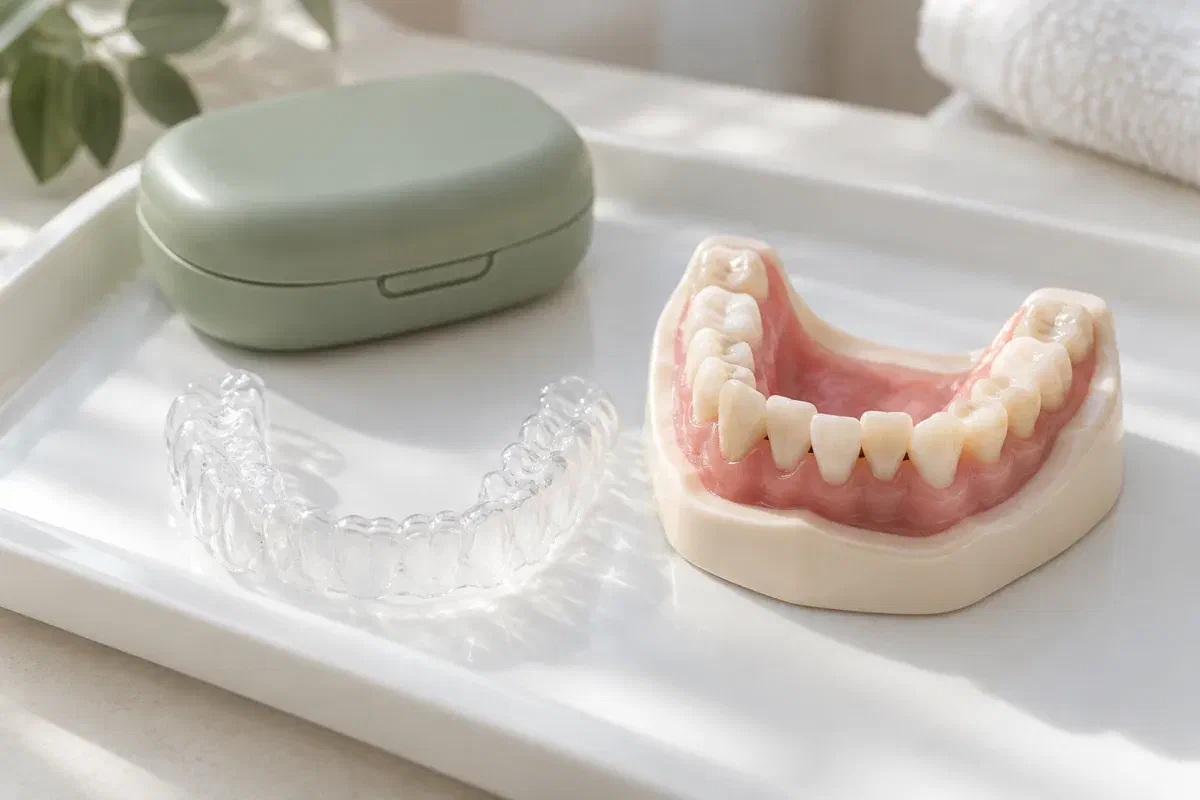
Illustrative lower-teeth model with mild crowding beside a removable retainer and case
What to describe

Tell us how the damage happened and what changed after

The appliance's history, which teeth moved, and when you first noticed it all help show whether the plastic or the mouth itself is behind the change. Mention soreness, too, not only appearance.

Heat-damaged or cracked clear retainer

Say what happened if you know: a hot car, boiling water, or a crack from dropping it. Describe whether it now lifts, presses, or won't seat. A misshapen retainer can put pressure in the wrong places, so please leave it out if it hurts and carry it to the visit, where you can ask about an interim option.

Fixed wire that may have been knocked

A firm bite on something hard can loosen a bond even when the wire stays on. Point out roughness, a new space, or a tooth that has shifted. Avoid bending the wire back, and ask for the bonds and nearby teeth to be examined.

A slow change with no reviews since braces

Changes over many years are fine to raise. Mention dental work, gum treatment, or a bite that feels different. Photos from the end of treatment can help reconstruct the history, but today's examination determines the advice.

Sudden movement with pain, swelling, bleeding, or a tooth that feels very loose should be assessed promptly and not written off as relapse. Please call the clinic.

What the check tells you

A new retainer keeps. Further treatment moves.

Once a retainer is damaged, it is tempting to assume a replacement will put things right. A newly made appliance, though, generally holds teeth in their present position, and repositioning them is a different undertaking. The review should explain which applies to you before anything is ordered.

Consider what you want now. Ask what is reasonable, what alternatives exist, and what each would involve in long-term wear and visits. A little drift does not automatically mean another course of treatment.

Patient information: American Association of Orthodontists — movement after orthodontic treatment

Findings tied to the teeth, not just the plastic

A warped appliance tells only part of the story. Expect to hear which teeth have drifted, by roughly how much, and whether the bite or gums call for attention too. Earlier records can be compared with current findings when available, and what was seen should be kept distinct from guesses about cause.

A plan that matches your aim

If you want the earlier alignment back, or are happy with how things look, say so. Ask what each option would require and whether keeping the current position is clinically suitable before deciding on an appliance.

A sturdier retention routine

Talk about how the damage happened and what else made retention hard, such as loss, discomfort, or unclear guidance. Ask about safe cleaning and storage, how future damage would be handled, and who reviews the appliance afterward.

How the appointment runs

From the damaged appliance to a clear next step

How long the assessment takes depends on how much has moved. When you book from Acton, feel free to ask what the visit includes and if extra records or a specialist's input could be part of the picture.

  1. Explain the treatment and retainer history

    Share when your braces or aligners ended, what retainer you received, when it was damaged, and when you noticed movement. Bring appliances and any records. Mention dental work, health changes, or routine changes since.

  2. Check the teeth and inspect the appliance

    The clinician examines alignment, gums, bite, and supporting tissues, and looks closely at the retainer's fit and condition. Images or scans may be advised. Ask whether a gum or dental concern should be dealt with first.

  3. Weigh replacing against realigning

    You will hear what a repaired or replacement retainer could do and whether further movement is sensible. If realignment comes up, discuss scope, risks, alternatives, monitoring, and estimate. A specialist may be suggested for complex situations.

  4. Know what to wear until the next step

    Confirm whether to keep wearing the damaged retainer, switch to something else, or wear nothing for now, and what to do if fit changes. Ask when records, an appliance, or a follow-up are likely.

Afterward

Protect the new arrangement from the start.

Whether the next step is retention, treatment, or more assessment, keep its aim in view and tell us if anything changes.

Wear only what you were advised to wear

Don't use a warped retainer or old trays to try to move teeth back. Ask which appliance suits your current position. If a damaged one is retired, confirm what replaces it and what happens in between.

Keep the follow-up visit

Bring the appliance and describe any changes you have spotted since the assessment. If active treatment begins, follow its schedule closely rather than wearing it when convenient. Ring promptly about fit problems, cracks, or lost attachments so the plan can be updated before small issues grow.

Store and clean it with care

Ask how to clean the appliance without heat damage and keep its case where you take it out. Avoid leaving it in a warm car. Mention upcoming travel or changes to your routine so the plan can account for them.

Options after a damaged retainer

Three ways forward, depending on what the exam shows

Ask what each option is for. Any appliance should have a defined purpose, and further movement should be planned from today's findings.

When your current position is acceptable

Replace or repair the retainer

If your teeth sit acceptably and the damage is the main issue, a repair or new retainer may be the focus. Ask which is appropriate and what records are needed. A replacement is made to hold the present position, not to recreate an earlier one.

When you want and need realignment

Move teeth with additional treatment

Depending on how much has shifted, a limited or broader course may be discussed. Ask why that scope fits and how retention would follow. Earlier treatment does not guarantee a short course will resolve everything.

When more is going on than the appliance

Look further or consult a specialist

If the gums, the bite, or an unusual pattern of movement need explaining, further assessment may come before any new appliance. Ask what a referral is meant to answer, and who looks after any urgent matter in the meantime.

Damaged retainer questions

When heat, a drop, or the dog got to your retainer

A check can show whether you need a new appliance, a decision about maintenance, or active treatment.

(905) 876-4488
Can a warped retainer still be worn?
It may not fit as intended and could press in the wrong places. Stop if it hurts, and bring it in so the fit can be checked and interim advice given.
How should I clean a clear retainer without damaging it?
Ask the team for cleaning instructions suited to your appliance, since materials differ. Hot water and dishwashers can distort some of them, so avoid those unless advised otherwise. Rinsing it after removal and keeping it in its case rather than a tissue also lowers the chance of loss or damage.
Will a replacement retainer move my teeth back?
Generally not. The replacement is shaped to your teeth as they are on the day it is made, so it preserves that arrangement. Correcting drift is a different decision, made after an assessment.
My dog chewed my retainer. Do I need an appointment?
Yes, call to arrange one. Keep the pieces and bring them along. The clinician can check whether teeth have moved and discuss a replacement or other next step.
Can I combine a relapse check with my regular cleaning when coming from Acton?
Ask when booking. Depending on availability and what is needed, the team can tell you whether appointments can be arranged close together to reduce trips.
Is treatment needed if I'm happy with my teeth after a small shift?
Not necessarily. The clinician can explain whether the present position is suitable to keep and whether anything else needs care, and then discuss suitable retention.
Retainer and relapse care for Acton

Bring the damaged retainer. We'll check both it and your teeth.

Book a visit at our Bronte Street practice to look at teeth and appliances after earlier orthodontic care. You will hear what we find, get answers on retention, and learn your options for further review or treatment.

Advice rests on examination and any records needed. A warped, cracked, lost, or painful retainer is a good reason to contact us promptly.

Visit Milton Dental Clinic
Unit 1, 342 Bronte St. S, Milton, ON L9T 5B7
Get directions Clinic hours
Monday–Thursday
11am–7pm
Friday–Sunday
By appointment only

Areas we serve

  • Milton
  • Oakville
  • Mississauga
  • Georgetown
  • Halton Hills
  • Acton
  • Campbellville
  • Brampton
  • Burlington
  • Puslinch
  • Rockwood
  • Erin
  • Caledon
  • Etobicoke
  • Old Milton
  • Bronte Meadows
  • Timberlea
  • Dorset Park
  • Dempsey
  • Clarke
  • Beaty
  • Coates
  • Harrison
  • Scott
  • Willmott
  • Ford
  • Bowes
  • Cobden
  • Walker
  • Mountain View
  • Milton Heights
  • Hawthorne Village
  • Valley View
  • Fallingbrook
  • Nassagaweya
  • Trafalgar
  • Esquesing
  • Nelson
  • Brookville
  • Moffat
  • Glen Williams
  • Norval
  • Limehouse
  • Stewarttown
  • Ashgrove
  • Hornby
  • Silver Creek
  • Speyside
  • Scotch Block
  • North Oakville
  • River Oaks
  • Glen Abbey
  • West Oak Trails
  • Palermo
  • Bronte Creek
  • College Park
  • Joshua Creek
  • Uptown Core
  • Preserve
  • Iroquois Ridge
  • Lisgar
  • Meadowvale
  • Meadowvale Village
  • Churchill Meadows
  • Erin Mills
  • Central Erin Mills
  • Streetsville
  • East Credit
  • Creditview
  • Heartland
  • Sheridan
  • Mount Pleasant
  • Credit Valley
  • Huttonville
  • Churchville
  • Springbrook
  • Northwest Brampton
  • Bram West
  • Fletcher's Meadow
  • Fletcher's Creek South
  • Alton Village
  • Orchard
  • Millcroft
  • Headon Forest
  • Tansley
  • Brant Hills
  • Tyandaga
  • Kilbride
  • Lowville
  • Aberfoyle
  • Morriston
  • Arkell
  • Hillsburgh
  • Freelton
  • Carlisle
  • Waterdown
  • Flamborough
  • Mountsberg

How can we help?

Milton Dental Clinic

Have a question about your smile? Choose the option that works best for you.

For urgent dental concerns, please call.
Messages are reviewed during clinic hours.