

Illustrative adult patient discussing tooth movement after earlier orthodontic care
Cosmetic Dentistry

Orthodontic Relapse Treatment in Campbellville

Since a new crown or filling, your retainer feels odd and your bite seems different. For households in Campbellville, a relapse review sorts out what has really moved, how recent dental work fits into it, and whether retention or realignment is the sensible next move.

Campbellville · Bite changes after braces

Has your bite changed, or have your teeth?

Sometimes both. Restorations placed years after orthodontic care can alter how a tooth is shaped, which may affect the way a retainer seats or the way your teeth come together. At the same time, teeth can drift from the alignment braces or aligners produced, which is what orthodontic relapse means. Telling these apart takes an examination.

Other factors may be involved as well. The mouth keeps changing through adult life, appliances wear down, and gum conditions can influence tooth position. Rather than blaming one event, a careful review considers all of them together.

Bring your retainer, the dates of any significant dental work, and whatever you have from the original treatment. Living in a rural part of Milton often means fitting appointments around a long list of other errands, so tell us what you hope to settle in this visit. We can discuss whether specialist orthodontic input would help.

Request a bite and relapse review
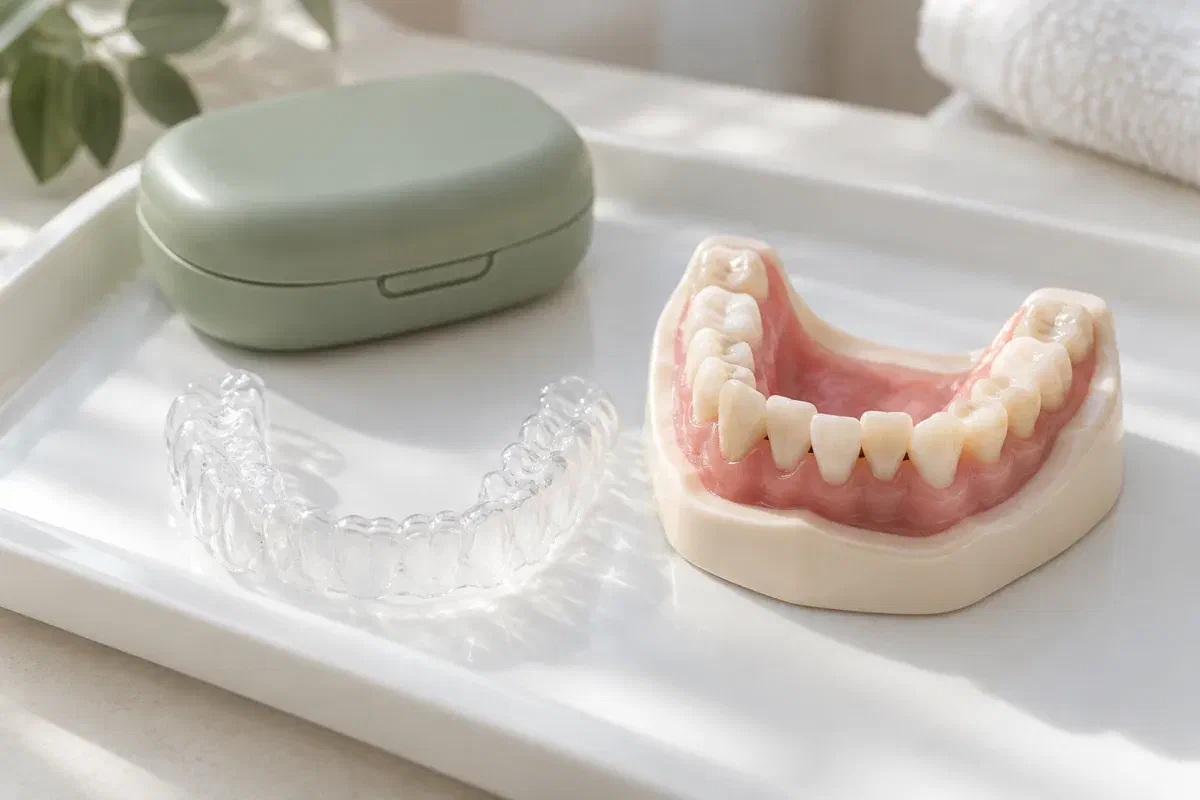
Illustrative lower-teeth model with mild crowding beside a removable retainer and case
Useful details

Point out what feels different and when it began

Your description helps show whether a new restoration, an appliance, or the teeth themselves are behind the change. Mention tenderness or a sore spot when chewing, even if the main concern is appearance.

A retainer that changed fit after dental work

Note whether the snag or pressure started after a crown, filling, or other treatment. Describe any crack or long break in wear, too. If the retainer hurts, do not press it on; bring it so the fit can be assessed, and ask about an interim plan.

A bonded wire near a newly restored tooth

A fixed retainer sits close to the surfaces dentists work on, and a bond can loosen without the wire coming off. Mention a new gap, a rough edge, or a tooth that looks off. Leave the wire alone and ask that it and the teeth beside it be checked.

A bite that has felt different for years

Long-standing changes are as welcome to discuss as sudden ones. List restorations, gum treatment, and any change in how your teeth meet since braces or aligners ended. Old photographs can help show the earlier result; the current examination is what guides advice.

A tooth that moves quickly or becomes painful, swollen, or noticeably loose may have a cause unrelated to relapse. Call us so it can be evaluated rather than waiting.

What gets clearer

One appliance holds. Another plan moves. Which do you need?

A retainer refitted or remade around your current teeth serves to keep them where they are. Further orthodontic movement sets out to reposition them. When dental work is part of the history, the review should also say whether the restoration, the appliance, or the alignment is the real priority.

Your goals now may differ from the ones you had during treatment. Ask what is realistic, what alternatives exist, and what long-term retention each would involve. Movement on its own does not commit you to another course.

Patient information: American Association of Orthodontists — movement after orthodontic treatment

Findings that account for restorations

The clinician should explain which teeth have shifted and how any newer dental work relates to the change. If earlier records exist, they may be compared with today. Facts and theories about cause should be clearly separated.

A recommendation shaped by your preference

Tell us whether you want an earlier alignment back or are comfortable with how your smile looks. Ask what each route requires, and whether keeping the current position is clinically appropriate, before any appliance or treatment scope is chosen.

Retention that fits a rural routine

Describe what made the retainer hard to keep up with before, from lost cases to discomfort or busy seasons. Ask who will review the appliance, how future dental work should be coordinated with it, and what to do if it stops fitting.

The review, in order

Untangle the history before choosing a response

How much is involved depends on the change. Ask what this visit includes and whether records, a look at recent restorations, or a specialist opinion might be needed first.

  1. List treatment, retention, and later dental work

    Share when braces or aligners finished, what retainer followed, and when each significant restoration was done. Bring appliances and any records. Mention health or routine changes that affected wear.

  2. Examine teeth, restorations, and bite

    The clinician checks alignment, how your teeth meet, the gums, and supporting tissues, along with the fit of any retainer. Additional images may be suggested. Ask whether a restoration or gum issue should be addressed before the orthodontic question.

  3. Contrast maintaining with repositioning

    Hear what a refitted or new retainer could achieve and whether further movement makes sense. If realignment is raised, ask how far it would go, what could go wrong, what else might work, how it would be followed, and what it is estimated to cost. A specialist may help with complex findings.

  4. Agree what to do until next time

    Confirm what to wear, if anything, and what to do if fit or comfort changes. Ask when records, an appliance, or a review would be scheduled, so you can plan trips in from Campbellville around everything else.

After your review

Follow the agreed approach, not guesswork

Your plan might centre on retention, treatment, or more assessment. Keep the purpose clear and tell us about any new dental work or change in fit.

Wear only the appliance you were advised to

Old trays or a retainer that no longer matches your teeth should not be used to push them back. Ask which appliance suits your present position. If one is retired as damaged, confirm its replacement and the interim plan.

Return for the check, and flag new dental work

Bring your appliance and describe changes since the assessment. If treatment is underway, wear it as prescribed. Let us know before or after any future restoration so retainer fit can be reviewed if needed.

Keep retention practical

Ask for straightforward wear and cleaning instructions and when reviews will take place. Keep a case where you take the appliance out. Raise busy seasons, travel, or a move in advance so the routine can adapt.

Deciding what comes next

Your findings point the way.

Ask each option's purpose. A new appliance should have a defined role, and any plan to shift teeth should take today's mouth, including recent dental work, as its starting point.

When today's position is acceptable

Refit, repair, or remake the retainer

If your teeth sit well enough and the appliance no longer fits around a new restoration, retention may be the focus. Ask whether adjustment, repair, or a new retainer is appropriate. A new appliance holds the present position; it is not designed to undo earlier movement.

When realignment is suitable and wanted

Plan further tooth movement

A limited or broader course may be considered, depending on the change. Ask why that scope fits your findings and how retention will follow. Past orthodontic treatment does not mean a short course will resolve every concern.

When the bite or gums need more explanation

Investigate the bite or seek a specialist

If how your teeth meet has changed or the gums raise questions, more assessment may come before any appliance changes. Ask what a referral would answer, and who looks after any pressing issue while the plan is decided.

Bite and relapse questions

When dental work and tooth movement overlap

A review can tell whether you are facing an appliance issue, a maintenance decision, or a need for active treatment.

(905) 876-4488
Can a new crown or filling stop my retainer from fitting?
It can sometimes affect fit, since the shape of the tooth may change. Mention any recent dental work and bring the retainer so the clinician can check what is causing the problem.
Should I tell my dentist about my retainer before getting a restoration?
Yes, it is helpful to mention it. Bringing the retainer to the appointment allows the fit to be considered and discussed afterward.
My bite feels different. Does that mean my teeth have relapsed?
Not necessarily. A changed bite can have several causes, including restorations, tooth movement, or other dental issues. An examination is needed to tell which applies.
Does relapse after braces always need a full new course?
No. The amount of change, your oral health, bite, and goals all matter. Options range from retention advice to limited or broader movement. Ask what each recommendation is meant to achieve.
Could a new retainer bring my teeth back to where they were?
It generally should not be relied on for that. A retainer made for your current teeth is meant to hold them. Moving teeth back is a separate decision with its own assessment.
Can I keep my teeth in their current position if I like them?
That is worth asking. The clinician can explain whether the present position is suitable to maintain and whether anything else needs attention, and then discuss a fitting retention arrangement.
Relapse reviews for Campbellville

Bring the retainer and a list of recent dental work.

Book a review at our Bronte Street practice to look at changes in your teeth or bite since orthodontic treatment. We will explain what we find, discuss retention, and set out options for further review or treatment.

The best next step depends on examination and relevant records. Let us know quickly if a retainer goes missing, cracks, hurts, or stops seating.

Visit Milton Dental Clinic
Unit 1, 342 Bronte St. S, Milton, ON L9T 5B7
Get directions Clinic hours
Monday–Thursday
11am–7pm
Friday–Sunday
By appointment only

Areas we serve

  • Milton
  • Oakville
  • Mississauga
  • Georgetown
  • Halton Hills
  • Acton
  • Campbellville
  • Brampton
  • Burlington
  • Puslinch
  • Rockwood
  • Erin
  • Caledon
  • Etobicoke
  • Old Milton
  • Bronte Meadows
  • Timberlea
  • Dorset Park
  • Dempsey
  • Clarke
  • Beaty
  • Coates
  • Harrison
  • Scott
  • Willmott
  • Ford
  • Bowes
  • Cobden
  • Walker
  • Mountain View
  • Milton Heights
  • Hawthorne Village
  • Valley View
  • Fallingbrook
  • Nassagaweya
  • Trafalgar
  • Esquesing
  • Nelson
  • Brookville
  • Moffat
  • Glen Williams
  • Norval
  • Limehouse
  • Stewarttown
  • Ashgrove
  • Hornby
  • Silver Creek
  • Speyside
  • Scotch Block
  • North Oakville
  • River Oaks
  • Glen Abbey
  • West Oak Trails
  • Palermo
  • Bronte Creek
  • College Park
  • Joshua Creek
  • Uptown Core
  • Preserve
  • Iroquois Ridge
  • Lisgar
  • Meadowvale
  • Meadowvale Village
  • Churchill Meadows
  • Erin Mills
  • Central Erin Mills
  • Streetsville
  • East Credit
  • Creditview
  • Heartland
  • Sheridan
  • Mount Pleasant
  • Credit Valley
  • Huttonville
  • Churchville
  • Springbrook
  • Northwest Brampton
  • Bram West
  • Fletcher's Meadow
  • Fletcher's Creek South
  • Alton Village
  • Orchard
  • Millcroft
  • Headon Forest
  • Tansley
  • Brant Hills
  • Tyandaga
  • Kilbride
  • Lowville
  • Aberfoyle
  • Morriston
  • Arkell
  • Hillsburgh
  • Freelton
  • Carlisle
  • Waterdown
  • Flamborough
  • Mountsberg

How can we help?

Milton Dental Clinic

Have a question about your smile? Choose the option that works best for you.

For urgent dental concerns, please call.
Messages are reviewed during clinic hours.