

Illustrative adult patient discussing tooth movement after earlier orthodontic care
Cosmetic Dentistry

Orthodontic Relapse Treatment in Mississauga

Your braces or aligners were done by another office, maybe in another city, and now teeth are shifting. Coming from Mississauga, you can start fresh with an assessment of current alignment, retainer condition, and gum health before any decision about realigning.

Relapse after treatment elsewhere

Different clinic, same teeth: start with where they are now

Plenty of people finish orthodontic care in one place and live somewhere else by the time their teeth begin to shift. A tooth rotating, crowding along the lower front, or a retainer that rocks are all common signs of orthodontic relapse, which simply means movement away from the earlier aligned position.

There is rarely a single reason. Mouths keep changing with age, appliances wear or break, and dental or gum conditions sometimes contribute. A thoughtful assessment considers each, rather than treating a busy year of missed retainer nights as the whole explanation.

Being a new patient is not a barrier. For people in western Mississauga neighbourhoods such as Meadowvale or Churchill Meadows, the practical step is to gather what you can before booking: the retainer, the former provider's name, and any photos. Tell us whether you want an earlier position back or a stable version of the current one, and we can discuss specialist input as needed.

Start a relapse assessment
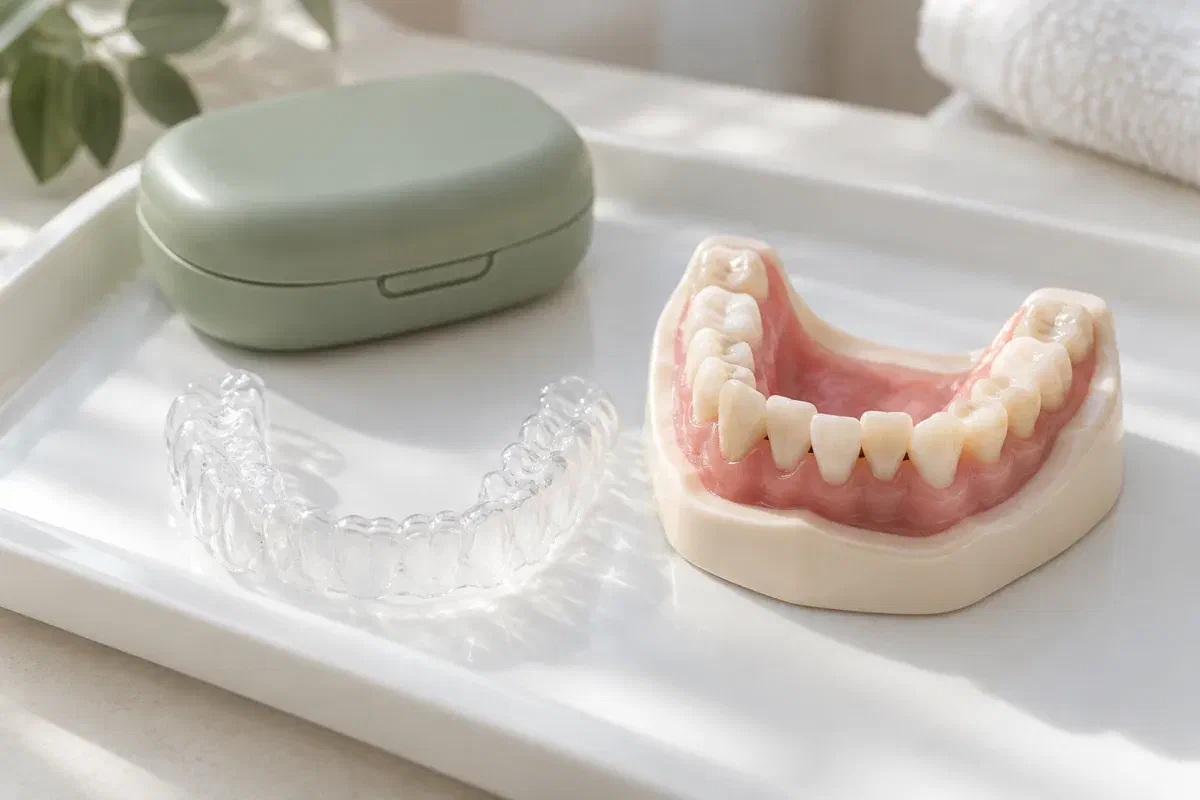
Illustrative lower-teeth model with mild crowding beside a removable retainer and case
Helpful to tell us

Share the history you have, even if it is patchy

Knowing what moved, when you spotted it, and what happened to your retainer helps distinguish an appliance issue from changes in the teeth or tissues. Mention symptoms even if appearance is your main worry.

A removable retainer made by your previous provider

Tell us how it fits now: tight, loose, or impossible to seat. Mention damage, heat exposure, or months without wear. If it is painful, do not force it; bring it to the appointment and ask what you should do in the meantime.

A bonded wire placed somewhere else

Its origin matters less than its current condition. Let us know about new spaces, rough areas, or teeth that look out of line. Avoid tugging or bending the wire, and ask for each bond and the nearby teeth to be checked.

Years without any orthodontic follow-up

It is reasonable to raise both recent and long-standing changes. Note dental work, gum treatment, or bite changes since treatment ended. Records from the earlier office can add context if you can obtain them, but today's findings guide what we suggest.

If teeth move suddenly with pain, swelling, bleeding, or noticeable looseness, do not wait it out as ordinary relapse. Contact the clinic so the symptom can be properly evaluated.

The value of a fresh look

Separate the retainer question from the realignment question.

Getting a replacement appliance and undertaking further orthodontic movement serve different purposes. Your assessment should explain whether the immediate aim is to maintain a reasonable current position, resolve a problem with an appliance, or consider moving teeth again, before anything new is ordered.

What mattered to you during the first treatment may not match your priorities now. Ask what is realistic, what alternatives exist, and what keeping a result would involve over the long term. Some movement does not mean you must begin a new course.

Patient information: American Association of Orthodontists — movement after orthodontic treatment

Findings you can follow

Ask which teeth have moved and whether your bite or gums need attention. If records from your former provider arrive, they can be compared with today. Expect a clear line between what has been observed and what is only a theory.

Advice based on today's goal

You might want the earlier result restored, or you may be content with how things look. State your preference early. Ask what each option would involve and whether maintaining the present position is clinically appropriate before an appliance or scope is chosen.

A maintenance plan that works for you

Reflect on what made retention hard: losing appliances, discomfort, moving house, or instructions that were never explained. A plan you understand is easier to keep. Ask how future problems would be addressed and who will review the retainer going forward.

What to expect as a new patient

We gather the background, examine, and talk options.

The scope of the visit depends on the extent of change. Ask what is included and whether additional records, a request to your previous office, or a specialist review may come first.

  1. Build a picture of the earlier care

    Tell us roughly when treatment ended, what retention followed, and when the current concern began. Bring appliances, plus the previous provider's details if you want records requested. Mention any dental work, health changes, or routine changes since then.

  2. Assess your teeth, bite, and retainer

    The clinician reviews alignment, gums, and supporting tissues and examines any appliance you bring. Further records may be suggested to explain the change or plan movement. Ask whether another dental or gum issue should be addressed first.

  3. Review keeping versus correcting

    You will hear what a repaired or new retainer would be meant to do and whether additional movement fits your situation. For realignment, go over its scope, risks, alternatives, monitoring, and estimate. Complex concerns may call for a specialist's view.

  4. Confirm the interim plan

    Find out what to wear, if anything, before you return and what to do if fit or comfort changes. Ask when records, an appliance, or a review should be expected. Coming from Mississauga, it is useful to know the likely number of visits at this stage.

Between appointments

Follow the new plan, even if old instructions said otherwise.

Advice may involve retention, treatment, or more assessment. Keep the purpose of each step clear and let us know about any change in circumstances.

Use only the advised appliance

An old retainer or unused aligners from the earlier treatment should not be used to push teeth back. Ask which appliance is right for your present position. If one is retired as damaged, confirm the replacement and what happens until it is ready.

Return for the scheduled check

Bring your appliance and describe changes since the assessment. If new treatment starts, follow the schedule you are given rather than wearing it on and off. Report fit problems or lost attachments quickly.

Keep the routine realistic

Ask for clear directions on wearing and cleaning the retainer and when it will be reviewed. Keep a case wherever you usually remove it. Talk about upcoming travel or a move now, before the routine is disrupted.

Possible responses

Maintain, realign, or investigate further: each serves a different need

Ask what each option is intended to accomplish. A new appliance should have a clear purpose, and further movement should rest on current findings.

When the present position is acceptable

Update or rebuild the retention

When your teeth sit acceptably and the appliance is the issue, retention may be the focus. Ask whether repairing what you have or making a new retainer is reasonable and what records are needed. A newly made retainer is not meant to recreate an earlier alignment.

When realignment is suitable and wanted

Undertake further tooth movement

A limited or broader course may be discussed depending on the changes. Ask how the scope fits your findings and what retention will follow. Previous orthodontics does not guarantee a short course will resolve everything.

When the findings need more explanation

Seek more information or specialist advice

Gum changes, bite shifts, or complex movement may need further assessment before appliances are changed. Ask what a referral is meant to answer, and confirm who handles any immediate concern while the longer plan develops.

New-patient relapse questions

Questions when your original orthodontist is not nearby

An assessment can clarify whether you face an appliance issue, a maintenance decision, or a case for active treatment.

(905) 876-4488
Can you assess relapse if my orthodontic treatment was done at another office?
Yes. The assessment is based on your teeth, gums, bite, and appliances as they are today. Information from the earlier office can be helpful but is not required to start.
How do I get records from my previous orthodontist?
You can contact that office directly, or ask our team how a records request would work. Records may not always be available, particularly after many years, and the current examination remains the main guide.
Does a small amount of movement mean I need a full new course?
Not necessarily. The degree of change, your oral health, your bite, and what you want all shape the options. These can range from retention advice to limited or broader movement. Ask what the recommendation aims to achieve.
My old retainer still fits a little. Should I keep wearing it?
Ask before relying on it. A retainer that still seats comfortably may be different from one that pinches or rocks. Bring it so the fit can be checked, and do not force it if it hurts.
How many visits should I plan for if I'm coming from Mississauga?
It depends on what the first assessment finds. Bring appliances and records to make that visit count, and ask at the end whether further records, a new appliance, or a specialist opinion are likely to add appointments.
Is it possible to stabilize my teeth where they are now?
That is a reasonable request. The clinician can explain whether the present position is suitable to keep and whether anything else needs care, then talk about a retention arrangement that fits your goals.
Relapse review for Mississauga

New here? Bring your retainer and what you remember.

Book an assessment at our Bronte Street practice to talk about movement after orthodontic care received elsewhere. We will explain the findings, retention questions, and options for further review or treatment.

Any recommendation follows an examination and the records that are available. If your old retainer breaks, goes missing, or begins to pinch before the visit, let us know straight away.

Visit Milton Dental Clinic
Unit 1, 342 Bronte St. S, Milton, ON L9T 5B7
Get directions Clinic hours
Monday–Thursday
11am–7pm
Friday–Sunday
By appointment only

Areas we serve

  • Milton
  • Oakville
  • Mississauga
  • Georgetown
  • Halton Hills
  • Acton
  • Campbellville
  • Brampton
  • Burlington
  • Puslinch
  • Rockwood
  • Erin
  • Caledon
  • Etobicoke
  • Old Milton
  • Bronte Meadows
  • Timberlea
  • Dorset Park
  • Dempsey
  • Clarke
  • Beaty
  • Coates
  • Harrison
  • Scott
  • Willmott
  • Ford
  • Bowes
  • Cobden
  • Walker
  • Mountain View
  • Milton Heights
  • Hawthorne Village
  • Valley View
  • Fallingbrook
  • Nassagaweya
  • Trafalgar
  • Esquesing
  • Nelson
  • Brookville
  • Moffat
  • Glen Williams
  • Norval
  • Limehouse
  • Stewarttown
  • Ashgrove
  • Hornby
  • Silver Creek
  • Speyside
  • Scotch Block
  • North Oakville
  • River Oaks
  • Glen Abbey
  • West Oak Trails
  • Palermo
  • Bronte Creek
  • College Park
  • Joshua Creek
  • Uptown Core
  • Preserve
  • Iroquois Ridge
  • Lisgar
  • Meadowvale
  • Meadowvale Village
  • Churchill Meadows
  • Erin Mills
  • Central Erin Mills
  • Streetsville
  • East Credit
  • Creditview
  • Heartland
  • Sheridan
  • Mount Pleasant
  • Credit Valley
  • Huttonville
  • Churchville
  • Springbrook
  • Northwest Brampton
  • Bram West
  • Fletcher's Meadow
  • Fletcher's Creek South
  • Alton Village
  • Orchard
  • Millcroft
  • Headon Forest
  • Tansley
  • Brant Hills
  • Tyandaga
  • Kilbride
  • Lowville
  • Aberfoyle
  • Morriston
  • Arkell
  • Hillsburgh
  • Freelton
  • Carlisle
  • Waterdown
  • Flamborough
  • Mountsberg

How can we help?

Milton Dental Clinic

Have a question about your smile? Choose the option that works best for you.

For urgent dental concerns, please call.
Messages are reviewed during clinic hours.