

Illustrative adult patient discussing tooth movement after earlier orthodontic care
Cosmetic Dentistry

Orthodontic Relapse Treatment in Rockwood

Someone has suggested a whole new round of braces for teeth that shifted, and you're not sure it fits the size of the problem. From Rockwood, you can book an independent relapse assessment that explains the findings and lays out the full range of reasonable choices.

A second look at relapse advice

Before a second course, a second opinion

It is reasonable to want another view when a recommendation feels larger than the change you can see. Orthodontic relapse describes teeth moving away from the result of earlier alignment, and the right response can range from a simple retainer conversation to further treatment. Scope should follow the findings.

Part of that judgement is understanding why teeth moved. Ongoing changes in the mouth, an appliance that wore out or stopped being used, and gum or dental issues can each play a role. An assessment that weighs these gives you a better basis for comparing advice.

Coming from Rockwood, bring your retainer, any written plan or estimate you have been given, and records from both the original treatment and the recent consultation if available. Tell us which outcome you are hoping for. We can explain our findings, discuss alternatives, and say plainly when a specialist orthodontist's view would be worthwhile.

Request an independent assessment
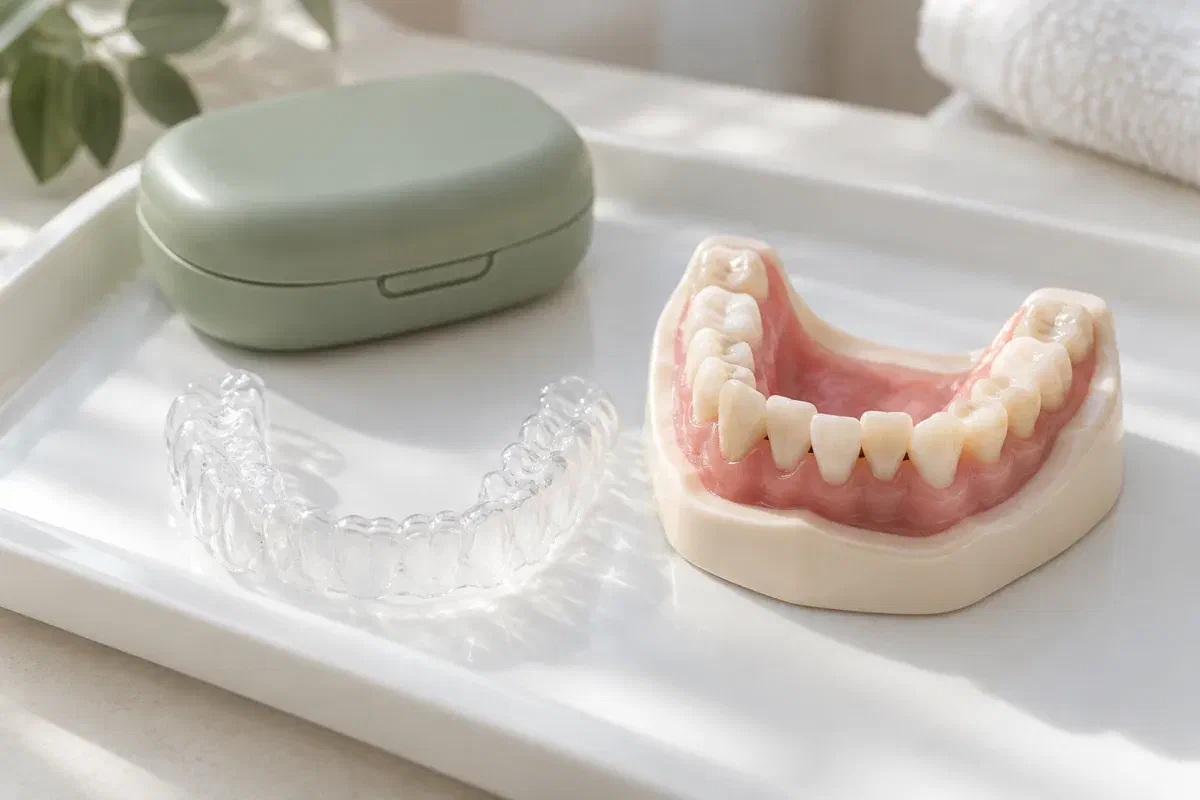
Illustrative lower-teeth model with mild crowding beside a removable retainer and case
To help us compare

Share the original story and the recent recommendation.

What moved, when it appeared, how your retainer has fared, and what you have already been told all help the clinician form a view. Mention any discomfort, not only appearance.

Removable retainer fit and history

Explain whether your retainer is tight, loose, cracked, or no longer usable, and whether wear was interrupted. A sore appliance should not be forced in while you decide; bring it with you and ask what is safe to wear in the interval.

Bonded wire condition

Point out new spaces, rough spots, or teeth out of line near a fixed retainer. A single bond can fail while the rest looks secure. Avoid touching or bending the wire, and ask for it and the adjacent teeth to be examined.

The time since treatment, and what happened in it

However many years have passed, the interval matters. Note any restorations, periodontal care, or shifts in how your teeth meet since braces or aligners ended. Old photographs and the recent consultation's records can both help, but our advice will rest on what the examination shows today.

Teeth that move quickly or become painful, swollen, bleeding, or noticeably loose should not be assumed to be ordinary relapse. Contact us so the symptom can be properly assessed.

What a second assessment offers

See the whole range, not only the largest option.

Keeping teeth in an acceptable current position, correcting an appliance problem, and moving teeth again are distinct responses. A second assessment should tell you which of these the findings support, and why, so you can set that beside the advice you already have.

Your goals deserve a central place. Ask what is reasonably achievable, which alternatives exist, and what each would mean for wear and visits in future. Noticeable movement does not, by itself, require you to start a full course.

Patient information: American Association of Orthodontists — movement after orthodontic treatment

An explanation of the findings in your own terms

Ask which teeth have moved, by how much, and whether the bite or gums need attention. Records from earlier treatment or the recent consultation can be compared with today. Observed facts should be distinguished from possible causes.

Options sized to the change

If you would be content with a smaller improvement or simply stability, say so. Ask what each option would involve and whether maintaining your current position is clinically appropriate. Understanding why a particular scope is advised matters as much as the scope itself.

A maintenance plan you can sustain

Consider why retention lapsed before: losing appliances, discomfort, travel, or unclear instructions. A plan that addresses those reasons is easier to follow. Ask who will review the appliance after any treatment and how problems would be handled.

How a second assessment works

We review what you've been told, then look for ourselves.

How long this takes depends on the change and the information you bring. Ask what is included and whether additional records or a specialist opinion might be needed before we can comment fully.

  1. Go over both histories

    Explain the original treatment, the retention you were prescribed, when the change began, and what the recent recommendation involves. Bring appliances, any written plan, and records. Mention dental work or health changes in between.

  2. Carry out our own examination

    The clinician checks your alignment, gums, bite, and supporting tissues and examines your retainer. Further records may be suggested if they are needed to form an opinion. Ask whether any dental or gum concern should be dealt with first.

  3. Explain the spectrum of options

    You will hear what retention alone could achieve, whether limited movement is reasonable, and when broader treatment might be justified. For any realignment, ask about extent, risks, alternatives, follow-up, and estimate. A specialist view may help.

  4. Clarify what to do while you decide

    Confirm what to wear, if anything, as you weigh the options, and how to reach us if it becomes sore or loose. Ask what further records or appointments would be involved with each route, so the trip from Rockwood can be planned.

While you weigh the advice

Take your time deciding, but keep the interim plan.

Whatever you choose, keep the purpose of each step clear, and let whichever team manages your care know if anything changes.

Avoid do-it-yourself corrections

Deciding can take a few weeks, and that is fine. In the meantime, old aligners or retainers should not be used to push teeth back. Ask which appliance suits your current position. If one is damaged, confirm what you should wear instead and for how long.

Keep whichever review you schedule

If you go ahead with treatment, with us or elsewhere, follow its schedule closely. Report fit problems or lost attachments promptly so the plan can be adjusted rather than waiting for the next routine visit.

Settle on a lasting routine

Ask for wear and cleaning instructions in plain language and know who reviews your appliance. Keep a case where you take it out. Mention travel or moves in advance so the routine can adapt.

The range of responses

From the lightest touch to fuller treatment

Ask what each option is meant to achieve and why. Any appliance should have a clear purpose, and a proposal to move teeth again ought to be grounded in today's examination.

When your present position is acceptable

Retention only

If you are reasonably happy with where your teeth sit, a repaired or new retainer may be all that is needed. Ask what records this requires. A new retainer is designed to hold the present position, not restore an earlier one.

When moving teeth again is justified and wanted

Limited or broader realignment

The extent of movement should match the change and your goals. Ask why a particular scope is proposed, what a smaller alternative would and would not achieve, and how retention would follow. Earlier treatment does not guarantee that a short course will be enough.

When the picture is unclear

Further investigation or specialist review

Gum findings, bite changes, or complex movement may need more assessment before any appliance changes. Ask what a referral would answer, and who looks after any pressing problem in the meantime.

Second-opinion questions

Weighing relapse advice you have already received

An independent assessment can clarify whether the issue is an appliance, a maintenance choice, or a need for active treatment.

(905) 876-4488
Is it okay to get a second opinion on orthodontic relapse treatment?
Yes. Many people want another view before committing to treatment. Bring any written plan and records, and we can explain what our own examination shows.
Why might two clinicians suggest different treatment for my relapse?
There can be more than one reasonable approach, and goals or priorities may be weighed differently. Ask each clinician to explain what their recommendation aims to achieve and what alternatives exist.
What information from my first consultation should I bring?
Any written treatment plan, estimate, images, or scans you were given can help, along with a note of the reasons you were offered for that plan. Your retainer and records from the original treatment are useful too. If something is missing, come anyway; the examination can still go ahead.
Could a limited course address my concern instead of full treatment?
Possibly, depending on the change, your bite, your oral health, and your goals. Ask what a limited course could and could not achieve compared with a broader plan, and what retention would look like after each, so the trade-offs are clear before you choose.
Will a new retainer correct teeth that have already moved?
Expect it to hold, not to correct. If the other office suggested a retainer as a fix for movement, ask what it was meant to achieve, since reversing drift normally involves planned tooth movement.
Could the best choice be to leave things alone and retain?
For some people, yes. The clinician can explain whether your current position is suitable to maintain and whether anything else needs care, then discuss retention.
Second assessments for Rockwood

Bring the plan you were given. We'll talk it through.

Book an assessment at our Bronte Street practice for an independent look at teeth that have moved since orthodontic care. We will explain our findings, retention questions, and the realistic options for further review or treatment.

Our view depends on examination and relevant records. While you are deciding, a missing, damaged, or uncomfortable retainer still deserves a prompt call.

Visit Milton Dental Clinic
Unit 1, 342 Bronte St. S, Milton, ON L9T 5B7
Get directions Clinic hours
Monday–Thursday
11am–7pm
Friday–Sunday
By appointment only

Areas we serve

  • Milton
  • Oakville
  • Mississauga
  • Georgetown
  • Halton Hills
  • Acton
  • Campbellville
  • Brampton
  • Burlington
  • Puslinch
  • Rockwood
  • Erin
  • Caledon
  • Etobicoke
  • Old Milton
  • Bronte Meadows
  • Timberlea
  • Dorset Park
  • Dempsey
  • Clarke
  • Beaty
  • Coates
  • Harrison
  • Scott
  • Willmott
  • Ford
  • Bowes
  • Cobden
  • Walker
  • Mountain View
  • Milton Heights
  • Hawthorne Village
  • Valley View
  • Fallingbrook
  • Nassagaweya
  • Trafalgar
  • Esquesing
  • Nelson
  • Brookville
  • Moffat
  • Glen Williams
  • Norval
  • Limehouse
  • Stewarttown
  • Ashgrove
  • Hornby
  • Silver Creek
  • Speyside
  • Scotch Block
  • North Oakville
  • River Oaks
  • Glen Abbey
  • West Oak Trails
  • Palermo
  • Bronte Creek
  • College Park
  • Joshua Creek
  • Uptown Core
  • Preserve
  • Iroquois Ridge
  • Lisgar
  • Meadowvale
  • Meadowvale Village
  • Churchill Meadows
  • Erin Mills
  • Central Erin Mills
  • Streetsville
  • East Credit
  • Creditview
  • Heartland
  • Sheridan
  • Mount Pleasant
  • Credit Valley
  • Huttonville
  • Churchville
  • Springbrook
  • Northwest Brampton
  • Bram West
  • Fletcher's Meadow
  • Fletcher's Creek South
  • Alton Village
  • Orchard
  • Millcroft
  • Headon Forest
  • Tansley
  • Brant Hills
  • Tyandaga
  • Kilbride
  • Lowville
  • Aberfoyle
  • Morriston
  • Arkell
  • Hillsburgh
  • Freelton
  • Carlisle
  • Waterdown
  • Flamborough
  • Mountsberg

How can we help?

Milton Dental Clinic

Have a question about your smile? Choose the option that works best for you.

For urgent dental concerns, please call.
Messages are reviewed during clinic hours.