

Illustrative patient learning about a clear retainer during a dental consultation
Cosmetic Dentistry

Orthodontic Retainers

A retainer should come with a clear purpose, a checked fit, and instructions you can follow. Discuss orthodontic retainers in Milton, including removable and bonded options, appliance care, and what to do when a retainer is lost, damaged, or feels different.

A closer look at orthodontic retainers

An appliance to maintain position needs a fit and routine that make sense.

Orthodontic retainers are appliances used to help maintain tooth positions after active alignment treatment. Some are removable; others are bonded to selected teeth. Their purpose, design, and wear instructions should be explained for your own teeth rather than chosen only by appearance or convenience.

A retainer may need attention when it is first provided, when it becomes worn or damaged, or when its fit changes. The appliance and the teeth should be assessed together. A replacement is not simply a retail purchase, particularly if positions or dental work have changed since the original was made.

At Milton Dental Clinic, bring your current retainer and describe the concern when arranging a visit. If another clinician manages your orthodontic care, tell us so the advice can be coordinated. We can discuss assessment, appropriate options, and whether the original provider or a specialist should be involved.

Arrange a retainer discussion
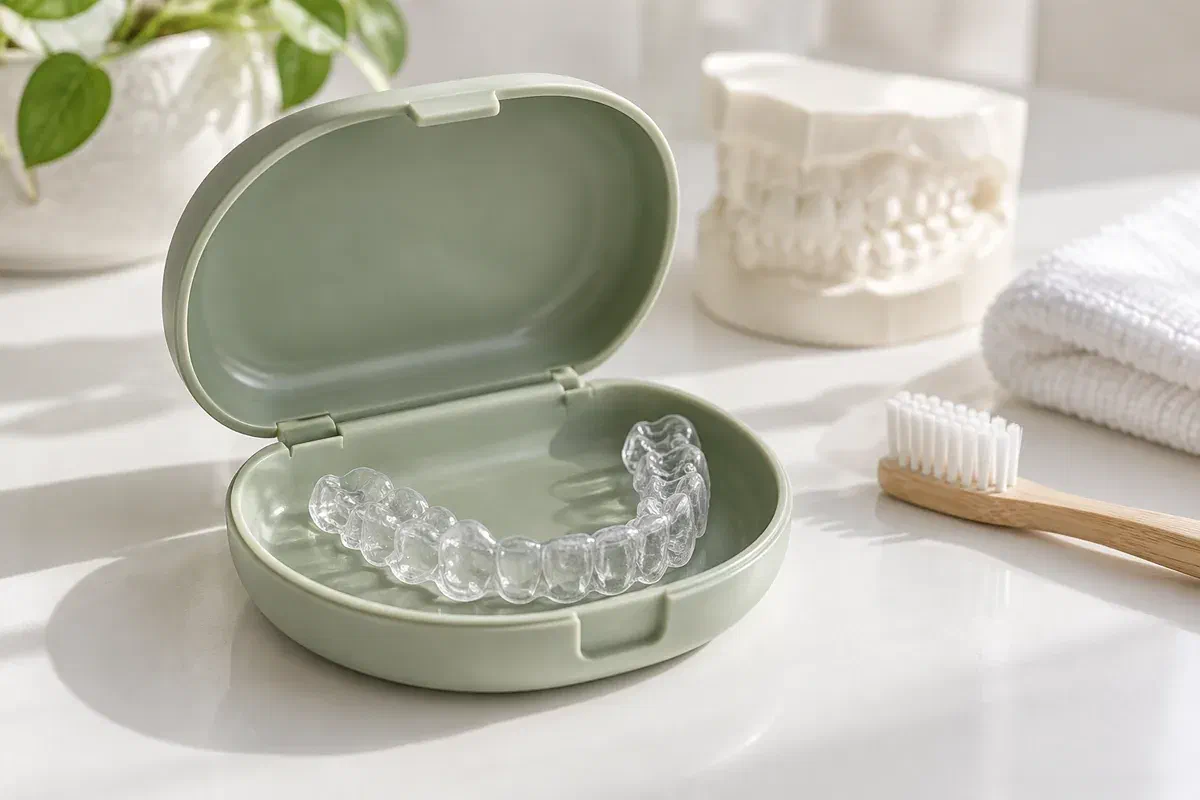
Illustrative clear orthodontic retainer in a protective case beside cleaning supplies
When to ask about a retainer

A change in fit, condition, or routine deserves a clear response.

Tell the team which appliance you have and what has changed. Include the timing, any symptoms, and whether you have been able to follow the prescribed wear.

A lost, cracked, or distorted removable appliance

Contact the clinic promptly rather than waiting for a distant review. Explain whether the appliance is missing or available to inspect. Keep damaged pieces to show the clinician, but do not glue, heat, or reshape the retainer yourself.

A bonded wire that feels different

Report looseness, a rough edge, difficulty cleaning, or a tooth that seems to have changed position. A bonded appliance still needs checks. Do not assume it is working as intended simply because part of the wire remains attached.

Uncertainty about wear or another dental appliance

Ask if you are unsure when to wear the retainer or how it fits with a night guard or sports mouthguard. Bring relevant appliances for review. Different devices have different purposes, so combining or substituting them needs specific clinical advice.

If a retainer will not seat properly or causes pain, do not force it. Ask for an assessment and an instruction for the period before you can be seen.

What a suitable retainer arrangement provides

Match the design to the teeth and the responsibilities you can follow.

A retainer is one part of maintaining the result of orthodontic care. The recommended type depends on the positions being maintained, the bite, cleaning needs, and other individual considerations. Sometimes a plan includes more than one type, with each serving an explained role.

The fitting appointment should also make the routine understandable. Ask how to handle the appliance, what a normal fit should feel like, and what changes should prompt contact. Clear instructions help you respond to a problem without trying to repair or adjust it yourself.

Patient information: British Orthodontic Society — types of orthodontic retainer

An explained reason for the chosen design

Ask why a removable, bonded, or combined arrangement is proposed for you. Discuss practical preferences while understanding the clinical considerations. The most suitable choice should not be assumed from another person's appliance or an online comparison.

Confidence in the way the appliance fits

Have the clinician check the retainer and demonstrate its use. If it is removable, practise insertion and removal before leaving. Explain any pressure, sharpness, or uncertainty so the advice addresses what you actually experience rather than what you expect it should feel like.

A clear route for maintenance and replacement

Ask who to call if the appliance is lost, damaged, or no longer fits. Clarify review arrangements and potential repair or replacement fees. Knowing the process in advance can make an unexpected problem easier to address promptly.

Assessing and providing a retainer

Check the current position before deciding what appliance is needed.

The appointment may involve a fit review, records for a new appliance, or assessment of a bonded retainer. Ask what the visit includes and whether a further appointment will be necessary.

  1. Review treatment history and the present concern

    Explain when active treatment ended, who provided it, and what retention was prescribed. Bring the appliance and any relevant instructions. Mention recent fillings, crowns, injuries, or changes in fit so they can be considered before a replacement is planned.

  2. Examine the teeth and existing appliance

    The clinician assesses current positions, relevant oral-health findings, and the retainer's condition. If movement has occurred, discuss whether maintaining the present position is appropriate. A retainer decision should not silently become an assumption about further active treatment.

  3. Agree on the design and required records

    If a new appliance is appropriate, discuss its purpose, limitations, care needs, and estimate. Records such as impressions or scans may be needed for fabrication. Ask what to do during the interval before fitting and whether coordination with your orthodontic provider is required.

  4. Check fit and demonstrate the routine

    At provision, the appliance is checked and its instructions explained. Ask about wear, cleaning, storage, and review. For a bonded retainer, request guidance on cleaning around the wire and recognising a problem. Confirm whom to contact if anything changes.

Caring for the appliance

Protect its shape, keep it clean, and notice changes early.

Follow the instructions for your particular retainer material and design. Advice intended for a different appliance may not be suitable, so ask before changing the care routine.

Clean the retainer using the method you were shown

Ask which brush, cleaning product, and water temperature suit the appliance. Avoid using heat or improvised chemicals to clean or reshape it. Continue cleaning your teeth as advised, and ask for help if a bonded wire makes an area difficult to reach.

Store removable appliances in their protective case

Use the case when the retainer is out of your mouth and keep it away from pets, young children, and heat. Avoid wrapping it in a napkin or leaving it loose in a bag. Bring the appliance and case to reviews as requested.

Report wear, breakage, or a change in seating

Contact the treating team if a removable retainer cracks, feels different, or no longer seats, or if a bonded wire loosens. Do not bend, trim, or glue it yourself. Ask whether it should be worn while waiting and whether an earlier appointment is needed.

Patient information: British Orthodontic Society — retainer handling and patient instructions

Comparing retainer designs

Different appliances bring different handling and maintenance needs.

These are general categories to discuss. The recommendation for your teeth may involve one type or a combination, and availability should be confirmed during assessment.

An appliance that fits over the teeth

A clear removable retainer

A transparent retainer can be removed for the activities specified in your instructions. Its effectiveness depends on appropriate fit and prescribed wear. Ask about cleaning, storage, replacement, and how to recognise distortion or damage.

A different removable design

A removable wire-and-acrylic retainer

Often called a Hawley retainer, this design combines an acrylic portion with wire components. Ask whether it is suitable for your particular plan and how to handle it. Any adjustment should be made by the treating clinician rather than by bending the wire yourself.

Support attached to selected teeth

A bonded retainer or combined arrangement

A bonded wire remains in place and requires careful cleaning and checks. It may be used with a removable retainer where prescribed. Ask which teeth it supports, how it will be reviewed, and what to do if a bond loosens.

Orthodontic retainer questions

Get practical answers about the appliance you actually have.

Bring the retainer to the appointment whenever possible. Its condition and fit can be as important to the discussion as your description of the problem.

(905) 876-4488
How do I choose between a clear retainer and a wire-and-acrylic retainer?
Discuss the clinical recommendation alongside your handling and appearance preferences. The clinician can explain which design suits the positions being maintained, the bite, and your care needs. Do not assume that the least visible option is always the most appropriate one.
Does a bonded retainer mean I can forget about retainer checks?
No. It still needs cleaning and assessment of its bonds, wire, and the surrounding teeth. Ask who will review it and how to report a loose or rough area. A fixed appliance is not maintenance-free.
Can a retainer be checked after I have a new filling or crown?
Yes. Tell the clinician providing the restoration that you wear a retainer and bring it if requested. Ask about fit before and after the procedure. Changes to tooth shape may require an appliance assessment rather than forcing the old retainer into place.
Is it safe to bend the wire on my removable retainer if it feels loose?
Do not adjust it yourself. Contact the treating clinician to check the appliance and current tooth positions. Bending a wire can change its fit or the force it applies, so a loose-feeling retainer needs a professional assessment.
What should I do if my retainer was left near a heater?
If its shape or fit seems different, contact the clinic and bring it for review. Do not try to reshape it with more heat or force it onto the teeth. Ask for a clear instruction while a repair or replacement decision is made.
Should I bring both upper and lower retainers when only one seems wrong?
Usually it is useful to bring both, along with any other appliance the clinic requests. Explain which one concerns you and when the problem appeared. The clinician can check the relevant fit and how the appliances relate to your current bite.
Orthodontic retainers in Milton

Bring your retainer and leave with a clearer plan for its care.

Contact our Bronte Street practice about retainer assessment, fit concerns, or replacement questions. Tell us about previous orthodontic care and whether another provider currently supervises your retention.

Appliance choice, repair suitability, records, and fees depend on assessment. Ask promptly about a lost, broken, or poorly fitting retainer.

Visit Milton Dental Clinic
Unit 1, 342 Bronte St. S, Milton, ON L9T 5B7
Get directions Clinic hours
Monday–Thursday
11am–7pm
Friday–Sunday
By appointment only

How can we help?

Milton Dental Clinic

Have a question about your smile? Choose the option that works best for you.

For urgent dental concerns, please call.
Messages are reviewed during clinic hours.