A removable retainer has vanished, snapped, or warped
Call soon instead of waiting for the next check-up. Say whether the appliance is truly lost or just damaged. Keep the broken parts, and do not let anyone at home try to glue, heat, or bend it.


Two teenagers, two retainers, and one of them has disappeared again. Households coming from Brampton can book retainer fit checks, ask about removable and bonded designs, learn care routines that hold up in a busy home, and get a plan for lost or damaged appliances.
In many homes, one child has just had braces removed, another is a few years into retention, and a parent may be wearing a retainer too. Each appliance has the same broad aim, helping teeth stay where orthodontic treatment put them, but the type and schedule can differ from person to person. A clear tray, a plate with a wire, or a bonded wire behind certain teeth should each be chosen for the mouth it belongs to.
Checks are useful at the first fitting, as an appliance ages, and whenever someone says theirs feels strange. Looking at the retainer without the teeth, or the teeth without the retainer, gives only half the answer. Siblings' appliances are not interchangeable, and a replacement has to reflect any new fillings, crowns, or shifting.
When booking for one or several family members, note who wears which retainer and what each concern is, and bring every appliance. If an orthodontist still follows anyone's retention, tell us so the advice lines up. We can then discuss assessment, sensible choices, and whether that orthodontist or a specialist should be included.
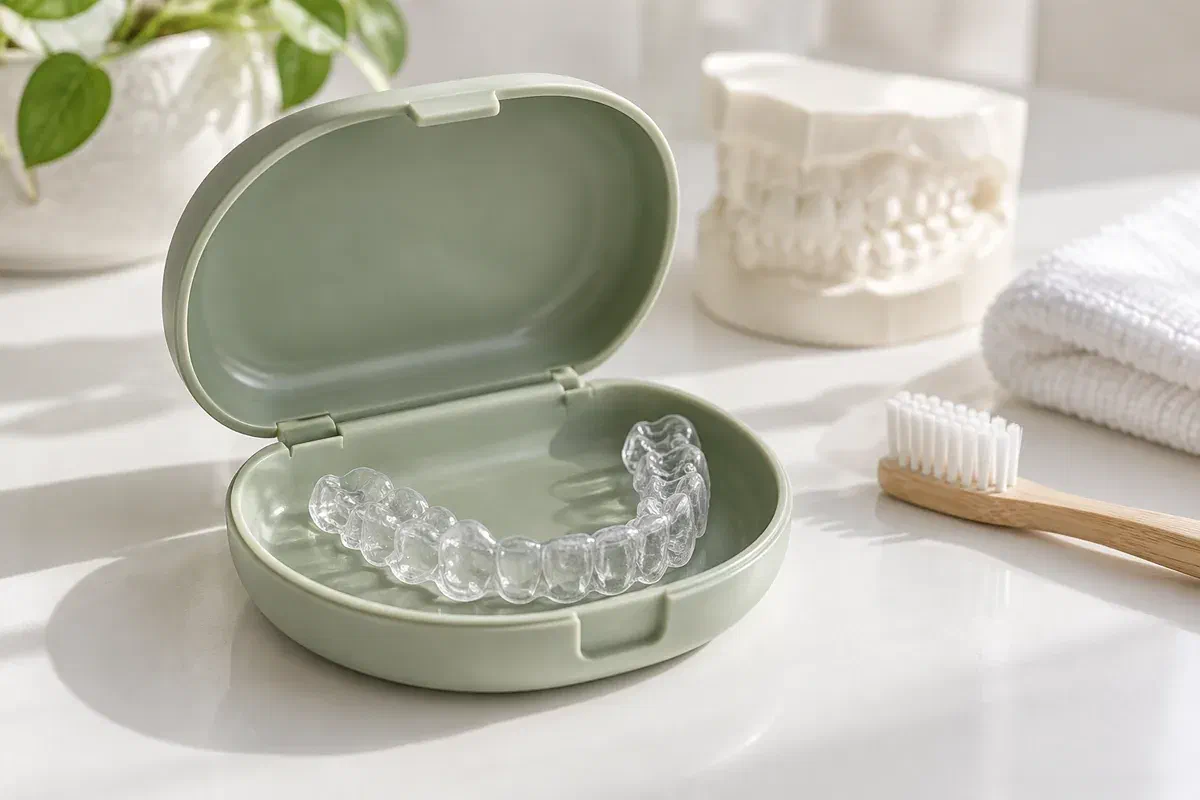
For each person, let us know the retainer type and what has changed. Include roughly when it began, any soreness, and how well the wear schedule has been kept.
Call soon instead of waiting for the next check-up. Say whether the appliance is truly lost or just damaged. Keep the broken parts, and do not let anyone at home try to glue, heat, or bend it.
Report it, along with any tooth that seems to have moved nearby. These fixed wires need routine professional checks. If only some of it remains attached, it may not be holding every tooth it was placed to support.
Ask if a family member is unsure about daily wear hours, or about how the retainer relates to a night guard or a mouthguard for hockey or soccer. Bring those devices too. They are made for different jobs and should not be swapped without specific advice.
If a retainer will not go in properly or hurts, nobody should force it. Ask for an assessment and what to do until the visit.
Retention is one part of keeping an orthodontic result. The recommended appliance depends on the positions to be held, how the teeth meet, ease of cleaning, and the individual's needs. One sibling may need a bonded wire plus a removable retainer while another needs only a tray; each choice should be explained.
A good fitting appointment leaves the wearer, and the parent helping them, clear on the routine. That includes how to handle the appliance, what a normal fit feels like, and what changes should lead to a call. When everyone knows the plan, home fixes become much less tempting.
Patient information: British Orthodontic Society — types of orthodontic retainer
Ask why a removable, fixed, or combined approach suits this particular person. Share practical concerns such as sports, school, or a forgetful teenager, and hear the clinical reasons too. A brother's or sister's retainer is not a guide to what someone else needs.
The clinician checks the fit and demonstrates use. With a removable retainer, have the wearer practise putting it in and taking it out before leaving. Mention any pressure, sharpness, or questions so the guidance matches what they actually feel.
Find out who to contact when a retainer goes missing or breaks, how reviews are booked, and what repair or replacement fees may apply. With a plan in place, a lost appliance is a phone call, not a crisis.
Visits range from a quick fit check to records for a new appliance or a review of a bonded wire. Ask what each appointment covers and whether a return trip is likely.
Share when braces or aligners finished, who provided them, and what retention was prescribed for each person. Bring the appliances and any written instructions. Note recent fillings, crowns, sports injuries, or changes in fit before a new retainer is considered.
The clinician examines tooth positions, the health of teeth and gums where relevant, and the appliance's condition. If teeth have moved, discuss whether keeping them in their present positions is appropriate. A retainer conversation should not silently become a plan for more orthodontic treatment.
Where a new appliance is right, you will hear its purpose, what it cannot do, the care it needs, and an estimate. Impressions or a scan are usually taken. Ask how to manage in the meantime and whether the treating orthodontist should be contacted.
At the fitting, seating is checked and instructions are given. Cover wear, cleaning, storage, and review. For a bonded wire, ask how to clean around it and what a problem looks like. Make sure the wearer and a parent both know who to call.
Care depends on each appliance's material and design. What works for one family member's retainer may not suit another's, so ask before changing anything.
Ask which brush, cleaner, and water temperature are safe for each appliance. Hot water and improvised chemical soaks can warp or damage them. Brushing and flossing still matter, and the team can show tricks for cleaning around a fixed wire.
Out of the mouth means into its own case, away from the dog, toddlers, and heat. Lunch trays, napkins, and loose backpack pockets are where many retainers disappear. Bring the cases to reviews.
Let the clinic responsible for retention know if a removable retainer splits, feels odd, or stops seating, or if a bonded wire loosens. Avoid bending, trimming, or gluing it. Ask whether it should still be worn and how soon to come in.
Patient information: British Orthodontic Society — retainer handling and patient instructions
Bring each retainer to the visit if you can. Its condition and fit often explain as much as the description of the problem.
Contact our Bronte Street practice about fit checks, damaged appliances, or replacements for one person or several. Let us know about past orthodontic care and whether another provider still oversees anyone's retention.
Retainer design, repair options, records, and fees depend on assessment. Call promptly about any retainer that is lost, broken, or fitting poorly.
