

Illustrative patient learning about a clear retainer during a dental consultation
Cosmetic Dentistry

Orthodontic Retainers in Burlington

Cracked, misplaced, or just not sitting the way it used to? Before deciding whether a retainer can be repaired or should be remade, have it assessed with your teeth. Coming from Burlington, you can discuss removable and bonded designs, care routines, and next steps in one visit.

Burlington retainer visits

Fix it, replace it, or leave it alone?

That decision is rarely obvious from the appliance alone. Retainers help keep teeth in the positions achieved with braces or aligners. Some are removable trays or plates; some are fine wires bonded to the inner surfaces of a few teeth. What you were given, and the hours you are asked to wear it, should rest on reasons particular to your teeth.

Trouble tends to appear at a handful of moments: when a retainer is new and unfamiliar, after months of daily handling, and when it stops seating as smoothly as it once did. Answering the repair question means examining your teeth too. If positions have shifted or a crown or filling has been added, a remake is a clinical decision, not a reorder.

Let us know the retainer type and the problem when you get in touch, and please bring it. If your orthodontic care is still overseen by someone else, mention them so recommendations can be coordinated. From there we can cover assessment, reasonable options, and whether your treating orthodontist should weigh in.

Talk to us about your retainer
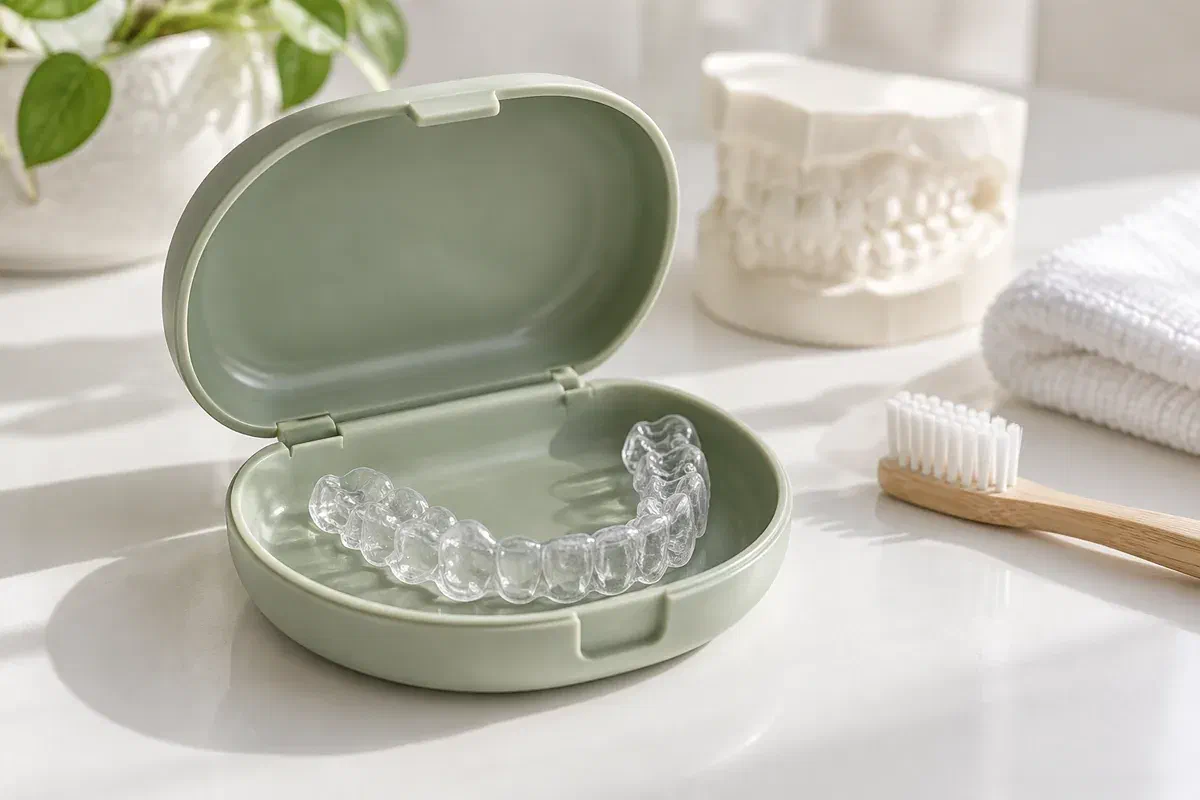
Illustrative clear orthodontic retainer in a protective case beside cleaning supplies
Time to check your retainer

Three situations that call for a closer look

Share which appliance you use and what has changed. It helps to know when you first noticed it, whether anything hurts, and how well the wear plan has been going.

Your removable retainer is gone, broken, or misshapen

Phone sooner rather than later. Explain whether it is lost or sitting in its case in pieces. Bring every fragment you have, and leave repairs alone: superglue, boiling water, and bending can make a fixable appliance unusable.

Your bonded retainer does not feel the same

Tell us if it moves, scratches, makes cleaning harder, or seems to sit beside a tooth that has turned or shifted. Wires bonded behind teeth still need professional checks. Partial attachment can leave some teeth without support.

You are unsure about the wear plan or other mouthguards

It is reasonable to ask how often to wear the retainer, or how it works alongside a night guard or sports guard. Bring those devices in. Each is designed for something different, and replacing or combining them needs individual guidance.

Pushing a retainer that resists or causes pain can do harm. Ask to be seen, and ask what you should do with it until then.

Why the choice of retainer matters

Suited to your teeth, and to what you can realistically maintain

No retainer works in isolation; it is one piece of preserving what orthodontic treatment achieved. Which design is recommended depends on the positions being held, your bite, ease of cleaning, and other individual details. You may be offered two types to use together, and each should come with an explanation.

The fitting is also your chance to understand the day-to-day routine. Know how the appliance should be handled, what a normal fit feels like, and what kind of change should send you to the phone. With that clarity, there is less temptation to try a home repair or adjustment.

Patient information: British Orthodontic Society — types of orthodontic retainer

A design chosen for clear reasons

Ask what favours a removable, bonded, or combined approach for you. Raise your practical concerns and hear the clinical side. A coworker's experience or an online comparison cannot tell you which retainer suits your teeth.

A fit you feel sure about

The clinician checks the appliance and shows you how it is used. If yours is removable, practise putting it in and taking it out before you go. Mention tightness, sharp spots, or uncertainty so the guidance reflects what you are actually feeling.

A plan for loss, damage, and remakes

Know who to call when the retainer goes missing, breaks, or stops fitting, and how reviews are scheduled. Ask about possible repair or replacement fees as well. A little preparation makes an unexpected problem much easier to sort out.

What the appointment looks like

Your teeth today decide what happens next.

A visit may be a straightforward fit check, a records appointment for a new appliance, or a review of a bonded retainer. Ask what is planned and whether a follow-up will be likely.

  1. Start with the story so far

    Describe when your orthodontic treatment ended, who did it, and what you were told about retention. Have the appliance and any instruction sheet with you. Fillings, crowns, accidents, or recent changes in fit should be raised now, before any replacement is discussed.

  2. Examine the mouth and the retainer

    The clinician reviews where your teeth sit now, any relevant findings about your oral health, and the state of the appliance. If teeth have moved, you can talk about whether keeping them in their current positions is appropriate. Choosing a retainer should not quietly commit you to more active treatment.

  3. Agree on a plan and any records

    When a new retainer is warranted, you will hear what it is for, what it cannot do, how to care for it, and an estimate. Scans or impressions may be taken. Ask how to cope before the fitting and whether your orthodontic provider needs to be consulted.

  4. Try it in and learn the routine

    On fitting day, the retainer's seating is checked and its use explained. Cover wear times, cleaning, storage, and follow-up. For a bonded wire, ask how to clean around it and what warning signs look like. Leave knowing who to contact.

Retainer care at home

Three habits that protect a retainer

Care depends on your appliance's material and design. Something that suits another type might harm yours, so check with the team before switching routines.

Stick to the cleaning approach you were taught

Confirm which brush, cleaner, and water temperature to use. Hot water and home-mixed solutions can warp or degrade the material. Keep looking after your own teeth as advised, and ask for help if flossing around a bonded wire is difficult.

Case it whenever it is out

A removable retainer should go straight into its case, kept away from heat, pets, and small hands. Napkins and loose bags are where many go missing. Remember the case when you come for a review.

Call about cracks, wear, or seating changes

Let the clinic managing your retention know if a removable retainer splits, feels different, or will not sit down, or if a bonded wire comes loose. Avoid bending, trimming, or gluing. Ask whether to keep wearing it and how soon to be seen.

Patient information: British Orthodontic Society — retainer handling and patient instructions

Retainer options explained

Removable, fixed, or a mix of both

These broad types are a starting point for your conversation. The recommendation may be one design or a combination, and availability is confirmed once you have been assessed.

Close-fitting and transparent

A clear removable retainer

You take this tray out for the activities your instructions allow. It depends on a proper fit and the wear you were prescribed. Ask about cleaning and storage, how long it is likely to last, and how to notice cracks or warping.

Durable plate with wire

A removable wire-and-acrylic retainer

Commonly known as a Hawley retainer, it joins an acrylic base to wire elements. Ask if it fits your plan and how it should be handled. Leave adjustments to the treating clinician, since bending the wire at home can change how the appliance behaves.

Wire attached to certain teeth

A bonded retainer or combination

This fixed wire stays in place and depends on careful cleaning and routine checks. A removable retainer is sometimes worn alongside it. Ask which teeth it holds, when it will be checked, and what to do should it detach.

Retainer FAQ

Answers to help you decide what to do next

Bring the retainer itself if you still have it. How it looks and sits can be as informative as your account of what happened.

(905) 876-4488
Can a cracked clear retainer be repaired, or does it need replacing?
That depends on the crack, how the appliance fits, and your current tooth positions. Bring it in so the clinician can assess it. Avoid home repairs, which can affect fit and make the decision harder.
How long does a removable retainer usually last?
It varies with the material, how it is cared for, and wear and tear. Reviews help spot thinning, cracks, or changes in fit. Ask the clinician what signs suggest yours may be reaching the end of its useful life.
Should I keep wearing a retainer that has a small crack?
Contact the clinic and describe the crack before deciding. If it has sharp edges, feels different, or will not seat, do not force it. Ask for an instruction for the time before your appointment.
Can my retainer be checked when I come in for a cleaning?
It is often helpful to bring it along to routine visits. Mention it when booking so the team knows you want it reviewed. The clinician can look at its condition and fit alongside your teeth and gums.
What records are needed for a new retainer?
Usually impressions or a digital scan of your current teeth. The clinician will explain what is needed for your appliance and whether any other information from your orthodontic provider would help.
My bonded retainer makes flossing hard. Is that normal?
Cleaning around a fixed wire takes some practice, but it should still be possible. Ask the team to show you techniques or tools that suit your retainer, and mention any area where food or build-up keeps collecting.
Retainer appointments for Burlington

Show us the retainer, and we will talk through what comes next.

Reach our Bronte Street practice about a fit review, a broken appliance, or a possible replacement. Mention earlier orthodontic care and whether another provider is still in charge of your retention.

Retainer type, whether repair is possible, records, and fees are confirmed after assessment. Call promptly if a retainer is lost, damaged, or fitting poorly.

Visit Milton Dental Clinic
Unit 1, 342 Bronte St. S, Milton, ON L9T 5B7
Get directions Clinic hours
Monday–Thursday
11am–7pm
Friday–Sunday
By appointment only

Areas we serve

  • Milton
  • Oakville
  • Mississauga
  • Georgetown
  • Halton Hills
  • Acton
  • Campbellville
  • Brampton
  • Burlington
  • Puslinch
  • Rockwood
  • Erin
  • Caledon
  • Etobicoke
  • Old Milton
  • Bronte Meadows
  • Timberlea
  • Dorset Park
  • Dempsey
  • Clarke
  • Beaty
  • Coates
  • Harrison
  • Scott
  • Willmott
  • Ford
  • Bowes
  • Cobden
  • Walker
  • Mountain View
  • Milton Heights
  • Hawthorne Village
  • Valley View
  • Fallingbrook
  • Nassagaweya
  • Trafalgar
  • Esquesing
  • Nelson
  • Brookville
  • Moffat
  • Glen Williams
  • Norval
  • Limehouse
  • Stewarttown
  • Ashgrove
  • Hornby
  • Silver Creek
  • Speyside
  • Scotch Block
  • North Oakville
  • River Oaks
  • Glen Abbey
  • West Oak Trails
  • Palermo
  • Bronte Creek
  • College Park
  • Joshua Creek
  • Uptown Core
  • Preserve
  • Iroquois Ridge
  • Lisgar
  • Meadowvale
  • Meadowvale Village
  • Churchill Meadows
  • Erin Mills
  • Central Erin Mills
  • Streetsville
  • East Credit
  • Creditview
  • Heartland
  • Sheridan
  • Mount Pleasant
  • Credit Valley
  • Huttonville
  • Churchville
  • Springbrook
  • Northwest Brampton
  • Bram West
  • Fletcher's Meadow
  • Fletcher's Creek South
  • Alton Village
  • Orchard
  • Millcroft
  • Headon Forest
  • Tansley
  • Brant Hills
  • Tyandaga
  • Kilbride
  • Lowville
  • Aberfoyle
  • Morriston
  • Arkell
  • Hillsburgh
  • Freelton
  • Carlisle
  • Waterdown
  • Flamborough
  • Mountsberg

How can we help?

Milton Dental Clinic

Have a question about your smile? Choose the option that works best for you.

For urgent dental concerns, please call.
Messages are reviewed during clinic hours.