

Illustrative patient learning about a clear retainer during a dental consultation
Cosmetic Dentistry

Orthodontic Retainers in Etobicoke

A retainer visit is easier to justify when it achieves something real. Coming from Etobicoke, you can plan a well-prepared appointment for a fit check or new records, compare removable and bonded designs, and know which problems to call about first.

Retainer planning from Etobicoke

Make the trip count.

Because the journey is longer than for most of our patients, it helps to arrive with everything the clinician needs. A retainer's job is to help keep teeth in the positions reached through orthodontic treatment. Yours may be a removable tray, a wire-and-acrylic plate, or a thin wire bonded behind selected teeth, and the reasons for that design should relate to your own teeth and bite.

Concerns usually surface soon after fitting, as the appliance wears, or when it starts to feel different. In every case, the clinician needs to see the retainer and your teeth at the same appointment to judge what has changed. If you have had new crowns or fillings, or your teeth have moved, a replacement has to be planned around the mouth as it is today.

When you call, describe the appliance and the problem, and ask what to bring so a single visit can cover as much as possible. Mention any orthodontist who still supervises your retention so advice can be coordinated. We can then discuss assessment, suitable options, and whether that provider or a specialist should be involved.

Plan a retainer appointment
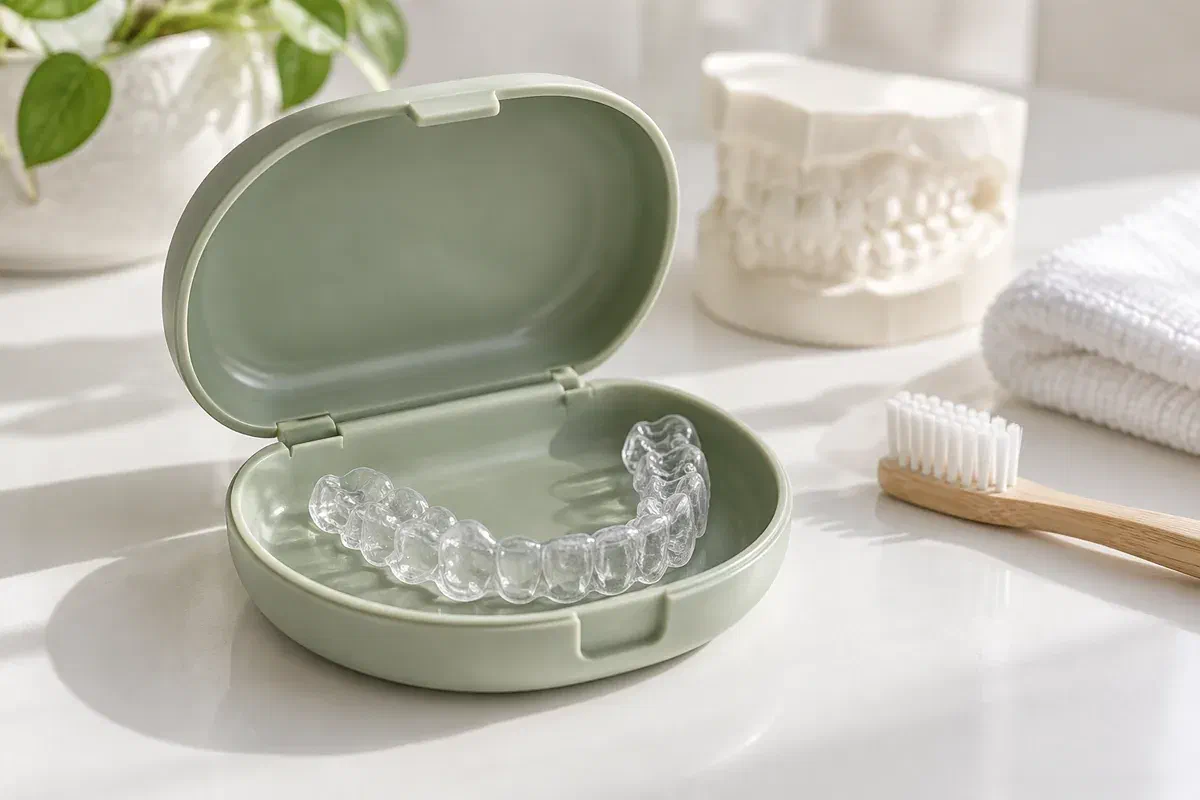
Illustrative clear orthodontic retainer in a protective case beside cleaning supplies
Problems to report

Call first, then decide whether to make the drive.

A quick conversation helps the team judge what kind of visit you need. Explain the retainer type, what changed and when, any discomfort, and how consistently it has been worn.

A removable retainer that is lost, broken, or distorted

Phone promptly instead of waiting. The team will want to know whether the appliance can be brought in. Keep any pieces safe in the case, and avoid repairing it at home with glue, heat, or force.

A bonded wire that has changed

Describe looseness, a sharp end, difficulty cleaning, or a tooth that appears to have moved. Fixed wires still need professional checks. Part of the wire staying attached does not mean it is supporting all the teeth it was bonded to.

Questions about wear or other appliances

Ask about your wear schedule, or about combining the retainer with a night guard or sports mouthguard, and bring those along. Each device has a specific purpose, so swapping or combining them requires individual advice.

Do not force a retainer that will not seat or that hurts. Ask for an assessment, plus guidance for the time before you can travel in.

Why a clear plan saves trips

Know the design, know the routine, and fewer surprises follow.

A retainer is one element of keeping an orthodontic result in place. The appropriate design depends on the tooth positions involved, your bite, how easily the area can be cleaned, and other personal factors. Some people use two types together, each with an explained role.

Leaving the fitting with a routine you fully understand is especially valuable when the clinic is not around the corner. You should be able to insert and remove it confidently, recognise ordinary snugness, and tell which changes warrant a call. Confident instructions reduce the urge to improvise repairs.

Patient information: British Orthodontic Society — types of orthodontic retainer

A recommendation grounded in your teeth

Ask why a removable, bonded, or combined approach is suggested for you. Raise your practical preferences, including how often you can realistically attend, and hear the clinical reasoning. Someone else's appliance is not a reliable guide.

A fit confirmed before you leave

The clinician checks the retainer and shows you how to use it. With a removable design, practise inserting and removing it yourself in the chair. Mention pressure, rough spots, or doubts so the advice reflects how it truly feels.

A plan for problems between visits

Ask who to contact if the appliance is lost or damaged, how reviews are scheduled, and what repair or replacement fees may apply. Settling this early means a setback can often be handled with a call before any trip is made.

How a retainer appointment runs

Organised so each visit has a clear purpose

Your appointment might be a fit check, records for a new appliance, or a bonded wire review. Ask what it will include and whether a second visit is likely, so you can plan around it.

  1. Prepare your history in advance

    Note when treatment ended, who provided it, and what retention was prescribed. Bring the retainer, its case, and any written instructions. Mention fillings, crowns, injuries, or changes in fit when booking so they can be considered before replacement is discussed.

  2. Assess your teeth and the appliance

    The clinician examines where your teeth sit now, any findings relevant to your oral health, and the retainer itself. If there has been movement, discuss whether maintaining the present position is reasonable. A retainer decision should not become an unstated plan for further alignment.

  3. Agree on a design and take records the same day where possible

    If a new appliance is appropriate, cover its purpose, limits, care, and estimate. Ask whether impressions or a scan can be taken at this visit to save a trip. Clarify what to do until the fitting and whether your orthodontic team should be consulted.

  4. Fit, explain, and set up follow-up

    At the fitting, the appliance is checked and instructions are given. Go over wear, cleaning, storage, and the next review. With a bonded wire, request a cleaning demonstration and a description of early warning signs. Confirm who to call, and which issues can be discussed by phone first.

Caring for it between visits

Good habits mean fewer unplanned appointments.

Your retainer's material and design determine how it should be cared for. Tips intended for a different appliance may not suit yours, so ask before changing your routine.

Clean it using the method you were given

Confirm the right brush, cleaner, and water temperature. Avoid heat and improvised chemicals, which can warp the material. Keep up your own brushing and flossing, and ask for help if a bonded wire makes an area hard to reach.

Keep a removable retainer in its case

Whenever it is out, it belongs in the case, away from pets, small children, and heat. Napkins, coat pockets, and loose bags are common culprits for loss. Bring the case to every review.

Call about wear, cracks, or a different fit

Tell the clinic overseeing your retention if a removable retainer splits, feels unusual, or will not seat, or if a bonded wire loosens. Leave the pliers and glue in the drawer. A short call can establish whether to keep wearing it and how soon you need to come in.

Patient information: British Orthodontic Society — retainer handling and patient instructions

Retainer types compared

Each design carries its own care load.

These broad categories are a basis for discussion. You may be advised to use one design or a combination, and availability is confirmed after your assessment.

A thin, transparent tray

A clear removable retainer

This appliance comes out for the activities set out in your instructions. It relies on a good fit and the wear you were prescribed. Ask about cleaning, storage, expected replacement, and how to recognise warping or damage.

Acrylic base, wire front

A removable wire-and-acrylic retainer

Often referred to as a Hawley retainer, it combines acrylic and wire. Ask whether it suits your plan and how to handle it. Adjustments belong with the treating clinician, since bending the wire yourself can alter both fit and force.

Fixed to selected teeth

A bonded retainer or combination

Once bonded, this wire stays in place and needs thorough cleaning and periodic checks. It may be prescribed with a removable retainer. Ask which teeth it covers, how often reviews are needed, and whether a loose bond can wait for a planned visit.

Retainer FAQ

Questions to settle before you set out

Please bring the retainer itself. Its fit and condition are often as revealing as your description.

(905) 876-4488
Can I describe my retainer problem by phone before booking?
Yes, and it often helps. Explain the appliance, what has changed, and any symptoms. The team can suggest what kind of visit is needed and what to bring.
If I need a new retainer, how many visits will it take?
Commonly there is an assessment with records, then a fitting once the appliance is made. Ask whether records can be taken at your first visit and what the fitting will involve.
What if my bonded wire comes loose and I cannot get in quickly?
Phone us first and explain which section has lifted. If a sharp piece is cutting your mouth or there is significant pain, seek dental care closer to home. Do not try to remove or bend the wire yourself.
Should I stop wearing a retainer that suddenly feels loose?
Ask the clinic before deciding. A change in fit may mean damage or tooth movement, and the right instruction depends on what has happened. Do not tighten or reshape it.
Can my previous orthodontist's records help?
They may. Ask your original provider what can be shared, and let us know who they are. Information about your treatment and retention plan can support the assessment.
What should I bring to a retainer appointment?
The retainer, its case, any other mouth appliances you use, and written instructions you were given. A list of recent dental work is useful too.
From Etobicoke to our practice

Plan one well-prepared visit and leave with clear next steps.

Get in touch with our Bronte Street practice about a retainer fit check, damage, or replacement. Tell us about your past orthodontic care and whether another provider still oversees your retention.

Design, repair suitability, records, and fees depend on assessment. Call promptly about a lost, broken, or poorly fitting retainer.

Visit Milton Dental Clinic
Unit 1, 342 Bronte St. S, Milton, ON L9T 5B7
Get directions Clinic hours
Monday–Thursday
11am–7pm
Friday–Sunday
By appointment only

Areas we serve

  • Milton
  • Oakville
  • Mississauga
  • Georgetown
  • Halton Hills
  • Acton
  • Campbellville
  • Brampton
  • Burlington
  • Puslinch
  • Rockwood
  • Erin
  • Caledon
  • Etobicoke
  • Old Milton
  • Bronte Meadows
  • Timberlea
  • Dorset Park
  • Dempsey
  • Clarke
  • Beaty
  • Coates
  • Harrison
  • Scott
  • Willmott
  • Ford
  • Bowes
  • Cobden
  • Walker
  • Mountain View
  • Milton Heights
  • Hawthorne Village
  • Valley View
  • Fallingbrook
  • Nassagaweya
  • Trafalgar
  • Esquesing
  • Nelson
  • Brookville
  • Moffat
  • Glen Williams
  • Norval
  • Limehouse
  • Stewarttown
  • Ashgrove
  • Hornby
  • Silver Creek
  • Speyside
  • Scotch Block
  • North Oakville
  • River Oaks
  • Glen Abbey
  • West Oak Trails
  • Palermo
  • Bronte Creek
  • College Park
  • Joshua Creek
  • Uptown Core
  • Preserve
  • Iroquois Ridge
  • Lisgar
  • Meadowvale
  • Meadowvale Village
  • Churchill Meadows
  • Erin Mills
  • Central Erin Mills
  • Streetsville
  • East Credit
  • Creditview
  • Heartland
  • Sheridan
  • Mount Pleasant
  • Credit Valley
  • Huttonville
  • Churchville
  • Springbrook
  • Northwest Brampton
  • Bram West
  • Fletcher's Meadow
  • Fletcher's Creek South
  • Alton Village
  • Orchard
  • Millcroft
  • Headon Forest
  • Tansley
  • Brant Hills
  • Tyandaga
  • Kilbride
  • Lowville
  • Aberfoyle
  • Morriston
  • Arkell
  • Hillsburgh
  • Freelton
  • Carlisle
  • Waterdown
  • Flamborough
  • Mountsberg

How can we help?

Milton Dental Clinic

Have a question about your smile? Choose the option that works best for you.

For urgent dental concerns, please call.
Messages are reviewed during clinic hours.