

Illustrative patient learning about a clear retainer during a dental consultation
Cosmetic Dentistry

Orthodontic Retainers in Old Milton

Some retainers are a few weeks old; others have been in the bathroom cabinet for twenty years. Bring yours in from Old Milton for a fit check, advice on removable or bonded designs, daily care, and a plan for an appliance that is lost, cracked, or no longer sits right.

Retention questions in Old Milton

An old retainer, a new chapter, or both?

A retainer has one main job: helping teeth stay where orthodontic treatment placed them. It might be a removable tray or plate, or a fine wire fixed behind a few teeth. The design and the wear schedule should be chosen for your mouth specifically, with appearance and convenience weighed alongside the clinical reasons, not ahead of them.

Adults who finished treatment long ago often wonder whether an appliance that still goes in is still doing anything useful. Others have just moved into one of the established streets near Milton's historic downtown and need someone new to look after a retainer made elsewhere. Either way, the appliance and the teeth are assessed together. A worn or ill-fitting retainer is not simply re-ordered, particularly when crowns, fillings or tooth positions have changed.

Before your visit, tell us what type you wear and what prompted the call, and bring the appliance with you. If an orthodontist or another dentist manages your retention, share their details so our advice fits with theirs. We can then talk about assessment, sensible options, and whether that provider or a specialist should stay involved.

Start a retainer check
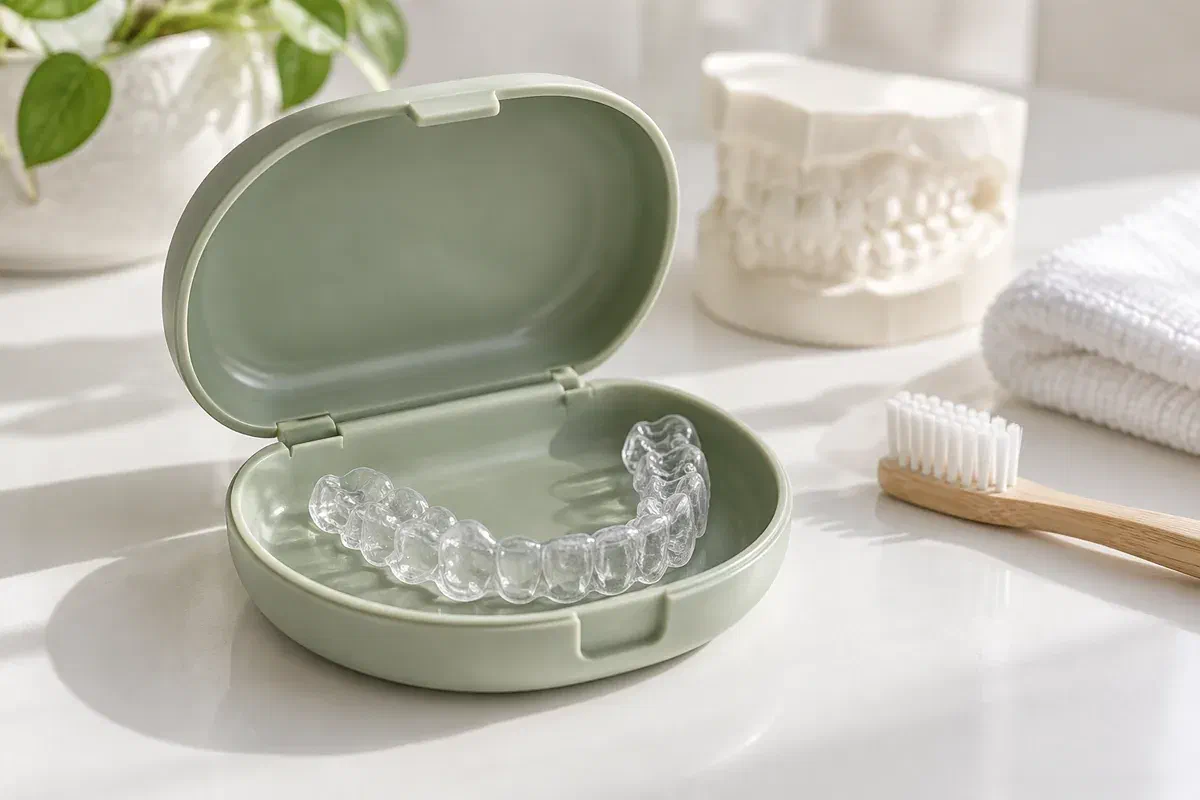
Illustrative clear orthodontic retainer in a protective case beside cleaning supplies
Reasons to get in touch

Small changes in a retainer are easy to miss.

Describe the appliance you have and what you have noticed. Timing, any soreness, and an honest account of how regularly you have worn it all help the team give useful advice.

A removable appliance that has gone missing or lost its shape

Call instead of waiting for your next routine appointment. Let the team know whether you still have it to show them. Hold on to broken pieces, and avoid any home repair with glue, hot water, or pliers.

A fixed wire that has started to feel unfamiliar

A section that lifts, catches your tongue, traps food, or sits beside a tooth that looks different is worth reporting. Bonded retainers are not set-and-forget appliances. A wire that is partly attached may no longer be supporting every tooth it was meant to.

Mixed instructions from different appliances

Perhaps you also wear a night guard, or a sports mouthguard on weekends, and are unsure how they fit together with your retainer. Bring them all. One device should not be swapped for another, or worn in combination, without advice specific to you.

Never press a retainer into place when it resists or hurts. Ask to be assessed, and ask what to do with it in the meantime.

The value of a well-chosen retainer

Long-term retention works best when the reasoning is shared with you.

Holding the result of orthodontic care depends on more than the appliance, but the appliance matters. The choice is shaped by which tooth positions are being held, your bite, how easily you can clean around it, and your wider dental health. A plan may use a fixed wire and a removable retainer together, each for a stated reason.

Equally important is leaving the fitting with a routine you can repeat for years. You should know how to put the appliance in and take it out, what normal pressure feels like, and when a change warrants a phone call. Clear guidance makes it less tempting to tinker with a retainer yourself.

Patient information: British Orthodontic Society — types of orthodontic retainer

A recommendation you can explain

Ask why a removable, fixed, or combined approach is being proposed. Mention what matters to you day to day, and hear how the clinical considerations shape the advice. Another person's retainer, or a comparison chart online, cannot tell you what your teeth need.

A fit you have tested before leaving

The clinician should check the appliance and show you how to handle it. For a removable design, practise inserting and removing it in the chair. Speak up about tightness, a sharp edge, or anything unclear, so the guidance reflects your real experience.

Knowing what happens if it breaks

Find out who to contact if the retainer disappears, cracks, or stops fitting, and when reviews are expected. Ask about possible repair or replacement fees too. That knowledge turns an unexpected problem into a phone call instead of a scramble.

Steps in a retainer appointment

Where are the teeth now? That question comes first.

Your visit could be a fit review, records for a new appliance, or a check of a bonded wire. Ask what is planned and whether a return appointment will probably be needed.

  1. Share the history behind your retainer

    Tell the clinician roughly when treatment ended, who provided it, and how you were told to wear the retainer. Bring the appliance and any instruction sheet. Recent crowns, fillings, a fall, or a change in fit are all worth mentioning before a replacement is considered.

  2. Assess teeth, gums and appliance together

    The clinician studies where each tooth sits today, the state of the appliance, and any gum or tooth findings that bear on the decision. If some movement has happened, you can discuss whether keeping the teeth in their present position is reasonable. A retention decision should never slide unspoken into a plan for more active treatment.

  3. Decide on the design and take records

    If a new appliance is appropriate, talk through its purpose, limits, care, and estimate. A scan or impressions may be needed so it can be made. Ask how to manage until the fitting and whether your orthodontic provider should be consulted.

  4. Fit, explain, and confirm the next contact

    On fitting day the clinician confirms it sits properly and goes over the routine with you: hours of wear, cleaning, where it lives when out, and when you will be seen again. If you have a bonded wire, ask how to clean around it and what a problem looks like. Know who to call if anything changes.

Looking after your retainer

A retainer lasts longer when its routine is simple and consistent.

Care depends on what your appliance is made of and how it is designed. Advice that suits someone else's retainer may not suit yours, so ask before trying something new.

Follow the cleaning method you were shown

Check which brush, cleaner, and water temperature are safe for your appliance. Heat and improvised chemical soaks can warp or weaken it. Keep up your own brushing and flossing, and ask for help if a fixed wire makes part of your mouth awkward to clean.

Give a removable retainer a permanent home

Its case is the right place whenever it is out of your mouth, kept away from pets, young grandchildren, and heat. A tissue on a restaurant table or a loose coat pocket is risky. Bring the case and retainer to review visits.

Report cracks, wear, or a change in seating

A retainer that has served you for years can still fail without warning. If a tray splits or stops sitting down, or a fixed wire loosens, let the clinic responsible for it know. Leave it unaltered, and ask whether to keep wearing it for now and how soon to come in.

Patient information: British Orthodontic Society — retainer handling and patient instructions

Retainer designs at a glance

Clear, wire-and-acrylic, or bonded

Use these as starting points for a conversation. You may be advised to use one type or a combination, and availability is confirmed once your teeth have been assessed.

Transparent and snug over the teeth

A clear removable retainer

This appliance comes out at the times your instructions allow, and it does its job only when it fits snugly and is worn as directed. Over the years, trays can thin, cloud, or split, so ask what a worn one looks like and how it should be cleaned and kept between uses.

A plate with a visible wire

A removable wire-and-acrylic retainer

Usually called a Hawley retainer, it combines an acrylic section with wire parts. Ask whether it suits your plan and how to handle it safely. If it needs adjusting, the treating clinician should do it, rather than you bending the wire at home.

Attached behind chosen teeth

A bonded retainer or a combined plan

This wire stays attached and needs thorough cleaning and regular review, however long it has been in. A removable tray is sometimes added. Confirm the teeth it spans, who examines it now, and the plan if a bond comes free.

Questions we hear about retainers

Plain answers for older appliances and new ones

Bring the retainer to your appointment if you can. Seeing its wear and fit often adds as much as your description of what has changed.

(905) 876-4488
I have worn the same retainer since my teens. Does it need replacing?
Not automatically. Its condition, fit, and the teeth it supports need to be checked. Bring it in so the clinician can look for wear, cracks, or changes in seating and discuss whether it is still suitable for you.
I moved here recently and my retainer was made by another clinic. Can you look after it?
Yes, you can bring it to us for assessment. Share who provided your treatment and what retention plan they gave you. We can review the appliance and discuss whether your original provider or a specialist should stay involved.
Will a new crown affect how my retainer fits?
It can, because the shape of a tooth may change. Tell the dentist placing the crown that you wear a retainer, and bring it if asked. Fit should be checked afterwards rather than forcing the old appliance into place.
My fixed retainer feels fine. Why would it need checking?
A bonded wire can loosen or collect build-up without obvious symptoms. Reviews check the bonds, wire, gums, and nearby teeth. Ask who will review it and how often.
My retainer was left in a hot car and feels different. What now?
Stop forcing it in and contact the clinic. Bring it so the fit can be assessed. Do not try to reshape it with heat. Ask what to do while a repair or replacement is being considered.
Is it all right to have a retainer and a night guard?
Some people need both, but they do different jobs. Bring both appliances so the clinician can explain how and when to use each one. Do not substitute one for the other without specific advice.
Retainer care for Old Milton

Bring it in, and we will look at it together.

Our Bronte Street practice is a short way from Milton's historic downtown. Get in touch about an old or new retainer, a fit concern, or damage, and tell us where your orthodontic treatment was done.

Whether to repair or remake, which design, what records, and any fees are worked out at assessment. A missing or broken retainer is worth a call the same week.

Visit Milton Dental Clinic
Unit 1, 342 Bronte St. S, Milton, ON L9T 5B7
Get directions Clinic hours
Monday–Thursday
11am–7pm
Friday–Sunday
By appointment only

Areas we serve

  • Milton
  • Oakville
  • Mississauga
  • Georgetown
  • Halton Hills
  • Acton
  • Campbellville
  • Brampton
  • Burlington
  • Puslinch
  • Rockwood
  • Erin
  • Caledon
  • Etobicoke
  • Old Milton
  • Bronte Meadows
  • Timberlea
  • Dorset Park
  • Dempsey
  • Clarke
  • Beaty
  • Coates
  • Harrison
  • Scott
  • Willmott
  • Ford
  • Bowes
  • Cobden
  • Walker
  • Mountain View
  • Milton Heights
  • Hawthorne Village
  • Valley View
  • Fallingbrook
  • Nassagaweya
  • Trafalgar
  • Esquesing
  • Nelson
  • Brookville
  • Moffat
  • Glen Williams
  • Norval
  • Limehouse
  • Stewarttown
  • Ashgrove
  • Hornby
  • Silver Creek
  • Speyside
  • Scotch Block
  • North Oakville
  • River Oaks
  • Glen Abbey
  • West Oak Trails
  • Palermo
  • Bronte Creek
  • College Park
  • Joshua Creek
  • Uptown Core
  • Preserve
  • Iroquois Ridge
  • Lisgar
  • Meadowvale
  • Meadowvale Village
  • Churchill Meadows
  • Erin Mills
  • Central Erin Mills
  • Streetsville
  • East Credit
  • Creditview
  • Heartland
  • Sheridan
  • Mount Pleasant
  • Credit Valley
  • Huttonville
  • Churchville
  • Springbrook
  • Northwest Brampton
  • Bram West
  • Fletcher's Meadow
  • Fletcher's Creek South
  • Alton Village
  • Orchard
  • Millcroft
  • Headon Forest
  • Tansley
  • Brant Hills
  • Tyandaga
  • Kilbride
  • Lowville
  • Aberfoyle
  • Morriston
  • Arkell
  • Hillsburgh
  • Freelton
  • Carlisle
  • Waterdown
  • Flamborough
  • Mountsberg

How can we help?

Milton Dental Clinic

Have a question about your smile? Choose the option that works best for you.

For urgent dental concerns, please call.
Messages are reviewed during clinic hours.